Plastic surgery abroad means travelling from the UK for a procedure at an independent clinic, while planning consultations, travel and recovery. For plastic surgery abroad UK patients should assess the named clinic and clinician, discuss suitability and risks with a qualified professional, and understand follow-up arrangements before deciding. Treatment outcomes cannot be guaranteed.
Choosing an overseas procedure involves more than comparing clinic information. You’ll need to understand who is responsible for clinical care, what the treatment plan covers and how recovery will be supported once you return home.
This guide sets out practical questions to ask about consultations, travel, clinic checks, aftercare and insurance. Use the answers to compare written clinical information and decide whether to explore an option further, at a pace that feels right for you.
Key Takeaways
- For plastic surgery abroad UK patients can use a step-by-step framework to assess a clinic, clinician and proposed procedure before making a decision.
- Ask for a clinician-led assessment and written treatment plan before confirming travel, including clear arrangements for follow-up and urgent concerns.
- Check who will perform the procedure, where it will take place and who is responsible for care after you return to the UK.
- Confirm insurance cover for treatment-related complications and review an itemised written quote before booking.
- Clinic Group’s directory can help you explore listed partner clinics, but clinical decisions and treatment remain the responsibility of the independent clinic.
What should UK patients understand about plastic surgery abroad?
Plastic surgery abroad means travelling from the UK to receive treatment from an independent clinic, with travel and recovery arrangements to plan alongside the procedure. For plastic surgery abroad UK patients should first discuss suitability, risks and expected recovery with a qualified clinician. This guide provides general information, not medical advice, and no outcome can be guaranteed.
The decision involves more than choosing a destination or procedure. Medical tourism describes travel for healthcare, but broad information about the subject cannot establish whether a particular clinic, clinician or operation is suitable for you. That requires individual assessment and clear information from the treating team.
What does plastic surgery abroad involve for a UK patient?
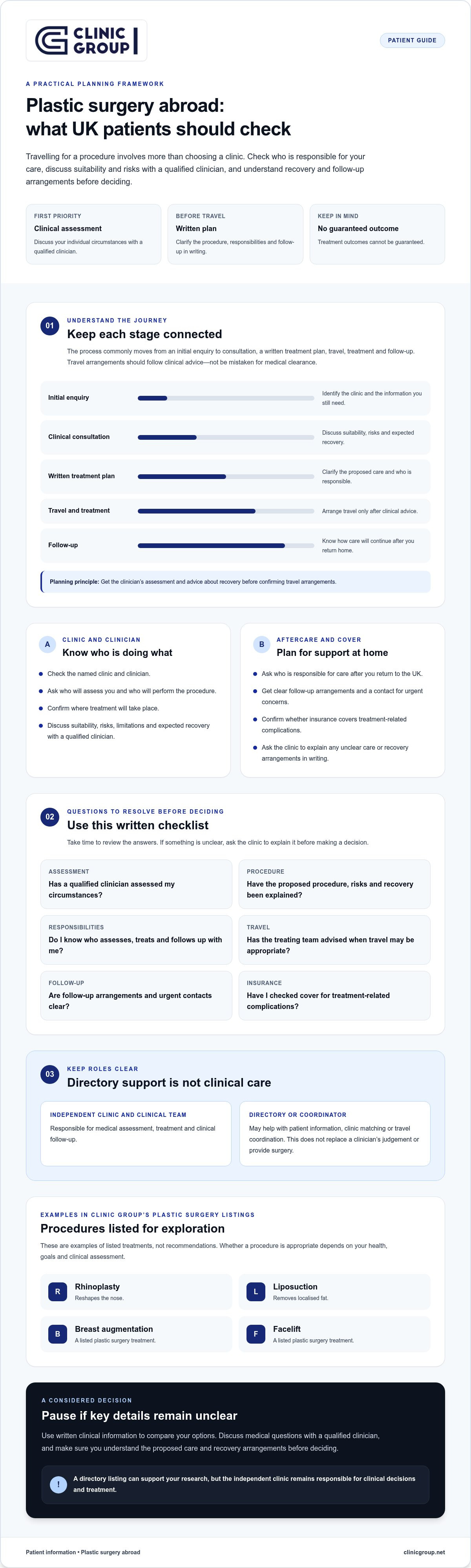
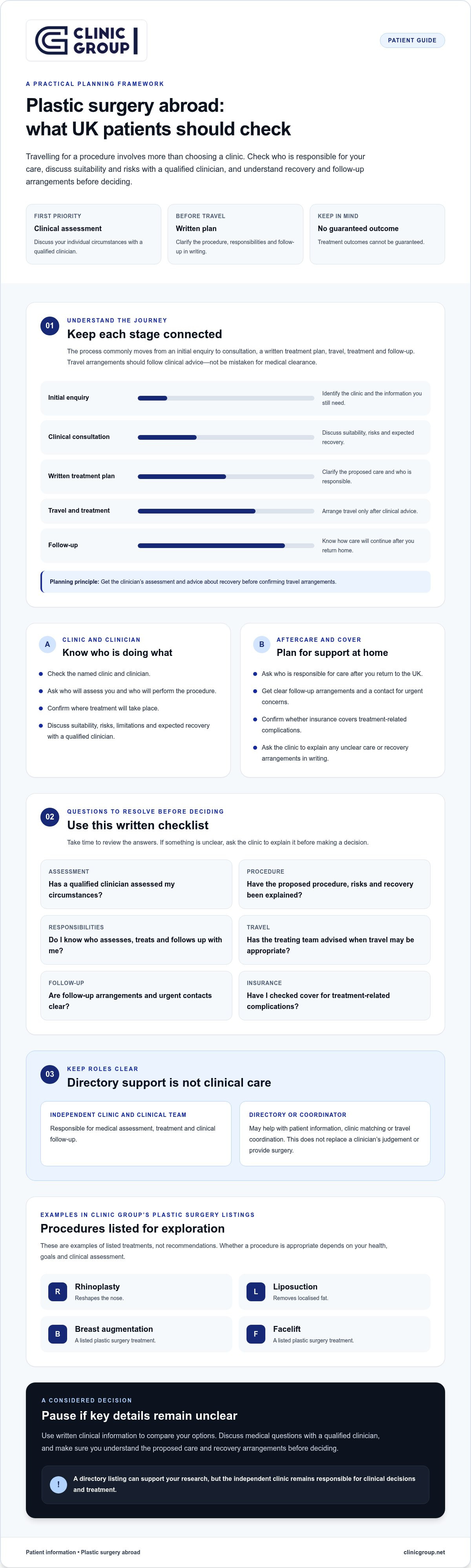
The journey commonly includes an initial enquiry, a clinical consultation, a written treatment plan, travel, treatment and follow-up. These stages should be connected: before arranging travel, ask the clinician what assessment is needed, what the proposed procedure involves and what recovery support will be available afterwards. A written plan can help clarify responsibilities and give you time to consider the information before deciding.
The independent clinic and its clinical team are responsible for medical assessment, treatment and clinical follow-up. A directory or coordinator may help with patient information, clinic matching or travel coordination, but these services do not replace a clinician’s judgement or provide surgery. Keep that distinction clear when reviewing what any organisation says it can arrange.
Which procedures are listed by Clinic Group?
Clinic Group’s plastic surgery listings include rhinoplasty, which reshapes the nose; liposuction, which removes localised fat; breast augmentation; and facelift procedures. These are examples of listed treatments, not a recommendation for any individual. Whether a procedure is appropriate depends on your health, goals and clinical assessment. The treating clinician should explain possible risks, limitations and expected recovery in language you understand.
You can review the plastic surgery listings to see the procedures and partner clinic options shown by Clinic Group. A listing is a starting point for research, not a substitute for checking the named clinician, discussing your circumstances directly with the clinic and deciding whether its written information answers your questions.
Before moving from research to travel plans, make sure you know who will assess you, who will perform the operation and who to contact about follow-up. If any part of the proposed care or recovery arrangements is unclear, ask the clinic to explain it in writing and discuss medical questions with a qualified clinician before making a decision.
How can travel and treatment planning affect the patient journey?
Travel arrangements should follow clinical advice, not lead it. Before confirming flights or treatment, obtain an assessment from the clinician responsible for the proposed procedure. The treating team should explain the expected recovery, advise when travel may be appropriate and set out how follow-up will work. For plastic surgery abroad UK patients, having these details in writing can help prevent practical arrangements from being mistaken for medical clearance.
A clear sequence makes it easier to spot unanswered questions before committing:
| Stage | What to confirm |
|---|---|
| Enquiry | Which clinic and clinician are being considered, and what information is needed to assess your enquiry? |
| Consultation | Speak with the clinician responsible for the proposed procedure and discuss suitability, risks and recovery. |
| Written plan | Request the proposed treatment, responsibilities, appointment schedule and follow-up arrangements in writing. |
| Travel | Agree travel dates only after the treating team has provided procedure-specific guidance. |
| Treatment | Confirm who will provide care and whom to contact if questions or concerns arise. |
| Follow-up | Establish how and when the clinic will review your recovery, including after you return to the UK. |
What should happen before a UK patient travels?
Ask for a consultation with the clinician who will assess you and, where applicable, perform the procedure. A discussion with a coordinator can help organise information, but it should not replace a clinician-led assessment. Request written confirmation of the treatment plan, who is responsible at each stage, and how clinical questions will be handled before and after your return. If any point is unclear, seek clarification before booking.
How should patients plan travel around recovery?
There is no single travel schedule that applies to every procedure or patient. Ask the treating clinician for advice specific to your operation and circumstances, including when it may be suitable to travel and what recovery support you might need. Confirm appointment dates and follow-up arrangements before booking, and check what happens if your recovery changes the original plan. A sightseeing itinerary or holiday schedule is not a substitute for time and arrangements advised by the clinical team.
Also clarify which practical services are coordinated and which are provided directly by the clinic. Do not assume that travel assistance includes clinical monitoring or follow-up. If you’d like to explore listed partner clinics while considering the questions above, you can browse Clinic Group’s directory. The clinic remains responsible for clinical assessment, treatment and care.
How can UK patients check a clinic, clinician and aftercare arrangements?
Check the named clinic and the clinician responsible for your care, rather than relying on general statements about quality or safety. Ask for information you can review and verify, and keep the clinic’s replies alongside your treatment documents. For plastic surgery abroad UK patients should also establish who will provide follow-up and how to raise urgent concerns after returning home.
Which questions should patients ask about clinical responsibility?
Before agreeing to treatment, ask the clinic to confirm in writing:
- The treating clinician’s full name, role, relevant qualifications and experience with the proposed procedure.
- Who will assess you in consultation and who will perform the operation. If these are different people, ask what each is responsible for.
- Who will explain the procedure’s risks, possible alternatives and limitations, and how your consent will be obtained.
- Which clinic or facility is responsible for your clinical care, and who you should contact with questions.
Read the answers alongside the proposed treatment plan. If information is missing, unclear or inconsistent, ask for clarification before making a decision. A directory listing can help you identify a partner clinic, but it doesn’t replace your own checks or a direct discussion with the treating clinician. You can also review this guide to pre-surgery consultations when preparing questions.
What should a written aftercare plan explain?
A useful plan names the clinical team responsible for follow-up and sets out how and when reviews will take place. It should give you a contact route for routine questions and explain whom to approach if a concern needs urgent attention. Ask how the clinic will respond if a problem arises after you have returned to the UK, and whether any assessment or care would need to take place in person.
Also request written details of any warranty terms that may apply, including what they cover, exclusions and how to make a claim. A warranty is not a guarantee of a particular surgical result, so ask the clinic to explain its limits rather than relying on a brief promotional claim.
Check your insurance policy directly. Ask whether it covers complications arising from elective surgery abroad and what conditions or exclusions apply; don’t assume a standard travel policy includes this cover. Keep the policy details and the clinic’s aftercare plan accessible during your trip. If the clinic cannot clearly identify who is responsible for follow-up, pause and resolve that uncertainty before booking.
What should UK patients confirm before booking plastic surgery abroad?
Use a written checklist to compare the clinic’s answers and identify gaps before making a commitment. For plastic surgery abroad UK patients should have a clinician-led plan, clear responsibilities, documented aftercare and confirmed insurance terms. Request an itemised written quote, but assess it alongside the clinical information, not as a substitute for it.
Which documents and answers should patients request?
Collect and review the following before booking:
- Clinician and clinic: Confirm the treating clinician’s identity, role and relevant credentials, and establish who will assess you and perform the procedure.
- Clinical plan: Request the proposed procedure, suitability assessment, risks, alternatives, expected recovery guidance and consent information in writing.
- Written quote: Ask for an itemised document explaining what is included and any stated exclusions. Request written clarification of any unclear item.
- Aftercare: Record the follow-up method, expected appointments, responsible clinical team and contact route for questions or urgent concerns.
- Insurance and terms: Check directly with your insurer whether complications from elective treatment abroad are covered, and ask the clinic for any applicable warranty terms and exclusions in writing.
- Concerns and complaints: Ask how to raise a concern, who will respond and what process applies if you need to make a complaint.
Putting responses side by side makes it easier to distinguish a clear clinical answer from a general assurance. Use a simple record such as this:
| What to check | What to record | Before booking |
|---|---|---|
| Clinical responsibility | Named clinician, role and who conducts each stage | Confirmed in writing or unresolved |
| Aftercare contact | Responsible team, contact route and follow-up method | Confirmed in writing or unresolved |
| Documents | Clinical plan, consent information and itemised quote | Received and reviewed or still requested |
| Open questions | Unclear risks, recovery details or insurance terms | Answered by the appropriate person or outstanding |
How can patients assess whether they are ready to decide?
Check that clinical questions have been answered by an appropriate clinician, and that you understand the proposed treatment, its risks and the follow-up arrangements. Pause if responsibilities are unclear, important documents are missing or you feel pressured to decide before your questions are resolved. The pre-surgery consultation guide can help you prepare for that discussion.
How can Clinic Group help UK patients explore plastic surgery options abroad?
Clinic Group is a directory and coordinator, not a treating clinic. It can help UK patients discover listed independent partner clinics and explore possible next steps, but clinical assessment, treatment decisions and surgery remain the responsibility of the clinic and its clinicians. For plastic surgery abroad UK patients, this distinction helps set clear expectations: a directory can support research, but it cannot determine whether a procedure is suitable or guarantee an outcome.
What support may Clinic Group provide?
The optional process may begin with a consultation and clinic matching, followed by a written plan from the independent clinic. Patients can also ask about arranging a second opinion and travel coordination. The supplied business information describes the initial consultation as free; confirm the current arrangements directly before proceeding. Any clinical opinion must come from a qualified clinician, and a proposed plan should be reviewed with the treating team.
Travel assistance is coordination support, and what can be arranged may depend on the clinic. Confirm which services are included, who provides them and whom to contact if arrangements change. Aftercare is also clinic-specific. Ask the treating clinic to provide its follow-up plan and responsibilities in writing, including how questions will be handled after you return to the UK. A listing or matching service does not replace your own checks of the named clinic and clinician.
Clinic Group’s partner clinics are located primarily in Albania, with a smaller number in the United Arab Emirates. Its plastic surgery listings include procedures such as rhinoplasty, liposuction, breast augmentation and facelift. Availability and suitability depend on the independent clinic’s assessment; outcomes cannot be guaranteed.
What is a sensible next step for interested patients?
Start by comparing listed procedures relevant to your goals, then prepare questions for a consultation. Ask who will assess you and perform the procedure, what risks and alternatives apply, what recovery may involve, and how follow-up will be arranged. Request written clinical information and take time to review it. If an answer is unclear, seek clarification from the clinician rather than relying on promotional material or assumptions about what coordination includes.
You can explore the directory to review available listings or make an enquiry without committing to treatment. Take time to compare the written information and decide whether you’re ready for a clinical discussion.
Take your next step with clear information
For plastic surgery abroad UK patients, the decision should rest on clinical information and a clear plan for care, not promotional claims alone. Confirm who will assess and treat you, discuss suitability and risks with a qualified clinician, and obtain the treatment and aftercare arrangements in writing. Check insurance terms for complications before you commit, and pause if key questions remain unanswered.
Clinic Group can help patients explore listed independent partner clinics through clinic matching and travel coordination support. It is a directory and coordinator, not a treating clinic: clinical decisions, surgery and follow-up remain the independent clinic’s responsibility. No surgical outcome can be guaranteed, so take time to review your options and make a decision that feels right for you.
A considered decision starts with asking questions and getting clear answers. You can take the next step at your own pace.
Frequently Asked Questions
Is plastic surgery abroad safe for UK patients?
No single answer applies to every clinic, clinician or patient. Safety depends on individual assessment, the procedure, the clinical team and arrangements for recovery and follow-up. Before deciding, verify the named clinician and clinic, discuss risks and alternatives directly with a qualified clinician, and get the treatment and aftercare plans in writing. Check insurance cover for complications too. Surgery carries risks, and outcomes cannot be guaranteed.
Can I have a consultation with the surgeon before travelling?
Ask to consult the clinician responsible for your proposed procedure before confirming travel. Check whether that person will assess you and perform the operation, and request an in-person assessment before surgery. Use the consultation to discuss your medical history, suitability, risks, alternatives and expected recovery in a language you understand. A conversation with a coordinator may help organise your enquiry, but it isn’t a substitute for clinical assessment by the treating team.
What should I check about aftercare before booking surgery abroad?
Ask for a written aftercare plan that names the responsible clinical team, explains how follow-up will take place and gives you a contact route for concerns, including urgent ones. Confirm how the clinic will respond if you have a problem after returning to the UK. Check directly with your insurer whether your policy covers complications from elective surgery abroad. Don’t assume routine or corrective follow-up will be available through the clinic or covered by insurance.
How long should I stay abroad after plastic surgery?
There isn’t one stay length that suits every patient or procedure. Ask the treating clinician how long you should remain available for reviews, what recovery milestones they’ll assess and when they consider travel appropriate. Confirm the advice before booking return travel, and ask what happens if your recovery takes longer than planned. Only the treating team can give guidance based on your procedure and circumstances; a travel itinerary shouldn’t determine when you leave.
What happens if I have a complication after returning to the UK?
Follow the urgent-contact instructions in your written plan and contact the treating clinic promptly. If you believe you need immediate medical attention, seek urgent help from an appropriate local healthcare service. Before travelling, ask the clinic what support it can provide after you return, whether an in-person review might be needed and how any further assessment or treatment would be arranged. Check your insurance policy for applicable complication cover and exclusions.
Does Clinic Group perform plastic surgery?
No. Clinic Group is a directory and coordinator that helps patients explore listed independent partner clinics. It doesn’t perform surgery or provide clinical care. The independent clinic and its clinicians assess suitability, make treatment decisions, carry out procedures and provide clinical follow-up. Patients can use listings or coordination support to explore options, but should verify the named clinician and clinic and discuss medical questions directly with the treating team before deciding.
Can Clinic Group guarantee the result of plastic surgery abroad?
No. Clinic Group can’t guarantee a surgical result, and no particular outcome should be assumed. Results depend on individual factors and clinical decisions made by the treating team. Ask the clinician to explain realistic expectations, limitations and risks for the proposed procedure, and request the plan in writing. Treat promotional images or claims as no substitute for that discussion. Clinic Group’s role is to support clinic discovery and coordination, not to control or promise clinical outcomes.

Article by
Clinic Group Editorial Team
The Clinic Group editorial team publishes clear, practical guides for UK and EU patients researching medical travel — from dental implants and hair transplants to plastic surgery and eye care — with a focus on verified clinics, transparent “from” pricing, and safe planning.
Disclaimer
This article is for general information only and is not medical advice, diagnosis, or a substitute for an in-person consultation with a qualified clinician. Treatment suitability, risks, timelines, and costs vary by individual. Clinic Group connects patients with independent clinics; those clinics are responsible for clinical care. Always verify credentials, obtain a written treatment plan and itemised quote, and confirm aftercare arrangements and travel insurance cover (elective procedures are often excluded) before booking. Outcomes cannot be guaranteed.