TL;DR:
- Choosing an overseas aesthetic clinic requires verifying international accreditation, staff qualifications, and emergency protocols to ensure safety. Transparency on safety practices, product sourcing, and complication management is essential, regardless of regional reputation. Clinic Group provides verified clinics meeting these rigorous standards, helping patients make informed and safe treatment choices worldwide.
Choosing a clinic abroad for an aesthetic treatment is not simply a question of price or convenience. For many patients, the real anxiety lies in not knowing whether the clinic they are booking actually meets safe, reliable standards. The rules change across borders, the terminology shifts, and the certificates on a clinic’s website do not always tell the full story. This article gives you a practical, step-by-step framework for evaluating clinic safety before you travel, covering everything from international accreditation and staff qualifications to emergency protocols and regional comparisons across Europe and the Middle East.
Table of Contents
- Essential safety evaluation criteria for clinics
- Staff qualifications and product sourcing
- Emergency preparedness and complication management
- Clinic safety practices compared across Europe and the Middle East
- Why conventional clinic ‘safety’ checks can mislead patients
- Find trusted clinics with Clinic Group
- Frequently asked questions
Key Takeaways
| Point | Details |
|---|---|
| Accreditation is a must | Always choose clinics with international certification that guarantee ongoing safety checks. |
| Check staff credentials | Ensure all medical staff are properly qualified and their certifications are verified by official bodies. |
| Emergency preparedness | Clinics must have immediate access to emergency protocols, drugs, and trained personnel to manage complications. |
| Compare regions directly | Safety standards vary in Europe and the Middle East, so compare clinics using structured criteria and tables. |
| Transparency matters most | Demand visible proof of safety practices and process documentation for every treatment considered. |
Essential safety evaluation criteria for clinics
Now that you understand why safety matters, let’s look at the specific criteria that separate genuinely safe clinics from those that simply appear that way on the surface.
The single most reliable signal of a clinic’s safety standard is its international accreditation status. Bodies such as the Joint Commission International (JCI) and the International Society for Quality in Health Care (ISQua) assess clinics against rigorous, globally recognised benchmarks. These cover everything from infection control and surgical protocols to patient rights and ongoing staff training. As JCI’s international standards confirm, international accreditation frameworks serve as proxies for robust, system-level safety processes rather than one-off inspections.
What does accreditation actually involve in practice? Clinics must demonstrate consistent compliance across dozens of operational areas. Surveyors look at sterilisation logs, anaesthesia protocols, emergency response records, and patient documentation systems. Accreditation is not awarded once and forgotten. It requires renewal and ongoing audits, which means a currently accredited clinic is actively maintaining its standards rather than coasting on past performance.
To use this knowledge practically, review our clinic accreditation guide before contacting any provider abroad. It helps you understand exactly which questions to ask and what documentation to request. You should also consider comparing clinic features side by side to identify meaningful differences beyond price.
When evaluating a clinic, look for the following safety criteria as a baseline:
- Valid, current accreditation from a recognised international body such as JCI or ISQua
- Written infection control and sterilisation protocols available on request
- Clear documentation of emergency preparedness procedures
- Transparent patient consent processes in your language
- Structured medication management policies, including pre-treatment health screening
- Regular internal safety audits with documented outcomes
Pro Tip: Always request a copy of the clinic’s accreditation certificate, not just a logo on their website. Ask when it was last renewed and whether ongoing safety audits are conducted between accreditation cycles. A trustworthy clinic will share this information willingly.
Staff qualifications and product sourcing
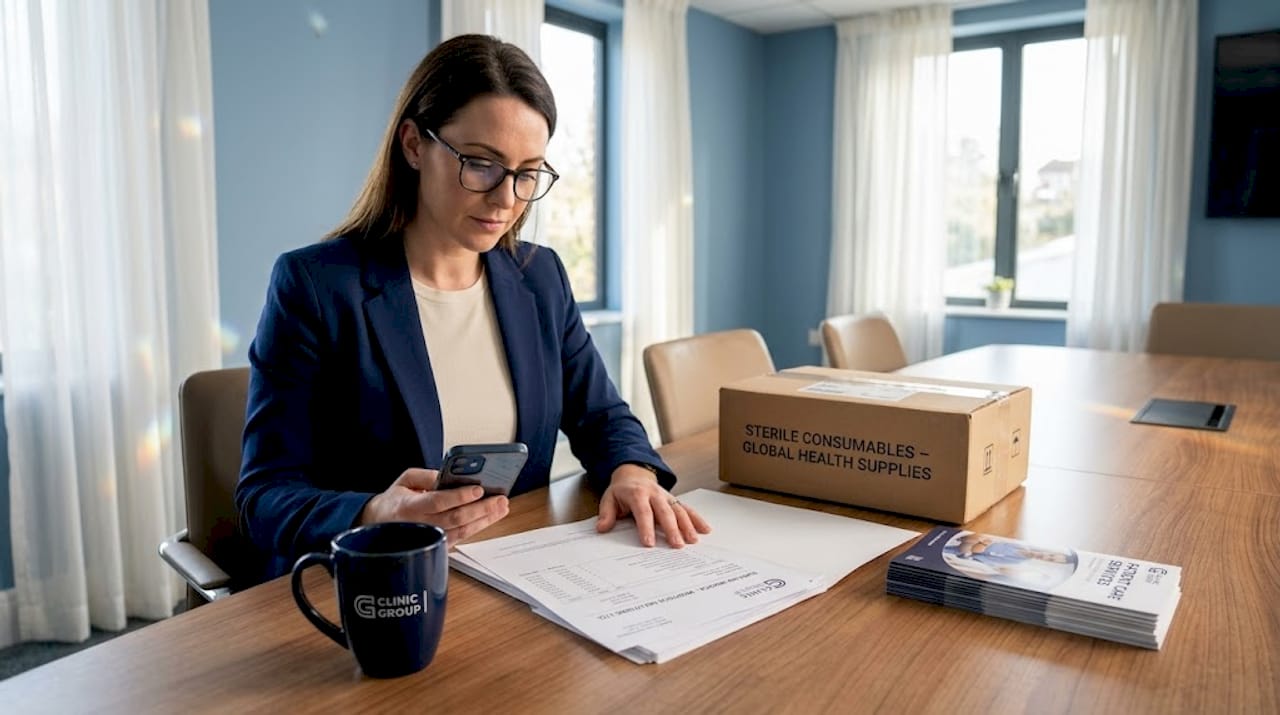
Once you have assessed accreditation and protocols, it is vital to examine the staff’s credentials and product sourcing, as these are surprisingly common sources of risk in aesthetic medicine.
Qualifications matter enormously in this field. A practitioner performing dermal fillers, rhinoplasty, or a hair transplant must hold recognised medical degrees and specialist training relevant to the procedure. Yet in many countries, aesthetic treatments sit in a regulatory grey area that allows non-medical practitioners to carry out complex procedures. This is not a minor concern. Empirical research shows that complications in aesthetic treatments correlate directly with process failures, nonmedical qualifications, and uncertified or unknown-origin products.
“Complications in aesthetic treatments most commonly trace back to nonmedical qualifications and uncertified products.”
Product sourcing is equally important and often overlooked by patients focused solely on practitioner credentials. Injectable treatments, implants, and topical agents should all come from verified, regulated suppliers. Counterfeit or improperly stored products are a genuine risk in markets with weak pharmaceutical oversight. Always ask your clinic to confirm the brand, batch number, and regulatory approval of any product used in your treatment.
Our trusted clinics directory lists verified providers whose staff credentials and product sourcing practices have been reviewed. You can also read more about medical staff certification and what to look for when assessing practitioner backgrounds.
Here is a practical checklist to use when assessing staff and products:
- Confirm that the lead practitioner holds a recognised medical degree and specialist qualification
- Ask how many procedures of your type the practitioner performs each month
- Request documentation of the products being used, including brand name and regulatory approval
- Check whether the clinic uses branded, original-source supplies rather than generic or imported alternatives
- Ask whether staff undertake regular continuing professional development in aesthetic medicine
- Verify that the clinic maintains treatment records in a format you can access after your procedure
Clinics that resist any of these requests, or that give vague answers, should be treated with caution. Transparency is the standard, not the exception, at genuinely safe providers.
Emergency preparedness and complication management
Even the best clinics can face complications, so it is critical to understand exactly what happens if something goes wrong during or after your treatment.
Emergency preparedness is a specific and testable quality. It is not enough for a clinic to say it has protocols in place. You need to know what those protocols look like in practice. For injectable treatments in particular, clinic safety standards highlight that a key concern is whether the clinic is equipped for injectable vascular emergencies and whether real, practised protocols exist rather than paper-only procedures.
Vascular occlusion is a rare but serious complication of filler injections. If a filler is accidentally introduced into a blood vessel, rapid intervention with hyaluronidase, an enzyme that dissolves hyaluronic acid fillers, is essential. Not all clinics stock this medication. Not all practitioners are trained to administer it under pressure. Asking directly whether hyaluronidase is available on site, and whether staff are trained in its use, is one of the most direct tests of a clinic’s emergency readiness.
Here is a step-by-step approach to assessing emergency preparedness:
- Ask the clinic to describe their complication management protocol in plain language, not just confirm that one exists
- Confirm that hyaluronidase or other relevant emergency medications are stocked and within expiry
- Ask how quickly staff can escalate a complication to a hospital or emergency facility
- Find out whether practitioners are trained in basic and advanced life support
- Request information about what aftercare is provided if a complication occurs post-discharge
- Check whether the clinic has a 24-hour contact line for patients experiencing post-procedure concerns
Our guide to aftercare services for medical tourists explains what good post-procedure support should include. You can also read our advice on how to navigate medical consultations abroad safely before your first appointment.
Pro Tip: Do not settle for generic answers during your pre-treatment consultation. Ask the clinic to walk you through what they would do in a specific emergency scenario. Confident, detailed answers indicate a clinic that has genuinely prepared. Vague reassurances are a warning sign.
Clinic safety practices compared across Europe and the Middle East
To clarify which standards dominate in each region, here is a structured comparison to help inform your decision when choosing between clinics across two major medical tourism destinations.
Both Europe and the Middle East have clinics operating at very high international standards. However, there are meaningful differences in regulatory environments, accreditation adoption rates, and the consistency of safety practices across the broader market. Over 1,000 clinics and healthcare organisations worldwide now hold JCI accreditation, and the Middle East, particularly countries such as the UAE, Turkey, and Jordan, has seen significant growth in internationally accredited providers over the past decade.
The CDC advises that travelling abroad for medical care carries real risks and should be planned carefully, with attention to specific risk-reduction steps. This advice applies regardless of destination. The key is not choosing a region blindly but identifying which individual clinics within that region meet verifiable standards.
| Safety criterion | Clinics in Europe | Clinics in the Middle East |
|---|---|---|
| JCI or ISQua accreditation | Widely adopted, especially in Western Europe | Growing rapidly, particularly UAE and Turkey |
| National regulatory oversight | Strong EU-wide frameworks in most member states | Varies; strongest in UAE, Jordan, and Saudi Arabia |
| Emergency protocol documentation | Typically formalised and audited | Present in accredited clinics; variable elsewhere |
| Staff qualification transparency | Generally high in regulated markets | High in premium clinics; verify independently |
| Patient aftercare provision | Standard in accredited facilities | Strong in top-tier clinics; confirm in advance |
| Language support for patients | Common in tourism-focused clinics | Widely available in international clinics |
Reading this table, it becomes clear that accreditation is the great equaliser. A JCI-accredited clinic in Istanbul or Dubai is operating to the same global benchmark as one in Prague or Warsaw. The risk is not the region. It is the individual clinic that has not been independently verified.
For more detail on safe dental treatment abroad, read our guide to dental safety abroad. You can also explore the full range of safe treatments available through verified providers on the Clinic Group platform.
Why conventional clinic ‘safety’ checks can mislead patients
Many guides stop at checklists. Here is what is often missed when patients evaluate clinic safety abroad, and why the standard approach can give a false sense of confidence.
Accreditation matters. Staff credentials matter. But there is a deeper layer of safety that most patients never think to check, and that is process transparency. A certificate on the wall means little if the real safety processes are not visible, documentable, and practised under realistic conditions. Clinics that have been through accreditation but have since cut corners on training, emergency stock, or documentation maintenance may still display their certificates proudly.
The most overlooked risk in aesthetic medical tourism is not the destination country. It is the absence of genuine transparency around what happens when things go wrong. Responsible provider systems are more relevant than geographic location. A clinic must be equipped for real complications, not just auditable ones.
“A certificate on the wall means little if the real safety processes are not visible.”
Our experience at Clinic Group tells us that patients who ask the most direct questions, about complication rates, emergency drugs, and aftercare contacts, consistently make better decisions about where to receive treatment. The clinics that welcome these questions are almost always the ones worth trusting. Those that deflect or offer only brochure-style answers are a red flag regardless of how impressive their facility looks online.
We also see patients over-relying on before-and-after photos and patient testimonials as safety proxies. These tell you about aesthetic outcomes, not clinical process. Safety is invisible in a photograph. It lives in the protocols, the training records, and the honest conversations that happen before a single procedure begins. For a fuller perspective on what to scrutinise, revisit our clinic accreditation guide with this mindset. You will read it differently.
Find trusted clinics with Clinic Group
Having reviewed how to evaluate clinics and what genuine safety looks like in practice, here is how Clinic Group can help you take the next step with confidence.
Clinic Group connects patients with verified, internationally accredited clinics and qualified medical specialists across Europe and the Middle East. Every clinic listed on the platform has been reviewed for credentials, accreditation status, and quality of patient support. You can browse the full range of available treatments, from cosmetic surgery and hair transplants to dental care and anti-ageing therapies, and filter providers by location, speciality, and accreditation level. The clinic directory gives you direct access to verified provider profiles, including staff qualifications, safety documentation, and patient reviews. Clinic Group also supports you with travel planning, aftercare coordination, and second-opinion services, so you are never navigating this process alone.
Frequently asked questions
What is international clinic accreditation and why does it matter?
International accreditation, such as JCI certification, ensures that clinics meet global safety benchmarks covering infection control, emergency preparedness, staff training, and ongoing quality improvement. It provides independent verification that a clinic’s processes are consistently maintained, not simply declared.
How can patients verify a clinic’s emergency readiness?
Patients should ask clinics directly about their complication protocols and emergency medications, including whether hyaluronidase is stocked for injectable vascular emergencies. Requesting a step-by-step walkthrough of what happens in an emergency scenario is the most reliable test.
Are medical tourism risks different in Europe versus the Middle East?
Both regions have clinics with strong safety practices, but accreditation adoption and regulatory consistency vary. The CDC recommends careful risk assessment and planning regardless of destination, so patients should always verify standards at the individual clinic level rather than assuming safety by region.
What are the main causes of complications in aesthetic treatments?
Research confirms that complications most commonly result from process failures, unqualified practitioners, or uncertified products. Thorough verification of staff credentials and product sourcing before treatment is the most effective way to minimise these risks.