TL;DR:
- Patient reviews are the most reliable resource for choosing an overseas dental clinic, as they reflect actual patient experiences. Clinics with detailed, recent reviews rank higher in search engines and offer better trust signals for international patients. Analyzing review specifics and responses helps verify clinical quality, safety standards, and aftercare reliability.
Dental reviews are the single most reliable resource patients have when choosing a clinic for treatment overseas. Unlike marketing copy or clinic websites, reviews are written by real patients who have already sat in the chair. 77% of patients check online reviews before choosing a dentist, and that figure rises sharply when the clinic is in another country. For dental tourists considering procedures in Albania, Dubai, or elsewhere in Europe, why dental reviews matter goes far beyond star ratings. They are patient-generated evidence of clinical quality, safety standards, and aftercare reliability, all in one place.
Why dental reviews matter more for international patients
Patient reviews function as the primary trust signal when you cannot visit a clinic in person before committing to treatment. For a UK patient considering dental implants in Tirana or veneers in Dubai, a review from someone who made that same trip carries far more weight than any brochure. Reviews reduce the uncertainty that comes with booking dental care abroad, and they do so in a way that no clinic-produced content can replicate.

AI search engines prioritise user-generated reviews over clinic-published content when assessing legitimacy and quality. This means that clinics with active, recent, and detailed reviews rank higher in search results and are treated as more credible sources by tools like Google, ChatGPT, and Perplexity. The practical implication is clear: a clinic with 200 detailed reviews is far more visible and verifiable than one with a polished website and 12 reviews from three years ago.
Dental care also carries a particular psychological weight. Patients read reviews specifically for evidence of gentle care and effective pain management, seeking reassurance before procedures that many find anxiety-inducing. This is especially true for complex treatments like full-arch implants or bone grafting, where the stakes are high and recovery takes time.
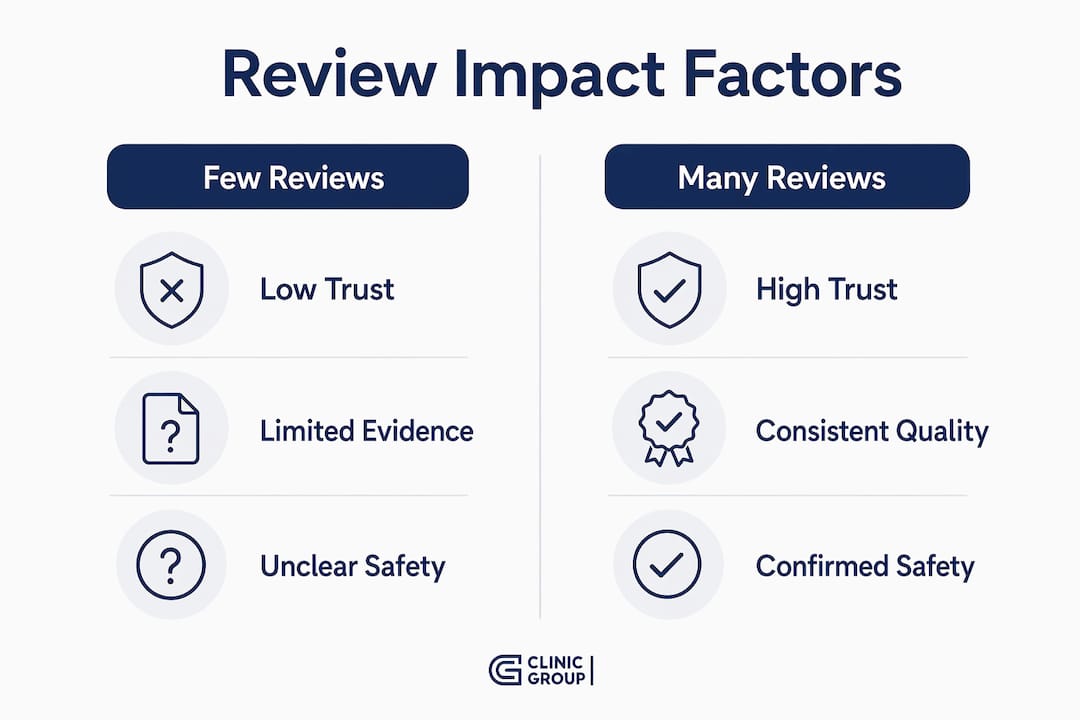
The table below shows how review volume and consistency affect patient confidence when comparing clinics abroad.
| Factor | Clinic with few reviews | Clinic with many reviews |
|---|---|---|
| Patient trust | Low, limited evidence | High, broad social proof |
| Search visibility | Reduced ranking | Stronger AI and Google ranking |
| Perceived safety | Uncertain | Verified through repeated feedback |
| Accountability signals | Absent | Visible through clinic responses |
| Suitability for dental tourism | High risk | Lower risk, better informed choice |
Pro Tip: When shortlisting clinics abroad, filter for those with at least 50 reviews posted across the past 12 months. Volume alone is not enough; you need recency to confirm that current standards match past performance.
What to look for beyond star ratings
Star ratings give you a quick impression, but the real value of dental patient feedback lies in the detail. A clinic with a 4.6 average and 300 reviews that mention specific procedures, recovery times, and follow-up care is far more trustworthy than one with a perfect 5.0 from 18 reviews. The importance of dental reviews lies in their specificity, not their score.
Clinical outcomes vs. generic praise
Look for reviews that mention actual treatment outcomes. Phrases like “my implant was fitted in two appointments and the crown matched perfectly” or “the clinic arranged a follow-up call two weeks after I returned to the UK” are meaningful. Generic comments such as “great staff, very friendly” tell you nothing about clinical competence. Reviews mentioning clinical outcomes and aftercare are the most reliable indicators of a clinic’s real performance.
Red flags in review patterns
Certain patterns signal that a clinic’s reviews may not reflect genuine patient experiences. Sudden influxes of five-star reviews over a short period, known as abnormal review velocity, are a common sign of manipulation. Organic review growth is steady and gradual. If a clinic received 4 reviews in January and 87 in February, treat that as a warning sign.
Other red flags include:
- Reviews that use identical or near-identical phrasing across multiple posts
- No negative reviews at all, even for a clinic with hundreds of ratings
- Complaints about treatment failures, broken crowns, or poor follow-up that go unanswered
- Reviews that mention staff by name but say nothing about the procedure itself
Why recency outweighs historical ratings
A recent review outweighs an older, higher-rated one when it comes to reflecting current clinic standards. Staff change, equipment is updated, and management practices evolve. A five-star review from 2019 tells you very little about what to expect in 2026. For dental tourists, this is particularly relevant when assessing current dental clinic safety and whether the clinic’s standards have been maintained.
Pro Tip: Sort reviews by “most recent” rather than “most relevant” on Google or Trustpilot. The most relevant filter often surfaces older, highly-rated reviews that may not reflect today’s clinic.
How patient feedback systems improve care quality abroad
Clinics that actively collect and respond to patient feedback operate differently from those that do not. The difference shows up in measurable outcomes. Clinics using post-visit feedback systems see a 25–40% reduction in no-show rates, which reflects stronger patient relationships and better communication. For dental tourists, a clinic that follows up after treatment is one that takes aftercare seriously.
The most effective clinics use a two-track feedback approach:
- Positive feedback is directed to public platforms such as Google or Trustpilot, where it builds the clinic’s visible reputation and helps future patients make informed decisions.
- Complaints and concerns are handled privately through direct outreach, allowing the clinic to resolve issues before they escalate and demonstrating genuine commitment to patient welfare.
- Feedback is reviewed by management on a regular basis to identify recurring issues, whether that relates to waiting times, communication, or post-procedure care.
- Patients are surveyed after treatment using standardised questionnaires, which produce consistent data. Clinics delivering standardised care report satisfaction scores averaging 4.74 out of 5, compared to 3.34 for those without structured feedback processes.
- Results are shared with clinical staff so that individual practitioners understand how their work is perceived and can adjust accordingly.
This kind of structured approach to patient feedback is a strong indicator of a well-managed clinic. For international patients who cannot easily return for a follow-up appointment, knowing that a clinic takes aftercare communication seriously is not a minor detail. It is a core part of the decision.
Pro Tip: Before booking, send the clinic a direct question about their post-treatment follow-up process. A clinic that responds clearly and promptly is demonstrating the same communication standard you will receive after your procedure.
How to verify clinic credibility through reviews
Using reviews wisely requires a structured approach. The following steps give you a reliable method for assessing any dental clinic abroad before you commit.
- Check review timestamps. Look for a steady flow of reviews over the past 6–12 months. Gaps in activity or sudden spikes both warrant further investigation.
- Read clinic responses to negative reviews. Clinics that respond professionally to criticism signal accountability. A defensive or dismissive response to a complaint tells you how the clinic handles problems when you are the patient.
- Cross-reference platforms. Check Google, Trustpilot, and any reviews hosted on the clinic’s booking platform. Consistent ratings across multiple sources are a stronger signal than a perfect score on one platform alone.
- Look for reviews from patients with similar procedures. If you are considering dental implants, search for reviews that specifically mention implant treatment. Generic reviews about cleanings or whitening are less relevant to your decision.
- Combine reviews with other verification steps. Reviews are one layer of due diligence. Pair them with confirmation of board certification, transparent pricing, and clear information about sterilisation protocols. Clinicgroup’s guide on checking clinic reviews before going abroad covers this process in detail.
- Avoid clinics with no negative reviews. A small number of negative reviews, handled well, is a sign of authenticity. A flawless record across hundreds of reviews is statistically unlikely and warrants scepticism.
Understanding how reviews shape clinic selection in Europe is particularly useful for patients comparing multiple destinations, as standards and review cultures vary between countries.
Pro Tip: Ask the clinic directly for references from previous international patients. Reputable clinics working with dental tourists regularly will have patients willing to share their experience.
Key takeaways
Dental reviews are the most reliable tool for assessing clinic quality, safety, and aftercare standards when choosing treatment abroad.
| Point | Details |
|---|---|
| Reviews outweigh marketing | Patient-generated feedback is more credible than clinic-produced content for assessing real standards. |
| Recency matters most | Recent reviews reflect current clinic quality; older ratings may not represent today’s standards. |
| Look beyond star ratings | Specific mentions of clinical outcomes and aftercare are more valuable than generic praise. |
| Review velocity signals fraud | Sudden influxes of five-star reviews suggest manipulation; steady organic growth is the safer signal. |
| Clinic responses reveal accountability | How a clinic responds to negative reviews shows how it will treat you if something goes wrong. |
Our perspective on dental reviews and dental tourism
From our experience working with patients travelling from the UK, Italy, and across Europe for dental treatment, the single most common regret we hear is not about the procedure itself. It is about not reading reviews carefully enough before booking.
Patients often focus on price and location, which are reasonable starting points. But a clinic offering dental implants at a significantly lower cost than UK prices is only a good choice if the clinical standards are verifiable. Reviews are where that verification happens. Not the clinic’s own testimonials page, but independent platforms where patients speak freely.
We have seen patients choose clinics with impressive websites and minimal reviews, only to find that aftercare communication was poor once they returned home. We have also seen patients who spent time reading detailed, recent reviews from fellow dental tourists arrive at their appointments calm, prepared, and with realistic expectations. The outcome difference is significant.
One thing we consistently advise: do not treat a high star rating as a substitute for reading the actual reviews. A 4.8 from 400 reviews that mention specific procedures, recovery experiences, and follow-up care is worth far more than a 5.0 from 20 reviews that all say “wonderful clinic.” The depth of patient feedback is where the real signal lives.
Clinicgroup prioritises verified clinics with transparent, independently sourced reviews precisely because we know how much that detail matters to patients making decisions about their health from hundreds of miles away.
— Clinic
Find verified dental clinics through Clinicgroup
Clinicgroup connects patients with verified dental clinics across Albania and Dubai, where board-certified specialists offer treatments including dental implants, crowns, and veneers at transparent prices. Every clinic in our directory is assessed for quality standards, and patient reviews are accessible directly through our platform so you can make an informed decision before you travel. Our team supports you from initial consultation through to travel logistics, accommodation, and aftercare follow-up. Browse our full range of dental treatments available or explore our verified clinic directory to compare options, read patient feedback, and take the first step towards confident, well-informed dental care abroad.
FAQ
Why do dental reviews matter more than clinic websites?
Clinic websites are produced by the clinic itself, while reviews are written by independent patients. AI and search engines treat reviews as the primary data source for assessing clinic legitimacy, making them a more reliable indicator of real standards.
How many reviews should a dental clinic abroad have?
There is no fixed minimum, but a clinic with fewer than 30 reviews provides limited evidence of consistent quality. Look for clinics with steady review activity over the past 12 months rather than a large volume of older reviews.
How can I spot fake dental reviews?
Abnormal review velocity, such as a sudden surge of five-star ratings in a short period, is the clearest warning sign. Also look for identical phrasing across multiple reviews or a complete absence of any negative feedback.
What should a good dental review include?
The most useful reviews mention the specific procedure, recovery experience, and any aftercare communication. Reviews that reference clinical outcomes are far more informative than those that only comment on staff friendliness or clinic décor.
Does a clinic’s response to negative reviews matter?
Yes. Clinics that respond professionally to negative feedback demonstrate accountability and a patient-centred approach. For international patients, this is particularly important as it indicates how the clinic will handle any concerns after you return home.