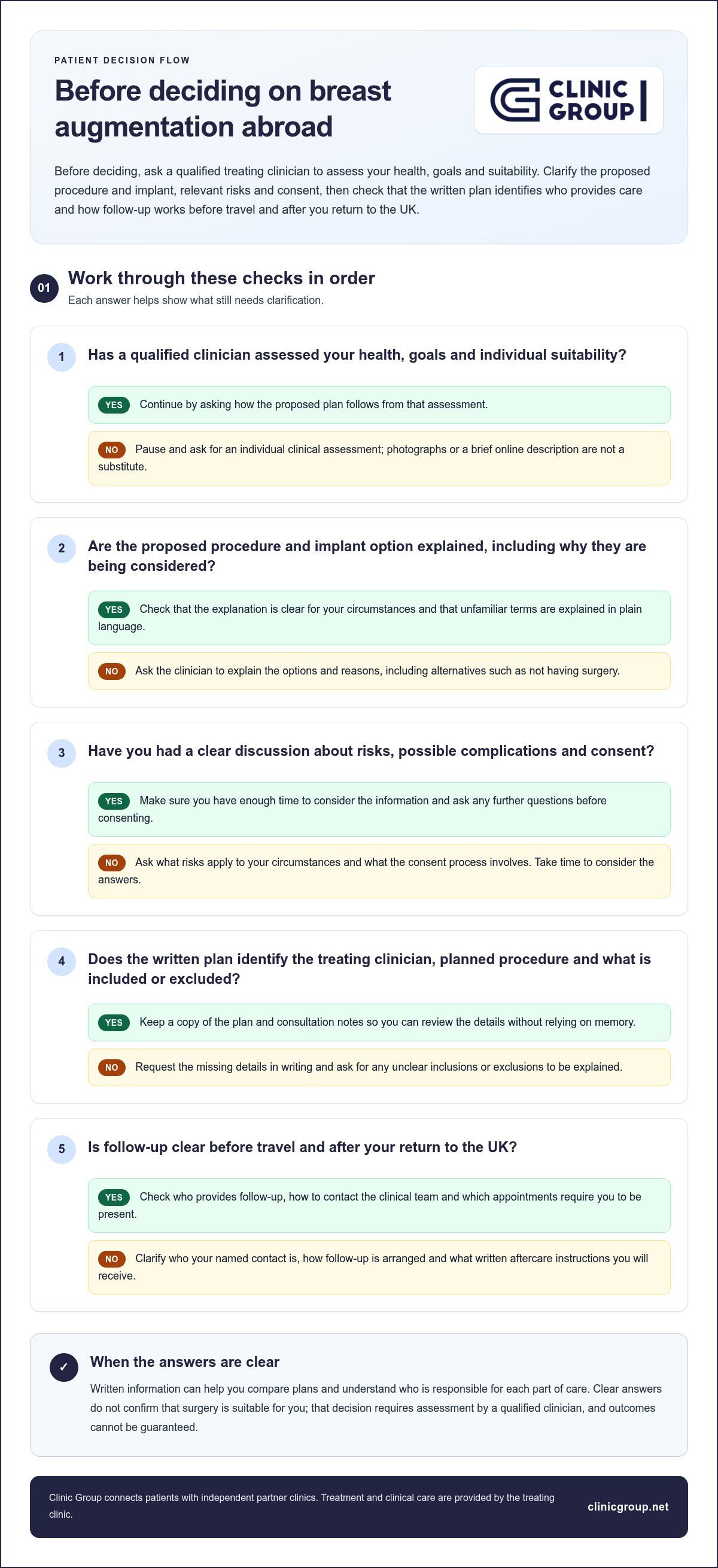
What if the most important part of choosing treatment abroad is not the destination, but how care is assessed and planned? Breast augmentation abroad means travelling from the UK for surgery intended to change breast size or shape, commonly using implants. Suitability depends on a qualified clinician’s assessment of your health, goals and circumstances, as well as clear arrangements for care before and after travel.
It’s understandable to have questions about assessing a clinic, comparing treatment plans and arranging follow-up at home. This guide explains what the procedure involves and what to clarify so you can consider your options without feeling pressured to book.
You’ll also find practical points to consider about written plans, travel and aftercare. Clinic Group connects patients with independent partner clinics; those clinics provide treatment and clinical care. This article offers general information, not medical advice, and outcomes can’t be guaranteed.
Key Takeaways
- Understand how breast augmentation abroad is assessed, including why implant choice and surgical planning depend on your individual clinical assessment.
- Use focused questions to clarify your treatment plan, the clinician’s documented credentials and who is responsible for your care.
- Compare written plans and itemised quotes so you can see what is covered and what arrangements need clarification.
- Build travel and recovery plans around individual guidance from the treating clinician, with a clear contact for aftercare.
- Learn how Clinic Group’s directory, optional consultation and clinic-matching support can help you explore independent partner clinics.
What does breast augmentation abroad involve?
Breast augmentation abroad means travelling outside the UK for surgery intended to change breast size or shape, usually using implants. Deciding whether it is suitable involves more than comparing clinics or treatment plans: a qualified clinician must assess your health, discuss your aims and explain the options, risks and follow-up arrangements for your individual circumstances.
The procedure is not a standard choice that can be made from photographs or a brief online description. Breast shape, existing health conditions, previous operations and personal expectations may all be relevant to a clinical assessment. Travelling adds practical questions too, including how appointments, recovery arrangements and follow-up will work once you are back in the UK.
What happens during breast augmentation?
At a high level, breast augmentation commonly involves placing implants to alter breast size or shape. The treating clinician should discuss your aims and medical history, explain the possible approach and consider whether surgery is suitable for you. Implant choice and surgical technique are individual clinical decisions, not recommendations that can be made in a general guide.
An implant is a medical device used in the operation. The clinician can explain the options being considered, the reasons for them and the risks that apply to your circumstances. For a general description of the procedure and its terminology, see this Breast Augmentation Overview. Use general reading to prepare questions, not to decide on an implant or assume a particular technique is right for you.
Before making a decision, be ready to describe what you hope to change and what a satisfactory outcome would mean to you. Ask the treating clinician to explain any medical terms in plain language and to discuss how your health history may affect the plan. The consultation should allow time for questions, consideration and a clear explanation of next steps.
Why do some UK patients consider treatment abroad?
Patients may look overseas to explore treatment options and clinic access beyond what they have considered in the UK. The reasons differ from person to person; interest in travelling should not be taken as evidence that a clinic is suitable or that a particular outcome is assured.
Travel also means organising appointments, accommodation, time away from home and a practical plan for follow-up. Consider how you would communicate with the treating team after returning to the UK, and what arrangements apply if you need further clinical advice. These details belong in the decision alongside the proposed treatment, not as an afterthought.
Clinic Group’s breast augmentation information can help you explore the topic and independent partner-clinic options. Any surgery is provided by the treating clinic, not Clinic Group. This section is general patient information, not individual medical advice; only a qualified clinician can assess your suitability, and outcomes cannot be guaranteed.
What should you discuss before deciding on breast augmentation abroad?
A useful consultation should leave you with a clear account of the proposed treatment, the reasons it may suit your circumstances and the support available before and after surgery. Take questions in writing, note the answers and request the plan, itemised quote and aftercare terms in writing before you decide. Suitability, implant choice and surgical planning are decisions for the treating clinician.
Which questions belong in a pre-surgery consultation?
Use the consultation to understand how the clinician reaches a recommendation, not simply to confirm a treatment you have already selected. A pre-surgery consultation guide can help you prepare. Ask the clinician to explain any unfamiliar terms, and take time to consider the answers before consenting.
- Clinical questions: How will you assess my goals, health history and individual suitability? What procedure and implant option are being proposed, and why? Are there alternatives, including not having surgery, that I should consider?
- Risks and consent: What material risks and possible complications should I understand? What does the consent process involve, and who will answer further questions if I need time to decide? You can review the FDA Breast Implant Risks as background, then ask the treating clinician how the information applies to your case.
- Travel and coordination questions: Which appointments require you to be present, what dates should remain flexible, and who coordinates practical arrangements? Who is your named contact for clinical questions before travel and after you return?
What should a written treatment plan explain?
The written plan should make it possible to understand what is proposed and who is accountable for each part of care. Check that it identifies the treating clinician and the planned procedure, and sets out what is included in the quote. Written details help you compare like with like rather than assume that different clinics offer the same pathway.
- Request an itemised quote and ask for any unclear inclusions or exclusions to be explained in writing.
- Ask how follow-up is arranged, who provides it and how to contact the clinical team if a concern arises after you return home.
- Obtain written aftercare instructions and clarify any terms described as a warranty, including what they cover and any limits.
- Keep copies of the consultation notes, proposed plan, quote and consent information so you can review them without relying on memory.
Pause if an answer is unclear or you feel rushed; you can ask for clarification or time to consider the information. To explore Clinic Group’s treatment and clinic information at your own pace, browse the Clinic Group directory. Consultations and coordination support do not replace assessment or care by the independent treating clinic.
How can you assess an overseas clinic and its patient safeguards?
Assess the people and systems responsible for care, not just the clinic’s website or promotional material. Look for information you can verify independently, understand which organisation provides treatment, and establish how follow-up is arranged. Credentials and documented safeguards must be checked, not assumed. A comparison framework can help you identify gaps before making a decision about breast augmentation abroad.
Which credentials and safety details should patients verify?
Start with the treating clinician’s identity, then check their qualifications and relevant registration using sources that can confirm the information. Ask the clinic to explain what documented safety processes apply to the procedure and clinical setting, and how these are recorded. If accreditation is claimed, verify it directly with the organisation said to have awarded it; a logo or statement on a website is not independent confirmation.
Separate evidence from promotion. A named qualification or registration that can be checked is different from broad phrases such as “leading expert” or “international standards”. Testimonials may describe individual experiences, but they cannot establish a clinician’s credentials or confirm that safeguards are in place. Clinic Group’s guide to comparing verified clinics offers further points to consider when reviewing provider information.
Who is responsible for treatment and follow-up?
Clinic Group connects patients with independent partner clinics; it does not perform surgery or provide clinical care. The treating clinic is responsible for treatment and clinical follow-up. Before proceeding, make sure the relevant clinic and contact route are clearly identified in your documents, including who will handle post-operative questions and how those arrangements work once you have returned to the UK.
Lower local operating costs do not, on their own, demonstrate either high clinical quality or poor standards. They are not a substitute for checking the clinician, the clinic’s documented processes and the written aftercare arrangements. Compare evidence and responsibilities rather than relying on price, testimonials or polished presentation as proof of safety.
How should you plan travel, recovery and aftercare?
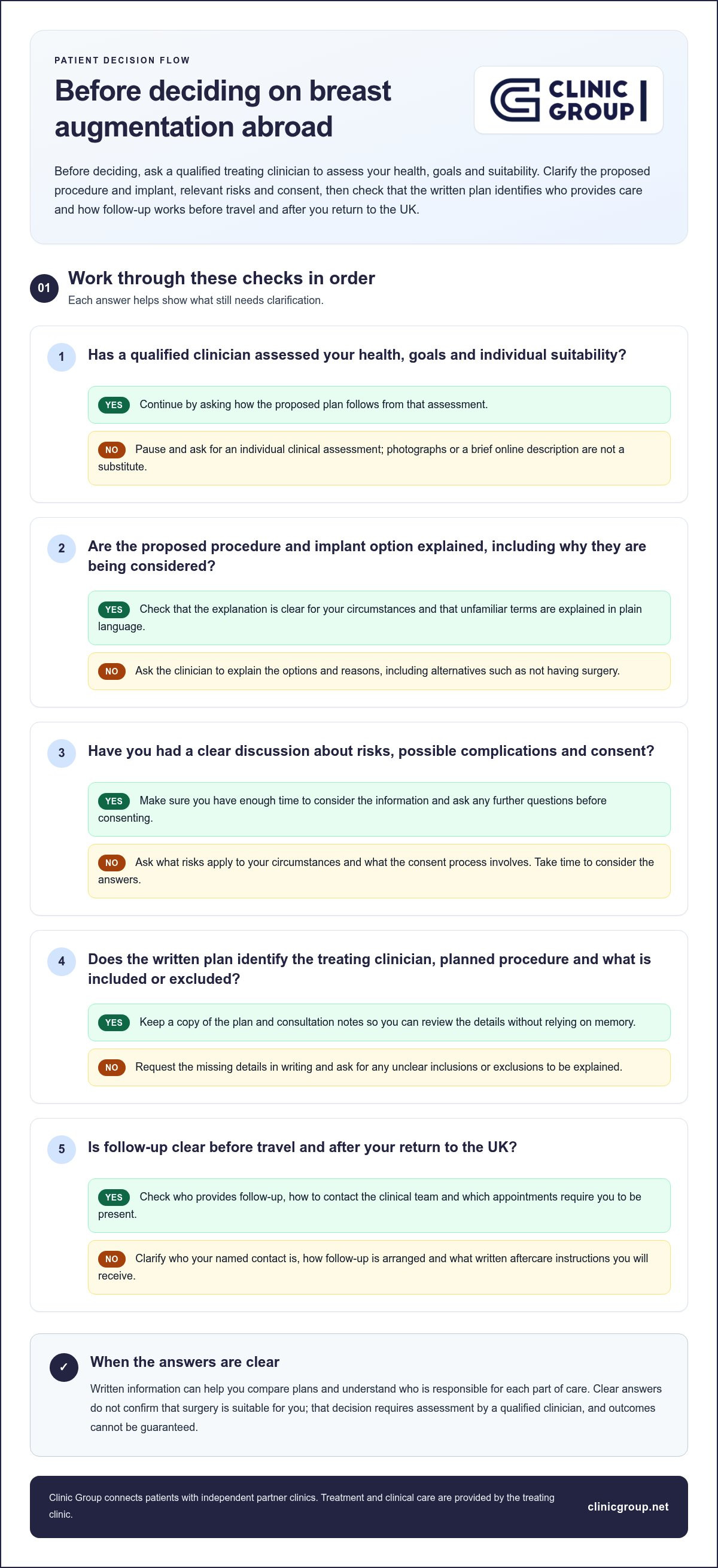
Plan travel around the treating clinic’s written instructions, not a standard itinerary found online. The clinician responsible for your care must advise you individually on when it is appropriate to travel and how recovery may affect your plans. Before booking, make sure appointments, accommodation, insurance and a named aftercare contact fit the clinical plan.
What belongs in a breast augmentation travel plan?
Start with the proposed appointment schedule and build travel arrangements around it. Avoid fixing return travel until the treating clinician has discussed timing with you; there is no universal number of nights or recovery timetable that applies to every patient. Ask how changes to appointments are handled and who to contact if your travel plans need to shift.
- Travel dates: Keep plans consistent with the clinic’s written schedule, and clarify any flexibility needed around appointments.
- Accommodation: Arrange a place to stay that suits the plan provided by the treating team. Ask the clinic what practical arrangements it recommends for your individual circumstances.
- Appointments: Record each planned visit, its purpose and where it will take place. Make sure you know who will tell you about any changes.
- Coordination: Clarify who handles travel logistics, translation or appointment changes where applicable, and keep their contact details accessible.
- Aftercare contact: Get the name and contact route for the person or team responsible for clinical questions while you are away and after you return home.
Medical travel insurance is a specialised policy that may cover complications arising from elective procedures abroad, subject to its terms. Do not assume a standard travel policy includes planned surgery or related complications. Before booking, read the policy wording and ask the insurer to confirm in writing whether the planned treatment, any complications and the relevant follow-up are covered. A GHIC does not cover planned medical treatment abroad, and insurance coverage should never be assumed.
How can you prepare for aftercare at home?
Before travelling, obtain written aftercare instructions, follow-up arrangements and contact details from the treating clinic. Clarify who to contact if you have a concern after returning to the UK, how that contact works and what steps the clinic advises if you need prompt clinical attention. Public healthcare systems remain subject to their usual eligibility arrangements, but routine aftercare for private treatment abroad should not be assumed.
Keep copies of your clinical records, the treatment plan, aftercare instructions and insurance documents somewhere you can access during and after travel. If another clinician needs to understand your care, having clear records can help you explain what treatment was planned and what follow-up was arranged. Clinic Group’s aftercare checklist for patients can help you organise the practical details.
For breast augmentation abroad, travel and recovery timing must be discussed with the treating clinician; this general information cannot determine what is suitable for you, and outcomes cannot be guaranteed.
Explore Clinic Group’s clinic directory
How can Clinic Group help you explore breast augmentation abroad?
Clinic Group can help you move from initial research to a clearer understanding of independent partner-clinic options. The process can include exploring treatment information, an optional free consultation or case review, clinic matching and written information from the treating clinic. Clinic Group provides directory and coordination support, not surgery or clinical care.
What happens after a patient requests a consultation?
A consultation can help you explain what you are looking for, raise practical concerns and identify what information you still need before deciding. It is a chance to discuss possible next steps, not a clinical assessment or a commitment to treatment. Suitability and treatment recommendations must be assessed by the clinician responsible for your care.
Clinic Group can support the process of matching your requirements with independent partner clinics and help organise communication. You can explore the breast augmentation treatment listing as part of your research, then review the information and questions that matter to you. If you want another clinical view, ask about an optional second opinion from a qualified clinician; the opinion itself must come from that clinician, not Clinic Group.
Coordination may also help with practical arrangements, such as travel planning and appointment logistics. The specific clinical plan, assessment and treatment remain the responsibility of the partner clinic. No matching process can guarantee suitability or a particular result.
What should be in place before booking?
Before making travel or booking arrangements, take time to review the documents from the treating clinic and clarify anything that is missing or unclear. Make sure the clinical responsibilities and practical arrangements are set out in writing, rather than relying on a brief conversation or an informal summary.
- Written treatment plan: It should identify the proposed procedure and the treating clinician responsible for care.
- Itemised quote: Request a written breakdown and clear information about what is included.
- Aftercare: Confirm the follow-up plan, written aftercare terms and named contact for clinical questions.
- Insurance: Check directly with the insurer whether the policy covers the planned elective treatment and relevant complications. Do not assume coverage.
- Travel coordination: Ensure dates and appointments align with the treating clinician’s individual guidance on travel and recovery.
Clinic Group connects patients with independent partner clinics, which provide treatment and clinical care. Outcomes cannot be guaranteed, and general information is not a substitute for individual medical advice or assessment. Taking time to compare the written plan, quote and aftercare arrangements can help you decide whether to take a next step, without pressure to proceed.
Take your next step with clarity
Choosing whether to pursue breast augmentation abroad is a personal decision, and there’s no need to make it before you feel ready. Give yourself time to consider whether the proposed plan fits your goals and circumstances. A useful next step is to write down what remains uncertain, then seek clear answers before making travel or booking arrangements.
Clinic Group’s free consultation and coordination support can help you explore independent verified partner-clinic options and organise your questions. Any clinical assessment, treatment recommendation and surgery remain the responsibility of the treating clinic. Use the conversation to understand the process, not as a reason to rush; you can pause, ask for further information or decide not to proceed.
Whatever you decide, an informed next step is a worthwhile one. Move forward at a pace that feels considered and right for you.
Frequently Asked Questions
Is breast augmentation abroad safe?
No destination or procedure can be described as risk-free, including breast augmentation abroad. Before deciding, ask how the clinic would respond if a complication or unexpected concern arose, and what route is available for urgent clinical questions. A useful answer should explain who handles the concern and how you can reach them. This general information cannot assess your personal risk; discuss that with a qualified clinician.
Can I have a consultation before travelling for breast augmentation?
Yes, an initial consultation or case review may be possible before travel, but it doesn’t replace the clinical assessment needed to decide on treatment. Use an early discussion to find out what information the clinician needs and whether an in-person assessment is required. Prepare a concise record of your questions and relevant medical history, and ask how any remote discussion will inform the next stage of assessment.
How long should I stay abroad after breast augmentation?
There’s no single stay duration that is suitable for everyone. The treating clinician should advise on travel timing in light of your individual plan, so avoid using another patient’s itinerary as a guide. Before committing to travel, ask the clinic to explain how the schedule might change if an appointment needs to be moved or further review is recommended. Keep your return plans flexible until you have that guidance.
What should a written breast augmentation treatment plan include?
Alongside the procedure and care arrangements, check that the documents are consistent: the clinician’s name and the proposed treatment should match across the plan, quote and consent information. Ask how changes to the plan would be recorded and whether you’ll receive copies of relevant clinical records. Clinic Group connects patients with independent clinics; it doesn’t provide clinical care or guarantee outcomes. Keep the final documents together for future reference.
Does travel insurance cover complications after elective surgery abroad?
It depends on the policy, so don’t treat ordinary travel insurance as automatic cover for elective surgery or complications. Give the insurer accurate details of the planned procedure and destination, then ask for a written response explaining applicable exclusions and conditions. Keep the policy documents and the insurer’s reply accessible while travelling. If the insurer’s answer is unclear, seek clarification before making a booking rather than relying on a verbal assurance.
Will the NHS automatically treat complications after breast augmentation abroad?
No, you shouldn’t assume the NHS will automatically provide or pay for care related to elective treatment abroad. NHS access and clinical decisions depend on individual circumstances, and this answer can’t determine your entitlement. If you need to discuss a health concern with a UK clinician, be ready to explain what procedure you had and when, and share relevant records from the treating clinic. Seek appropriate medical help if you’re concerned about your health.
Can I choose an implant before my consultation?
You can read about implant options beforehand, but choosing one is a clinical decision made after discussion with the treating clinician. Rather than arriving with a fixed choice, note what matters to you, such as the change you hope to achieve, and ask how the clinician will consider your preferences alongside your individual assessment. Images or descriptions online can help you frame questions, but they can’t establish which option is suitable for you.

Article by
Clinic Group Editorial Team
The Clinic Group editorial team publishes clear, practical guides for UK and EU patients researching medical travel — from dental implants and hair transplants to plastic surgery and eye care — with a focus on verified clinics, transparent “from” pricing, and safe planning.
Disclaimer
This article is for general information only and is not medical advice, diagnosis, or a substitute for an in-person consultation with a qualified clinician. Treatment suitability, risks, timelines, and costs vary by individual. Clinic Group connects patients with independent clinics; those clinics are responsible for clinical care. Always verify credentials, obtain a written treatment plan and itemised quote, and confirm aftercare arrangements and travel insurance cover (elective procedures are often excluded) before booking. Outcomes cannot be guaranteed.