TL;DR:
- Cheap dental treatments carry significant risks of infection, implant failure, and irreversible damage, often resulting in higher long-term costs. Verifying sterilisation protocols, material quality, and provider credentials is essential to ensure safety and success. Choosing verified clinics that meet European standards minimizes these dangers and offers more predictable, cost-effective outcomes.
The risks of cheap dental treatments include a significantly elevated chance of infection, implant failure, irreversible tooth damage, and long-term costs that far exceed the original savings. Clinically, the term used by dental professionals is “substandard dental care,” which covers everything from inadequate sterilisation to the use of inferior prosthetic materials. For European patients considering dental work abroad, understanding these risks is not optional. Research shows that patients frequently pay more correcting failed cheap dental work than a quality provider would have charged in the first place. Clinicgroup connects patients with verified clinics across Albania and Dubai that meet European standards, precisely because the consequences of getting this wrong are serious.
1. Infection risks from inadequate sterilisation
Inadequate sterilisation is one of the most serious dangers associated with budget dental clinics, and it is largely invisible to patients during treatment. Reputable dental practices follow strict protocols using autoclaves and single-use disposables. Budget providers sometimes substitute these with cold chemical disinfectants or reuse instruments that should be discarded after a single procedure.
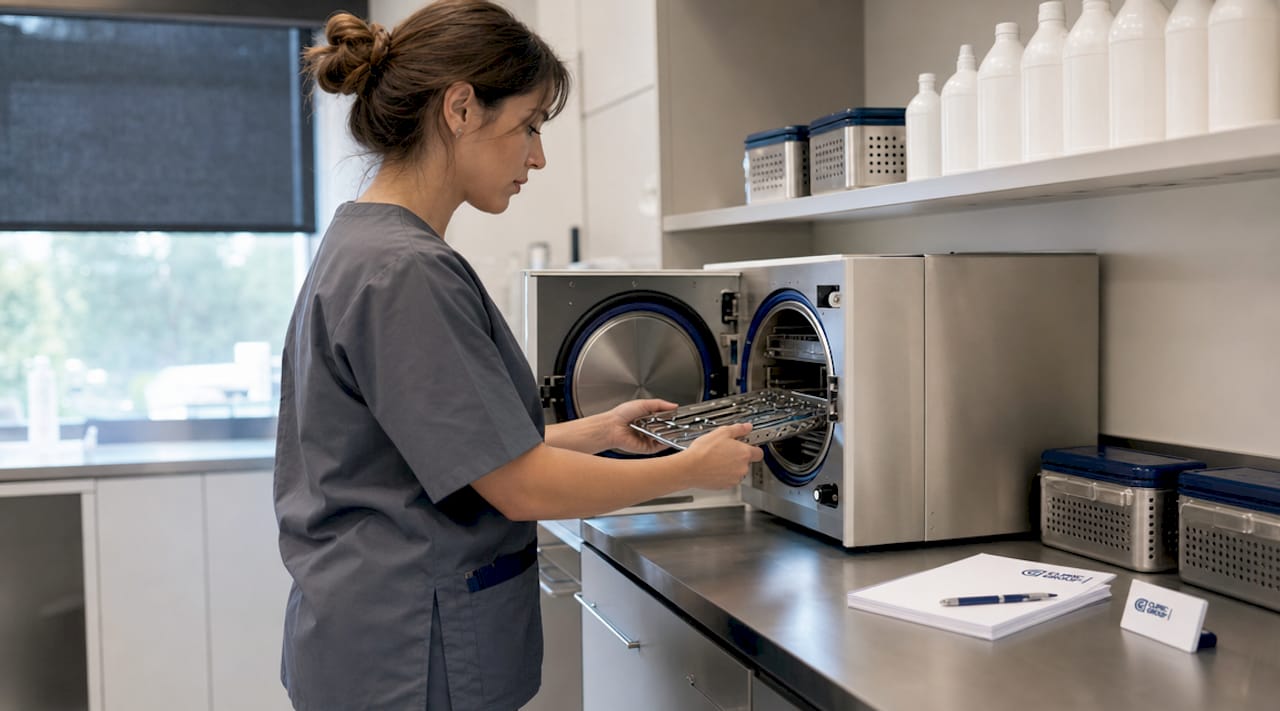
The consequences are not minor. Emergency public health notices have been issued in response to unsafe reuse of single-use supplies in low-cost dental settings. This means patients may be exposed to blood-borne pathogens including Hepatitis B, Hepatitis C, and HIV without any visible sign of a problem during the appointment itself.
What makes this risk particularly difficult to manage is that patients have no reliable way to inspect sterilisation equipment or verify compliance during a routine visit. The importance of safe dental practices is well-documented in oral health literature, yet budget clinics operating outside robust regulatory frameworks are rarely held accountable until harm has already occurred.
- Always ask to see the clinic’s sterilisation certification and autoclave records before treatment begins
- Verify that the clinic holds accreditation from a recognised national or European dental body
- Confirm that all instruments used in your procedure are single-use or have been autoclaved in your presence
Pro Tip: Before booking any dental treatment abroad, request written confirmation of the clinic’s sterilisation protocols and check whether it holds accreditation from a body such as the European Association for Osseointegration or an equivalent national authority.
2. Substandard materials and unqualified providers
The affordable dental care risks associated with materials and provider experience are closely linked. A low headline price almost always reflects a compromise somewhere in the supply chain, and that compromise is most commonly found in the quality of crowns, veneers, implant fixtures, and bonding composites used.
Inferior dental materials fracture earlier, discolour faster, and create micro-gaps at the margins where bacteria accumulate. For implants specifically, skipping bone grafting to reduce costs significantly increases the risk of implant failure and peri-implantitis, a destructive inflammatory condition affecting the tissue and bone around the implant. This is not a theoretical risk. It is a documented outcome when pre-surgical planning is sacrificed for a lower price point.
Provider experience compounds the problem. A dentist with limited implantology training may place fixtures at incorrect angles or depths, leading to poor osseointegration. A technician using a lower-grade ceramic may produce a crown that looks acceptable initially but fractures within two years. The consequences include:
- Repeated corrective procedures, each carrying its own surgical risks
- Progressive bone loss around failed implants, which reduces the options for future treatment
- Crown and veneer fractures requiring full replacement rather than simple repair
- Nerve damage from poorly executed extractions or implant placements
Dental specialists are clear that comprehensive treatment planning focusing on oral function rather than appearance alone is the critical differentiator between a successful outcome and a costly failure. Cutting corners on this planning stage is where cheap dentistry most reliably causes long-term harm.
3. Overtreatment and destructive procedures
Overtreatment is one of the least discussed yet most damaging consequences of low-cost dentistry. The economic incentives in dental tourism actively promote more invasive, higher-profit procedures, even when conservative alternatives would serve the patient better.
A common example is the substitution of full-coverage crowns for composite bonding or porcelain veneers. Cheap clinics often perform more destructive, higher-profit procedures like full-coverage crowns instead of conservative composite bonding, which is not clinically indicated for many patients. Placing a crown requires grinding down a healthy tooth to a peg, a process that is entirely irreversible. Once that tooth structure is removed, the patient is committed to crowns for life, with each replacement carrying additional risk.
The same pattern appears with root canals performed on teeth with vital pulp that could have been managed conservatively, and with full arch treatments sold as package deals that include procedures the patient does not clinically need. The economic incentives in dental tourism create a systemic pressure toward overtreatment that is largely invisible to patients who lack the clinical knowledge to question a treatment plan.
Understanding how dental pricing works is one practical way to identify when a proposed treatment plan seems disproportionate to the presenting problem. If a clinic recommends crowns across multiple healthy teeth during an initial consultation, seeking a second opinion before proceeding is the correct response.
4. Hidden costs and warranties that do not protect you
The initial price of cheap dental work rarely reflects the true financial cost of the treatment. Warranties offered by cheap clinics are often marketing tools that are impractical to enforce due to travel costs and the clinic’s limited availability for corrective care. Patients rarely benefit from these guarantees, bearing the full cost of remedial treatment themselves.
Consider the practical reality. A patient from the UK travels to a distant clinic for dental implants at a fraction of the domestic price. The implant fails six months later. Returning to the original clinic requires flights, accommodation, and time off work. In most cases, the patient instead seeks corrective treatment locally, paying full UK or European prices for work that addresses the original clinic’s failure.
Poorly fitted crowns and veneers from cheap dentistry can cause bite misalignment, jaw pain, gum recession, and a cascade of long-term oral health complications. Even minor misfits trigger further failures over years. The cumulative cost of these corrections consistently exceeds what a verified clinic would have charged for the original procedure done correctly.
- Corrective implant surgery following failure typically costs more than the original implant placement
- Bite realignment treatment following poorly fitted crowns can require orthodontic intervention
- Gum recession caused by ill-fitting restorations may require periodontal surgery
Pro Tip: When evaluating the cost of dental treatment abroad, calculate the total cost of ownership: the procedure price, travel, accommodation, and a realistic estimate of one corrective procedure. This figure is a far more accurate comparison than the headline treatment price alone.
5. Risks specific to cheap orthodontic treatment
Cheap orthodontic treatment issues deserve separate attention because the market for low-cost clear aligners and budget braces has expanded rapidly across Europe. Direct-to-consumer aligner brands and unregulated orthodontic providers offer prices that appear attractive but carry specific clinical risks.
Orthodontic treatment moves teeth through bone. Without proper radiographic assessment, including CBCT scans where indicated, a provider cannot reliably identify root resorption, bone density issues, or the presence of impacted teeth that would contraindicate certain movements. Budget providers routinely skip this diagnostic stage. The result can be permanent root shortening, tooth loss, or relapse within months of completing treatment.
The absence of in-person monitoring is a further concern. Verified orthodontic treatment involves regular clinical reviews to assess how teeth and supporting bone are responding. Remote or app-based monitoring, common in discount orthodontic models, cannot replicate this assessment. Delaying or compromising dental care raises risks of serious systemic health issues, and orthodontic complications left undetected can progress to conditions requiring surgical intervention.
6. Risks versus benefits: cheap clinics compared to verified providers
Not all affordable dental care carries the same risk profile. The distinction lies in whether a clinic is genuinely verified and accredited or simply inexpensive. The table below summarises the key differences.
| Factor | Budget or unverified clinic | Verified accredited clinic |
|---|---|---|
| Sterilisation standards | Variable; often unverified | Documented protocols; autoclave records available |
| Material quality | Lower-grade composites and fixtures | CE-marked or internationally certified materials |
| Provider credentials | Qualifications may be unverifiable | Board-certified specialists with traceable training |
| Warranty enforceability | Largely impractical to claim | Supported by clinic availability and aftercare coordination |
| Aftercare continuity | Typically absent post-departure | Structured follow-up with remote and in-person options |
| Transparent pricing | Hidden fees common | Full treatment cost confirmed before booking |
| Patient support | Limited to the appointment | Travel, logistics, and aftercare coordination included |
Clinicgroup works exclusively with clinics that meet the verified accredited standard. Patients receive a full treatment plan with transparent pricing before committing, along with support for travel logistics, partner hotel arrangements, and structured aftercare. The role of technology in dental clinics is also a reliable indicator of quality: clinics investing in CBCT imaging, digital impressions, and CAD/CAM milling are demonstrably more likely to deliver predictable outcomes.
Key takeaways
The risks of cheap dental treatments are not theoretical. They are documented, cumulative, and frequently more expensive to resolve than the original treatment would have cost at a verified provider.
| Point | Details |
|---|---|
| Infection risk is real | Budget clinics may bypass sterilisation protocols, exposing patients to Hepatitis B, C, and HIV. |
| Materials and expertise matter | Inferior fixtures and inexperienced providers lead to implant failure, fractures, and bone loss. |
| Overtreatment causes irreversible harm | Unnecessary crowns and root canals permanently remove healthy tooth structure. |
| Warranties rarely protect patients | Travel costs and clinic unavailability make warranty claims impractical to pursue. |
| Total cost exceeds initial savings | Corrective procedures following cheap dental failures consistently cost more than quality care upfront. |
What we have learned from patients choosing cheap dental care abroad
From Clinicgroup’s position working with patients across the UK, Italy, and Europe, the pattern is consistent. Patients who arrive seeking corrective treatment after a cheap procedure abroad are not unusual cases. They represent a predictable outcome of a system where price is the primary filter.
The most common scenario we encounter is a patient who received dental implants at a significantly reduced price, experienced failure within the first year, and is now facing bone grafting, implant removal, and re-placement at full cost. The total expenditure at that point is substantially higher than a verified clinic would have charged for a complete, well-planned procedure from the outset.
What concerns me most is the overtreatment problem, because it is the least visible risk. A patient who receives unnecessary crowns on healthy teeth has no way of knowing, at the time, that the procedure was not clinically indicated. They leave satisfied with the cosmetic result, unaware that they have committed to a lifetime of crown replacements on teeth that could have been preserved. Researching clinic credentials before booking is the single most protective action a patient can take, and it costs nothing.
The good news is that genuinely affordable, high-quality dental care abroad does exist. Albania and Dubai, where Clinicgroup’s partner clinics operate, offer treatments at a fraction of UK prices without compromising on materials, technology, or clinical standards. The difference is verification. Choosing a clinic through a trusted network rather than a price comparison alone changes the risk profile entirely.
— Clinicgroup
How Clinicgroup supports safer dental treatment abroad
Clinicgroup connects patients with verified dental treatments delivered by board-certified specialists in Albania and Dubai, where European standards of care are maintained at significantly lower prices than the UK or Western Europe. Every clinic in the network is assessed for sterilisation protocols, material standards, and provider credentials before being listed on the platform.
Patients receive a full treatment plan with transparent pricing before any commitment is made. Clinicgroup also coordinates travel logistics, partner hotel arrangements, and structured aftercare, so the entire treatment journey is supported rather than left to chance. If you are considering dental work abroad and want to understand your options safely, speak with the Clinicgroup team today.
FAQ
What are the main risks of cheap dental treatments?
The primary risks include inadequate sterilisation leading to blood-borne infections, use of substandard materials causing early failures, overtreatment with irreversible procedures, and hidden costs from corrective work. Patients frequently pay more fixing failed cheap dental work than quality care would have cost initially.
Are dental warranties from budget clinics worth anything?
Warranties from budget clinics are largely impractical to enforce. Return visits for warranty work rarely happen due to travel costs and logistics, meaning patients typically bear the full cost of corrective treatment themselves.
How can I tell if a dental clinic abroad is safe?
Request documentation of sterilisation protocols and autoclave records, verify the provider’s board certification, and check for accreditation from a recognised European or national dental body. Booking through a verified network such as Clinicgroup provides an additional layer of vetting before you travel.
Is affordable dental care abroad always risky?
No. The risk lies in choosing unverified, low-cost providers rather than in seeking treatment abroad itself. Verified clinics in countries such as Albania offer treatments at significantly reduced prices while maintaining European material and clinical standards.
What should I do if cheap dental work has already failed?
Seek an assessment from a qualified dentist in your home country as soon as possible to understand the extent of the damage. Contact Clinicgroup for a second opinion and a treatment plan from a verified specialist, particularly if the original work involved implants, crowns, or orthodontic treatment.