How can you tell whether a clinic listing is a sound starting point for surgery abroad? Verified plastic surgery clinics abroad can help you begin your research, but verification alone can’t show whether a particular surgeon, treatment plan or recovery arrangement is right for you. An informed decision means considering the whole patient pathway, from assessment and consent to follow-up after you return to the UK.
It’s reasonable to want clear information before travelling for surgery, especially when comparing clinicians, proposed procedures and after-care. A directory listing can support your research, but it doesn’t replace an in-person clinical assessment or guarantee a particular outcome.
This guide sets out a practical way to compare Clinic Group partner-clinic information, understand what verification can and can’t tell you, and prepare questions about your written plan, follow-up and insurance. Clinic Group connects patients with partner clinics, while those independent clinics are responsible for clinical care. The guidance is general information, not medical advice, and can help you understand the patient journey before deciding whether to proceed.
Key Takeaways
- A verified listing is a useful starting point for research, not proof that a clinic or proposed treatment is right for you.
- Compare clinician details, written treatment plans and follow-up arrangements using the same checklist for each partner clinic.
- When reviewing verified plastic surgery clinics abroad, check what any accreditation applies to and avoid treating it as a guarantee of results.
- Prepare questions about assessment, after-care and insurance before deciding whether to travel for treatment.
- Clinic Group can help organise clinic matching, case review and next steps, while independent partner clinics remain responsible for clinical care.
What does a verified plastic surgery clinic abroad mean?
A verified plastic surgery clinic abroad is a partner clinic included in a directory after the platform has reviewed it for listing. The listing helps patients organise their research, but it doesn’t establish whether a clinic or procedure is suitable for an individual, replace a medical assessment or guarantee an outcome.
Clinic Group is a directory and coordinator: it connects patients with independent partner clinics and can help organise matching, case review and next steps. The partner clinic is responsible for clinical assessment, treatment decisions and care. This distinction matters because finding a clinic through a directory is only one part of deciding whether to travel for surgery.
What can a verified clinic listing tell you?
A curated listing brings clinic information together so you can begin comparing options more methodically. It can help you identify the partner clinic and the types of procedures associated with its listing. It isn’t a clinical recommendation. A clinician must assess your individual circumstances before deciding whether a procedure is appropriate.
Before making a decision, seek an individual assessment and a written treatment plan from the clinic. The plan should explain the proposed procedure and the care arrangements relevant to your case. If a listing or clinic refers to accreditation or quality standards, check which facility the claim applies to and what it covers. A directory check is not the same as verifying a clinical claim, and neither can promise a particular result.
People travel for treatment for different reasons, and cosmetic surgery is one area discussed in broad overviews of medical tourism. Whatever prompts your research, general information can help you prepare questions, but it isn’t medical advice and can’t replace a consultation with a qualified clinician.
Which plastic surgery services are relevant to this directory?
Clinic Group’s plastic surgery listings cover facial and body procedures, including rhinoplasty (nose surgery), facelift, liposuction (removal of fat from specific areas) and breast augmentation. The right procedure, if any, depends on an individual clinical assessment, so examples in a directory shouldn’t be treated as recommendations.
To see the procedures covered, browse the plastic surgery treatment listings. Use them to narrow your research, then focus your questions on the clinician’s assessment, the written plan and how care will be arranged before and after treatment. This gives you a clearer basis for comparing options without treating verification as a guarantee.
Which evidence should you review before comparing partner clinics?
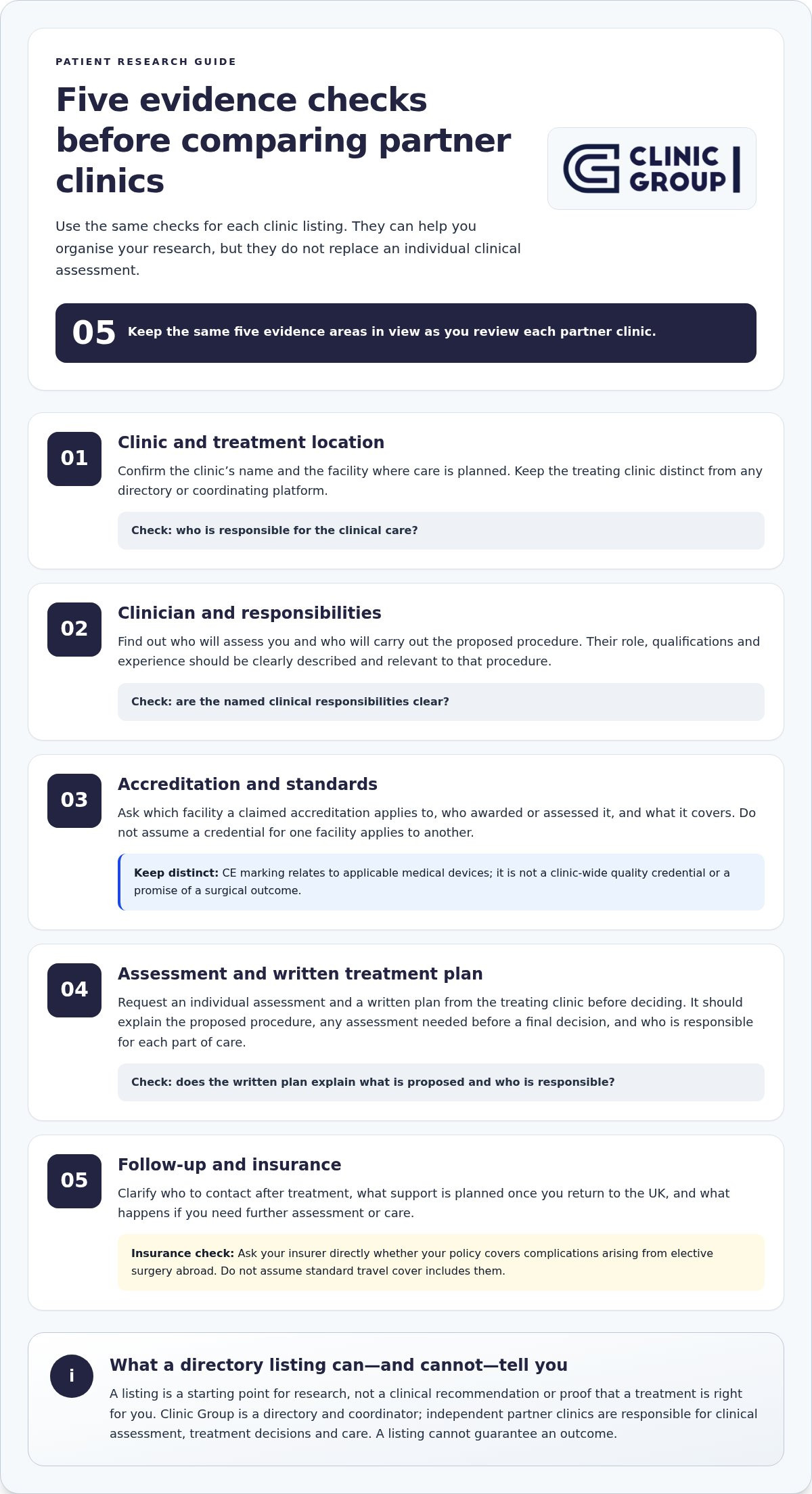
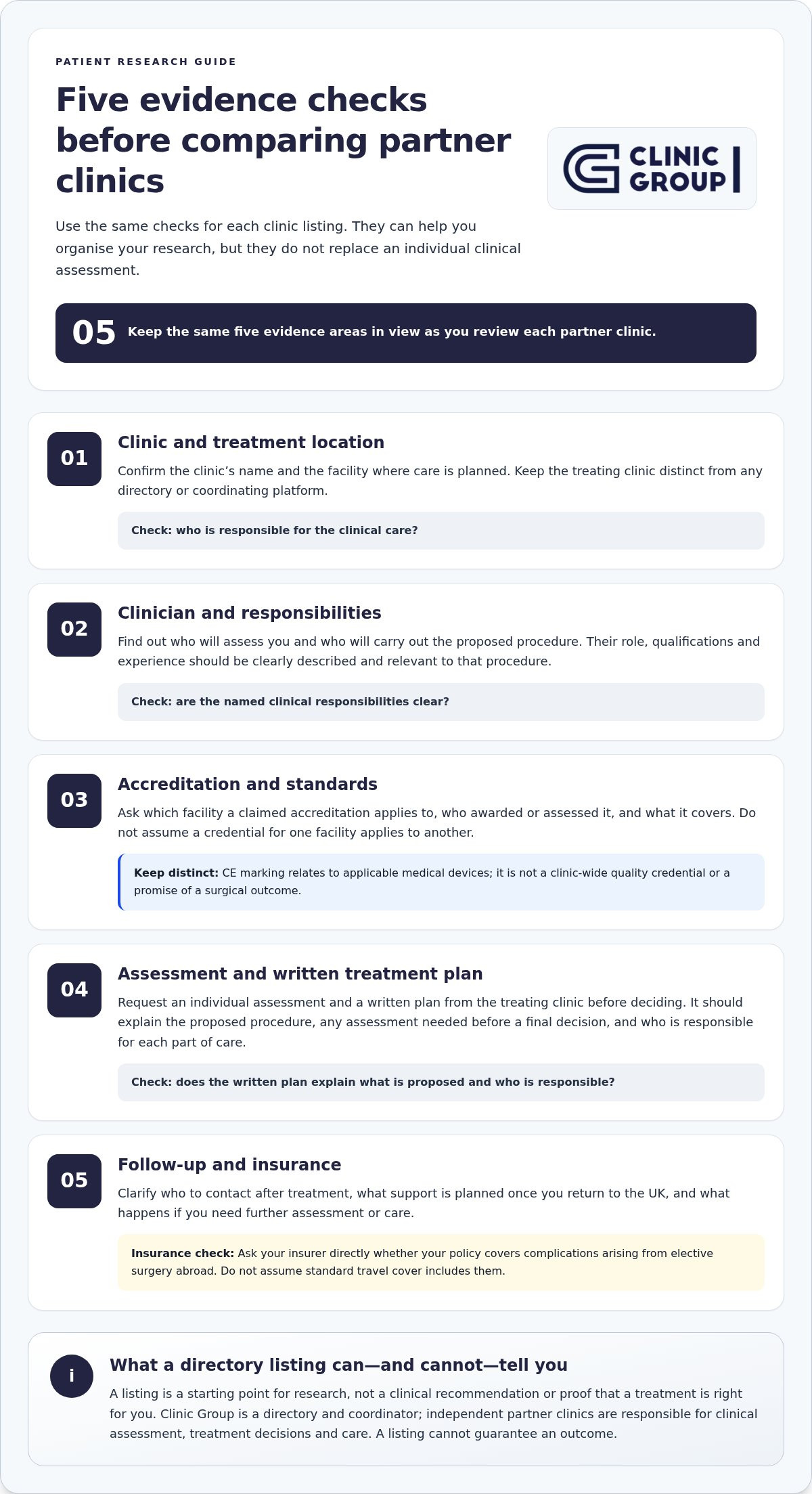
Before comparing partner clinics, collect the same core information for each: the clinic’s identity, who will assess and perform the procedure, where care will take place, what is proposed, and how follow-up will be arranged. This makes gaps easier to spot and helps keep claims in context. A clinic listing is one evidence source, not a clinical assessment.
How should you assess clinician and facility information?
Start by establishing which clinic is responsible for your care and the name and role of the clinician involved in assessing and carrying out the proposed procedure. Their qualifications and experience should be clearly described and relevant to that procedure. For example, if you are also researching specialised urological care abroad, you can learn more about TurboUrolog – Dr Anna Bonder-Nowicka to see how specific practitioner credentials and treatment areas are presented. Check that the facility where treatment is planned is identified separately from any coordinating platform or directory.
Claims about accreditation or standards need to be specific. Find out which facility they apply to, who awarded or assessed them, and what the claim covers. An accreditation held by one facility shouldn’t be assumed to apply to another. CE marking is different: it relates to applicable medical devices, not a clinic’s overall quality or the likely outcome of surgery. The UK government’s official government advice is another useful reference as you prepare to assess treatment abroad.
What should a written plan and after-care outline cover?
Ask the treating clinic for a written plan before making a booking decision. It should set out the procedure being proposed, the assessment needed before a final decision, and who is responsible for each part of your care. An itemised written quote can help you understand what is included in the proposed arrangement.
Clarify how follow-up will work, including who to contact with questions after treatment and what support is planned once you’ve returned to the UK. Discuss what happens if you need further assessment or care. Check directly with your insurer whether your policy covers complications arising from elective surgery abroad; don’t assume standard travel cover includes them.
- Clinic: Confirm its name and the facility where care is planned.
- Clinician: Record the named clinical responsibilities and relevant qualifications.
- Standards: Note which facility an accreditation claim applies to, and distinguish device marking from clinic credentials.
- Plan and follow-up: Keep the written proposal, itemised quote and after-care arrangements together.
- Insurance: Check cover for complications before booking.
Using this checklist can make comparisons between verified plastic surgery clinics abroad more consistent, without treating a listing or credential as proof of personal suitability. To organise your next research steps, you can also explore Clinic Group’s clinic directory. This information is general and not medical advice; independent partner clinics are responsible for clinical care.
How can you compare clinics without mistaking verification for a guarantee?
Compare the evidence each partner clinic provides, not the confidence of its promotional language. A listing can help you identify options and organise information, but “verified” doesn’t mean treatment is risk-free, personally suitable or certain to achieve a particular result. Independent partner clinics provide clinical care and make clinical decisions; outcomes can’t be guaranteed.
What does a fair clinic comparison include?
Use the same headings for each clinic and record what is documented, what remains unclear and who is responsible. This makes missing information visible without creating a ranking based on claims that can’t be checked.
| What to compare | Record consistently | Note what remains unanswered |
|---|---|---|
| Clinician details | Named clinician, role and relevant qualifications for the proposed procedure | Who will assess you and who will perform the procedure? |
| Written plan | Proposed procedure, assessment steps and information provided about your case | What needs to be assessed before the plan is final? |
| After-care | Follow-up arrangements, contact route and responsibilities after treatment | What support is planned after you return to the UK? |
| Coordination | Practical support offered by the coordinator, separately from clinical care | Which decisions and care remain the clinic’s responsibility? |
| Evidence gaps | Documents or explanations received, with dates where useful | What information is still needed before you can decide? |
Coordination can help organise communication and practical next steps, but it isn’t clinical assessment or treatment. Keep a written record of responses and unresolved questions. If key details about the clinician, plan or follow-up aren’t clear, pause your comparison until you understand what is being proposed.
How should you interpret accreditation and safety claims?
Read each accreditation claim in context. JCI, or Joint Commission International, is an accreditation body; a reference to JCI should identify the facility it applies to and the scope of the claim. Don’t assume a credential covers every site, clinician or service connected with a clinic.
The EU regulatory framework refers to legal standards set by the European Union. It shouldn’t be treated as a blanket assurance for every clinic or destination abroad; applicability depends on the relevant location and circumstances. A badge or standards statement can be one piece of evidence, but it doesn’t establish your individual suitability or promise an outcome. For further context, read the official government guidance on medical travel.
This consistent method can help you assess verified plastic surgery clinics abroad without confusing listing status with a clinical recommendation. To continue your research, you can browse Clinic Group’s partner clinic directory.
How do you prepare for plastic surgery abroad, step by step?
A careful preparation process helps you move from browsing to an informed decision without treating clinic matching as medical approval. Clinic Group can coordinate case review and partner-clinic matching, but only the independent clinic can assess your health, discuss whether a procedure is appropriate and provide clinical care.
What should happen before you decide to travel?
Work through these steps before making a booking decision:
- Research the procedure and your priorities. Note what you hope to understand or address, then prepare questions about the proposed treatment, assessment and recovery.
- Arrange an initial consultation. Discuss your goals and relevant health information, and ask how the clinic will assess your individual suitability. An initial discussion is not a substitute for a clinical assessment.
- Consider case review and clinic matching. These steps can help organise your information and identify a relevant partner clinic for further discussion. They don’t determine whether surgery is suitable for you.
- Request written details from the clinic. Before deciding, obtain a written plan describing the proposed procedure and assessment, plus an itemised written quote. Make sure you understand who is responsible for each part of your care.
- Consider an optional second opinion. Another clinical view may help you understand the recommendation and weigh your options. It should be based on your circumstances, not a promise of a particular result.
- Confirm after-care and insurance in writing. Clarify follow-up arrangements, who to contact if concerns arise, and how care will be managed after you return to the UK. Ask your insurer whether your policy covers complications from elective surgery abroad.
How can you plan travel and follow-up responsibly?
Sort out practical arrangements only once you have enough clinical information to make a considered decision. Support with hotels, airport transfers or a patient coordinator may depend on the partner clinic. Confirm what is arranged, who coordinates appointments and travel details, and which organisation is responsible for clinical decisions and care.
Keep copies of the plan, quote, consultation details, insurance response and after-care arrangements together. If responsibilities or follow-up remain unclear, resolve those questions before booking travel. A clinic coordinator can help organise logistics, but coordination doesn’t replace assessment by the treating clinic.
Clinic Group’s role is to connect patients with independent partner clinics and help organise next steps. This guidance is general information, not medical advice; the partner clinic is responsible for clinical care. Use the plastic surgery directory to begin exploring verified plastic surgery clinics abroad.
How does Clinic Group help you explore verified plastic surgery clinics abroad?
Clinic Group is a directory and coordinator that connects patients with independent partner clinics. It can help organise clinic matching, case review and practical next steps, while the partner clinic remains responsible for clinical assessment, treatment and follow-up. A directory pathway supports your research; it doesn’t guarantee that surgery is suitable or promise a particular outcome.
What support can patients expect from the directory pathway?
The process can begin with searching the directory and discussing your needs in an initial consultation. Clinic Group can then help coordinate a match with a relevant partner clinic and arrange a case review. The clinic must assess your individual circumstances and explain its clinical recommendations directly.
If you wish to proceed with further discussions, request the clinic’s written treatment plan and an itemised quote. An optional second opinion may help you consider the recommendation, but it does not replace an assessment by the treating clinic. Travel assistance may include accommodation, airport transfers or a patient coordinator, depending on the clinic. Confirm what applies to your arrangements and keep clinical responsibilities distinct from travel coordination.
You can browse the Clinic Group clinic directory to explore partner listings and organise your research. Use the information to prepare questions, not as a substitute for clinical advice.
What should you do before making a final decision?
Before booking, make sure you have clear written information from the independent clinic and know who is responsible for each part of your care. Check that the plan reflects your individual assessment, rather than relying on general procedure information or a directory description.
- Obtain the clinic’s written plan and itemised quote, and make sure you understand what each document covers.
- Confirm after-care arrangements, including how follow-up will work once you return to the UK.
- Check directly with your insurer whether your policy covers complications arising from elective surgery abroad.
- Clarify who coordinates appointments and travel arrangements, and who provides clinical care.
- Take time to resolve unanswered questions before deciding whether to travel.
Clinic Group coordinates the pathway; independent partner clinics provide clinical care, and outcomes can’t be guaranteed. This article offers general information, not medical advice. A decision to proceed should follow an individual assessment and a clear understanding of the written plan, follow-up and insurance arrangements.
Make your next step an informed one
Finding verified plastic surgery clinics abroad is a starting point for careful comparison, not a guarantee of suitability or results. Review clinician details, request a written treatment plan and itemised quote, and clarify follow-up and insurance before making travel plans. Independent partner clinics provide clinical care and assess whether a procedure is appropriate for you.
Clinic Group states that its directory includes 10+ verified clinics and displays a 5/5 rating. These platform indicators don’t replace your own review of the proposed care. Coordination may include patient support and travel logistics, depending on the partner clinic.
Take the time you need to understand the plan, responsibilities and after-care. A considered decision begins with clear information and questions answered to your satisfaction.
With a clear picture of the patient journey, you can decide on your next step with greater confidence.
Frequently Asked Questions
What does verified mean when choosing a plastic surgery clinic abroad?
“Verified” means a clinic has been reviewed for inclusion in a directory of partner clinics. It gives you a starting point for research, not a personal recommendation or clinical assessment. Ask what the verification covers, then review the clinic’s identity, the clinician responsible for your procedure, the proposed plan and follow-up arrangements. These checks help you assess the information available, but don’t establish individual suitability or guarantee an outcome.
Is a verified plastic surgery clinic guaranteed to be safe?
No. A verified listing cannot guarantee risk-free treatment, personal suitability or a particular result. Surgery involves individual clinical considerations, which an independent partner clinic must assess with you. Review who will provide your care, the written treatment plan and after-care arrangements, and clarify any unanswered questions before deciding. Accreditation can be relevant evidence when its scope and facility are clear, but a badge alone isn’t proof of safety for your specific circumstances.
How can I check a plastic surgery clinic abroad before booking?
Check the clinic’s identity and the facility where treatment is planned, then review the named clinician’s role and qualifications relevant to your proposed procedure. Ask for an individual assessment and a written plan, and clarify who provides follow-up after you return to the UK. If the clinic cites accreditation, establish which facility it applies to and what it covers. Keep a record of documents received and questions still unanswered before making a decision.
What should a written plastic surgery treatment plan include?
A written plan should describe the procedure being proposed, the assessment needed before a final decision, and who is responsible for each part of your clinical care. It should also set out the follow-up arrangements and how to raise concerns after treatment, including after you return home. Request an itemised quote separately and make sure you understand what it covers. Review both documents before booking, and ask the clinic to explain anything unclear.
Does Clinic Group perform plastic surgery?
No. Clinic Group is a directory and coordinator that connects patients with independent partner clinics; it doesn’t perform surgery or provide clinical care. It can help organise clinic matching, case review and next steps, while the partner clinic is responsible for assessing you, making treatment decisions and providing care. Discuss your health and proposed procedure with the clinic’s clinical team. Information in this guide is general and isn’t medical advice.
Can I rely on travel insurance for complications after plastic surgery abroad?
Don’t assume your travel insurance covers complications from elective plastic surgery abroad. Contact your insurer before booking and ask specifically whether your policy covers complications arising from the proposed procedure, and what exclusions or conditions apply. Keep the insurer’s response with your treatment and after-care documents. Also confirm in writing how the partner clinic will arrange follow-up and who to contact if you have concerns after returning to the UK.
What should I compare when reviewing plastic surgery clinics abroad?
Compare the clarity of the evidence, not promotional language alone. Record each clinic’s identity, clinician details and relevant qualifications, the written plan, after-care arrangements and any coordination support. Note who provides clinical care and who handles practical arrangements, such as appointments or travel assistance. Also keep a list of missing documents and unanswered questions. Comparing verified plastic surgery clinics abroad this way supports a more consistent review, without treating listing status as a guarantee.
How does Clinic Group help patients find a plastic surgery clinic abroad?
Clinic Group helps patients explore partner-clinic listings and can coordinate an initial consultation, case review, clinic matching and next steps. Patients can request a written plan from the independent clinic and consider an optional second opinion. Travel support may include accommodation, transfers or a patient coordinator, depending on the clinic. The partner clinic provides clinical assessment and care; Clinic Group doesn’t decide whether surgery is suitable, and outcomes can’t be guaranteed.

Article by
Clinic Group Editorial Team
The Clinic Group editorial team publishes clear, practical guides for UK and EU patients researching medical travel — from dental implants and hair transplants to plastic surgery and eye care — with a focus on verified clinics, transparent “from” pricing, and safe planning.
Disclaimer
This article is for general information only and is not medical advice, diagnosis, or a substitute for an in-person consultation with a qualified clinician. Treatment suitability, risks, timelines, and costs vary by individual. Clinic Group connects patients with independent clinics; those clinics are responsible for clinical care. Always verify credentials, obtain a written treatment plan and itemised quote, and confirm aftercare arrangements and travel insurance cover (elective procedures are often excluded) before booking. Outcomes cannot be guaranteed.