What if the most important part of comparing a tummy tuck abroad isn’t the destination, but the care arranged around the operation? It’s understandable to feel unsure when clinics describe procedures differently or when travel plans move ahead before follow-up is clear. A careful comparison starts with the clinical details, not a headline promise.
Compare the surgeon’s credentials, the clinic’s care arrangements and the proposed procedure in a written plan. Ask what assessment is needed, who will provide follow-up, how long you should remain nearby and when it may be suitable to travel home. Obtain written answers and insurance details before making a decision.
This guide explains the questions to ask and documents to request at each stage, from consultation and treatment planning to travel and aftercare. It also sets out how to compare plans on equal terms, recognise when more information is needed and understand the role of a medical-tourism directory. Independent clinics are responsible for clinical care; no online comparison can replace an individual assessment.
Key Takeaways
- Compare a tummy tuck abroad by the proposed care pathway, not just how clinics describe the procedure.
- Learn what to look for in an individual clinical assessment and a clear written treatment plan.
- Review key documents, including an itemised quote and written aftercare terms, before deciding.
- Plan travel and follow-up around advice from the treating clinician rather than relying on generic recovery timelines.
- Understand how Clinic Group’s directory, case review and coordination support can help you organise your questions.
What should UK patients understand before considering a tummy tuck abroad?
A sound comparison starts with the clinical care pathway, not a destination label or a clinic’s promotional description. Abdominoplasty, commonly called a tummy tuck, is surgery to address excess abdominal skin and, where planned, underlying tissue. The exact approach depends on an individual assessment by an independent clinician, so general information can help you prepare questions but cannot establish whether surgery is suitable for you.
For broader context, the Abdominoplasty (Tummy Tuck) Overview describes the procedure and related terms. Use educational sources as a starting point, then compare what each consultation explains about assessment, the proposed procedure, follow-up and the clinic responsible for care. A clear account of the whole pathway is more useful than a destination label alone.
What does a tummy tuck usually involve?
In broad terms, abdominoplasty involves surgery to address excess abdominal skin and may also address underlying tissue, depending on the clinician’s plan. Liposuction is different: it removes localised fat rather than directly addressing excess skin. These descriptions aren’t a way to determine which procedure, if any, is right for you. The treating clinician decides on the proposed approach after assessment and should explain it in terms you understand.
Who decides whether the procedure is appropriate?
An independent clinician makes the clinical assessment, considering your health history, goals and individual circumstances. Discuss relevant medical history directly with the clinical team, and ask how it affects the proposed plan. A directory or coordination service can help organise treatment research and questions, but it doesn’t replace clinical judgement. General information cannot predict your suitability, recovery or results, and an online discussion alone may not provide the assessment needed to make a decision.
Before comparing options, look for a consultation that gives you space to describe your goals and ask questions, rather than relying on images or broad procedure labels. The written plan should make clear what is proposed and which independent clinic is responsible for clinical care. If details are unclear or the plan doesn’t reflect what you discussed, seek clarification before making arrangements. Clinic Group’s guide to choosing a clinic for treatment abroad offers further points to consider when reviewing the care pathway.
Which tummy-tuck clinic options are worth comparing?
Compare the explanations and arrangements each independent clinic provides, rather than relying on headline procedure descriptions, promotional images or destination labels. For a tummy tuck abroad, a consistent comparison makes it easier to spot what’s clear, what differs and what still needs an answer. It doesn’t establish which clinic or treatment is right for you; that requires an individual clinical assessment.
What belongs in a useful clinic comparison?
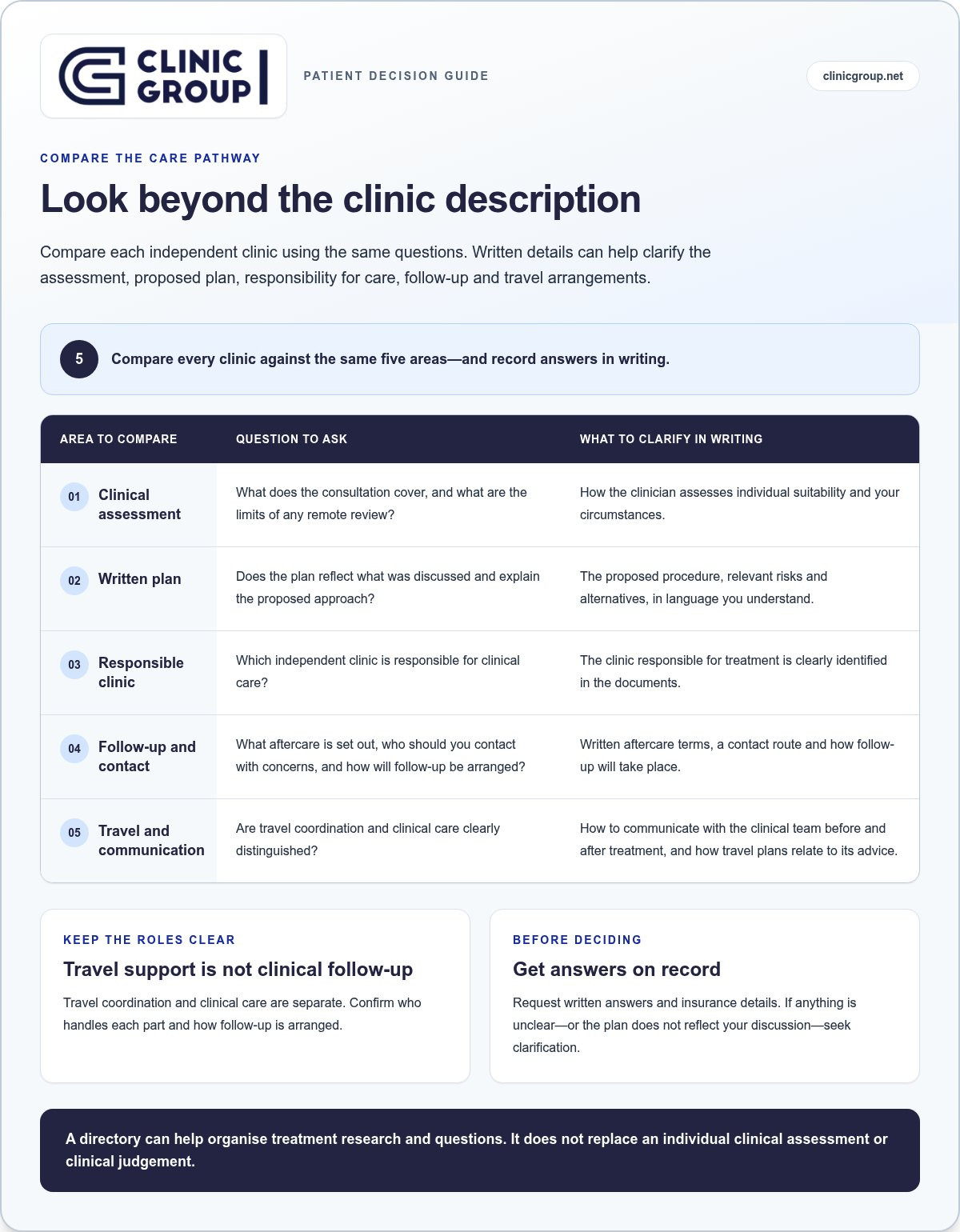
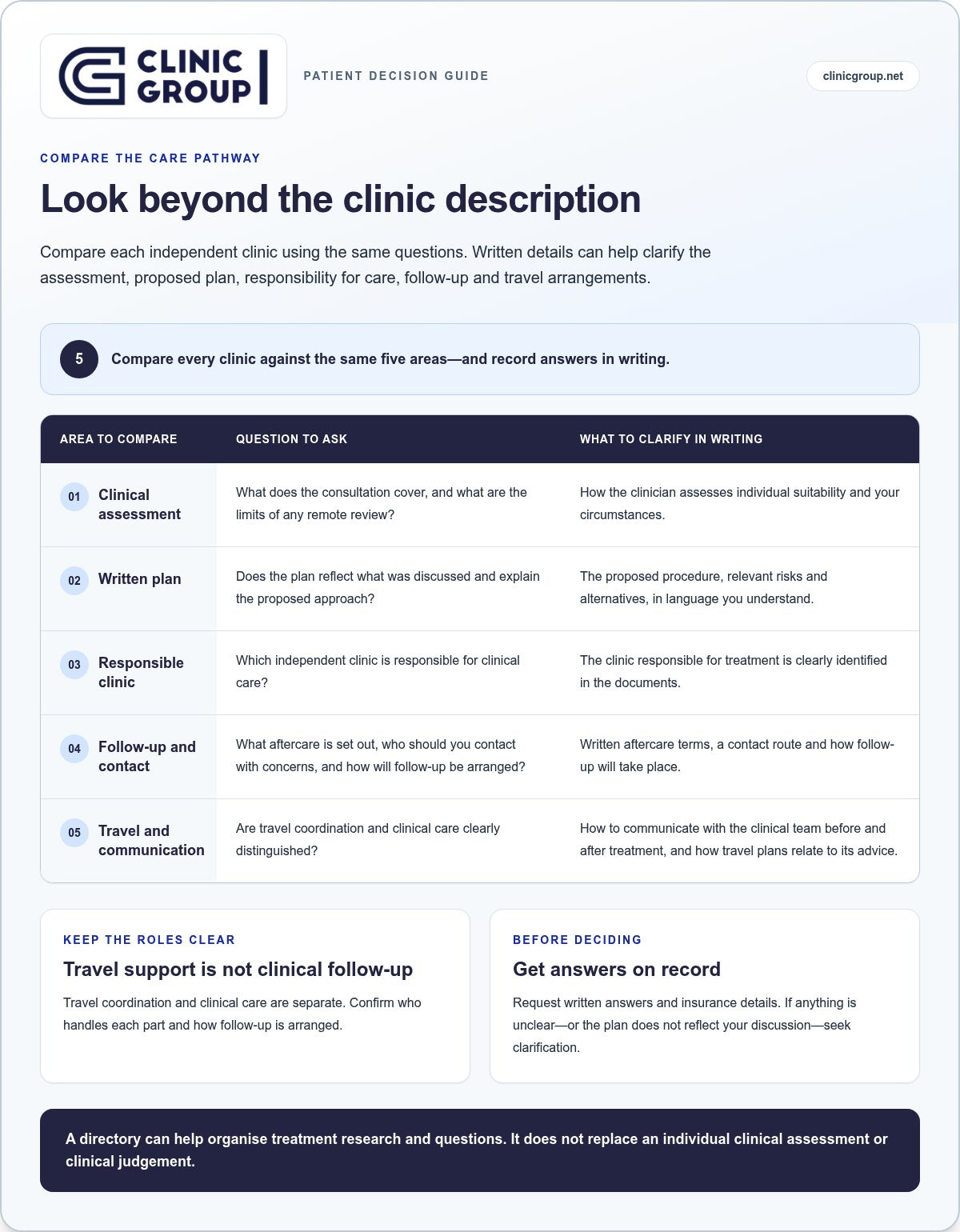
Use the same criteria for each consultation, and record the answers in writing. Focus on how the clinical team explains your circumstances and the complete care pathway.
- Clinical assessment: What does the consultation cover, and how does the clinician explain individual suitability and the limits of any remote review?
- Written plan: Does it describe the proposed procedure, relevant risks and alternatives in language you understand?
- Responsible clinic: Is the independent clinic responsible for treatment clearly identified in the documents?
- Follow-up and contact: What aftercare is set out in writing, who should you contact with concerns, and how will follow-up be arranged?
- Travel and communication: Are travel coordination and clinical care clearly distinguished? Is there a clear way to communicate with the clinical team before and after treatment?
These details matter because an organised travel plan is not the same as a clinical follow-up plan. Ask for written aftercare terms and clarify who handles each part of communication. To understand the procedure’s potential risks, you can also read the Tummy Tuck Risks and Procedure (Mayo Clinic). The treating clinician should discuss risks and alternatives in relation to your own assessment.
How can patients assess a verified clinic listing?
Clinic Group’s directory connects patients with independent partner clinics and supports treatment research and clinic matching. A verified listing can help you organise information, but directory inclusion is not a clinical endorsement and cannot guarantee suitability, safety or results. Review each clinic’s documented plan and care arrangements using the same criteria, rather than treating a listing or promotional material as a substitute for clinical discussion.
For a clearer sense of what verification means in a directory context, read the guide to verified clinics. Keep a record of unanswered questions and seek written clarification before deciding. You can also explore Clinic Group’s clinic directory and treatment guides as part of your research.
How can you assess safety, credentials and aftercare before deciding?
Verification and travel coordination can help you organise your research, but neither guarantees safety, suitability or a particular clinical outcome. Before committing to a tummy tuck abroad, establish which independent clinic is responsible for your care, who will assess and treat you, and what support is set out for after the procedure. Keep the decision grounded in documents you can review, not verbal assurances alone.
Which clinic credentials and documents should you review?
Ask for the names and roles of the clinicians involved, and clarify who is responsible for assessment and treatment. If a clinic states that it or a clinician holds a professional registration or accreditation, check the claim against reliable documentation and confirm that it applies to the relevant person or facility. A directory listing or general quality statement is not a substitute for checking the specific clinic’s details.
Request and read the documents before making travel arrangements. They should give you a clear account of the proposal and the care attached to it. Review:
- The written treatment plan: the proposed procedure, the assessment it is based on, and any risks or alternatives discussed.
- An itemised quote: the proposed treatment and what the quoted arrangements include, so you can identify what is covered and what is separate.
- Aftercare terms: planned follow-up, the contact route for concerns and which clinic team remains responsible for clinical care.
- Insurance documents: the policy wording for planned elective treatment and any complications. Don’t assume standard travel insurance applies; obtain clear confirmation from the insurer before booking.
Take time to clarify gaps or wording you don’t understand. The written information should match what the clinical team explained during consultation.
What should a written aftercare plan explain?
A useful plan sets out how follow-up will be arranged, who you should contact after returning home, and how concerns will be directed to the responsible clinical team. Ask the clinic to document these arrangements, including how communication works if you need advice after leaving the destination. Travel coordination may help with logistics, but it doesn’t replace clinical follow-up or transfer responsibility for care from the treating clinic.
Aftercare terms can differ between clinics, so keep the written plan and contact details accessible throughout your journey. Clinic Group’s guide to patient aftercare can help you consider what to clarify before booking. If the responsible clinic, follow-up route or insurance position remains unclear, pause and seek written answers before deciding.
How should you organise travel, recovery planning and follow-up?
Plan travel around clinical advice, not the other way round. For a tummy tuck abroad, the treating clinician should advise whether and when you can travel, based on your assessment and treatment plan. A general article cannot set a safe recovery schedule for an individual. Confirm the arrangements before booking travel or accommodation, and make sure follow-up is planned for both your time away and your return home.
What should happen before travel is arranged?
Use this sequence to keep clinical decisions ahead of logistics:
- 1. Complete the consultation. Discuss your health history and goals with the independent clinical team, and clarify any further assessment needed.
- 2. Review the written plan. Obtain the proposed treatment plan and itemised quote. Make sure the responsible clinic, follow-up arrangements and what is included are clear before making non-refundable bookings.
- 3. Confirm the care schedule. Agree consultation, treatment and follow-up arrangements directly with the independent clinic. Ask the treating clinician for individual advice on recovery and travel timing.
- 4. Check insurance. Read the policy wording and ask the insurer to clarify cover for planned elective treatment and possible complications. Don’t assume standard travel insurance will cover these circumstances.
- 5. Arrange practical support. Only once the clinical schedule is clear, organise transport and accommodation. Hotel arrangements, airport transfers and support from a patient coordinator may depend on the clinic, so obtain the details in writing.
How can patients plan for follow-up after returning home?
Before departure, agree how follow-up will take place and identify the clinical contact responsible for your care. Ask what to do if you have a concern after returning to the UK, and how the treating clinic will communicate with you. Keep the written plan, relevant records and contact details somewhere accessible, rather than relying on messages or documents stored only on a device you may not have to hand.
Build flexibility into travel arrangements where possible. Recovery and fitness to travel vary, so don’t use generic timelines as personal medical advice or assume a fixed return date is appropriate. The treating clinician should advise on your circumstances and any changes to the plan. Clinic Group’s guide to organising medical travel offers further planning prompts for the logistics around treatment.
How does Clinic Group support patients comparing tummy-tuck options abroad?
Clinic Group is a medical-tourism directory and coordination platform that helps UK and EU patients research care abroad. Its general patient journey can include an initial search, consultation, case review, clinic matching, a written plan and, where useful, an optional second opinion. These steps help organise information and questions; they don’t establish whether a particular procedure or clinic is available or suitable for an individual.
What does Clinic Group coordinate, and what remains the clinic’s responsibility?
Clinic Group’s role is to support research and coordination, not to provide surgery or clinical care. Across its directory and coordination work, support may include helping patients organise a case review, compare information or plan travel. Any clinical assessment, decision about treatment, procedure and clinical follow-up are the responsibility of the independent partner clinic. Coordination cannot guarantee suitability, safety, quality or an outcome.
Keep that distinction clear as you research. Information about a directory or coordination process should not be taken as confirmation that a particular treatment is available through a partner clinic. For general information about the specialists and treatment areas represented in the directory, visit the specialist directory.
What should you have in hand before making a decision?
Before committing to any treatment or travel arrangements, review the relevant documents and clinical advice. Use this checklist:
- Written treatment plan: review the proposed approach, the assessment behind it, and the risks and alternatives explained by the treating clinician.
- Itemised quote: understand what it covers and which arrangements may be separate.
- Aftercare arrangements: keep the follow-up plan and the responsible clinic’s contact details in writing.
- Insurance information: ask your insurer about cover for elective treatment and possible complications.
- Travel guidance: follow the treating clinician’s advice on recovery and fitness to travel.
Take time to resolve questions with the independent clinical team and review the written arrangements before deciding. A directory or coordination service can help you organise your research, but the clinic’s assessment and documents should inform clinical decisions.
Make your next step an informed one
Considering a tummy tuck abroad calls for more than comparing procedure descriptions. Review the proposed care pathway, including an individual assessment by an independent clinician, a written plan, aftercare arrangements and travel advice. Before deciding, read the itemised quote and check your insurance terms for elective treatment and possible complications.
Clinic Group provides a medical-tourism directory and coordination support for patients researching treatments abroad. Depending on the treatment journey, support can include a case review, clinic matching, a written plan and an optional second opinion. Independent partner clinics are responsible for clinical care. These general services don’t confirm availability or suitability for a particular procedure, or guarantee an outcome.
Take time to clarify any unanswered questions and review the relevant documents before making arrangements. A considered decision is one informed by clear clinical advice and a follow-up plan you understand.
With careful research and clear information, you can approach your next step at your own pace.
Frequently Asked Questions
Is it safe to have a tummy tuck abroad?
No article or directory can guarantee safety or results from a tummy tuck abroad. These depend on your individual assessment, the independent clinic’s care, clear written information and planned follow-up. Review the clinic and clinician details, ask the treating clinician to explain risks in relation to your circumstances, and obtain treatment and aftercare arrangements in writing. Check your insurer’s terms for elective treatment and possible complications before booking. This is general information, not medical advice.
How do I choose a clinic for a tummy tuck abroad?
Compare the independent clinic responsible for care, the clinicians involved, the individual assessment and how clearly the proposed plan explains risks and alternatives. Review written aftercare and communication arrangements, and verify any stated credentials against reliable documentation. Clinic Group is a directory and coordinator, not a treating clinic. Independent partner clinics are responsible for clinical assessment, treatment and follow-up. Obtain the relevant information in writing before deciding.
What should a tummy-tuck treatment plan include?
Request a written plan that identifies the independent clinic responsible for care, describes the proposed treatment and explains the assessment behind it. It should also set out the risks and alternatives discussed, along with follow-up arrangements. Obtain an itemised quote and written aftercare terms as separate documents if needed. The treating clinician must explain what may be appropriate for you; general information cannot provide an individual assessment or medical advice.
How long should I stay abroad after a tummy tuck?
There’s no standard number of days that applies to every patient. The appropriate length of stay and timing of follow-up depend on your individual plan and the treating clinician’s assessment. Arrange travel only after receiving clinical guidance about your circumstances. Before leaving, clarify how follow-up will work, who to contact with concerns, and how you can reach the clinic after returning home. Don’t rely on a generic article to set your schedule.
Can I travel home soon after a tummy tuck?
A general article can’t determine when you’ll be ready to travel after surgery. The treating clinician should advise on travel timing, review arrangements and any precautions in light of your circumstances. Obtain this guidance in writing before booking your journey, and clarify what follow-up is planned before and after you return home. Check your insurance policy specifically for elective treatment and possible complications; don’t assume these are covered by standard travel insurance.
What aftercare should I arrange before travelling for a tummy tuck?
Before booking, confirm the follow-up schedule, the responsible clinic contact, written aftercare instructions and the process for raising concerns. Arrangements vary between independent clinics, so ask the clinical team to document the details. Keep your treatment plan, relevant records and clinic contact information accessible while travelling and after returning home. Make sure you understand who is responsible for clinical follow-up; travel coordination does not replace the treating clinic’s care arrangements.
Does travel insurance cover complications from elective surgery abroad?
Cover depends on the policy, so don’t assume elective surgery abroad or possible complications are included. Ask your insurer specifically about the planned procedure and any related complications, and obtain clear confirmation before booking. Keep the policy information with your travel documents. Insurance cover is separate from the clinic’s clinical responsibilities and written aftercare arrangements. Read both carefully, and clarify any exclusions or limits with the insurer before making a decision.

Article by
Clinic Group Editorial Team
The Clinic Group editorial team publishes clear, practical guides for UK and EU patients researching medical travel — from dental implants and hair transplants to plastic surgery and eye care — with a focus on verified clinics, transparent “from” pricing, and safe planning.
Disclaimer
This article is for general information only and is not medical advice, diagnosis, or a substitute for an in-person consultation with a qualified clinician. Treatment suitability, risks, timelines, and costs vary by individual. Clinic Group connects patients with independent clinics; those clinics are responsible for clinical care. Always verify credentials, obtain a written treatment plan and itemised quote, and confirm aftercare arrangements and travel insurance cover (elective procedures are often excluded) before booking. Outcomes cannot be guaranteed.