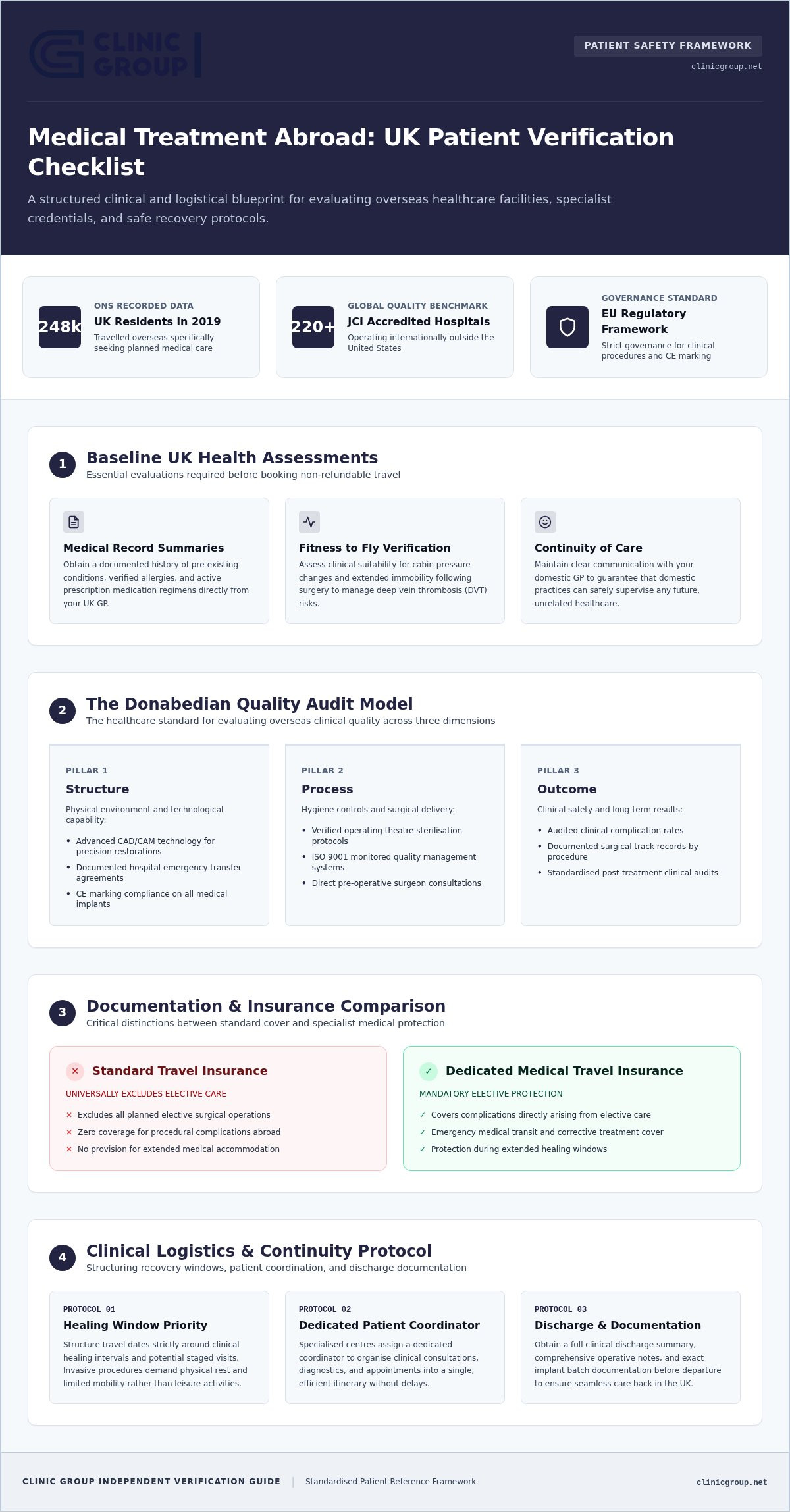
According to the Office for National Statistics, roughly 248,000 UK residents travelled abroad for medical treatment in 2019 alone. Looking beyond domestic waiting lists offers a practical route to prompt elective care, but the process can quickly feel daunting. You want professional clinical standards and reliable outcomes, yet assessing overseas facilities, verifying surgeon credentials, and managing aftercare responsibilities often creates understandable hesitation.
Safe cross-border healthcare relies on methodical preparation rather than guesswork. This UK patient checklist provides a clear framework to help you independently verify overseas clinic registrations, secure dedicated medical travel insurance, and organise your travel logistics with confidence. Here is everything you need to check, clarify, and confirm before booking your journey.
Key Takeaways
- Consult your UK general practitioner before making non-refundable travel bookings to confirm your clinical suitability and baseline medical health.
- When travelling abroad for medical treatment, independently verify facility accreditations and specialist surgical registrations through recognised national and international regulatory boards.
- Secure dedicated medical travel insurance specifically covering elective procedures, as standard travel policies universally exclude planned operations and related complications.
- Structure your travel schedule strictly around necessary clinical healing windows and potential staged visits rather than flight convenience.
- Obtain a full clinical discharge summary, including operative notes and implant documentation, to ensure continuity of care once you return home.
What should you consider before travelling abroad for medical treatment?
Planning clinical care overseas requires evaluating three core pillars: personal medical suitability, logistical transit demands, and verified aftercare arrangements. Before committing to bookings, patients must assess baseline health indicators with their general practitioner and separate clinical journeys from routine leisure trips to ensure recovery remains the primary focus throughout.
Approaching clinical care overseas with the expectations of a holiday is a common misstep. Invasive operations demand structured rest, limited mobility, and monitored clinical recovery rather than tourism. Crucially, lower procedure costs in international hubs typically reflect reduced operational overheads and living expenses, not compromised clinical standards or inferior materials. For an introduction to finding verified independent providers, read this guide on how to choose a clinic for affordable quality care abroad.
Why are UK patients choosing treatment overseas?
Extended NHS waiting times alongside high private domestic fees encourage many British patients to look across borders. Gaining perspective through understanding medical tourism highlights how patients gain rapid access to modern private facilities equipped with advanced equipment, such as computer-aided design and manufacturing (CAD/CAM) systems for precision dental restorations. In addition, specialised centres like Haris Hair Medical use dedicated patient coordinators to organise clinical consultations, diagnostics, and appointments into a single, efficient itinerary without lengthy domestic delays.
What are the essential pre-travel health assessments?
Safe journeys begin in the UK. Before scheduling non-refundable travel, book an appointment with your general practitioner to complete these essential checks:
- Medical record summaries: Request a full summary of your medical history, pre-existing conditions, allergies, and current prescription medications.
- Fitness to fly verification: Confirm your physical suitability for cabin pressure changes and long periods of immobility following surgery, which can heighten deep vein thrombosis risks.
- Open care communication: Discuss your planned procedure with your GP to maintain treatment continuity, keeping in mind that domestic practices require clear documentation to manage any future unrelated care safely.
How do you verify an overseas clinic and medical team?
Confirming clinical credentials requires systematic cross-referencing rather than relying on promotional brochures. When travelling abroad for medical treatment, your safety depends on verifying institutional accreditations and individual surgeon qualifications. Independent European directories evaluate partner facilities using standardised audits, ensuring partner centres meet stringent healthcare standards before accepting international patients.
Every facility under consideration should demonstrate compliance with recognised international bodies. Joint Commission International (JCI) accreditation represents a rigorous benchmark, with over 220 international hospitals accredited globally outside the United States. Additionally, ISO 9001 certifications reflect monitored quality management systems. Reviewing how to choose a clinic for affordable quality care abroad gives you a structured blueprint for auditing clinic track records and specialist qualifications.
Which accreditations and safety standards matter most?
Modern private facilities operating within an EU regulatory framework must adhere to strict clinical governance. Healthcare analysts frequently apply the Donabedian model, assessing quality across three components: structure (physical facilities and equipment), process (hygiene and clinical delivery), and outcome (complication rates). Examining the documented health risks of medical tourism reinforces why verified operating theatre sterilisation protocols and clear emergency hospital transfer agreements are non-negotiable for elective surgical care.
What questions must you ask your treating clinician?
Direct communication with the medical team clarifies expectations and prevents clinical misunderstandings. Before committing to travelling abroad for medical treatment, ask these targeted questions:
- Surgeon credentials: How many times have you performed this specific operation, and can I see your national medical board registration? You can check qualifications via credential verification services such as EPIC.
- Materials and traceability: Do all medical consumables, including dental implants or surgical prostheses, carry verified CE marking and traceable serial batch numbers?
- Logistical support: Will an English-speaking patient coordinator oversee communication, clinical notes translation, and appointment scheduling throughout the admission?
If evaluating foreign credentials feels daunting, exploring the Clinic Group verified clinic network simplifies this process by connecting you with pre-vetted specialists in Tirana and Dubai who meet exacting clinical standards.
What legal, documentation, and insurance checks are necessary?
Travelling abroad for medical treatment requires rigorous administrative verification before departure. Relying on casual travel arrangements leaves patients exposed to financial and clinical vulnerabilities. Establishing a transparent legal and paperwork trail protects your consumer rights and provides an uninterrupted record for clinical practitioners at home and abroad.
Entry criteria demand close attention. Visiting Albania requires a UK passport valid for at least three months beyond your scheduled departure date. It is equally important to clarify funding routes: while the post-Brexit S2 Planned Treatment Scheme permits state funding for pre-authorised state treatments within the EU, it excludes private clinics, and the old EU Directive route is closed to new applicants. Always request written copies of informed consent forms in English well in advance. Signing complex medical disclosures immediately prior to sedation limits your ability to question clauses regarding liability or unexpected procedural adjustments.
Why is standard travel insurance insufficient for medical trips?
Standard annual or holiday travel policies categorically exclude planned medical interventions and any health complications arising from them. Patients travelling abroad for medical treatment must arrange bespoke medical travel insurance. These policies provide specialised indemnity for elective operations, encompassing emergency hospital transfers, unplanned corrective procedures, additional accommodation costs, and air ambulance repatriation, which can easily cost tens of thousands of pounds if unhedged.
What written documentation must you secure before departure?
Never board an outward flight without an organised portfolio of physical and digital documentation. Ensure your pre-travel pack includes:
- Detailed clinical treatment plan: A binding schedule itemising surgical stages, diagnostic evaluations, anaesthesia arrangements, and prosthetic brand specifications.
- Redress policy and warranty terms: Written definitions clarifying clinic financial liability and corrective obligations if an implant or restoration fails prematurely.
- Medical travel insurance certificate: Written proof specifying the exact surgical codes covered, policy limits, and terms for post-return complications.
- Logistical confirmation: Confirmed transfer bookings, clinic accessibility information, and hotel accommodation aligned with mobility requirements.
For more details on reviewing provider standards and regulatory safety, consult the clinic accreditation guide for ensuring safe medical tourism.
How should you prepare travel logistics and recovery timelines?
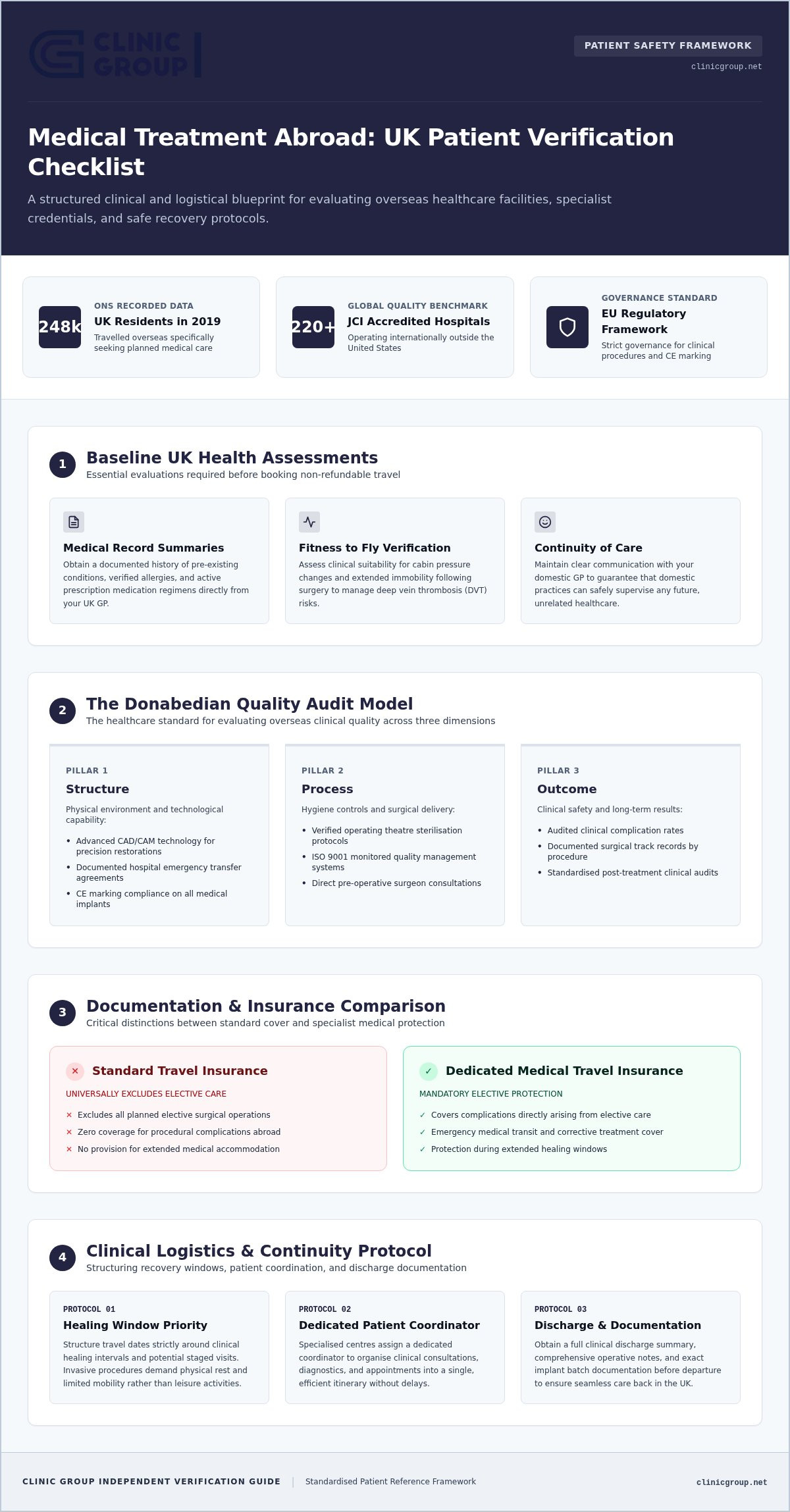
When travelling abroad for medical treatment, your travel schedule must revolve entirely around surgical recovery rather than flight timetables. Rushing through transit while managing swelling, surgical drains, or temporary sutures compromises clinical outcomes and elevates discomfort. Staged treatments also require distinct planning. Extensive restorative procedures, such as dental implants, usually require two separate visits months apart to allow proper bone healing before placing permanent prosthetics.
Pre-travel preparation also involves physical readiness. Engaging in preventative health initiatives, including smoking cessation and optimised nutrition, supports tissue healing and reduces infection risks. Accommodation planning requires equal care. Booking a hotel with step-free access, quiet surroundings, and suitable dietary catering, such as soft-food options following oral surgery, ensures a restful environment during early convalescence.
When is it safe to fly home after treatment?
Flying too soon after surgery heightens deep vein thrombosis risks due to prolonged seated immobility and cabin pressure changes. Minor dental work generally requires 24 to 48 hours of recovery before flying. In contrast, extensive surgical interventions demand 7 to 14 days of local monitoring before receiving clinical flight clearance. Always wear graded compression socks, move your feet regularly during transit, and obtain signed approval from your surgeon before heading to the airport.
What local logistical support should you organise?
Coordinating with a dedicated medical concierge removes the friction of arranging transport while physically vulnerable. Private, air-conditioned transfers between the airport, accommodation, and surgical centre prevent unnecessary physical exertion. In addition, confirm the location of late-opening pharmacies to fill prescriptions easily, and establish clear emergency contact pathways with the clinic before your initial appointment takes place.
How do you arrange seamless aftercare and follow-up care?
Safe recovery depends on establishing structured follow-up routines before departing for your procedure. Many patients assume that domestic healthcare services will automatically manage post-operative checkups, but the NHS holds no obligation to provide routine monitoring or dressing changes for elective care completed overseas. Emergency rooms will treat acute, life-threatening complications, yet routine aftercare remains entirely the patient's private responsibility.
Securing private domestic continuity requires proactive planning. Prior to travelling abroad for medical treatment, contact independent UK practitioners, such as private dentists or cosmetic specialists, to ensure they will accept you for maintenance checkups once you return. Coupling this domestic arrangement with established digital communication channels to your overseas surgical team ensures rapid responses if unexpected symptoms develop during your recovery.
What clinical records must you bring back to the UK?
Never leave your overseas treatment facility without a complete physical and digital handover package. Your clinical records should include:
- Operative discharge summary: A detailed clinical report written in English outlining the procedural technique, surgical findings, sutures used, and administered anaesthetic drugs.
- Medical device documentation: Implant passports or certification leaflets displaying the manufacturer, batch lot codes, and precise mechanical dimensions for items such as dental fixtures or surgical prostheses.
- Diagnostic imaging files: High-resolution digital copies of all pre-operative and post-operative evaluations, including dental panoramic radiographs, CT scans, or ophthalmic measurements.
- Prescription instructions: Clear post-operative medication protocols detailing active generic drug names, dosages, and wound management routines.
How does an independent directory support your treatment pathway?
Organising private healthcare across international borders involves substantial paperwork, medical vetting, and itinerary coordination. Working through an established directory streamlines this journey by matching patients with facilities that comply with rigorous international clinical safety standards. Dedicated patient coordinators manage appointments, translation services, and record transfers to keep your treatment pathway organised.
Take the first step toward safe, organised care: Browse verified medical clinics to explore accredited facilities and request comprehensive written treatment proposals.
Next Steps for Your Overseas Healthcare Journey
Planning your journey with a structured checklist transforms an uncertain process into an empowering healthcare decision. Successful clinical travel relies on methodical vetting: confirming specialist surgeon credentials, securing dedicated medical travel insurance, and ensuring detailed clinical discharge notes are ready for care back home. Approached with thorough preparation, travelling abroad for medical treatment offers a safe, accessible pathway to private procedures without domestic delays.
Organising independent international care doesn't have to feel overwhelming. Clinic Group simplifies this cross-border experience by introducing patients to a curated network of accredited overseas clinics that maintains a 5/5 rating display for patient satisfaction. With dedicated patient coordinator and logistics support handling translation, transfers, and clinic schedules, you retain complete oversight of your health throughout the process.
With verified standards in place and your personal checklist confirmed, you can take control of your clinical journey with total clarity and peace of mind.
Frequently Asked Questions
Will the NHS treat complications if I have private medical treatment abroad?
The NHS provides emergency care for acute, life-threatening complications, but it has no duty to reverse, revise, or monitor elective procedures carried out overseas. Routine dressing changes, stitch removals, and corrective surgeries remain the patient's financial responsibility. You should always arrange specialist private aftercare or confirm your clinic's revision policy before travelling abroad for medical treatment.
How long do I need to stay abroad after undergoing surgery or dental work?
The required duration depends on the invasive nature of your procedure. Minor cosmetic dental treatments usually require two to three days in the destination before you can travel comfortably. Complex restorative surgery, facial operations, or body procedures require between seven and fourteen days locally so the medical team can monitor early healing, remove surgical drains, and issue formal fit-to-fly documentation.
Can I use standard travel insurance when travelling abroad for medical treatment?
No, standard holiday or annual travel insurance policies explicitly exclude planned operations and any secondary complications stemming from them. Anyone travelling abroad for medical treatment needs dedicated elective medical travel insurance. These specialised policies provide protection for emergency hospital transfers, extended hotel convalescence, surgical complications, and medical repatriation back to the United Kingdom.
How can I verify the qualifications of an overseas doctor or dentist?
Request the practitioner's full legal name and national medical board registration number directly from the facility. You can cross-reference their training records via the Electronic Portfolio of International Credentials (EPIC) service. In addition, confirm whether they hold active memberships in recognised international bodies, and check that their operating clinic holds audited health accreditations such as JCI or ISO certifications.
Do I need a companion to travel with me for medical treatment overseas?
Do I need a companion to travel with me for medical treatment overseas?
Bringing an adult companion is strongly advised for any invasive surgical or dental procedure involving general anaesthesia or deep sedation. A travelling partner assists with luggage, manages local transfers, and provides physical support during your initial 48 hours of recovery. If you must travel alone, verify that your clinic arranges personal medical concierge assistance throughout your hospital discharge. For expatriates or patients spending an extended period recovering away from home, community connection platforms like Sahayy can also help you connect with people living abroad for local guidance and peer support.
What happens if my treatment abroad requires multiple stages or visits?
Multi-stage procedures require distinct travel schedules that you must plan well in advance. For example, dental implant rehabilitation typically demands an initial trip for surgical screw placement, followed by a three to six month osseointegration healing period before a second visit for final crown fitting. Each leg of the journey requires its own travel arrangements, recovery timeline, and clinical evaluation.
How do language barriers get handled during consultations and treatment abroad?
Reputable international clinics employ multilingual doctors and assign a dedicated, English-speaking patient coordinator to each visitor. This coordinator attends your consultations, translates clinical discussions, and ensures you receive consent forms, surgical notes, and medication instructions in clear English. Clarify these translation provisions in writing with the administrative team before booking your flights.

Article by
Clinic Group Editorial Team
The Clinic Group editorial team publishes clear, practical guides for UK and EU patients researching medical travel — from dental implants and hair transplants to plastic surgery and eye care — with a focus on verified clinics, transparent “from” pricing, and safe planning.
Disclaimer
This article is for general information only and is not medical advice, diagnosis, or a substitute for an in-person consultation with a qualified clinician. Treatment suitability, risks, timelines, and costs vary by individual. Clinic Group connects patients with independent clinics; those clinics are responsible for clinical care. Always verify credentials, obtain a written treatment plan and itemised quote, and confirm aftercare arrangements and travel insurance cover (elective procedures are often excluded) before booking. Outcomes cannot be guaranteed.