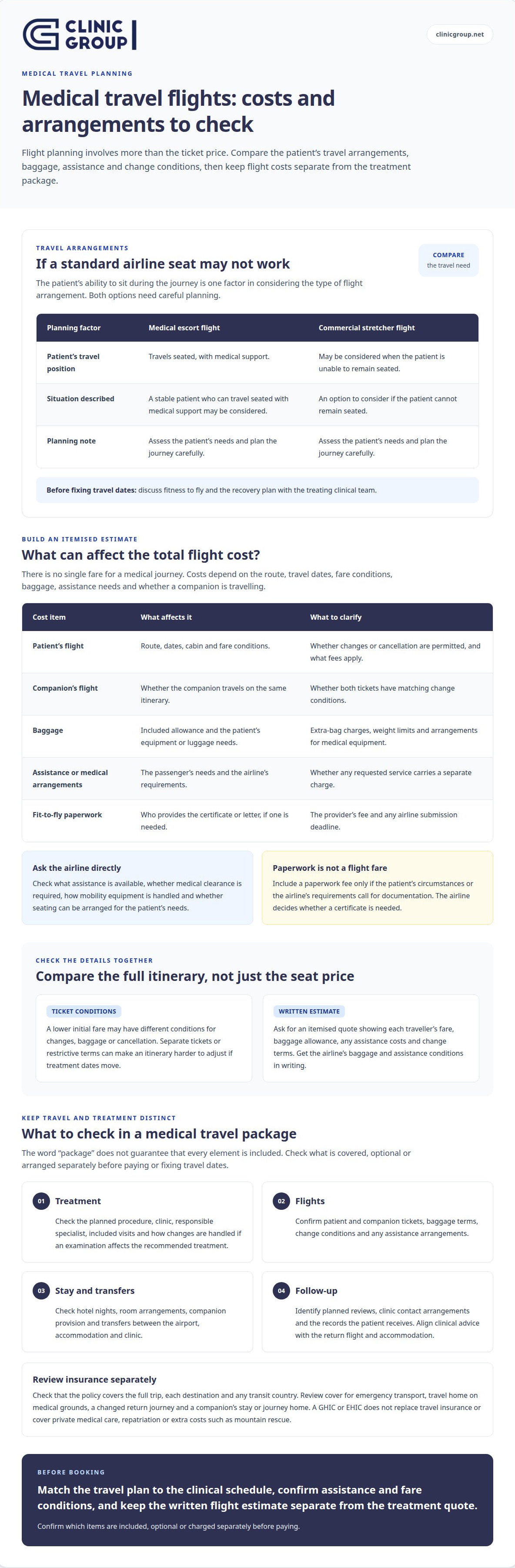
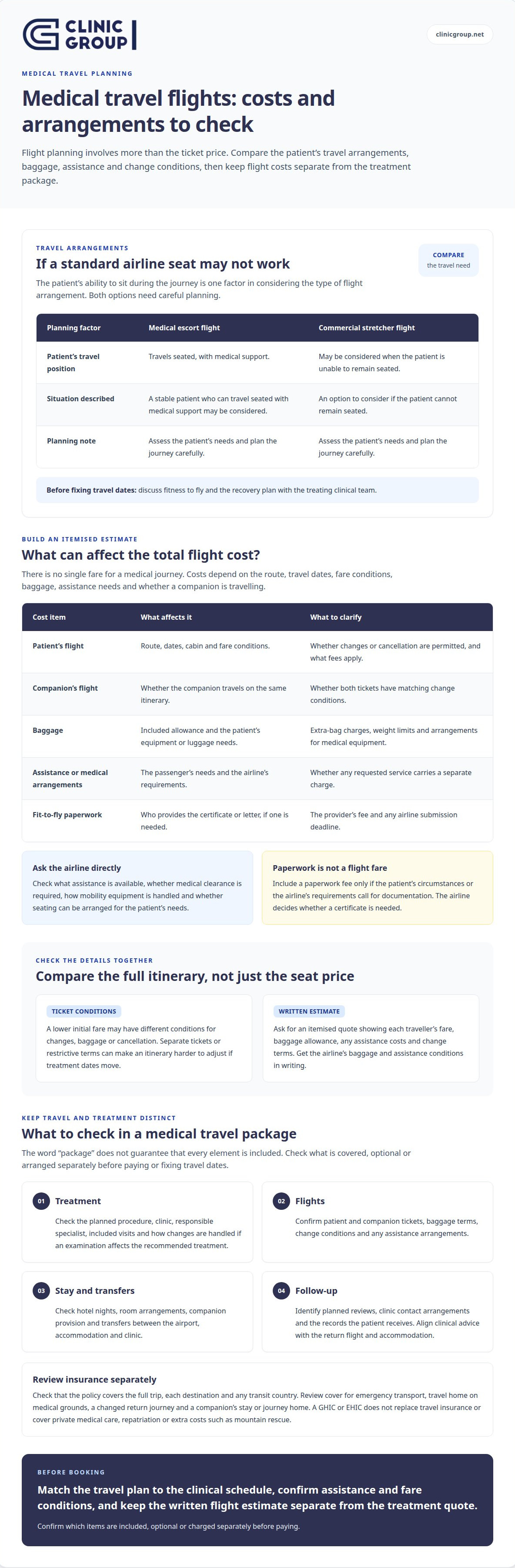
What if a patient isn’t well enough to sit in a standard airline seat? Booking flights for medical travel may still be possible: a stable patient who can travel seated with medical support may be considered for a medical escort flight, while someone unable to remain seated may be considered for a commercial stretcher flight. Both options need careful planning.
For patients and companions, booking flights for medical travel involves more than choosing departure and return dates. Your itinerary needs to fit the clinical schedule, the patient’s needs and the companion’s availability. Understanding how fares, assistance and date changes work helps you consider the practical details before committing to a booking.
This guide covers key decisions, from comparing flight arrangements and package inclusions to planning insurance and follow-up care. It also explains how to explore verified clinics and when a consultation can clarify the treatment plan. Use it to organise your journey from the UK and identify the details to confirm before booking.
Key Takeaways
- Build a realistic travel budget by accounting for fares, baggage, companion tickets and possible date changes, then request a personal written quote.
- Look beyond the headline package price: clarify which treatment, accommodation, insurance and follow-up arrangements are included.
- Plan assistance with the airline in advance, including any medical support, seating needs and fare or baggage conditions.
- Discuss fitness to fly and recovery plans with the treating clinical team before booking travel dates.
- Use Clinic Group’s treatment guides and directories to explore verified clinics and consider whether a consultation is the right next step.
How much can medical travel flights cost?
There is no single fare for a medical journey. The total depends on the route, travel dates, fare conditions, baggage, assistance needs and whether a companion is travelling. Extra planning may be needed if the patient requires support beyond standard passenger assistance. Compare the full itinerary cost, not just the advertised seat price.
Use this breakdown to organise an itemised estimate before booking:
| Cost item | What affects it | What to clarify |
|---|---|---|
| Patient’s flight | Route, dates, cabin and fare conditions | Whether changes or cancellation are permitted, and what fees apply |
| Companion’s flight | Whether the companion travels on the same itinerary | Whether both tickets have matching change conditions |
| Baggage | Included allowance and the patient’s equipment or luggage needs | Extra-bag charges, weight limits and arrangements for medical equipment |
| Assistance or medical arrangements | Passenger needs and the airline’s requirements | Whether any requested service carries a separate charge |
| Fit-to-fly paperwork | Who provides the certificate or letter | The provider’s fee and any airline submission deadline |
These are paperwork costs, not flight fares, and the airline decides whether a certificate is needed. Include a fee only if the patient’s circumstances or the airline’s requirements call for documentation.
Assistance needs can affect planning even when there is no separate service charge. Ask the airline what support is available, whether medical clearance is required and how mobility equipment is handled. Seating for a medical condition depends on the airline, so contact it directly about your request. Baggage charges also depend on the carrier’s allowance, fare type and items carried. Get the terms in writing rather than assuming a standard ticket includes them.
When booking flights for medical travel, compare the patient’s and companion’s tickets together. A lower initial fare may come with different conditions for changes, baggage or cancellation. If treatment dates move, separate tickets or restrictive terms can make the itinerary harder to adjust. Ask for a written, itemised quote showing each traveller’s fare, baggage allowance, any assistance costs and change terms. Confirm the total and the conditions that could affect it.
Keep the travel estimate separate from the treatment package. Clinic arrangements and flight bookings may have different inclusions and change conditions. A comparison of clinic features can help distinguish clinical arrangements from travel costs. Before paying, review the written quote against the planned itinerary and confirm which items are included, optional or charged separately.
What should a medical travel package include?
A medical travel package can combine treatment, flights, accommodation and follow-up, but the word “package” does not guarantee that every element is included. For a British patient, the written itinerary and treatment quote should identify what is covered, what is optional and which arrangements remain separate. Check each component before paying or fixing travel dates.
Start with the clinical plan. The treatment description should name the planned procedure, clinic, responsible specialist and included visits. For example, a dental treatment plan should distinguish the procedure from consultations, imaging or later adjustments. Ask how changes are handled if an examination affects the recommended treatment. The written plan should clarify which decisions depend on the specialist’s assessment.
Next, match travel and accommodation to the treatment schedule. A useful package document sets out flight dates, airport transfers, hotel nights and appointments. It should also state whether a companion’s fare, room or meals are included. Compare your arrival time with the first clinic visit, and check that the return date allows the patient to attend planned reviews before travelling home.
- Treatment: named procedure, clinical location, consultations and planned reviews.
- Flights: patient and companion tickets, baggage terms, change conditions and assistance arrangements.
- Accommodation: location, length of stay, room arrangements and any companion provision.
- Ground travel: transfers between the airport, accommodation and hospital or clinic.
- Follow-up: scheduled checks, contact arrangements and instructions after returning home.
Review insurance separately, even if a package mentions travel insurance. Check that the policy covers the full trip, every destination and any transit country. It should address emergency transport, including ambulance costs, and travel home on medical grounds. Check whether it covers returning home if the patient cannot use the original ticket, and whether a companion’s stay or journey home is covered. A GHIC or EHIC does not replace travel insurance or cover private medical care, repatriation or extra costs such as mountain rescue.
Aftercare should be clear before departure, not left as a vague promise. Identify which clinic contact handles questions, how planned reviews take place and what records the patient receives. A post-treatment appointment may affect the return date, so align clinical advice with flights and accommodation. The medical package guide can help you assess how treatment and travel elements fit together.
Request a written breakdown of included services, exclusions and separately payable items. A package might include airport transfers but exclude baggage, or cover accommodation without meals. Ask about the date-change and cancellation terms for each component. This itemised view lets you compare the actual arrangements rather than relying on a package label or headline description.
How should patients arrange flights and assistance?
Plan travel around the clinical schedule, then confirm assistance and ticket conditions with the airline. The treating specialist can advise on the patient’s support needs, while airline policies determine available services, medical clearance and seating arrangements. Include the companion in the planning, especially if dates or assistance needs change.
- Agree travel requirements. Ask the treating specialist about fitness to fly, seating, mobility and any equipment needed. If the patient cannot remain seated, a commercial stretcher flight requires airline stretcher availability, MEDIF approval and additional planning. A stable patient who can travel seated with medical support may suit a seated medical escort flight, which can require medical clearance.
- Contact the airline before purchasing tickets. Explain the patient’s needs and ask how to request assistance, medical clearance or a specific seat. Seat requests for a medical condition depend on the airline, so contact it directly. Give the airline the information it requests and follow its process before confirming travel dates.
- Compare the patient’s and companion’s fare terms. Ask whether both tickets can be changed together, what happens if treatment dates move, and whether the fare includes checked baggage. Check charges for extra bags and how the airline handles mobility aids or medical equipment. A companion’s ticket may have separate terms, even when both passengers share an itinerary.
- Keep the booking record accessible. Save the airline’s assistance confirmation, medical clearance documents and ticket conditions. Share relevant journey details with the patient’s companion and treating team, so each knows the planned departure and arrival arrangements.
Discounted medical fares are not a standard entitlement across airlines. Availability and terms depend on the carrier and route, so ask whether it offers a patient fare, companion discount or flexible ticket for your journey. Compare any reduced fare with its change rules, baggage allowance and assistance arrangements. A lower headline price may not suit a patient whose treatment schedule could shift.
UK legislation also sets out protections for air travel access. According to the UK legislation register, the Civil Aviation (Access to Air Travel for Disabled Persons and Persons with Reduced Mobility) Regulations 2014 are in force. For practical preparation, keep assistance requests specific: describe what help is needed at the airport, during boarding and after landing. An assistance request and medical clearance are separate matters; arranging one does not automatically provide the other.
For a UK traveller flying abroad, a medical travel checklist can help organise documents and journey details. Keep the airline’s response with the booking, and make sure the companion understands how assistance is arranged. This creates a clear record if the itinerary changes or the patient needs updated travel arrangements. While individual travellers coordinate their own plans, organisations managing wider travel programmes often rely on professional advice from Dominic Marc Short - Independent Consultant to navigate complex airline policies and logistics.
No specific airlines are named here. Assistance and any patient fare, companion discount or flexible ticket depend on the carrier and route, so ask the airline directly about available support and fares.
What are the risks of flying for treatment, and what aftercare is needed?
Flying during recovery can add strain, particularly when a patient has limited mobility or has recently had an operation. Long periods sitting still can raise concerns about blood clots, while cabin pressure changes may affect comfort. The treating specialist can assess the procedure, the patient’s health and the planned journey before a flight is scheduled.
Travel timing varies with the procedure and the patient’s recovery. After a heart attack, a person may be able to travel by air after 7 to 10 days if there are no complications. After bypass grafting or other heart or chest surgery, avoiding flights for at least 10-14 days is advisable, and the person should be able to manage normal day-to-day activities. These examples do not establish a suitable travel date for every patient.
Some situations involve specific airline restrictions. Many airlines restrict flying during the first 24-48 hours after a plaster cast is fitted, because swelling may become a concern. For passengers with infectious tuberculosis, the World Health Organisation recommends not flying for at least 2 weeks after effective treatment. The treating team can consider the patient’s condition alongside relevant airline requirements.
- Before departure: the clinical team considers the timing of travel, mobility, medication and recovery needs.
- During the journey: the patient’s care plan can address movement, prescribed medicines and any support required.
- After arrival: planned reviews and contact arrangements help connect travel with ongoing care.
Blood clot risk is relevant when reduced movement during recovery coincides with air travel. The treating specialist can explain how the patient’s health and procedure affect that risk and whether prevention is part of the care plan. Medication decisions belong within the patient’s clinical care. New leg swelling or pain, or sudden breathing difficulty, may require clinical assessment.
Cabin pressure can also matter after some procedures. Its significance depends on the treatment, recovery stage and the patient’s condition. The treating specialist can advise whether the planned departure and return dates fit the recovery plan. Changes in pain, swelling, bleeding or breathing should be assessed by the clinical team, rather than treated as a reliable indication of how recovery is progressing.
Include follow-up in the travel plan. The clinic’s review schedule, contact arrangements and discharge instructions clarify what care continues after treatment. Planned appointments may affect the return journey, so align clinical appointments with flight dates. A written aftercare plan can set out how appointments, travel and recovery instructions fit together.
How can you choose a verified clinic for medical travel?
Clinic Group helps patients explore verified clinics through its Medical Tourism Treatment Guides and treatment directories, and decide whether to request a consultation. It is a directory and referral platform, not the treating clinic. Clinical assessments and treatment decisions remain the responsibility of the relevant medical team. This distinction makes clear who provides information and who is responsible for care.
Start by matching the treatment you are considering to the relevant directory. The Dental Treatment Directory covers dental options, while Hair Transplant Referrals and the Ophthalmology Clinic Directory help patients explore those areas. Treatment guides provide context for travel planning and comparing clinic features. Clinic Group’s verified clinics are almost entirely in Tirana, Albania, with a small number of partner clinics in Dubai.
Before booking flights, review the clinical plan alongside your travel dates. Check that the proposed treatment, consultation schedule and expected follow-up fit the time you can spend abroad. The clinic’s information should make the planned procedure and the specialist’s role clear. If a medical detail affects whether or when you can fly, raise it with the treating team during a consultation.
- Match the service: choose a directory or guide relevant to dentistry, hair transplantation or eye care.
- Understand the treatment plan: note the proposed procedure, clinical location and consultations involved.
- Consider travel logistics: compare appointment dates with flights, accommodation and companion arrangements.
- Clarify follow-up: identify planned reviews and how clinical questions are handled after treatment.
- Prepare for consultation: organise your medical history, questions and preferred travel dates.
A verified listing is a starting point for research, not a substitute for an individual assessment. Ask the specialist to explain the recommendation, likely recovery needs and risks relevant to your health. For example, anyone considering dental implants should understand the proposed stages and review schedule before arranging flights. Keep the treatment plan and travel itinerary aligned as details develop.
Clinic Group’s guides can also help you consider clinic quality and patient-safety factors. A useful next step is to read about how to verify clinic quality, then use the information to prepare focused questions for a consultation. Look for clear explanations of the treatment pathway, the clinical team’s responsibilities and follow-up arrangements, rather than relying on promotional language alone.
A consultation is useful when you have a specific treatment in mind and need clinical advice on suitability, timing or recovery. Bring relevant records and explain any health conditions or mobility needs that could affect flying. The specialist can assess your circumstances and discuss the proposed care. Arrange flights in line with the clinical plan, not the other way round.
For a considered next step, contact Clinic Group to explore its treatment guides and directory options.
Considering treatment in Albania? Request a free consultation with Clinic Group.
Frequently Asked Questions
What happens if the patient is not fit to fly on a commercial airline?
If a patient cannot travel in a standard seat, the treating specialist can assess whether an alternative flight arrangement is suitable. A stable patient who can sit with medical support may be considered for a seated medical escort flight, subject to airline medical clearance. A stable patient unable to remain seated may be considered for a commercial stretcher flight, which requires airline stretcher availability, MEDIF approval and additional planning. The specialist’s advice and airline approval guide the next steps.
How do you book flights for medical travel in the UK?
Booking flights for medical travel from the UK starts with a confirmed clinical schedule and a clear understanding of the patient’s travel needs. Contact the airline before buying tickets to discuss medical clearance, assistance, seating and equipment. Compare the patient’s and companion’s fare conditions, including baggage, date changes and cancellation terms. Keep the itinerary, appointments and airline correspondence together so you can manage changes against one travel plan.
What are airline rules for flying with a medical condition or medical equipment?
Airline requirements vary, so contact the chosen carrier about the patient’s condition, equipment and requested assistance. Seating for a medical condition depends on airline policy. The Civil Aviation Authority advises that most people with stable long-term medical conditions should not need a letter, but the chosen airline decides whether a certificate is required. Describe any equipment and ask how it must be arranged for the journey. Do not assume standard baggage terms cover it.
How do you arrange flights and accommodation for medical treatment abroad?
Coordinate flight dates with the clinic’s appointment schedule before reserving accommodation. Allow for arrival, planned treatment and any follow-up visit, rather than planning only around the procedure date. Confirm how the patient and companion will travel between the airport, accommodation and clinic, and whether those transfers are included. Keep booking confirmations and appointment details accessible to both travellers so everyone knows where they need to be.
What are the options for changing or cancelling flights if treatment dates change?
Your options depend on the ticket’s fare conditions and the airline’s change or cancellation policy. Before booking, check whether changes are permitted, what fees or fare differences may apply, and whether the companion’s ticket has separate terms. If the clinic changes an appointment, contact the airline promptly and check accommodation terms separately, as each travel component may follow different rules. Keep written confirmations of revised flights and appointments with the updated itinerary.
What should I do if the airline says the patient cannot board?
Ask the airline which requirement has not been met and whether it can explain its decision in writing. Contact the treating clinic to discuss the patient’s current condition and next steps before making another travel booking. Keep airline messages, medical documents and ticket details together. If the patient’s condition has changed, tell the treating team so any revised travel plan reflects the new circumstances.

Article by
Clinic Group Editorial Team
The Clinic Group editorial team publishes clear, practical guides for UK and EU patients researching medical travel — from dental implants and hair transplants to plastic surgery and eye care — with a focus on verified clinics, transparent “from” pricing, and safe planning.
Disclaimer
This article is for general information only and is not medical advice, diagnosis, or a substitute for an in-person consultation with a qualified clinician. Treatment suitability, risks, timelines, and costs vary by individual. Clinic Group connects patients with independent clinics; those clinics are responsible for clinical care. Always verify credentials, obtain a written treatment plan and itemised quote, and confirm aftercare arrangements and travel insurance cover (elective procedures are often excluded) before booking. Outcomes cannot be guaranteed.