Yes, you can have dental sedation abroad, but only if the clinic provides a staffed monitoring and rescue system. Sedation dentistry overseas has grown alongside dental tourism, and most reputable clinics abroad offer the same sedation techniques familiar from the UK or Italy: nitrous oxide, oral sedatives, IV conscious sedation, and general anaesthesia. The sedative itself rarely causes problems. What matters is who is watching you while you’re under it.
Before booking any dental care with sedation abroad, verify three things in writing:
- A dedicated sedationist or monitor separate from the dentist performing the procedure
- Continuous monitoring including capnography for IV sedation, alongside pulse oximetry, blood pressure, and ECG
- A documented rescue protocol, named reversal agents, and clear indemnity or insurance cover
Get these answers before you pay a deposit, not after you land.
Key Takeaways
Safe dental sedation abroad depends on verifiable staffing, monitoring, and rescue systems in writing, not on price, marketing language, or star ratings alone.
| Point | Details |
|---|---|
| Separate the roles | Confirm a dedicated sedationist monitors you while a different clinician performs the procedure. |
| Demand capnography for IV sedation | Ask specifically whether continuous capnography runs alongside pulse oximetry, BP, and ECG. |
| Respect the 24 hour rule | Plan flights at least 24 hours after IV sedation or general anaesthesia, longer after major procedures. |
| Compare full journey cost | Judge quotes on total patient journey cost, not the headline price, since sedation line items vary widely. |
| Use Clinicgroup to verify in advance | Clinicgroup gathers written sedation policies and itemised quotes from verified partner clinics before you book. |
Table of Contents
- Sedacion dentar jashtë vendit: which method fits which procedure?
- What questions should you ask a clinic about sedation?
- How long should you wait to fly after sedation?
- Does sedation change the total cost of treatment abroad?
- What do patients actually say about sedation abroad?
- Are sedation standards regulated the same way everywhere?
- What risks are specific to sedation abroad, and how do you reduce them?
- How does sedation abroad compare with home country standards?
- How do you verify a sedation provider’s credentials?
- What the sedation conversation usually gets backwards
- How Clinicgroup helps you verify sedation safety before you travel
- Sources
- FAQ
Sedacion dentar jashtë vendit: which method fits which procedure?
Sedation dentistry overseas isn’t a single service. It’s four distinct techniques, each suited to different procedures, anxiety levels, and risk profiles, and understanding the difference helps you ask sharper questions when researching sedacion dentar jashtë vendit.
Nitrous oxide (laughing gas) is inhaled through a nasal mask and wears off within minutes of removal. Patients stay fully conscious and can usually drive themselves home. It suits short procedures like fillings or scaling, and needs only the treating dentist plus standard chairside monitoring.
Oral sedation uses a tablet, typically a benzodiazepine, taken before the appointment. It produces drowsiness and reduced anxiety without full unconsciousness, and it’s common for moderate-length restorative work or implant placement in anxious patients. Recovery takes longer than nitrous oxide, and patients cannot drive afterwards.
IV conscious sedation delivers medication directly into the bloodstream, giving faster onset and easier dose adjustment mid-procedure. It’s the default for longer implant surgery, multiple extractions, or full-mouth reconstructions. This is where monitoring requirements rise sharply: continuous monitoring including capnography is recommended as an important adjunct for IV sedation, because it detects breathing changes before oxygen levels drop.
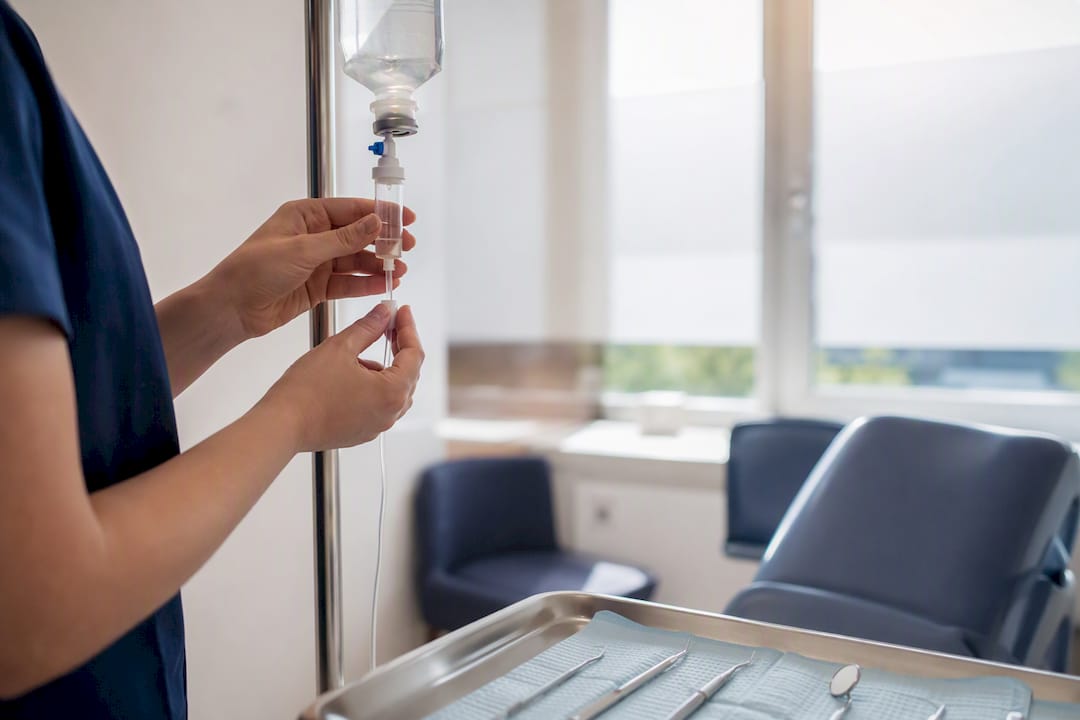
General anaesthesia puts the patient fully unconscious and is reserved for extensive surgical cases or patients who cannot tolerate any awareness of the procedure. It demands the highest staffing level: a dedicated anaesthetist, full resuscitation equipment, and a hospital-grade recovery area.
NHS England’s clinical standards for dental anxiety management describe tiered care, where behavioural techniques are tried first and sedation is stepped in according to need and assessment, not requested on demand. A clinic combining behavioural approaches with sedation, rather than defaulting straight to the strongest option, is generally following better practice, and background material on managing dental anxiety explains why that graded approach reduces unnecessary drug exposure.
Pro Tip: If a clinic’s website describes IV sedation as “just like a nap” without mentioning who monitors you during that nap, ask directly. Vague comfort language with no operational detail is one of the clearest signs to probe further before booking.
What questions should you ask a clinic about sedation?
Comfort gets marketed. Safety has to be verified, and the only way to verify it is to ask specific operational questions and get specific written answers. Vague replies are themselves a warning sign.
- Who administers the sedation, and who monitors you separately? A single operator performing the procedure and watching the monitor at the same time is a weaker setup than a dedicated sedationist whose only job is your airway and vital signs.
- Which monitors run continuously, and is capnography used? Pulse oximetry and blood pressure are standard; capnography specifically tracks exhaled carbon dioxide and catches breathing problems earlier than oxygen saturation alone.
- What reversal agents and rescue equipment are on-site, and who is trained to use them? Ask for the drug names and confirm someone present, not just theoretically on call, can administer them.
- Can they send pre-assessment forms, consent documentation, and their written rescue protocol before you travel? Ask about indemnity or insurance cover too.
Regulatory and professional guidance treat written consent, pre-sedation assessment, and documented indemnity as non-negotiable elements of safe sedation practice, not optional extras a good clinic happens to offer.
Statistic Callout: Analysis of sedation safety in dental tourism argues that safety lives in the surrounding system, not the drug itself, specifically dedicated monitoring staff, continuous capnography, reversal agents, and rehearsed rescue protocols. A clinic that can’t specify these in writing hasn’t necessarily built them.
Insisting on written answers before travel isn’t being difficult. It’s the single most effective filter for safe dental sedation options abroad, and our dental treatment safety guide walks through the same checklist in more depth.
How long should you wait to fly after sedation?
Clinical guidance points to a minimum 24 hour wait before flying after IV sedation or general anaesthesia, and this isn’t a bureaucratic buffer. Cabin pressure changes can affect patients still metabolising sedative drugs, and specialist frameworks on dental tourism travel timing cite 24 hours as a conservative floor, longer after extensive procedures where swelling, bleeding risk, or prolonged anaesthesia recovery is involved.
Plan around this rather than fighting it:
- Arrange an escort for the day of sedation. You will not be allowed to travel alone, and most clinics will not release you to a taxi unaccompanied.
- Expect overnight observation after IV sedation or general anaesthesia at a proper facility, not a same-day discharge straight to the airport.
- Confirm who provides local follow-up if something feels wrong the next morning, before you leave the clinic.
- Check your travel insurance policy for exclusions around dental treatment or sedation-related complications; many standard policies exclude planned medical travel entirely.
Pro Tip: Book flexible return flights rather than the cheapest fixed fare, and line up a named dentist back home for continuity of care. The saving on a non-changeable ticket rarely covers the cost of rebooking after a delayed recovery.
Does sedation change the total cost of treatment abroad?
Sedation adds real cost, and an honest quote should show exactly where. A dedicated sedationist’s fee, capnography and advanced monitors, reversal agents, oxygen and airway kit, and extended observation time all appear as separate line items in a properly itemised quote for affordable dental sedation abroad.
Cheap package prices commonly hide these costs by omitting them entirely rather than including them at a lower rate. Watch for quotes that leave out:
- Pre-assessment and medical history review before the day of treatment
- Dedicated aftercare and follow-up contact once you’re home
- Ambulance access or complication cover if something goes wrong during recovery
Comparing headline prices against each other tells you almost nothing useful. Comparing the full patient journey cost, flights, accommodation, consultation, sedation, aftercare, and contingency, tells you which quote is genuinely competitive and which one is cheap because it’s missing something. Our guide to dental treatment benefits for Europeans breaks down realistic cost comparisons in more detail. Clinicgroup can request itemised written quotes from verified partner clinics on your behalf, so you’re comparing like with like before you commit to anything.
What do patients actually say about sedation abroad?
Patient feedback on international dental sedation services tends to cluster around two themes: relief that anxiety was managed well, and appreciation for clear communication before the procedure started. Reviews of clinics offering IV conscious sedation abroad frequently mention feeling informed about what would happen step by step, rather than simply being told to relax.
What’s harder to find in public reviews is the operational detail that actually determines safety, whether a dedicated sedationist was present, what monitoring ran throughout, whether a rescue protocol existed. Reviews capture comfort and communication well. They rarely capture staffing models or equipment, because most patients under sedation aren’t in a position to evaluate that themselves.
This is precisely why written documentation matters more than testimonials when you’re assessing a clinic for sedation. A five-star review tells you the patient felt looked after. It doesn’t tell you whether capnography was running, or who was trained to reverse the sedative if something went wrong. Our piece on why dental reviews matter for patients going abroad covers how to read reviews alongside, never instead of, a clinic’s written safety policy. Treat testimonials as one data point among several, not as a substitute for asking the four questions above.
Are sedation standards regulated the same way everywhere?
Regulation of dental sedation varies by country, and popular dental tourism destinations don’t all follow identical frameworks. Some destinations have dental regulators broadly comparable to the UK’s General Dental Council, with registration requirements and defined scopes of practice for who can administer sedation. Others have less centralised oversight, or standards that exist on paper without consistent enforcement.
The GDC’s own guidance for patients travelling abroad for dental care advises checking whether the destination country has an equivalent regulatory body, confirming the treating practitioner’s registration status, and understanding what complaint routes exist if treatment goes wrong. This matters more for sedation than for most other dental work, because sedation carries acute risks that unfold in minutes, not the slower-developing problems of a poorly fitted crown.
Accreditation from an internationally recognised body such as ISO certification or affiliation with international dental federations is a useful signal, though it’s not a substitute for the specific operational checks covered earlier. A clinic can hold general accreditation and still lack a dedicated sedationist for a specific procedure. Ask both questions: is the clinic accredited, and separately, who exactly is running your sedation on the day.
What risks are specific to sedation abroad, and how do you reduce them?
The core risks of dental sedation don’t change because you’re abroad, respiratory depression, airway obstruction, adverse drug reactions. What changes is the margin for error if something goes wrong far from your usual healthcare system, and the practical steps available to reduce that margin.
Language barriers during an emergency are a real, underdiscussed risk. If the sedationist and rescue team don’t share a working language with you, confirm in advance that emergency instructions and consent forms are available in a language you fully understand, not just translated headlines.
Continuity of care after you return home is another gap. If a complication surfaces days after you’ve flown back, having no local record of exactly what sedative was used and at what dose slows down treatment considerably. Ask the clinic for a discharge summary listing drugs, doses, and monitoring results, and keep a copy yourself rather than relying on the clinic to forward it later.
Finally, the absence of a dedicated sedationist role is a mitigable risk you can screen out entirely before travelling; background analysis on sedation staffing models treats a separate monitoring role as one of the clearest practical markers of a clinic that takes sedation seriously. Where that role is absent, treat it as a reason to keep looking, not a detail to overlook because the price is attractive.
How does sedation abroad compare with home country standards?
Well-run clinics abroad frequently meet or approach the monitoring standards described in NHS England’s clinical guidance and equivalent European frameworks: structured assessment, valid consent, and monitoring aligned to the sedation technique used. The technology and the drugs are largely the same regardless of country.
The gap, where one exists, tends to show up in staffing depth and system redundancy rather than equipment quality. A UK NHS sedation clinic will almost always separate the sedationist from the operating dentist as standard practice. Some overseas clinics, particularly high-volume budget operators, occasionally combine these roles to keep costs down, which is exactly the kind of shortcut the pre-booking questions in this article are designed to catch.
There’s no blanket answer to whether sedation abroad is “as safe” as sedation at home. It depends entirely on the individual clinic, not the country. A verified, well-staffed clinic abroad can match home country standards; an unverified budget operator, in the UK or overseas, can fall well short of them. The country on the brochure tells you far less than the written protocol document does.
How do you verify a sedation provider’s credentials?
Credential verification starts with a specific name, not a clinic brand. Ask for the name and professional registration number of the person who will actually administer or monitor your sedation, then check that registration against the relevant national dental or medical register for that country, most maintain a searchable public database.
Ask whether that individual holds specific sedation-related training beyond general dental qualification, since administering IV conscious sedation safely requires additional competency-based training recognised by professional bodies. SAAD’s guidance on conscious sedation treats this training requirement, alongside facility standards and indemnity cover, as a baseline rather than an optional extra.
Request evidence of indemnity insurance specific to sedation practice, and confirm it covers the country where treatment happens, not just the clinic’s parent company jurisdiction. Finally, ask how long the sedationist has held their current role at that specific clinic; a newly formed team with no track record together is not automatically unsafe, but it’s a fact worth knowing before you commit. Our questions to ask your dentist before travelling guide includes template wording you can adapt for exactly this conversation.
What the sedation conversation usually gets backwards
Most advice on dental sedation abroad focuses on comfort: will it hurt, will you feel anxious, how quickly will it wear off. That’s the wrong starting question. Comfort is easy for any clinic to promise. Safety is the thing you actually have to verify, and it’s verifiable precisely because it doesn’t depend on trusting a marketing page.
The conventional advice to “read reviews and check accreditation” isn’t wrong, but it’s incomplete. Reviews measure how patients felt, not whether capnography was running. Accreditation measures general standards, not who specifically is watching your airway on the day. The gap between those two things is where the real risk sits, and it’s a gap you can close yourself with four direct questions before you ever board a flight.
What should you prioritise first? Get the staffing model in writing. Everything else, the monitors, the reversal agents, the rescue protocol, tends to follow logically once a clinic has committed to a dedicated sedationist role. Clinics that dodge that first question rarely have satisfying answers to the rest.
— Clinic
How Clinicgroup helps you verify sedation safety before you travel
Clinicgroup connects UK and Italian patients with verified partner clinics offering dental treatment abroad, including practices with sedation capability such as Dental Med Austria Tirana. Unlike browsing individual clinic websites and taking their comfort claims at face value, Clinicgroup publishes clinic-level details where available, staffing model, monitoring equipment, and treatment scope, so you’re not starting the verification process from zero.
We help gather written sedation policies directly from partner clinics, compare itemised quotes so hidden costs surface before you book, and coordinate travel and aftercare planning around the 24 hour post-sedation window covered earlier in this article. If a clinic can’t provide a written rescue protocol or named sedationist, we won’t be pointing you towards them.
Request a pre-travel consultation and a written sedation-policy checklist through Clinicgroup’s dentistry page before you commit to any clinic abroad. It costs nothing to ask the questions first.
Sources
- Who administers your sedation: dedicated sedationist, monitoring, reversal agents, and rescue capability in dental tourism | The Maloney Review
- Going abroad for your dental care (GDC)
- NHS England » Clinical standards for dental anxiety management
- Guidance on Conscious Sedation for Dentistry (SAAD, 2026)
FAQ
Is dental sedation abroad as safe as at home?
Safety depends on the individual clinic’s staffing and monitoring, not the country. A verified clinic with a dedicated sedationist and continuous monitoring can match home country standards.
How long after sedation can I fly home?
A minimum of 24 hours after IV sedation or general anaesthesia is the conservative standard, longer after extensive procedures involving swelling or prolonged recovery.
What monitoring should a clinic use for IV sedation?
Continuous pulse oximetry, blood pressure, and ECG are standard, with capnography recommended as an important adjunct that catches breathing changes earlier.
Does sedation make dental treatment abroad more expensive?
Yes. A dedicated sedationist, advanced monitors, reversal agents, and extended observation all add cost, and itemised quotes should show these as separate line items.
How do I check a sedation provider’s qualifications?
Ask for their name and professional registration number, then verify it against the relevant national dental register, and confirm specific sedation training beyond general qualification.
Can Clinicgroup help me get a written sedation policy before booking?
Yes. Clinicgroup coordinates with verified partner clinics to provide written staffing, monitoring, and rescue protocol details before you commit to travel.