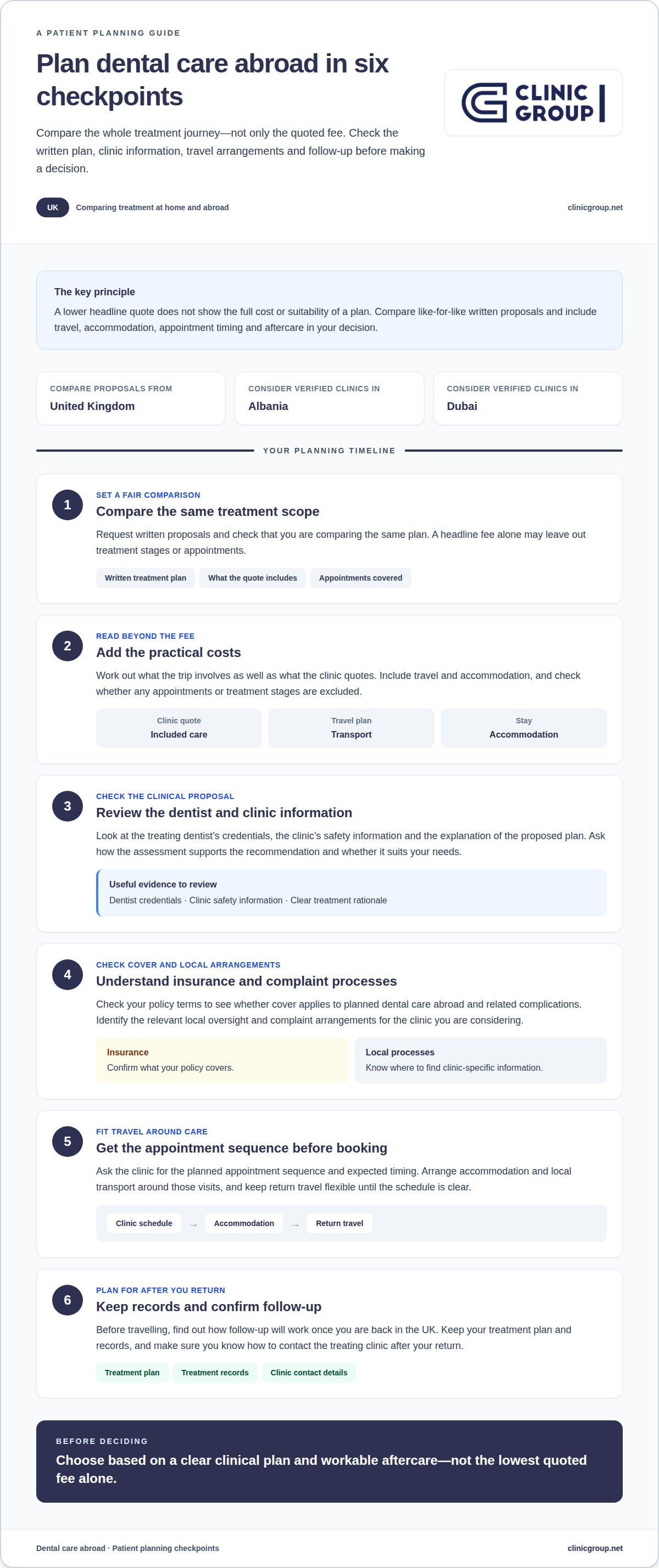
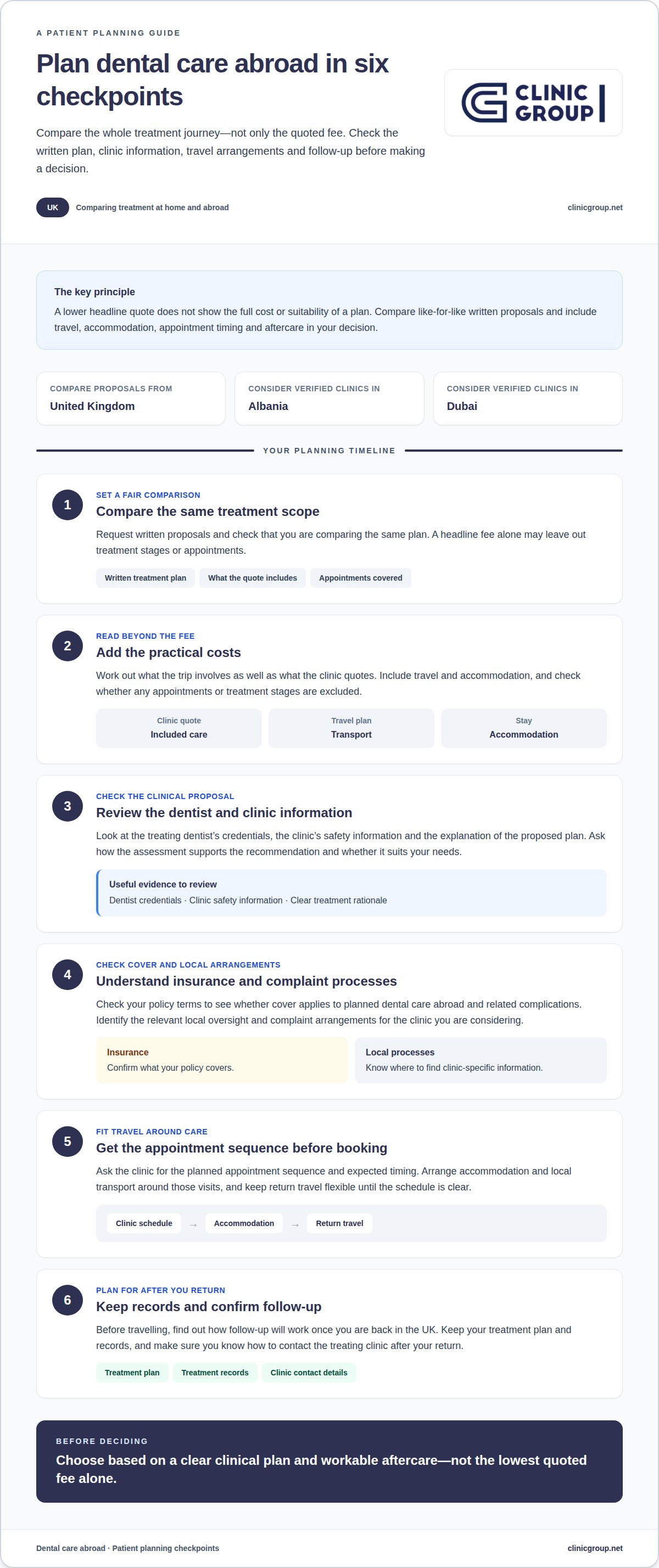
The best place for dental implants in Europe is not simply the destination with the lowest quoted fee; it is the one where the proposed treatment suits your needs and the full plan, clinic’s credentials, travel and aftercare are clear. For UK patients, comparing the whole treatment journey matters as much as comparing the procedure.
It’s understandable to look abroad for more choice or a different overall cost, but a headline quote alone won’t show what the trip involves. Weigh the treatment plan, travel and accommodation costs, the clinic’s experience and how follow-up care will work once you’re home.
This guide explains how to compare costs without overlooking travel, what to look for when assessing a clinic, and why an in-person assessment matters before deciding whether dental implants are suitable. Use these points to make a considered choice based on your dental needs and the practicalities of treatment abroad.
Key Takeaways
- Compare written treatment plans and indicative from prices, then request a personal quote that sets out what your dental implant treatment includes.
- Factor in appointment timing, travel and accommodation when working out the practical cost of treatment abroad.
- Review the dentist’s credentials, clinic safety information and treatment plan before making a decision.
- Discuss dental implant suitability in person, including less invasive options and how follow-up care could work after you return to the UK.
- Use Clinic Group’s verified dental clinic directory to explore partner clinics and consider your next step.
How much do veneers cost?
Veneer quotes vary according to the material, number of teeth and treatment stages included. Compare written proposals covering the same treatment, then account for travel, accommodation and any appointments excluded from the quoted fee.
Veneer prices across countries
For UK patients, compare a UK proposal with written quotes from verified clinics in Albania or Dubai. Check that each quote covers the same material, number of teeth, consultation, preparation, fitting and review. Use the dental veneers treatment information to understand the procedure and prepare questions about the plan.
The best place for veneers in Europe is not automatically the destination with the lowest quoted fee. Include travel and accommodation costs, and consider whether the planned appointments fit your schedule. A quote that excludes a treatment stage may not reflect the full cost.
| Location | What to compare |
|---|---|
| United Kingdom | Material, teeth included, treatment stages and review. |
| Albania | Written plan, quote inclusions and travel arrangements. |
| Dubai | Quote details, appointment schedule and return-trip practicalities. |
Compare the same treatment scope at each destination rather than focusing only on the price per tooth. Ask for a personal written quote detailing the proposed treatment and what it includes.
European quality, insurance and regulations
A country alone cannot establish whether veneers will be high quality. Clinic-level evidence is more useful: consider the treating dentist’s assessment, proposed plan, choice of material and explanation of the approach. These details help you judge whether the proposal suits your needs.
Porcelain and composite veneers differ in how they are made and applied. Porcelain veneers usually last 10 to 15 years with good care. Ask the dentist to explain the options’ appearance, maintenance and suitability for your teeth.
Insurance for cosmetic veneers depends on your policy terms. Before arranging treatment abroad, check whether your cover applies to planned dental care and related complications. Professional oversight and complaint processes differ between countries, so identify the relevant local arrangements for the clinic you’re considering.
To compare overall value, review the treatment scope, appointment schedule, travel costs and follow-up arrangements together. The right choice balances these practical costs with a clear clinical plan and a destination where you can manage treatment and aftercare.
How does veneer treatment abroad work?
Veneer treatment abroad usually involves assessment, a written plan, preparation, fitting and review. The schedule depends on the material, laboratory work and appointments arranged with the treating clinic.
Benefits and trade-offs of treatment abroad
Choosing a verified clinic in Albania or Dubai means planning treatment away from home, with travel and clinical appointments working together. Weigh the benefits of accessing care abroad against the practical need to arrange accommodation, leave time for appointments and plan follow-up after returning to the UK. Ask how you’ll receive your records.
Treatment duration and trip planning
The dentist first assesses your teeth and discusses the proposed treatment. Preparation and fitting follow the agreed plan. Porcelain veneers need laboratory preparation, which takes 4 to 10 days abroad, depending on the number of veneers and work required. Porcelain veneer treatment involves two appointments, while composite veneers can be placed in one visit.
Before booking travel to Albania or Dubai, ask the clinic for the appointment sequence and expected time between visits. Arrange accommodation that makes it easy to attend appointments, and include local transport in your plans. Keep flights flexible until the schedule is clear. For follow-up in the UK, retain your treatment plan and records, and find out how to contact the treating clinic after you return.
| Option | Treatment stages | Planning considerations |
|---|---|---|
| Composite veneers | Assessment, preparation and placement | Can be placed in one visit; coordinate travel with the appointment. |
| Porcelain veneers | Assessment, preparation, laboratory work and fitting | Allow for laboratory preparation and two appointments. |
| UK treatment | Appointments with a UK dental clinic | Consider local access for follow-up visits. |
| Albania or Dubai treatment | Clinic assessment and planned treatment appointments | Arrange accommodation, transport and return travel around the schedule. |
Choose a schedule that fits your treatment plan and follow-up needs, rather than arranging dates around sightseeing.
Combining treatment with a holiday
A visit to Albania or Dubai may include leisure time, but dental appointments should shape your itinerary. Keep activities flexible around preparation, fitting and review, and don’t plan to leave before the clinic’s scheduled appointments are complete. The plan may change after assessment, so leave room in your travel arrangements.
Veneers differ from crowns and implants, which have different clinical purposes and schedules. Make sure the written plan names the procedure and each appointment, so you can organise travel around the treatment you’re actually having.
What are the risks and aftercare needs?
Dental crowns require ongoing dental care, so plan follow-up before travelling. Understand possible complications, keep your treatment records and know how to contact the treating clinic once you’re back in the UK.
The British Dental Association reported that 86% of UK dentists had treated patients with complications from dental work done abroad. This figure covers dental work generally, rather than crowns alone, but it underlines why a clear treatment plan and follow-up arrangements matter. Before travelling, understand who to contact if a crown feels uncomfortable, becomes loose or needs review.
Discuss possible problems during your consultation, including sensitivity, a chipped or loose crown, and whether the planned appearance can be adjusted. Ask the dentist to explain the treatment, which symptoms need prompt attention and which clinic will provide follow-up. A written explanation makes the agreed care clear, rather than leaving you to rely on verbal assurances.
- Before treatment: Keep the written plan, consent information and clinic contact details together. Confirm how the clinic handles post-treatment questions and what follow-up appointments are planned.
- After fitting: Follow the dentist’s care instructions and attend the scheduled review. Tell the treating clinic promptly about discomfort or a change in how the crown feels.
- After returning to the UK: Take your treatment records to any dental professional involved in follow-up. Explain what was done, when it was completed and what concern needs attention.
The General Dental Council advises patients to get a written plan and take their records home. Keep copies of the plan, clinical notes, details of the materials used and any instructions from the clinic. These records give a UK dentist useful context if you seek an assessment after returning. They don’t replace a follow-up plan with the treating clinic.
Before booking, clarify how the overseas clinic will respond to concerns, what follow-up it has planned and how it will provide your records. Also consider practical access to care after you return: routine public dental care does not guarantee that complications from elective treatment abroad will be resolved. You’ll need to arrange an assessment and discuss available care with a dental professional.
For further context on treatment planning and safety, the guide to dental treatment abroad can help you prepare questions for your consultation.
How can you check a dentist and clinic?
Check the dentist’s qualifications, local registration, experience with dental implants and the clinic’s written treatment plan. Professional oversight differs between countries, so identify the relevant authority where the clinic is based and understand how follow-up is handled.
Choosing a dentist and clinic abroad
Compare clinics using the same criteria: who assesses you, who performs each stage and what the plan includes. Ask for the treating dentist’s name, qualifications and experience with dental implants, then check registration details with the relevant local professional body. Photographs can show examples of previous work, but they don’t establish whether the same approach suits your teeth.
Look for a plan that identifies the proposed treatment, teeth involved, preparation and review arrangements. If a clinic proposes a full-mouth restoration, ask what treatment each tooth requires and why. Patient feedback can add context: read reviews of European clinics for specific comments about communication and follow-up, rather than relying only on star ratings.
Clinic vetting and patient safety
Assess the clinic’s communication and treatment process, not just whether its quote seems affordable. Before agreeing, request a written plan and clarify who will answer clinical questions before and after treatment. Find out how you’ll receive your records and contact the clinic about concerns after returning to the UK.
Look for specific, relevant feedback, such as whether patients describe clear explanations or changes to planned appointments. A positive review or polished photograph alone cannot establish clinical quality. Ask the clinic to explain its hygiene procedures and how it records consent, treatment details and the materials used.
Qualifications and professional standards
For a dentist practising in Albania or Dubai, check their dental qualification, registration with the relevant local body and experience with the proposed dental implant treatment. The appropriate authority depends on the clinic’s location. Ask the clinic to name the professional body responsible for registration and explain how to verify the dentist’s details.
At your consultation, ask why the proposed implant treatment suits your teeth, how the treatment will be planned and what alternatives involve. The dentist should relate their recommendation to your examination and explain its limitations. Discuss the proposed treatment alongside your dental needs, rather than accepting a promised result without an individual assessment.
Who is suitable for dental crowns and avoiding overtreatment?
A dental crown may suit someone whose tooth needs a restoration. Suitability depends on an in-person dental assessment, not a photograph or cosmetic goal alone. The dentist should examine your teeth, listen to what you want to address and explain whether a crown could be appropriate.
A clear clinical reason helps distinguish an individual treatment plan from overtreatment. Ask the dentist which teeth they propose treating and what each crown would address. If the plan covers several teeth, ask why each one is included. The right place for dental crowns in Europe is one where the treating dentist assesses your needs before recommending treatment.
Other listed dental treatments may address some concerns without crowns. For example, ask whether a bridge or orthodontic treatment could suit your needs. These options aren’t interchangeable, and the right discussion depends on your teeth and the dentist’s findings. Ask what each involves, how it may address your concern and what ongoing care it requires.
- Describe your concern: explain which tooth or feature you want the dentist to assess.
- Ask for the clinical reason: have the dentist explain why each tooth in the proposed plan needs treatment.
- Discuss alternatives: ask whether a bridge or orthodontic treatment could address your needs.
- Review the proposal: make sure the procedure, expected changes and follow-up arrangements are clear.
Dental crowns and implants serve different purposes. Crowns restore existing teeth, while implants replace missing teeth. If a consultation includes implants or another procedure, ask the dentist to explain its separate clinical purpose and how it relates to your needs.
Take time to consider the written plan after your appointment. If you’re still unsure why several teeth are included, another dentist’s opinion can help you understand the proposed scope. A useful plan connects your concern with examination findings and explains alternatives, rather than proposing the same treatment for every patient.
Before travelling, arrange an in-person assessment with the treating dentist before treatment begins. A remote discussion can introduce your needs, but the examination informs the clinical decision. Choosing a suitable European destination means weighing clinical suitability and proposed care, not simply selecting a location or preferred result.
How can Clinic Group help you find a verified dental clinic?
Clinic Group helps UK patients explore verified dental clinics and understand the practical steps involved in treatment abroad. It is a directory and coordinator, not the treating clinic: the selected clinic is responsible for dental assessment, treatment decisions and clinical care. This distinction clarifies who answers questions about treatment and who helps with travel arrangements.
For dental crowns, Clinic Group’s directory can help you explore verified partner clinics, almost entirely in Tirana, Albania, with a small number in Dubai. Consider your preferred destination, the treatment plan you need assessed and how you’ll manage follow-up after returning home. These factors can help narrow your options before you decide.
Use the available information to prepare for a clinic consultation. Set out what you want to address, note questions about crown materials and suitability, and consider how appointment dates fit your travel plans. A treating dentist must assess your teeth in person and explain the clinical options. Clinic Group does not make clinical decisions or provide dental crowns.
- Clarify your priorities: note the dental concern you want to address and what matters most, such as treatment planning or follow-up arrangements.
- Explore the destination: compare whether a verified clinic in Tirana or Dubai fits your travel needs.
- Prepare questions: ask the treating clinic about assessment, proposed treatment stages and the records you will receive.
- Plan beyond the appointment: consider how you will communicate with the clinic and arrange dental follow-up after returning to the UK.
Clinic Group’s medical tourism treatment guides provide context for comparing treatment journeys and preparing to talk with clinics. Use them alongside clinic information, not as a substitute for an in-person dental examination. The decision about dental crowns should follow an individual assessment and a clear explanation from the treating dentist.
Choosing a clinic for dental crowns in Europe means weighing clinical suitability, communication, travel practicalities and aftercare. Clinic Group helps you navigate these choices and connect with verified clinics, while each clinic remains responsible for its own clinical advice and treatment.
Browse verified dental clinics with Clinic Group to explore the available options.
Considering treatment in Albania? Request a free consultation with Clinic Group.
Frequently Asked Questions
Which country is cheapest for veneers?
There isn’t one country that is always cheapest once you consider the full treatment journey. Compare quotes for the same veneer material and number of teeth, then include travel, accommodation and additional appointments. A lower price per tooth may not mean a lower overall cost if key treatment stages are excluded. Ask for an itemised written quote in pounds, or a clear currency conversion and payment terms.
How long will veneers last?
Porcelain veneers usually last 10 to 15 years with good care. Their lifespan depends on factors such as oral hygiene, the condition of the teeth beneath them and habits that place pressure on teeth. Follow the treating dentist’s cleaning advice and attend routine dental reviews. If a veneer chips, loosens or feels different, contact the treating clinic for guidance rather than trying to adjust it yourself.
Do I need to travel twice for veneers?
Not always. The number of trips depends on the material, laboratory work and the clinic’s treatment plan. Ask whether assessment, preparation, fitting and review can take place during one stay, or whether a return visit is needed. Before booking travel, get the appointment sequence in writing and clarify how changes to the plan could affect your itinerary. Leave enough flexibility to attend all agreed clinical appointments.
Is a clinic in Hungary or one in Clinic Group’s network better for veneers?
There’s no reliable answer based on country alone. Compare the treating dentist’s qualifications, clinical assessment, proposed material, written plan and follow-up arrangements. Clinic Group’s verified network can help you explore partner clinics, but each clinic is responsible for its own clinical care. Assess the specific plan and communication you receive, rather than assuming location alone indicates suitability or quality.
What are the top clinics for dental tourism in Europe?
No single clinic is right for every patient, and a ranking alone can’t show whether a dentist’s plan suits your teeth. Use Clinic Group’s directory to explore verified partner clinics, then compare the proposed treatment, credentials, communication and aftercare arrangements. A consultation with the treating dentist should establish whether veneers are appropriate. The directory connects patients with clinics; it does not provide dental treatment.
How do veneer prices compare across European countries, including the UK?
Prices vary by country, material, number of teeth and what the clinic includes, so compare itemised quotes rather than headline figures. Check whether each covers assessment, preparation, laboratory work, fitting and review. For an overseas quote, also account for travel and accommodation, and note the currency and payment terms. These details make comparisons with UK private treatment more meaningful.
What are the average costs of porcelain and composite veneers in Europe?
There is no single average that applies across European clinics: material, treatment scope and clinic inclusions all affect the quote. Porcelain veneers involve laboratory-made restorations, while composite is applied directly to teeth; the dentist can explain the implications for your case. Compare written quotes for the same number of teeth and treatment aims, and request the total in pounds or with clear currency terms.
Which European veneer clinics have strong independent reviews and accreditations?
Choose a clinic based on evidence you can assess, not an unsupported “top clinic” label. Read independent reviews for specific comments on communication, treatment planning and follow-up, and check the dentist’s registration with the relevant professional body in that country. Ask the clinic to explain any accreditation it cites and what it covers. Reviews and accreditations provide context, but neither replaces an individual clinical assessment.

Article by
Clinic Group Editorial Team
The Clinic Group editorial team publishes clear, practical guides for UK and EU patients researching medical travel — from dental implants and hair transplants to plastic surgery and eye care — with a focus on verified clinics, transparent “from” pricing, and safe planning.
Disclaimer
This article is for general information only and is not medical advice, diagnosis, or a substitute for an in-person consultation with a qualified clinician. Treatment suitability, risks, timelines, and costs vary by individual. Clinic Group connects patients with independent clinics; those clinics are responsible for clinical care. Always verify credentials, obtain a written treatment plan and itemised quote, and confirm aftercare arrangements and travel insurance cover (elective procedures are often excluded) before booking. Outcomes cannot be guaranteed.