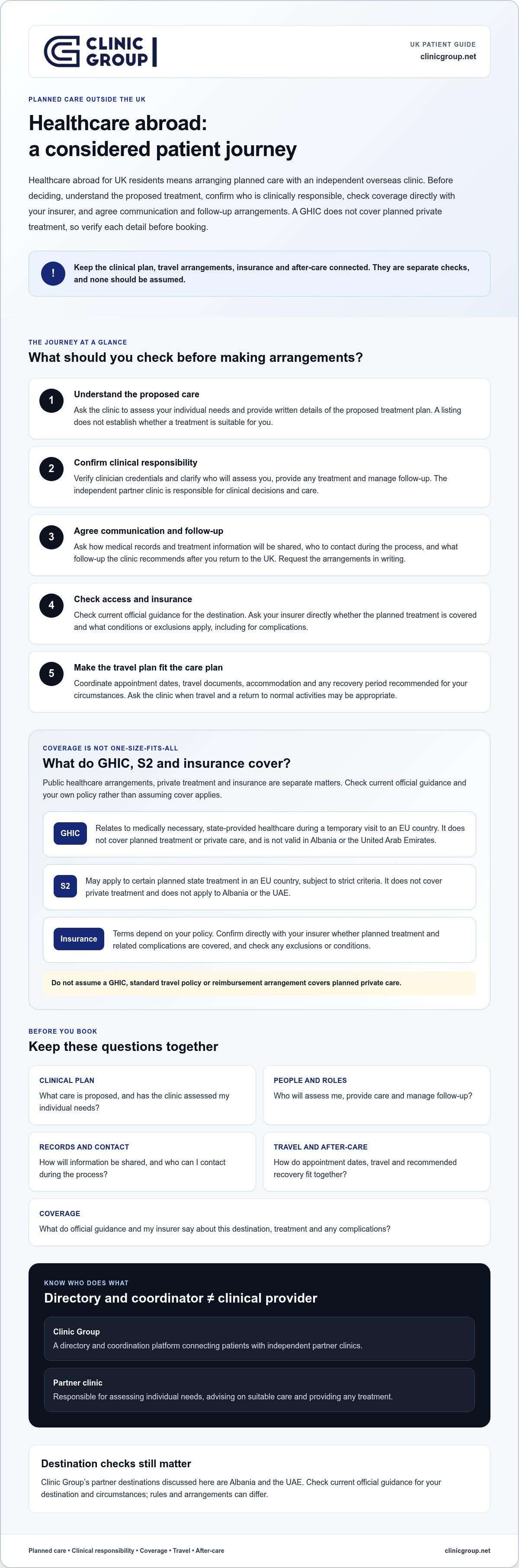
Healthcare abroad UK residents arrange usually means planned private care with an independent overseas clinic, alongside decisions about assessment, travel, insurance and after-care. Before booking, ask for a written plan and itemised quote, confirm who provides clinical care, and check follow-up and insurance directly. A GHIC does not cover planned private treatment.
It’s understandable to focus first on the procedure and clinic, particularly when comparing options from the UK. But a written treatment plan, details about the clinicians and facilities, and an agreed after-care plan are also important when deciding whether to proceed.
This guide explains the patient journey and the questions to ask before making arrangements. It covers how to check clinic credentials, what documents to request, and how to consider travel, insurance and responsibility for clinical care. It also outlines practical points to verify when exploring Clinic Group’s partner destinations in Albania and the UAE, so you can make an informed decision without assuming treatment will be covered or a particular outcome guaranteed.
Key Takeaways
- For healthcare abroad UK residents are considering, distinguish planned private treatment from urgent care during a trip, and check current official guidance for the destination.
- Before choosing a clinic, verify clinician credentials and request written details of the proposed treatment, communication arrangements and follow-up care.
- Plan the journey step by step, including appointments, medical records, travel documents, accommodation and care after returning to the UK.
- Check insurance terms directly with your insurer. Don’t assume a GHIC or standard travel policy covers planned treatment or related complications.
- Clinic Group is a directory and coordinator connecting patients with independent partner clinics. Clinical decisions and treatment remain the clinic’s responsibility.
What does healthcare abroad mean for UK residents?
In this guide, healthcare abroad means arranging planned care outside the UK, with a focus on private treatment. It involves more than selecting a clinic: patients also need to consider clinical assessment, travel, communication, records and follow-up after returning home. This type of planned care is often discussed as medical tourism.
Clinic Group is a directory and coordination platform that connects patients with independent partner clinics. It does not provide clinical care or make treatment decisions. The partner clinic is responsible for assessing your individual needs, advising on suitable care and providing any treatment.
Is planned treatment abroad different from urgent care while travelling?
Yes. Planned treatment is arranged in advance, giving you time to discuss options, share relevant medical information and organise travel. Urgent care is sought during a trip when a health problem needs prompt attention. Rules and arrangements can differ by destination and circumstance, so check current official GOV.UK guidance rather than assuming arrangements for travel also apply to planned care. This guide is about planned treatment, not emergency medical advice.
What kinds of planned treatment can UK residents research abroad?
UK residents exploring healthcare abroad can research listed services such as dentistry, hair transplants, plastic surgery, eye care and wellness. The Clinic Group treatment categories outline these areas. Availability differs between partner clinics, and a listing does not establish that a particular treatment is suitable for you. That requires an individual assessment by the clinic.
Why does the patient journey involve more than the clinic?
A treatment decision should account for each stage of care, not just the appointment itself. Before proceeding, ask how the clinic will assess your case, explain the proposed plan and answer questions. Clarify how your records and treatment information will be shared, who to contact during the process, and what follow-up the clinic recommends after you return to the UK.
Travel arrangements also need to fit the clinical plan. Appointment dates, time away and any recommended recovery period may affect when you can travel and resume normal activities. Ask the clinic to explain these points for your circumstances and provide the plan in writing. For practical prompts on evaluating a provider, read this guide to choosing a clinic for care abroad.
Treat the decision as a sequence of checks: understand the proposed care, confirm who is clinically responsible, clarify communication and follow-up, then decide whether the travel arrangements are workable. This helps you make a considered choice without relying on assumptions about eligibility, coverage or outcomes.
How should UK residents check access, coverage and responsibilities?
For healthcare abroad UK residents are considering, there isn’t one rule that applies to every destination or type of treatment. Public healthcare arrangements, private treatment and insurance are separate matters. Check current NHS and GOV.UK guidance for your destination and circumstances before making plans, and confirm relevant terms directly with your insurer.
A GHIC relates to medically necessary state-provided healthcare during a temporary visit to an EU country, not planned treatment or private care. It isn’t valid in Albania or the United Arab Emirates. The S2 route may apply to certain planned state treatment in an EU country, subject to strict criteria. It doesn’t cover private treatment and doesn’t apply to Albania or the UAE. Check current official guidance rather than assuming either route will apply to you.
What should you verify before relying on healthcare coverage?
Before booking, identify who is responsible for each part of the proposed care and get the answers in writing. Check official guidance and your policy documents for the specific destination and treatment. Don’t assume that public healthcare, a GHIC, ordinary travel insurance or reimbursement arrangements will cover planned private treatment or complications.
- Ask the clinic who will assess you, provide treatment and manage follow-up.
- Ask your insurer whether the planned treatment is covered and what exclusions or conditions apply, including for complications.
- Check official guidance for documentation and any applicable healthcare arrangements for your destination.
NaTHNaC’s guidance on patient safety for medical tourism can help you consider health risks and preparations before travelling. Use it alongside advice from your clinician, insurer and official UK sources.
Who is responsible for treatment and follow-up?
The independent clinic is responsible for clinical assessment and treatment. Ask it to set out the treatment plan, communication arrangements and follow-up process in writing, including who to contact if you have concerns after returning home. Clinic Group can help with referrals and coordination, but it isn’t the treating provider and doesn’t make clinical decisions.
Don’t assume that the NHS will provide or fund corrective care if a problem arises after elective treatment abroad. Ask the clinic what follow-up it offers and speak to your insurer about the limits of your cover before deciding.
How can you assess a clinic and its patient-safety arrangements?
Assess the clinic by asking for clear, specific answers about who will provide care, how decisions are made and what happens after treatment. For healthcare abroad UK residents are considering, a directory listing can help start your research, but it isn’t proof that a clinic is right for you or that a particular outcome will follow. Verify clinician credentials and any claimed standards directly with the clinic.
Written plans clarify the proposed care, responsibilities and follow-up before travel. Request these details in writing, then compare clinics on the clarity and completeness of their answers, not on rankings or promotional claims.
What questions should you ask a clinic before deciding?
Credentials and assessment
Who will assess you and provide the treatment? What qualifications and relevant experience do they have, and what steps are needed to decide whether treatment is suitable?
Treatment plan
Can the clinic provide the proposed plan in writing, including the stages of care, recovery guidance and any materials or devices relevant to the treatment?
Communication
Who is your clinical contact? How will you raise questions before travelling, and who should you contact if your plans or health circumstances change?
Follow-up
What after-care does the clinic provide, and how will it respond to concerns once you’ve returned to the UK? Ask what follow-up involves and how relevant records or advice will be shared.
Compare the written responses from the clinics you’re considering. If an answer is unclear, missing or only given verbally, ask for clarification before making arrangements.
How should you interpret accreditation and quality claims?
Ask which organisation issued any claimed accreditation, what it covers and whether it applies to the specific clinic or facility involved in your care. Where possible, check the claim with the issuing organisation. Don’t infer accreditation, certification or an outcome record from a directory entry. Distinguish a clinic’s stated standards from evidence you have independently confirmed.
For further guidance on what accreditation claims mean and what to check, read the clinic accreditation guide. A careful assessment brings together the clinic’s credentials, written plan, communication process and follow-up arrangements. No directory or accreditation can guarantee that treatment is suitable or ensure a particular result.
What should you organise before travelling abroad for healthcare?
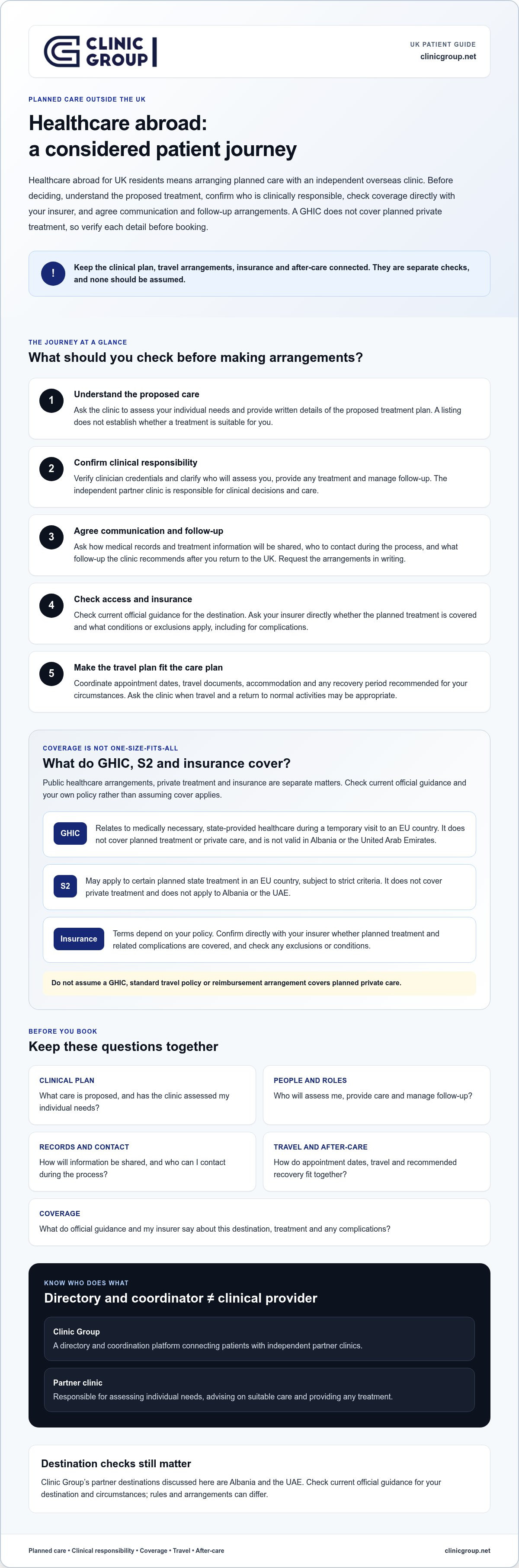
For healthcare abroad UK residents are considering, work through the practical arrangements in order and keep key decisions in writing. Don’t book travel until you understand the proposed care, know who is responsible for each part of the journey and have checked whether your insurance applies to elective treatment and possible complications.
- Make an initial enquiry. Share relevant details about your needs and ask what information the clinic requires to consider your case. Confirm who will review it and who will answer clinical questions.
- Request written treatment details. Ask the clinic for a written clinical plan, an itemised quote and clear terms before making arrangements. Check that the plan explains the proposed care, assessment steps and any further information needed before a decision can be made. Check what the quote includes and whether any parts of the proposed care are listed separately.
- Prepare your records. Ask which medical records, test results or assessments the clinic needs, and how to send them securely. Keep copies of what you share and the clinic’s written response so you can refer to them during consultations.
- Confirm appointments and communication. Get appointment dates, contact details and instructions in writing. Check who coordinates appointments and any travel support, and clarify which arrangements are provided by the clinic or depend on its services. Agree how you’ll communicate if plans change or you need to ask a question.
- Check insurance before booking. Contact your insurer directly and ask whether your specific elective treatment is covered. Confirm the terms and exclusions for complications, follow-up or changes to travel plans. Don’t assume a standard travel policy covers treatment arranged abroad.
- Arrange travel and accommodation. Once the clinical plan and appointment schedule are clear, check the destination’s current travel-document requirements through official sources. Plan accommodation around the clinic’s appointments and any recovery guidance it has provided. Keep travel details accessible alongside clinic contacts.
- Agree follow-up before departure. Ask the clinic how after-care will work when you’re back in the UK, who will respond to concerns and how relevant instructions or records will be shared. Save the agreed arrangements and after-care guidance before travelling, rather than relying on a verbal understanding.
The time and number of trips needed depend on the treatment and the clinic’s plan. For example, dental implants usually require two trips: one for placement, followed by a return for the final crown or bridge after three to six months of osseointegration. All-on-4 treatment often involves a first trip for temporary fixed teeth and a second for the definitive bridge. Ask the clinic to set out your own treatment stages and travel schedule in writing.
Clinic Group can support patient navigation and coordination, but independent partner clinics assess patients and provide clinical care. Confirm what support applies to your chosen clinic and obtain clinical and follow-up details directly from that clinic.
How can Clinic Group help UK residents explore healthcare abroad?
For healthcare abroad UK residents are researching, Clinic Group can provide a starting point for finding listed independent partner clinics and understanding possible next steps. It operates as a directory and coordinator, not as a medical provider: clinics make clinical decisions, assess patients and deliver treatment. Partner locations are mainly in Albania, with a smaller number in the United Arab Emirates. Services vary by clinic.
What support can a patient request from a directory and coordinator?
The journey may begin with an enquiry about a treatment area and a review of the information you provide. Depending on the clinic and the support available, Clinic Group may help with clinic matching, case review, coordination or a request for another clinical opinion. These are navigation and coordination activities, not a diagnosis or substitute for assessment by a qualified clinician.
After a potential match, ask the independent clinic to assess your case and explain whether the proposed treatment may be appropriate. Request its clinical plan and relevant terms directly from the clinic. Travel coordination and patient support can vary by partner, so confirm what is available for your chosen clinic rather than assuming every service is included.
What should you have in hand before making a decision?
Take time to review the information before booking. The key documents and arrangements should come from the clinic and your insurer, not be inferred from a directory listing.
- Written clinical plan: Ask the clinic to explain the proposed treatment and any assessment still needed.
- Itemised quote and terms: Request a written breakdown of what is included and any conditions that apply.
- After-care arrangements: Confirm how follow-up will be handled after you return to the UK, including who to contact with concerns.
- Insurance confirmation: Check directly with your insurer whether the elective treatment and possible complications are covered, and review any exclusions.
If you want another clinical perspective, ask whether an independent second opinion can be arranged and clarify who will provide it. Make your decision only once you understand the clinic’s written plan, responsibilities, follow-up arrangements and your insurance terms. No outcome can be guaranteed.
This article provides general information, not medical advice. A clinician must assess your individual circumstances before treatment decisions are made.
Make your next step an informed one
Healthcare abroad UK residents are considering should be treated as a planned care journey, not simply a choice of clinic. Check current official guidance and insurance terms for your circumstances, verify clinicians and any claimed standards directly, and get the treatment plan and after-care arrangements in writing before booking.
Clinic Group is a directory and coordination platform, not the treating clinic. It connects patients with independent partner clinics, which are responsible for clinical assessment and treatment. Consultation and case-review support may be available; check the current details directly before relying on a particular service. No outcome can be guaranteed.
Taking time to confirm responsibilities, follow-up and cover can help you decide whether the proposed arrangements suit your needs. You can explore the directory and enquire about consultation support before making any commitment.
A clear plan and verified details put you in a stronger position to choose your next step.
Frequently Asked Questions
Can UK residents arrange planned healthcare abroad?
Yes, UK residents can arrange planned private treatment abroad, subject to the requirements and arrangements that apply to their circumstances and destination. Healthcare abroad UK residents research may include dentistry, hair transplants, plastic surgery, eye care or wellness services listed through Clinic Group. Before committing, ask the independent clinic to assess your case and provide a written plan, then check travel arrangements, insurance and follow-up directly.
Is healthcare abroad covered by the NHS?
Don’t assume the NHS will fund planned private treatment abroad or cover complications afterwards. A GHIC relates to medically necessary state healthcare during a temporary visit to an EU country, not planned private treatment. The S2 route may apply to certain planned state care in the EU or Switzerland, subject to strict conditions. Check current NHS and GOV.UK guidance for your destination and circumstances before relying on any arrangement.
How can I check whether an overseas clinic is suitable?
Ask the clinic directly for the treating clinicians’ credentials, the assessment process, a written treatment plan and details of follow-up care. If it claims accreditation, check which organisation issued it and whether it applies to the specific clinic. Compare how clearly clinics answer your questions. A directory listing can help you begin research, but it doesn’t establish individual suitability or guarantee an outcome.
What should I ask before booking treatment abroad?
Request a written clinical plan, an itemised quote and the terms that apply before arranging travel. Ask who will assess and treat you, what records or tests are needed, how to contact the clinic, and what after-care is available once you return to the UK. Confirm appointment dates, travel arrangements and insurance terms as well. If an answer is unclear, ask for written clarification before deciding.
Does travel insurance cover complications from elective treatment abroad?
Not necessarily. Don’t assume that standard travel insurance covers elective treatment or complications arising from it. Contact your insurer before booking and ask about the specific procedure, destination, exclusions and any conditions that apply. Request confirmation in writing and check whether follow-up or changes to travel plans are included. The clinic can explain its own after-care arrangements, but these aren’t a substitute for checking your policy.
What is the difference between a clinic directory and a healthcare provider?
A clinic directory helps patients discover or compare listed clinics; it doesn’t provide clinical treatment. Clinic Group is a directory and coordination platform connecting patients with independent partner clinics. The clinic itself is responsible for assessing your health, recommending treatment and providing clinical care. Support with matching or coordination may help with the process, but it doesn’t replace advice from the treating clinic.
Can Clinic Group provide medical advice or guarantee treatment results?
No. Clinic Group supports clinic discovery, referrals and coordination, but it isn’t the treating provider and can’t give a diagnosis or guarantee results. Clinical advice and treatment decisions must come from the independent clinic after it assesses your individual circumstances. A second opinion may offer another clinical perspective if you request one. This article is general information, not medical advice, and treatment outcomes cannot be guaranteed.

Article by
Clinic Group Editorial Team
The Clinic Group editorial team publishes clear, practical guides for UK and EU patients researching medical travel — from dental implants and hair transplants to plastic surgery and eye care — with a focus on verified clinics, transparent “from” pricing, and safe planning.
Disclaimer
This article is for general information only and is not medical advice, diagnosis, or a substitute for an in-person consultation with a qualified clinician. Treatment suitability, risks, timelines, and costs vary by individual. Clinic Group connects patients with independent clinics; those clinics are responsible for clinical care. Always verify credentials, obtain a written treatment plan and itemised quote, and confirm aftercare arrangements and travel insurance cover (elective procedures are often excluded) before booking. Outcomes cannot be guaranteed.