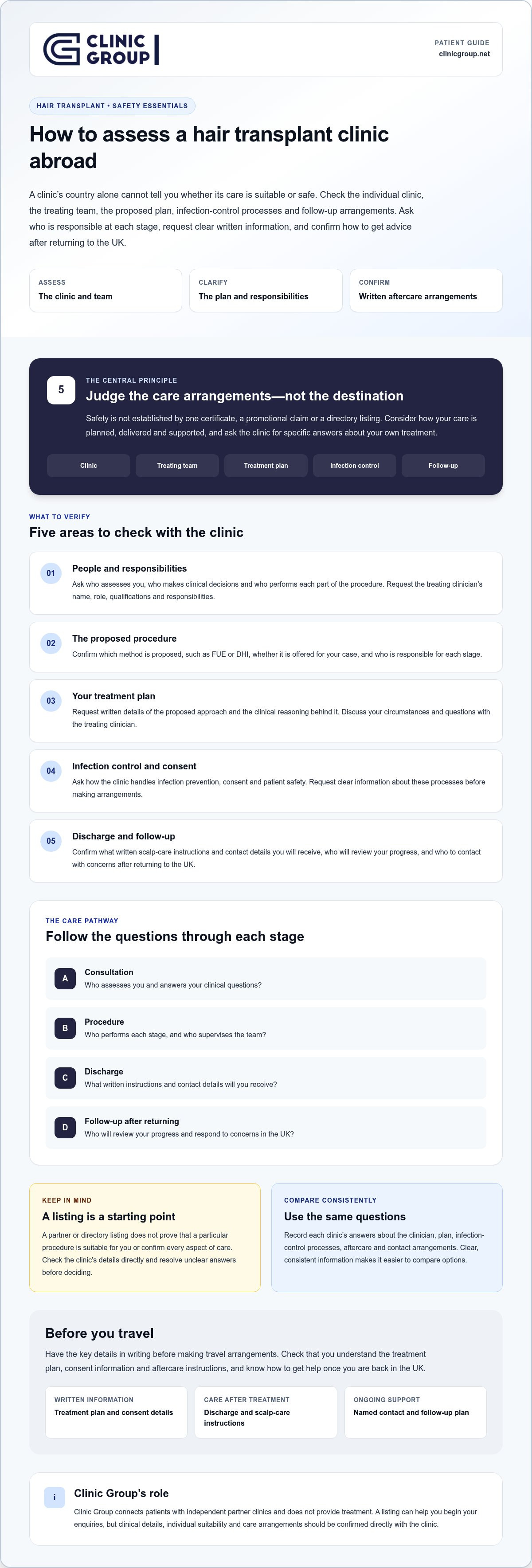
A clinic’s country cannot tell you whether its care is safe. Hair transplant abroad safety depends on the individual clinic, the clinician’s qualifications, who performs each stage, infection-control procedures and the follow-up plan. UK patients should verify these details directly, request them in writing and understand how care will continue after they return home.
It’s reasonable to feel uncertain about who will carry out the procedure, how to check their credentials from the UK and what happens if you need advice afterwards. This guide sets out the questions to ask before deciding, including what to confirm about the clinician, treatment plan, hygiene processes, travel arrangements and aftercare.
Clinic Group connects patients with independent partner clinics; it doesn’t provide treatment. A partner listing can help you start your enquiries, but it isn’t a substitute for checking the clinic’s details directly and getting clear written answers before booking. You’ll be able to compare options using consistent safety questions rather than assumptions about a destination.
Key Takeaways
- Assess hair transplant abroad safety by checking the clinic, treating team, proposed plan, infection-control processes and follow-up arrangements, not by destination alone.
- Ask who will perform each stage of the procedure and request the clinician’s name, role, qualifications and responsibilities.
- Compare clinics by asking the same questions and recording their answers on treatment plans, aftercare and contact arrangements.
- Before travelling, obtain the treatment plan, consent information and aftercare instructions in writing, and confirm how to get help after returning to the UK.
- Use Clinic Group’s listed partner clinics to explore options, while confirming clinical details directly with each independent clinic.
What does hair transplant safety abroad actually mean?
Hair transplant abroad safety depends on verifiable clinic and care arrangements, not the destination alone. Assess the clinic, the treating team, the proposed treatment plan, infection-control processes and follow-up. Ask for clear answers about who is responsible at each stage, and request important information in writing before deciding whether to travel.
A hair transplant is a procedure that moves hair from one area of the scalp to another. For a neutral introduction to the procedure and techniques such as FUE and FUT, see What is hair transplantation. Understanding what is proposed can help you ask focused questions, but suitability and clinical decisions must be discussed with the treating clinician.
Safety is not a single certificate or claim. It is a practical assessment of how your care is planned, delivered and supported. A clinic’s location alone cannot establish whether its services are appropriate for you; the arrangements and evidence need to be considered clinic by clinic.
Which parts of the care pathway should you assess?
Consider each stage separately. A consultation should give you the opportunity to discuss your circumstances and ask the clinician questions. The procedure plan should make clear who is responsible for clinical decisions and each part of the operation. Before leaving the clinic, you should receive discharge information, including instructions for caring for your scalp and what to do if you have concerns. Ask how follow-up will work once you are back in the UK, and who you should contact.
- Consultation: Who assesses you and answers clinical questions?
- Procedure: Who performs each stage, and who supervises the team?
- Discharge: What written instructions and contact details will you receive?
- Follow-up: Who will review your progress and respond to concerns after you return?
Ask the clinic directly if any answer is unclear or if responsibility appears to pass between different people. A directory listing can help you identify a clinic to contact, but it cannot confirm your individual suitability or replace those enquiries. Clinic Group connects patients with independent clinics and does not provide treatment; clinical care is the responsibility of the clinic.
Does a clinic directory listing prove a clinic is safe?
No. A verified or partner listing is a starting point for research, not proof that a particular procedure is suitable or that every aspect of care meets your needs. Treat ratings, promotional language and directory presence as information to consider, not as clinical evidence. Request clinic-specific details, ask who will treat you and seek written answers about the plan and follow-up.
You can review the listed hair transplant services as a first step, then confirm procedure details directly with the independent clinic. Compare the information you receive, and take time to resolve gaps before making arrangements to travel.
What should you verify about a hair transplant clinic and team?
A practical check starts with clear, clinic-specific answers, not general promises. Before deciding, ask who will assess you, who will make the clinical decisions and who will perform each part of the procedure. Request the treating clinician’s name, role, qualifications and relevant experience directly from the clinic, then make sure those details match the written plan.
- People: Identify the clinician responsible for your assessment and treatment, and clarify each team member’s role.
- Procedure: Confirm which method is proposed, such as FUE or DHI, and whether the clinic offers it for your case.
- Plan: Request written details explaining the proposed approach and the clinical reasoning behind it.
- Standards: Ask how the clinic handles infection prevention, consent and patient safety, and request information about these processes.
- Answers: Check that the clinic responds clearly and consistently to your questions before you make travel arrangements.
Which questions should you ask about the treating clinician?
Ask who will assess whether treatment is suitable, plan the procedure and carry out each clinical step. If different people have different responsibilities, ask the clinic to explain those roles plainly and confirm them in writing. Request the clinician’s qualifications and relevant experience from the clinic, then check that the information relates to the person who will actually treat you, not simply a named adviser or spokesperson.
Don’t rely on an unclear job title or a general statement that a team is experienced. If you can’t establish who is accountable for a decision or stage, ask for clarification before proceeding. Clinic Group’s hair transplant treatment information can help you review listed treatment details, but the independent clinic must confirm the method it offers and whether it considers it appropriate for you.
How can you check clinic standards and procedures?
Ask for a written explanation of how the clinic prevents infection, obtains your informed consent and manages patient safety. Consent means receiving information about the proposed treatment, its relevant risks and alternatives so you can decide whether to proceed. The CDC’s guidance on the risks of medical tourism discusses infection among the possible concerns associated with treatment abroad; use this as a prompt to ask the clinic specific questions, rather than as evidence about an individual provider.
For FUE, which involves removing individual hair follicles, or DHI, ask the clinic to describe the proposed method, who performs its clinical steps and what information supports its plan for you. The clinic accreditation and safety guide explains what accreditation can indicate, but don’t assume a clinic holds any particular accreditation. You can explore Clinic Group’s listed clinic and treatment information as one starting point, then confirm credentials and procedures directly with the independent clinic.
How can you compare clinic information without relying on broad claims?
Use the same questions for every clinic and record each answer in writing. This makes it easier to spot missing details, unclear responsibilities or differences in aftercare, rather than relying on phrases such as “high standards” or “experienced team”. A consistent comparison can help you assess hair transplant abroad safety on the details that matter to your care.
Compare the actual information supplied, not just the proposed method. FUE and DHI describe hair transplant techniques; neither, by itself, proves that a clinic’s staff, facilities or follow-up arrangements are suitable. Ask for a written plan that names the clinic, identifies the treating clinician and states the proposed method. If anything is missing, request clarification before making arrangements.
| What to compare | Question to ask | What to record |
|---|---|---|
| Clinician details | Who assesses me and is responsible for the procedure? | Name, role, qualifications and responsibilities, as confirmed by the clinic. |
| Written plan | Does the plan identify the clinic, clinician and proposed method? | The method offered and any points that need further explanation. |
| Aftercare | What follow-up is available after I return to the UK? | How follow-up works, who provides it and what it covers. |
| Contact arrangements | How do I reach the clinical team if questions arise? | Contact details and the process for raising concerns. |
Which evidence is useful when comparing clinics?
Specific written answers are more useful than broad promotional claims. Keep copies of each clinic’s response and check that the information is consistent across its messages, consultation and written plan. If the plan uses a different clinician’s name from the one discussed with you, or leaves the procedure method unclear, ask the clinic to resolve that discrepancy. You can also read Clinic Group’s guide to clinic accreditation and safety for questions to consider when reviewing claims.
Include aftercare in your comparison from the outset. A clinic should explain how you can contact its clinical team if questions come up after treatment, rather than leaving you to assume that a coordinator or directory will provide clinical advice. Record the named contact or route given by each clinic and ask what happens if your usual contact is unavailable.
How should you interpret accreditation and ratings?
If a clinic refers to accreditation, ask for the exact name of the accreditation, the issuing body and confirmation that it applies to that clinic. Check those details with the issuing body where possible; don’t assume a partner listing means a clinic holds a particular accreditation. The NIH article on hair transplant safety standards offers further context on care considerations.
Ratings can offer a limited view of patient feedback, but they don’t establish a clinician’s qualifications, the quality of your proposed plan or the reliability of follow-up. Treat them as one small part of your research, alongside clinic-specific written evidence and direct answers.
What should you confirm before travelling for a hair transplant?
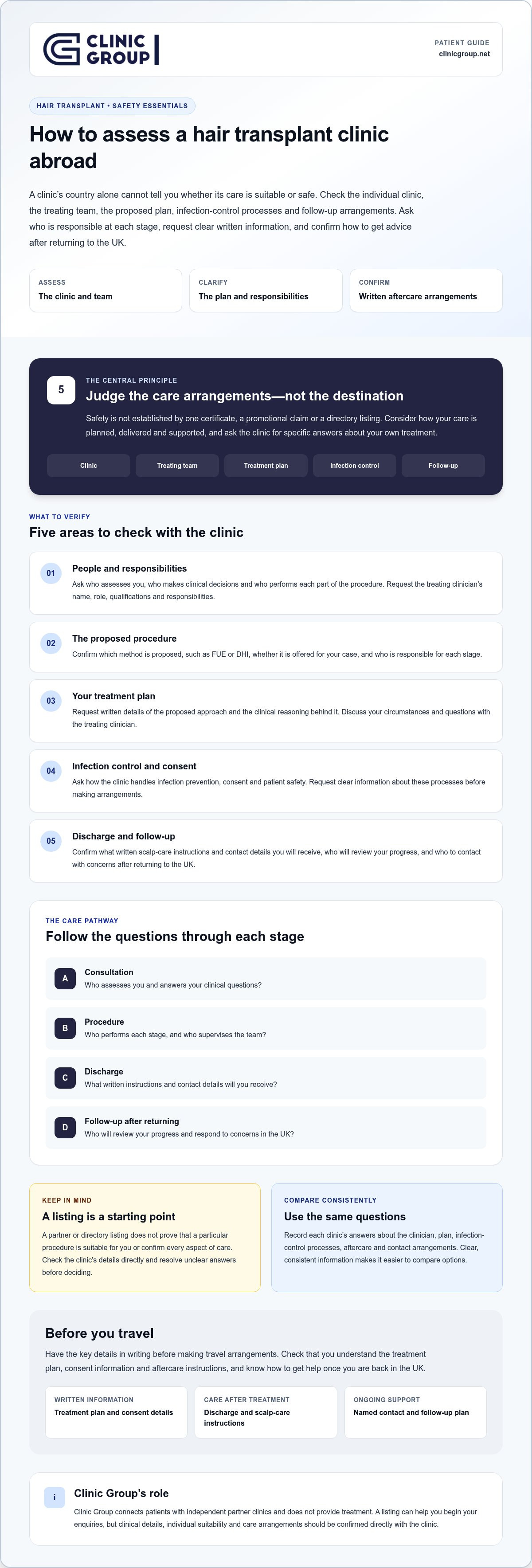
Before booking travel, make sure you understand the proposed care and know how you’ll get support afterwards. A written plan should match what the treating clinician discussed with you, and any unanswered questions should be resolved before you commit. Use this checklist to organise your final checks.
- Complete a consultation. Ask what assessment the clinic needs before deciding whether treatment is suitable for you. Make sure you can raise questions with the clinician responsible for your care. The guide to pre-surgery consultation questions can help you prepare.
- Get the treatment plan in writing. Check that it names the clinic and responsible clinician, states the proposed method, and explains the planned care. Ask who will make clinical decisions and who will perform each part of the procedure.
- Read the consent information. Ask for written information about the procedure, relevant risks, alternatives and what to expect. If a term or instruction is unclear, ask the clinic to explain it before you agree.
- Confirm aftercare and contact arrangements. Find out what follow-up is planned, how the clinic will communicate with you after you return to the UK, and whom to contact if you have a concern. Confirm who provides each part of that support.
- Check insurance directly. Contact your insurer and ask whether the policy covers elective treatment abroad and complications arising from it. Don’t assume that standard travel insurance includes either. Ask for written confirmation of the relevant cover and exclusions.
- Organise your travel around the clinic’s guidance. Confirm appointment details and any travel instructions with the clinic, including what arrangements it recommends after the procedure. Keep copies of the confirmed plan, consent information, aftercare instructions, insurance terms and clinic contact details.
What should a written treatment plan explain?
The plan should make clear what method is proposed, who is responsible for your care, what assessment has informed the recommendation and how to contact the clinical team. Check that the written information reflects your consultation. If your suitability has not been confirmed, ask what further assessment is needed and when that decision will be made. Keep the clinic’s written answers together so you can refer to them when planning.
How should you plan aftercare and travel arrangements?
Ask the clinic to explain the expected follow-up and how to reach the appropriate clinical contact once you’re home. Don’t assume a coordinator or directory can provide clinical advice; confirm who is responsible for it. Clear arrangements are part of hair transplant abroad safety, alongside the procedure itself. If information changes, request an updated plan before travelling.
How can Clinic Group help you explore listed hair transplant clinics?
Clinic Group is a medical tourism platform and directory that can help patients explore listed independent hair transplant clinics. It may support clinic matching, case review and travel coordination, but it doesn’t assess your medical suitability or provide treatment. The independent clinic is responsible for your clinical assessment, treatment recommendations and care.
Clinic Group’s partner status can help you identify a clinic to contact, but it isn’t a substitute for checking the clinician’s credentials, proposed plan and aftercare arrangements yourself. For example, you can review the Nobi Hair clinic profile to see listed clinic information, then contact the clinic directly to confirm who would treat you and what care it proposes.
What happens when you request clinic matching?
The first step is an enquiry about the treatment you’re considering. Clinic Group may then support a case review and help match your enquiry with a listed independent clinic. Ask what information is needed for this process and whether any material you provide will be shared with the clinic. A clinic may need to assess you directly before it can confirm suitability or recommend a plan.
You can ask the clinic questions about its recommendation or seek another clinical opinion before deciding. Travel coordination support may help with arrangements, but it isn’t clinical advice. Clinic Group doesn’t perform hair transplants, and clinical decisions remain with the independent clinic that assesses and treats you.
What should you do before making a decision?
Use the clinic’s written information to compare its answers with what you’ve learned from other enquiries. Check that the plan identifies the treating clinician and proposed method, and that you understand the assessment, consent and aftercare arrangements. If a responsibility is unclear, ask the clinic directly who will handle it and request a written response.
Don’t proceed until you know how follow-up will work after you return to the UK, whom to contact with concerns and whether your insurer confirms cover for elective treatment and possible complications. Hair transplant abroad safety depends on those clinic-specific details and the continuity of care, not on a directory listing alone. Outcomes can’t be guaranteed, so take the time you need to understand the plan and its risks.
Make your decision with clear, written answers
Hair transplant abroad safety is best assessed through the details of a clinic’s care, not assumptions about its destination. Before deciding, confirm who will assess and treat you, which method is proposed, what the written plan covers and how the clinic will manage follow-up. Compare clinics by asking the same questions and checking that their answers are specific and consistent.
Make sure you know whom to contact after returning to the UK, and check directly with your insurer whether elective treatment and possible complications are covered. Clinic Group is a directory and coordination service connecting patients with independent partner clinics. It can help you explore listed options, but each clinic is responsible for assessing patients and providing clinical care.
Take the time you need to resolve uncertainties before travelling. Clear information can help you make a considered decision with greater confidence.
Frequently Asked Questions
Is a hair transplant abroad safe?
No destination label can establish whether an individual clinic or procedure is safe for you. Hair transplant abroad safety depends on the clinic, treating clinician, personal assessment, written treatment plan and follow-up arrangements. Verify these details directly with the clinic and seek qualified medical advice about your suitability. Outcomes cannot be guaranteed. Clinic Group connects patients with independent partner clinics, but it doesn’t perform surgery or provide clinical treatment.
How can I check whether an overseas hair transplant clinic is legitimate?
Ask for the clinic’s legal identity and the treating clinician’s name, qualifications and responsibilities. Request written patient information that explains the proposed care and follow-up, and check that it identifies the clinic and clinician involved. If the clinic claims accreditation, ask for its exact name and issuing body, then verify the claim with that body where possible. A directory listing or online rating can inform initial research, but can’t replace direct checks or personal assessment.
What should I ask a hair transplant surgeon before treatment?
Ask who will assess your suitability, plan the procedure and perform each stage. Confirm which method is proposed, what risks and alternatives the clinician considers relevant to you, and how follow-up will work. Request clear written answers and time to consider them before deciding. A qualified clinician should answer questions about your individual medical suitability. A directory service or general information article can help you prepare, but can’t make that clinical assessment.
Does FUE or DHI mean a hair transplant clinic is safer?
No. FUE and DHI describe hair transplant methods; neither establishes the overall quality or safety of a clinic. Check the treating clinician, your assessment, the written plan, consent information and aftercare separately. Ask the clinic to explain why it proposes a particular method for you and who will carry out each stage. Neither method is suitable for everyone, and choosing one cannot guarantee a particular result.
What aftercare should I confirm before travelling for a hair transplant?
Get written details of planned follow-up, contact arrangements and instructions for raising questions after you return home. Confirm who provides clinical care, whom to contact if a concern arises and how the clinic will communicate with you. Ask your insurer directly whether elective treatment and possible complications are covered, and check exclusions in writing. Confirm these arrangements before booking, and make sure you understand who is responsible for each part of your follow-up.
Can Clinic Group perform or guarantee a hair transplant?
No. Clinic Group is a directory and coordination platform that connects patients with independent clinics; it doesn’t perform surgery or provide clinical care. The independent clinic assesses patients and is responsible for treatment. Clinic Group can’t guarantee surgical outcomes, and outcomes can’t be guaranteed. Before deciding, check the treating clinician’s details, request a written plan and confirm aftercare arrangements directly with the clinic.
What documents should I have before booking a hair transplant abroad?
Ask for a written treatment plan naming the clinic and responsible clinician, with the proposed method and procedure details. Request consent information, aftercare instructions and contact details for follow-up. Ask the clinic to clarify what its plan covers, and confirm insurance cover for elective treatment and possible complications directly with your insurer. Keep copies of the plan and correspondence. If important details remain unclear, seek written clarification before deciding to book.

Article by
Clinic Group Editorial Team
The Clinic Group editorial team publishes clear, practical guides for UK and EU patients researching medical travel — from dental implants and hair transplants to plastic surgery and eye care — with a focus on verified clinics, transparent “from” pricing, and safe planning.
Disclaimer
This article is for general information only and is not medical advice, diagnosis, or a substitute for an in-person consultation with a qualified clinician. Treatment suitability, risks, timelines, and costs vary by individual. Clinic Group connects patients with independent clinics; those clinics are responsible for clinical care. Always verify credentials, obtain a written treatment plan and itemised quote, and confirm aftercare arrangements and travel insurance cover (elective procedures are often excluded) before booking. Outcomes cannot be guaranteed.