A poor hair transplant does not always mean the result cannot be improved. Botched hair transplant repair may involve surgical correction, a non-surgical way to change the appearance, or no further procedure. The right option depends on the cause of the concern and the findings of a clinical assessment.
It is understandable to want a clear explanation when the outcome differs from what you expected. Before considering another procedure, distinguish appearance concerns from signs that need medical attention. A careful review can clarify what may be addressed, what limitations apply and whether further treatment is appropriate.
This guide covers common causes of unsatisfactory results, possible approaches to graft and FUT scar concerns, and factors that shape repair planning. It also explains costs to consider, risks of corrective surgery and how to assess a verified clinic. The aim is to help you ask informed questions and set realistic expectations, rather than feel rushed into another procedure.
Key Takeaways
- Identify what needs correcting, such as an unnatural hairline, uneven growth or visible scarring, before considering a repair plan.
- Allow the original transplant time to mature; results are often assessed around 12 months after the procedure.
- Understand how graft removal, relocation, further transplantation or scar treatment may address different concerns.
- Bear in mind that donor hair availability, scalp condition and ongoing hair loss can shape the options and the timing of repair.
- Choose a repair plan guided by a surgeon experienced in corrective cases, with attention to assessment, risks and aftercare.
Can a bad hair transplant be fixed?
An unsatisfactory transplant may be improved, but the options depend on the cause and the condition of the scalp. A surgeon’s assessment can distinguish a cosmetic concern from damage that needs medical attention before further treatment is considered.
Recognising poor transplant results
Poor results are features that make transplanted hair look unlike natural growth. A low, straight hairline, for example, may look harsh against a person’s features, while larger grafts at its edge can make the outline conspicuous. Grafts growing against nearby hair can also disrupt the overall direction, even when coverage is reasonable.
Look for abrupt changes between transplanted and surrounding hair, rather than judging one small area alone. A sparse patch, visible grafts or an uneven outline can each point to a different concern. If little or no growth appears in the transplanted area after 6-8 months, a clinical review can help distinguish slow development from a result that needs further assessment.
Appearance can change as the transplant matures. The final result is commonly assessed around 12 months after the procedure, so an early impression may not show how the hairline or density will settle. A dated photograph taken in consistent lighting can help show changes over time and give a surgeon a clearer comparison during assessment.
Correcting unnatural hairlines and growth
The correction plan depends on whether the main concern is position, direction or density. A hairline that looks too low or unusually straight may need a different approach from grafts that point away from surrounding hair. Before deciding what could create a more natural-looking outline, the surgeon considers the person’s features and existing growth pattern.
Some patients can disguise an uneven edge by growing their hair longer or changing its style. This may help when the concern is most visible with short hair or in particular lighting. Scalp care may support healthy hair growth, but it does not add hair or alter graft direction.
Hairline angulation is one detail assessed during planning. A reported concern is an angle of 15 to 30 degrees; the relevant question is how transplanted hairs sit beside nearby strands. Repair aims to improve the overall appearance, not simply to increase density or lower the hairline further.
Responding to clinic-caused harm
If a UK clinic may have caused harm, seek prompt medical assessment, especially if symptoms are worsening. Record when the problem began, take dated photographs, and keep correspondence and treatment documents. These details can help a clinician understand what happened and assess the scalp without relying on memory alone.
Before another procedure, have a surgeon assess the affected area and explain the findings. A Nobi Hair clinic profile is one source of information about a hair clinic when exploring an assessment. Keep the original clinic’s aftercare instructions and any follow-up notes available for the consultation.
If the concern is a visible scar rather than poor growth, make that clear during the assessment. The response may depend on the affected area, scalp condition and treatment already received. A clear account of the harm and the result you hope for helps the surgeon discuss appropriate next steps.
What does hair transplant repair cost?
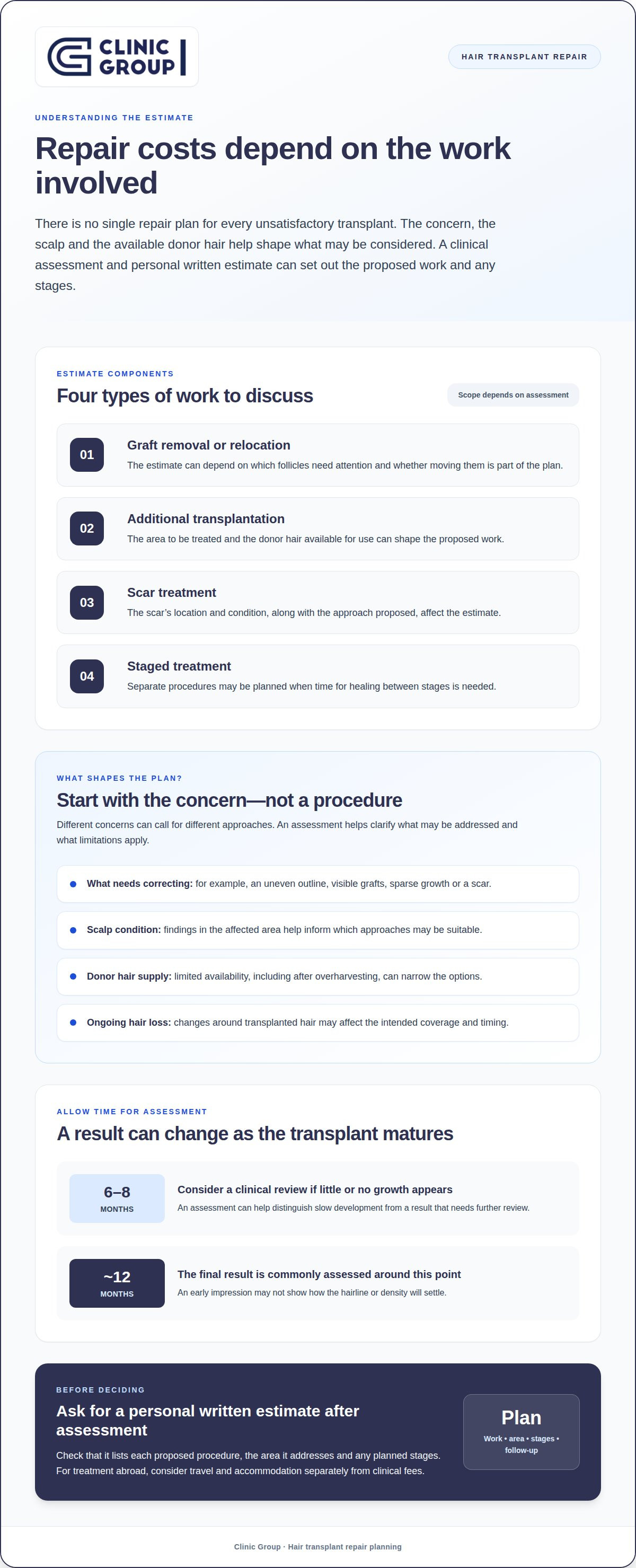
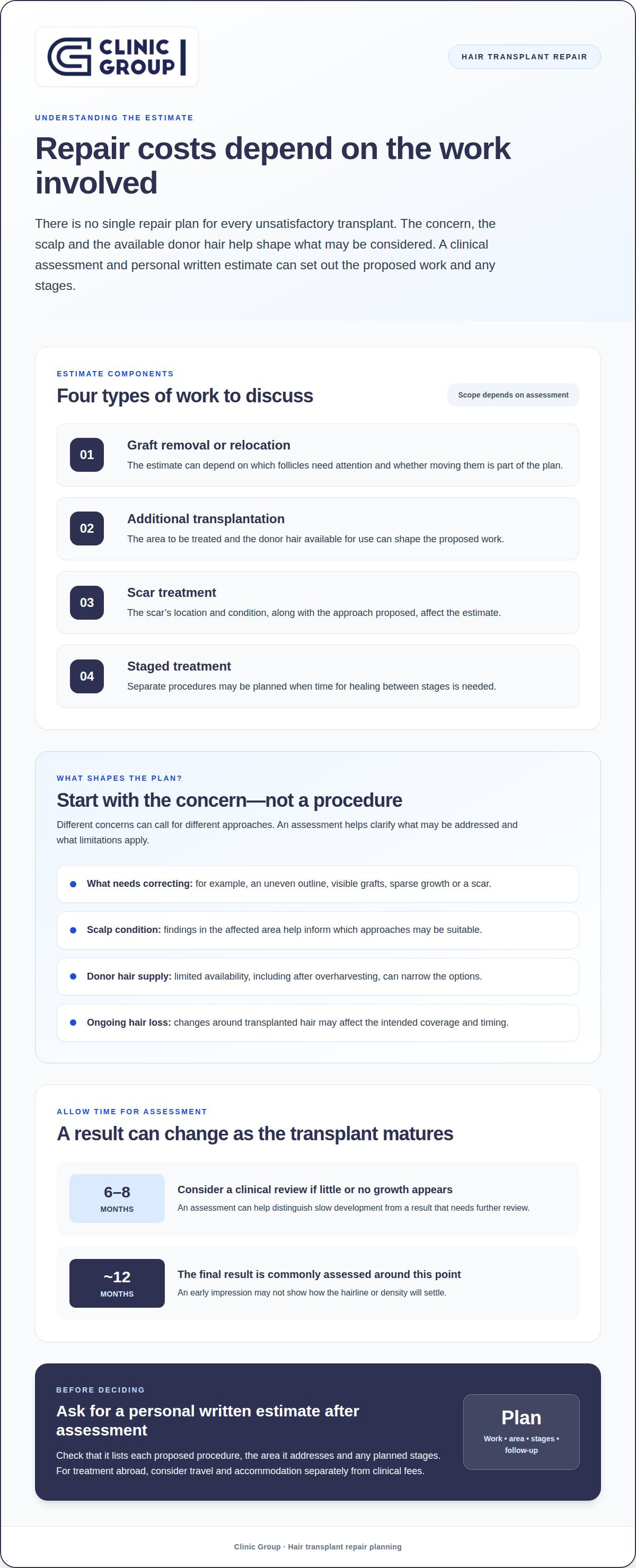
The cost of corrective treatment depends on the proposed work, affected area and clinical findings. A plan to remove grafts differs from one focused on adding coverage or treating a scar. For UK patients, an individual assessment and written estimate provide the clearest basis for understanding the likely financial commitment.
Cost planning should link each proposed step to the concern it addresses. Where relevant, a written estimate can set out the scope and separate the following work:
| Work considered | What can shape the estimate |
|---|---|
| Graft removal or relocation | Which follicles need attention and whether relocation is part of the plan. |
| Additional transplantation | The size of the area and the donor hair available for use. |
| Scar treatment | The scar’s location, condition and proposed approach. |
| Staged treatment | Whether healing between separate procedures is needed. |
Why can the final cost vary?
A surgeon first needs to establish why the original result is unsatisfactory. Planning, graft handling, placement and limited growth can each lead to different corrective plans. Ongoing hair loss may also affect the intended coverage. Overharvesting can reduce donor supply, narrowing the options and changing the scope of treatment.
Ask for a personal written quote after clinical assessment. It should describe each proposed procedure, the area it addresses and any planned stages. Check that the estimate matches the written treatment plan instead of relying on a single total. This helps you judge whether the proposed work addresses your main concern, such as patchiness, an irregular outline or a visible scar.
Clarify what the estimate includes and what follow-up arrangements apply. For treatment abroad, consider travel and accommodation separately from clinical fees, and keep the written plan and quote together. These details help you understand the full commitment before deciding whether to proceed.
Why do failed results affect more than appearance?
Hair restoration can carry emotional weight, as patients may have invested time, money and hope in the original procedure. Continued hair loss around transplanted hair can change the appearance over time, even when some grafts grow. For example, thinning beside a transplanted hairline may make its shape more noticeable and affect how a patient feels about the result.
Repair and revision procedures accounted for a significant share of corrective work across modern clinics, reflecting the demand for specialized care. This figure describes procedures, not an individual’s likelihood of needing corrective work. It does show that revision forms part of hair restoration practice, with each plan shaped by its own clinical findings.
When weighing the expense, consider the proposed correction alongside donor limitations, possible stages and the emotional importance of the concern. A clear written plan helps you understand the proposed work before making a financial decision.
How does hair transplant repair work?
Planning hair transplant repair starts with identifying which grafts, scalp areas or scars need attention. The plan then takes account of the previous transplant, donor supply and scalp condition.
Addressing poor graft placement
Graft placement refers to where each follicle sits and the direction its hair grows. Grafts placed too shallowly or densely can create a raised, goosebump-like appearance; placement that is too deep can leave pitted marks. An incorrect angle can make hair stand out or grow against surrounding strands, so density alone cannot correct an unnatural result.
During assessment, the surgeon examines the grafts and their direction in relation to surrounding hair. The hairline needs particular care: grafts placed in a straight row may look artificial, even when they grow. Planning hair transplant repair means accounting for existing angles before adding or relocating hair.
Removing and relocating grafts
Selective graft removal can address follicles that sit too low, point in the wrong direction or disrupt the hairline. FUE, or follicular unit extraction, removes individual grafts; some may be relocated to a more suitable area. The FUE hair transplant method uses this individual-graft approach.
Further transplantation can add coverage where healthy donor hair remains. If grafts are removed, the scalp must heal before another transplant takes place in the same area. Staging the work may therefore be part of the plan, rather than removing and replacing grafts in one session.
Planning revision and graft maturation
Revision timing depends on recovery and how fully the previous transplant has matured. New growth can begin around 3-4 months, but this is too early to judge the final appearance. Revision surgery is usually performed 6-24 months after the previous procedure; final results are commonly assessed after 12-18 months.
One reported revision case used around 800 grafts, or 2,500 hairs, to address patchiness and density. That example illustrates a treatment plan, not a standard graft number. Donor availability and the area needing correction determine the amount considered.
Scar repair needs a separate assessment. A scar’s size, thickness and rigidity affect the approach, and scar tissue can make transplantation more complex than routine restoration. Reduced blood supply can limit graft growth, so transplanting into scar tissue requires specialist skill. FUE may also be considered to place individual grafts and soften the scar’s appearance. The surgeon examines the scar and surrounding donor area before deciding whether transplantation is suitable.
What are the risks and signs of a botched hair transplant?
Signs can include persistently sparse growth, an unnatural pattern or visible changes in the donor area. Timing matters: transplanted hairs often shed early, while final results are expected, on average, about one year after surgery. Consider the appearance in light of the recovery timeline, rather than judging it from early shedding alone.
Hair shedding around two weeks after transplantation can be temporary shock loss. New growth may begin after the early shedding period, so this change alone doesn’t establish that the transplant has failed. By contrast, a lack of density in the recipient area around 12-18 months after surgery may indicate a poor result that needs assessment.
Examine both the recipient and donor areas. Poor technique can leave a widened or incorrectly positioned scar. Overharvesting may leave the donor area sparse or moth-eaten. An abrupt change in density, visible scarring or unnatural distribution can help a surgeon understand what may have happened.
Corrective surgery also carries risks. A poorly planned repair can worsen scarring or damage the donor and recipient areas. One patient case described scalp necrosis, meaning skin and some grafts died, after poor surgical technique. This illustrates why the scalp’s condition and previous surgery need careful clinical assessment before another procedure.
Ongoing genetic hair loss can change the result even when transplanted hairs remain. Hair may thin around the transplanted area over time, leaving an isolated patch or unnatural pattern. A surgeon assessing repair considers the current hair-loss pattern, donor supply, scalp condition and previous graft placement together, rather than focusing only on the transplanted hairline.
Aftercare and documentation help make changes easier to assess. Follow the operating clinic’s aftercare instructions, attend planned reviews and take dated photographs. Note when shedding, redness, discomfort or other scalp changes occur, then share the timeline during clinical assessment. If the scalp appears damaged or symptoms worsen, seek prompt medical attention.
A poor result can affect confidence, social comfort and how patients feel about their appearance. Consider these concerns alongside physical findings, especially when deciding whether further surgery is appropriate. Before any repair, discuss expected changes, possible limitations and the recovery plan with the assessing surgeon. A clear review of the donor area and current hair loss can help avoid a rushed decision.
How can you choose a verified hair transplant clinic?
Clinic Group’s hair transplant referrals help patients find verified clinics for assessment and treatment planning. For corrective work, look for a surgeon with repair experience and clear information about their role, credentials and approach to previous transplants.
Repair differs from planning a first procedure. A suitable assessment considers the original graft placement, donor area, current hair-loss pattern, scalp condition and the change you hope to achieve. The surgeon should lead the consultation and decide on the treatment plan, graft amount and hairline design. These discussions help establish whether the proposed approach addresses your concern.
When comparing clinic information, look for details that make clinical responsibility clear:
- The surgeon’s name, biography and credentials are available.
- The surgeon examines the patient and makes the treatment decision, rather than leaving key decisions to technicians.
- The clinic’s registration with the CQC or an equivalent regulatory body is clear.
- Examples of repair work show cases relevant to your concern, such as a low hairline, sparse growth or a FUT scar.
- The plan explains the limits created by donor hair, scalp condition or continued hair loss.
Repair photographs can help you understand a surgeon’s experience, but they cannot predict your result. Look for examples that show the original concern and the later appearance. A former repair patient’s recommendation may also offer a perspective on their experience. The clinic’s explanation should distinguish repair planning from routine hair restoration surgery.
For UK patients considering treatment abroad, practical planning matters as much as the clinical plan. Understand where the consultation and procedure take place, who leads the assessment and how follow-up is arranged. When comparing verified clinics, use the same questions for each option. This helps clarify differences in clinical roles and aftercare without relying on promotional claims.
Clinic Group’s referrals connect patients with verified clinics; Clinic Group does not provide hair transplant treatment directly. Consider a consultation when the original result has matured, or when scarring, sparse growth or an unnatural pattern needs professional assessment. The consultation allows the surgeon to examine the scalp and discuss options suited to the findings.
For guidance on the next step, contact Clinic Group about hair transplant referrals.
Considering treatment in Albania? Request a free consultation with Clinic Group.
Frequently Asked Questions
What is overharvesting?
Overharvesting occurs when too many hair follicles are removed from the donor area, leaving visible thinning or an uneven, moth-eaten appearance. It can limit the healthy hair available for later restoration, so an assessment should examine the donor area as well as the transplanted region. For example, a patchy pattern at the back or sides may affect whether further grafts can be taken safely.
What is an unnatural hairline?
An unnatural hairline is one whose position, shape or growth pattern looks out of place with a person’s features and surrounding hair. A sharply straight outline, an overly low position or hairs growing in inconsistent directions can make it look artificial. A useful assessment considers how the hairline looks from different angles and how it may change as non-transplanted hair continues to thin.
What is lack of density?
Lack of density means the transplanted area looks too sparse to provide the intended coverage. The scalp may remain visible between grafts, for example, or a patch may contrast with denser neighbouring hair. Consider density alongside the hair-loss pattern: thinning in surrounding hair can make an earlier transplant look less full over time, even when transplanted hairs remain.
How can a failed hair transplant be repaired?
Repair may combine approaches, depending on the specific concern. A surgeon may remove selected grafts, relocate suitable follicles, add grafts to sparse areas or address a visible scar. An irregular hairline, for example, might need selective removal before further transplantation is considered. The plan also accounts for donor hair availability, scalp condition and whether ongoing hair loss could affect the appearance.
When is it safe to have corrective hair transplant surgery?
Corrective surgery is usually planned after the original transplant has matured and the scalp has recovered. Revision procedures are commonly performed 6-24 months after the previous transplant, while the appearance is often assessed around 12 months. Timing depends on growth, healing and the proposed correction. If grafts need removal, the scalp must heal before another transplant in that same area.
What are the alternatives to surgery for repairing a bad hair transplant?
Changing your hairstyle or growing your hair longer may help disguise uneven areas without another operation. Scalp care, including keeping the scalp clean and nourished, may support scalp health but will not correct a poor transplant or add hair. These options may be considered when surgery is unsuitable or donor hair is limited, with the choice shaped by the area and the look you want.
How much does hair transplant repair cost in the UK?
Repair costs depend on the proposed work, such as removing grafts, adding coverage or treating a scar. Scalp condition and available donor hair can also affect the plan. There is no single repair plan for every patient, so ask for a personal written quote after assessment. It should set out the proposed treatment and itemise what the estimate covers.
What are the risks and success rates of corrective hair transplant surgery?
There is no single success rate for every corrective case. Outcomes depend on factors such as scalp condition, donor supply, the original procedure and the planned correction. Further surgery can worsen scarring or affect the donor and recipient areas, and some cases need staged treatment. Ask the assessing surgeon to explain the risks and likely limitations in light of your own findings.

Article by
Clinic Group Editorial Team
The Clinic Group editorial team publishes clear, practical guides for UK and EU patients researching medical travel — from dental implants and hair transplants to plastic surgery and eye care — with a focus on verified clinics, transparent “from” pricing, and safe planning.
Disclaimer
This article is for general information only and is not medical advice, diagnosis, or a substitute for an in-person consultation with a qualified clinician. Treatment suitability, risks, timelines, and costs vary by individual. Clinic Group connects patients with independent clinics; those clinics are responsible for clinical care. Always verify credentials, obtain a written treatment plan and itemised quote, and confirm aftercare arrangements and travel insurance cover (elective procedures are often excluded) before booking. Outcomes cannot be guaranteed.