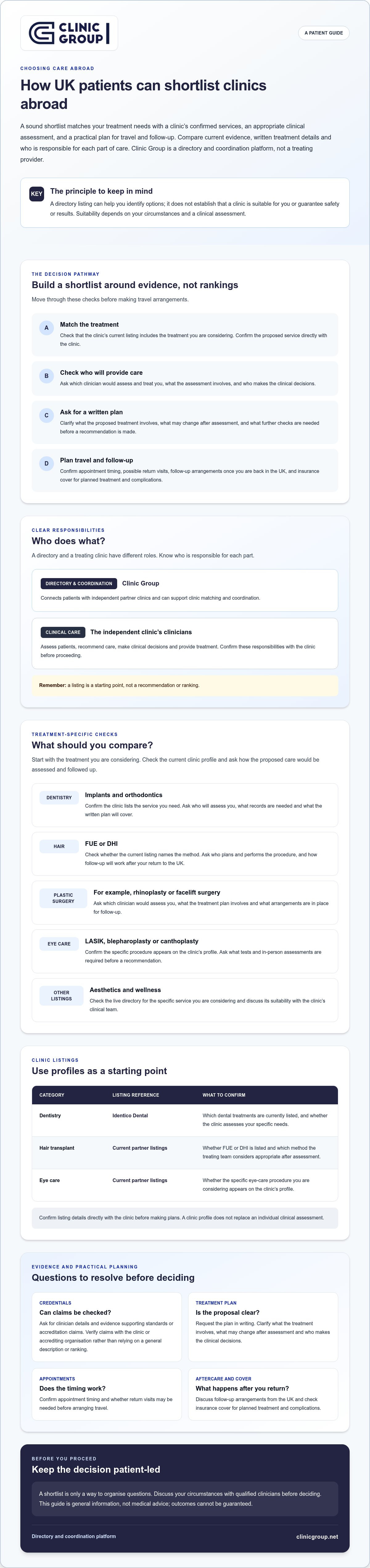
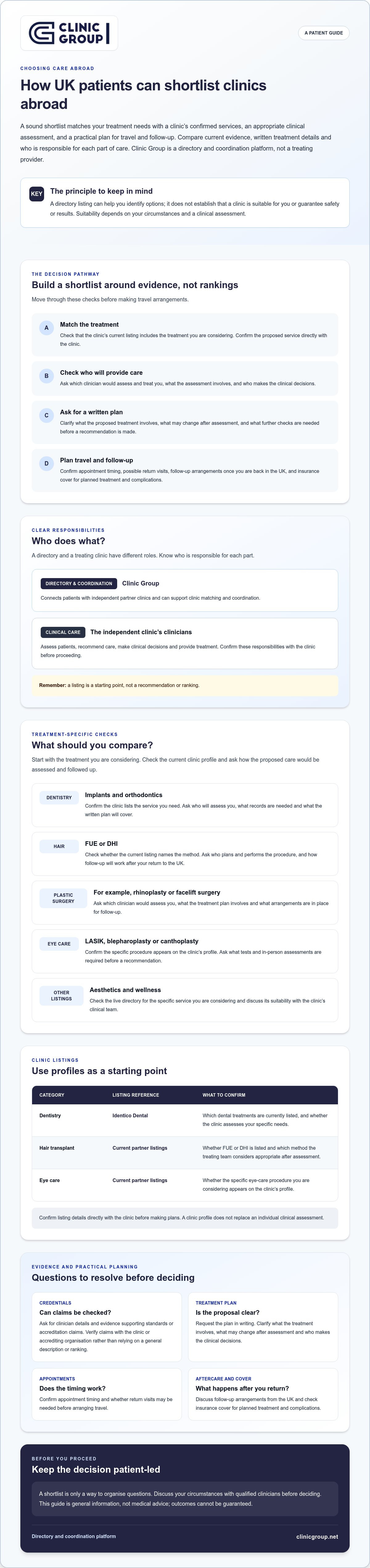
The best clinics abroad for UK patients are not identified by a high ranking alone. Compare each clinic’s relevant services, checkable credentials, written treatment plan and aftercare arrangements. Clinic Group is a directory and coordination platform connecting patients with independent partner clinics, not a treating provider.
It’s reasonable to want clarity before making plans, particularly when a directory, coordinator and clinic may have different roles. Look beyond listings to understand who makes clinical decisions, what your proposed treatment involves and how follow-up will work once you’re back in the UK.
This guide covers practical checks for shortlisting clinics by treatment category, reviewing credentials and requesting a written plan. It also explains how to clarify consultation arrangements, travel, aftercare and insurance before deciding whether to proceed.
Key Takeaways
- Check that a clinic’s current listing includes the treatment you’re considering, then discuss suitability with its clinical team.
- When comparing the best clinics abroad for UK patients, verify clinician details and ask for evidence supporting accreditation claims.
- Request a written treatment plan and itemised quote. Clarify what is included, what might change after assessment and who makes clinical decisions.
- Before booking, confirm appointment timing, possible return visits, follow-up arrangements and insurance cover for planned treatment and complications.
- Clinic Group can support clinic matching and coordination, but independent partner clinics remain responsible for clinical care and treatment decisions.
How should UK patients compare clinics abroad for their treatment?
A useful shortlist matches your treatment needs with a clinic’s confirmed services, an appropriate clinical assessment and a practical plan for travel and follow-up. The best clinics abroad for UK patients aren’t simply those with the highest ranking. Compare current evidence, written treatment details and who is responsible for each part of care.
Medical tourism means travelling to another country to access healthcare. The Medical tourism overview explains the term, but choosing a provider calls for treatment-specific checks. Suitability depends on your circumstances and a clinical assessment, as well as whether you can manage the journey, recovery arrangements and any follow-up visits.
What does “verified clinic” mean in this directory?
Clinic Group is a directory and coordination platform that connects patients with independent partner clinics. It doesn’t provide dental, surgical or other clinical treatment. The clinic’s clinicians assess patients, recommend care and make clinical decisions. A directory listing can help you identify options, but it doesn’t establish that a clinic is suitable for you or guarantee safety or results.
Check the clinic’s current listing and ask for details relevant to your proposed treatment. Confirm which clinician would assess and treat you, what the assessment involves and what evidence supports claims about standards or accreditation. Verify accreditation claims with the clinic or accrediting organisation, rather than relying on a general description or ranking.
Which treatment categories can patients compare?
Start with the treatment you’re considering, then compare clinics whose current listings confirm that service. While dedicated platforms such as Storge focus on connecting individuals and couples with specialised fertility resources, Clinic Group’s directory covers categories including:
- Dentistry: implants, cosmetic dentistry, orthodontics and restorative treatment.
- Hair transplants: FUE and DHI, with PRP where offered by clinics.
- Plastic surgery: facial and body procedures, including rhinoplasty and facelift surgery.
- Non-surgical aesthetics: check current clinic listings for the specific service you’re considering.
- Eye care, anti-ageing and wellness: listed categories include ophthalmology procedures such as LASIK, blepharoplasty and canthoplasty, as well as wellness programmes.
Within your chosen category, compare what each clinic actually proposes, what further assessment is needed and how follow-up would work from the UK. Ask for a written plan before making travel arrangements. For more practical selection guidance, read how to choose a clinic for quality care abroad.
This section provides general information, not medical advice. Outcomes can’t be guaranteed. Discuss your circumstances with qualified clinicians before deciding.
Which Clinic Group partner clinics could UK patients shortlist?
The directory can help you identify partner clinics by treatment category, but a listing is a starting point, not a recommendation or ranking. Use the table to begin comparing options. Check each live profile for the service you need, then confirm details directly with the clinic before making plans.
| Treatment category | Listed partner clinic | Services to confirm in the current listing | Questions to ask |
|---|---|---|---|
| Dentistry | Identico Dental | Which dental treatments are currently listed, and whether the clinic assesses your specific needs. | Who will assess me, what records are needed and what will the written plan cover? |
| Hair transplant | Check current Clinic Group partner listings | Whether FUE or DHI is listed for the clinic, and which method the treating team considers appropriate after assessment. | Who plans and performs the procedure, and how will follow-up work after I return to the UK? |
| Eye care | Check current Clinic Group partner listings | Whether the specific eye-care procedure you’re considering appears on the clinic’s profile. | What tests and in-person assessments are required before a recommendation can be made? |
How can patients compare dental and hair-transplant listings?
For dental care, distinguish between a broad category such as implants and the particular treatment proposed for you. Ask what assessment is needed and request a written plan from the treating clinic. The suggested guide, “The Comprehensive Guide to Dental Treatment Abroad”, can help you prepare questions. For hair options, check whether the live listing names FUE or DHI, then ask how the clinician will assess your suitability. “Choosing a Hair Transplant Clinic Abroad: A 2026 Guide” is another suggested resource for your research.
What should patients check for aesthetic and eye-care options?
Clinic Group’s listed categories include plastic surgery, non-surgical aesthetics and eye care. Match a clinic’s current profile to the exact treatment you’re considering, and ask who will assess you and explain the options. Don’t infer qualifications, accreditation or likely results from a clinic name. Outcomes can’t be guaranteed, and an in-person assessment may be needed before a clinical recommendation is made.
Bangor University has published research on medical tourism complications, highlighting why patients should clarify aftercare and what to do if concerns arise. The guide how to choose a clinic for affordable, quality care abroad offers further evaluation guidance, but it can’t replace individual clinical advice. To review the directory’s options, browse Clinic Group’s listed treatments and clinics.
How can UK patients assess clinic quality and safety claims?
For UK patients comparing the best clinics abroad, quality checks should be specific to the clinic and treatment. A directory listing can help identify options, but it isn’t proof of a particular accreditation, clinical suitability or outcome. Ask for current evidence and clear written information before deciding.
Which questions should patients ask before choosing a clinic?
Use this checklist to clarify who is responsible at each stage and what the proposed care involves:
- Confirm treatment scope. Check that the clinic currently lists the specific procedure you’re considering. Ask what assessment is needed to decide whether it may be suitable for you.
- Identify the clinical team. Ask who reviews your case, who would provide treatment and how you can verify the relevant clinician details. Find out who to contact about clinical concerns.
- Request a written plan. It should describe the proposed treatment, its main stages, any further assessment required and possible alternatives. Ask for an itemised breakdown of what is included and what might change after an in-person assessment.
- Clarify aftercare. Ask what follow-up the clinic provides, how it is arranged after you return to the UK and what to do if you have a concern. Get the arrangements and any limits in writing.
- Check practical arrangements. Confirm expected appointment timing, whether you may need to return and how clinical updates will be shared. Travel coordination is not a substitute for clinical advice from the treating team.
How should patients interpret accreditation and quality claims?
Ask for the exact name of the accrediting organisation, the facility covered, the scope of the accreditation and its current status. Where possible, verify the claim with the organisation itself. A reference to JCI or the EU regulatory framework is a claim to check in context, not a blanket assurance about every clinic, service or treatment.
Clinic Group’s directory inclusion doesn’t establish that a partner clinic holds a specific accreditation. A clinic’s name or promotional material isn’t evidence of clinician qualifications or likely results. Ask for clear, clinic-specific evidence behind success rates, warranties or outcome statements. Treatment outcomes can’t be guaranteed, and an appropriate clinical assessment is essential.
For more detail on checking accreditation claims, read the Clinic Accreditation Guide: Ensuring Safe Medical Tourism. This article and the guide offer general information, not medical advice. Ask the treating clinic to explain anything you don’t understand before making a decision.
What should UK patients plan before travelling for treatment?
Travel planning should follow a clinical assessment and a clear written plan. Even a promising shortlist of the best clinics abroad for UK patients needs to be checked against practical details, including appointment timing, possible return visits, accommodation and follow-up after you’re home. Ask the treating clinic to explain each step before booking travel.
Use this sequence to organise your plans:
- Case review: provide the information the clinic requests and ask what can be assessed remotely and what needs an in-person examination.
- Clinic matching: confirm which independent clinic will assess and treat you, and who will answer clinical questions.
- Written planning: obtain the proposed treatment plan, consent information, an itemised quote and the clinic’s contact details.
- Travel arrangements: ask about realistic appointment dates, how long you may need to stay and whether a return visit could be required. Confirm whether travel or accommodation coordination and a patient coordinator are available for your case.
- Follow-up: agree how the clinic will check your progress and whom to contact if a concern arises after you return to the UK.
The number and timing of trips depend on the treatment plan. Dental implants usually involve two trips: one for placement, followed by a visit for the final crown or bridge after three to six months of osseointegration. Ask the treating clinic to confirm your own proposed schedule and whether follow-up can be arranged remotely.
A UK patient travel checklist can help you keep these details together and identify questions to resolve before departure. Treat travel coordination as practical support, not a substitute for advice from the treating clinical team.
What documents and written details should patients obtain?
Keep the clinic’s written plan, itemised quote, consent information and contact details together in a format you can access whilst travelling. Check that the plan describes the proposed treatment and any further assessment needed. Ask for aftercare arrangements, contact routes and any warranty terms the clinic offers in writing. Don’t rely on verbal assurances or assume that a coordinator makes clinical decisions.
What should patients check about insurance and aftercare?
Before booking, ask your insurer in writing whether your planned elective procedure abroad and any related complications are covered. Don’t assume ordinary travel insurance includes this cover. Check exclusions and any conditions that apply. Confirm with the clinic what follow-up it provides, how concerns are handled after your return and whether further travel may be needed. Discuss your plans with your UK GP or specialist, and make sure you understand the arrangements before deciding whether to proceed.
How can Clinic Group help patients take the next step?
Clinic Group can help UK patients move from researching options to comparing relevant independent partner clinics. The platform can support a consultation, case review, clinic matching and travel planning. The selected clinic is responsible for clinical assessment, treatment recommendations and care. Knowing the difference helps you understand who to contact for coordination and who makes clinical decisions.
What happens after a patient requests a consultation?
The usual starting point is to describe the treatment you’re considering and share relevant information for review. A consultation and case review can help identify potentially relevant clinics listed in the directory, but can’t confirm clinical suitability on their own. The independent treating clinic must assess your circumstances and decide whether a treatment may be appropriate, including whether an in-person examination or further information is needed.
Once a clinic has reviewed your case, ask for its proposed plan in writing and take time to consider its recommendation. You can ask questions or request a second opinion before deciding. Clinic Group may assist with coordination and travel arrangements, but that support doesn’t replace clinical advice or make the platform responsible for the clinic’s treatment decisions. Confirm directly with the clinic what assessment, aftercare and follow-up it can provide.
How can readers browse options without committing to treatment?
Start by comparing relevant treatment categories and checking current partner listings for the service you’re considering. You can use a consultation to discuss which listed clinics might merit further enquiry, then decide whether to contact a clinic or proceed. Request a written plan and clarify the clinic’s aftercare and insurance arrangements before booking. A directory listing or consultation does not commit you to treatment.
For readers researching the best clinics abroad for UK patients, Clinic Group’s role is to help organise comparisons and next steps, not to promise a particular result. Treatment decisions are individual, and outcomes can’t be guaranteed. This article provides general information, not medical advice. Discuss your circumstances with a qualified clinician before making a decision.
Make your shortlist with care
The best clinics abroad for UK patients are not identified by rankings alone. Compare each clinic’s listed services with your treatment needs, ask who will assess and treat you, and request a written plan that explains follow-up and travel arrangements. Confirm claims directly with the independent clinic before deciding.
Clinic Group is a directory and coordination platform, not a treating provider. Its website states that the directory includes 10+ verified clinics, but listings can change, so check current profiles and relevant details. The partner clinic remains responsible for clinical assessments, treatment decisions and care. Outcomes can’t be guaranteed, and this article provides general information, not medical advice.
Take the time you need to review your options and raise unanswered questions with the treating clinic before making plans. Before booking, obtain a written plan and itemised quote, and confirm aftercare and insurance arrangements.
Frequently Asked Questions
How can I find a verified clinic abroad as a UK patient?
Start with a directory listing that matches your treatment category, then confirm the clinic’s current services and details directly. Assess clinics on treatment suitability, clear clinical responsibility, written planning and aftercare, not rankings alone. Ask who will assess you, what further examination is needed and how follow-up will work after you return to the UK. A listing can help with research, but it can’t establish personal suitability.
Are clinics listed by Clinic Group the treating providers?
No. Clinic Group is a directory and coordination platform that connects patients with independent partner clinics; it doesn’t provide clinical treatment. The treating clinic’s own clinical team is responsible for assessing your health, recommending treatment, obtaining consent and providing care. Confirm directly with the clinic who will handle each clinical decision and whom you should contact with treatment questions or concerns.
What should I check before choosing an overseas clinic?
Confirm that the clinic’s current listing covers the treatment you’re considering, then ask who will assess and treat you. Request a written plan, an itemised quote, information about possible alternatives and details of aftercare. Check accreditation claims with the named accrediting organisation, and ask the clinic to explain appointment timing, possible return visits and how concerns will be handled. Confirm insurance cover before booking, including whether complications from elective treatment are covered.
Can Clinic Group arrange a second opinion or travel support?
Clinic Group can support patients with clinic matching, case review, second opinions and travel coordination. Ask what support is available for your circumstances and confirm arrangements directly before relying on them. A second opinion can help you review a proposed plan, but it doesn’t replace an assessment by the independent clinic that would provide treatment. Clinical decisions and care remain the responsibility of that treating clinic.
Do I need to travel more than once for treatment abroad?
It depends on the treatment plan and the clinic’s clinical assessment. Some procedures involve staged treatment or follow-up that requires another visit; others may not. Dental implants usually require two trips, with the final crown or bridge fitted after three to six months of osseointegration. Ask the treating clinic to confirm how many visits may be needed, the expected timing and what follow-up can be arranged remotely.
Will travel insurance cover complications from elective treatment abroad?
Don’t assume that standard travel insurance covers planned procedures or related complications. Before booking, contact your insurer and ask specifically whether the policy covers the elective treatment abroad, complications and any relevant exclusions or conditions. Request confirmation in writing, and check whether separate medical travel insurance is needed. Also ask the clinic to explain its aftercare arrangements and whom to contact if you have a concern once you’re back in the UK.
Are outcomes guaranteed when choosing a verified partner clinic?
No. A directory listing or partner status doesn’t guarantee that a treatment is suitable or that it will achieve a particular result. Outcomes cannot be guaranteed, and an individual clinical assessment is needed before a treatment recommendation can be made. Ask the clinic to explain potential benefits, risks, alternatives and aftercare in terms you understand. This information is general guidance, not medical advice. Discuss your circumstances with a qualified clinician.
Browse Clinic Group treatments and request a free consultation.

Article by
Clinic Group Editorial Team
The Clinic Group editorial team publishes clear, practical guides for UK and EU patients researching medical travel — from dental implants and hair transplants to plastic surgery and eye care — with a focus on verified clinics, transparent “from” pricing, and safe planning.
Disclaimer
This article is for general information only and is not medical advice, diagnosis, or a substitute for an in-person consultation with a qualified clinician. Treatment suitability, risks, timelines, and costs vary by individual. Clinic Group connects patients with independent clinics; those clinics are responsible for clinical care. Always verify credentials, obtain a written treatment plan and itemised quote, and confirm aftercare arrangements and travel insurance cover (elective procedures are often excluded) before booking. Outcomes cannot be guaranteed.