TL;DR:
- Dental costs vary mainly due to location, insurance coverage, and provider choices that influence pricing. Patients can lower expenses by understanding these factors, requesting itemized quotes, checking insurer network status, and considering treatment abroad through verified clinics. Knowledge and research empower patients to make confident, cost-effective dental care decisions.
Dental costs differ primarily because of where you live, who your insurer is, and which dentist you choose. These three factors interact in ways that can push the price of a single crown from a few hundred pounds to well over a thousand, for identical clinical work. Understanding dental price variations is not just useful for budgeting. It is the foundation for making confident decisions about your care, whether you are being treated locally or considering treatment abroad.
Why dental costs differ by location
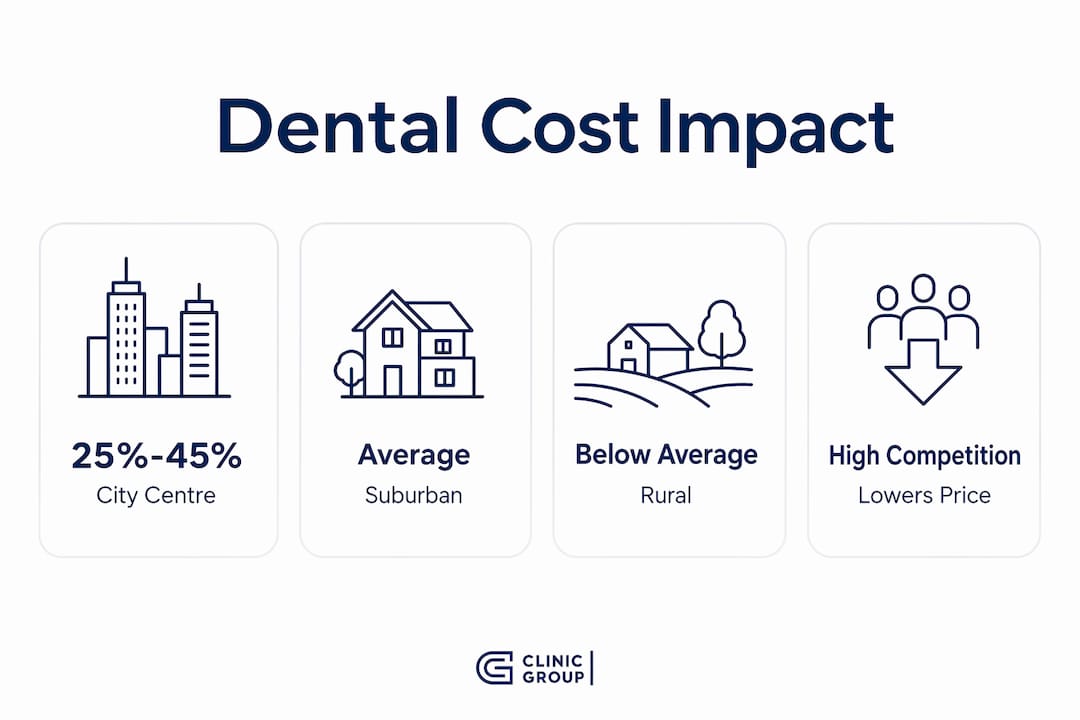
Location is the single largest driver of dental pricing. Metropolitan areas charge 25%–45% more than the national average, while rural practices typically charge 20%–30% less. That gap exists because dentists in cities pay higher rent, higher wages, and higher laboratory fees. These overhead costs are passed directly to patients.

Dental pricing reflects local economic realities rather than arbitrary charging. A practice in central London or central Dubai operates under entirely different cost pressures than one in a market town. The clinical quality may be identical, but the price tag will not be.
Competition also shapes regional dental cost differences. In areas with a high density of dental practices, prices tend to stabilise or fall. In underserved regions, where patients have fewer choices, fees often rise. This is not unique to dentistry, but it has a pronounced effect because dental care is rarely portable in the way that, say, online services are.
Pro Tip: When comparing quotes from different practices, check whether they are in the same postcode area. A practice two miles away in a lower-cost district may charge significantly less for the same procedure.
| Region type | Typical price impact |
|---|---|
| City centre | 25%–45% above average |
| Suburban | Near average |
| Rural | 20%–30% below average |
How dental insurance creates cost differences for patients
Insurance is the second major reason why dental fees differ, and it operates in ways that surprise many patients. Most dental insurance plans carry annual maximums of £1,000–£2,000, after which the patient pays 100% of costs. For anyone needing a crown, an implant, or multiple fillings in a single year, that ceiling is reached quickly.
The distinction between in-network and out-of-network providers matters enormously. In-network dentists accept negotiated fees that are 15%–40% lower than their standard rates. Choosing an out-of-network dentist means the insurer calculates reimbursement based on what it considers a “Usual, Customary, and Reasonable” rate, which is often lower than the actual fee charged. The patient absorbs the difference.
Coverage percentages add another layer of complexity. Most plans cover:
- Preventive care (check-ups, hygiene appointments) at 100%.
- Basic restorative work (fillings, simple extractions) at around 70%–80%.
- Major procedures (crowns, bridges, implants) at only 50%.
This tiered structure means the most expensive treatments receive the least proportional support. A patient facing a £1,500 crown may find their insurer covers just £750, and only if the annual maximum has not already been exhausted by earlier treatment.
Pro Tip: Request a pretreatment estimate from your insurer before any major procedure. A written pretreatment estimate confirms exactly what your plan will pay, preventing unexpected shortfalls at the point of billing.
Understanding the dental insurance impact on costs is one of the most practical things a patient can do before agreeing to treatment. Checking your dentist’s network status before booking an appointment takes minutes and can save hundreds of pounds.
Why dentists charge differently for the same procedure
Even within the same city, two dentists may quote very different fees for identical work. This reflects clinical and business factors that have nothing to do with geography or insurance. Understanding these factors is central to understanding dental price variations at the provider level.
The absence of a national dental fee schedule means each practice sets its own prices. There is no regulatory body that mandates what a filling or an implant must cost. Dentists price their services based on their costs, their expertise, and their judgement of the local market.
Several provider-level factors drive these differences:
- Materials and technology. A dentist using CBCT scanning, digital impressions, and laboratory-grade ceramic will charge more than one using conventional methods. The clinical outcome may justify the premium, but patients should ask what is included.
- Specialist versus general dentist. A periodontist or oral surgeon commands higher fees than a general practitioner for the same procedure. Specialist training, indemnity insurance, and equipment costs all contribute.
- Treatment philosophy. Clinical judgement varies significantly between practitioners. One dentist may recommend a watch-and-wait approach for a borderline cavity; another may recommend immediate restoration. Both positions can be clinically defensible, but they produce very different bills.
- Bundled versus itemised pricing. Some practices present treatment plans as bundled phases, which obscures individual procedure costs. Others provide itemised ADA-coded plans that allow direct comparison. Always request the itemised version.
For patients researching dental treatment terminology, understanding procedure codes is the first step towards comparing quotes fairly. Two quotes using different codes are not comparable, even if the descriptions sound similar.
How to manage and compare dental costs effectively
Patients who understand how dental pricing works are far better placed to manage their expenses. The following steps give you a clear framework for doing so.
- Request a pretreatment estimate. Before agreeing to any procedure costing more than a few hundred pounds, ask your insurer for a formal estimate. This document states exactly what will be covered, preventing billing surprises.
- Check network status before booking. Confirm whether your dentist is in-network with your insurer. The 15%–40% saving on negotiated fees is significant and requires no negotiation on your part.
- Ask about cash payment discounts. Many dental practices offer cash-pay discounts of 10%–25% on expensive procedures. This discount is rarely advertised. Asking directly is the only way to access it.
- Spread treatment across insurance years. If you need multiple major procedures, planning them across two calendar years allows you to use two annual maximums rather than one. This alone can halve your out-of-pocket costs.
- Compare itemised quotes using ADA codes. Ask each practice for a quote that lists procedures by their standard codes. This makes like-for-like comparison possible and removes ambiguity about what is included.
- Read verified patient reviews. Dental care cost comparison is not only about price. Quality, aftercare, and communication matter. Reading dental reviews from verified patients gives you a fuller picture before committing.
Pro Tip: If you are considering treatment abroad, regional pricing differences can be substantial. Dental pricing in Slovenia, for example, reflects significantly lower overheads than the UK, making it a practical option for patients facing high-cost procedures at home.
For patients weighing up options across borders, Clinicgroup’s guide to how dental pricing works provides a detailed breakdown of what drives costs in different markets.
Key takeaways
Dental costs differ because of location, insurance structure, provider choices, and clinical philosophy. No single factor explains the full picture, but understanding each one gives patients real control over their expenses.
| Point | Details |
|---|---|
| Location drives the base price | Urban practices charge 25%–45% more than average due to higher overheads. |
| Insurance maximums run out fast | Annual limits of £1,000–£2,000 mean major procedures often become out-of-pocket costs. |
| Network status changes your bill | In-network dentists charge 15%–40% less than their standard rates for insured patients. |
| Provider philosophy affects treatment plans | Clinical judgement varies; always request an itemised, ADA-coded quote before agreeing to work. |
| Cash discounts are rarely advertised | Asking directly about cash payment can reduce costs by 10%–25% on major procedures. |
What working with international patients has taught us about dental pricing
The patients who contact Clinicgroup are rarely confused about whether they need dental treatment. They are confused about why the same treatment costs three times more in one place than another, and whether paying less abroad means accepting lower quality.
The honest answer is that price and quality are not the same variable. A practice in Albania or Dubai operating to European clinical standards, using the same materials and sterilisation protocols as a London clinic, carries lower overheads. Those savings pass to the patient. The clinical outcome does not have to differ.
What I have seen repeatedly is that patients who struggle most with dental costs are those who did not know the rules of the system they were navigating. They did not know to ask for a pretreatment estimate. They did not know their dentist was out-of-network. They did not know that bundled quotes obscure individual procedure costs. The pricing complexity is real, but it is not impenetrable.
The patients who fare best are those who treat dental care cost comparison as a skill worth developing. They ask for itemised quotes. They check network status. They read verified reviews. And increasingly, they look at verified clinics abroad, not as a compromise, but as a deliberate, well-researched choice. Clinicgroup exists to make that research process reliable, transparent, and supported at every stage.
— Clinic
Transparent dental care abroad with Clinicgroup
Clinicgroup connects patients from the UK and Europe with verified dental clinics in Albania and Dubai, where board-certified specialists provide treatment at prices that reflect genuinely lower overheads, not lower standards. Every clinic in the network meets European standards for sterilisation, materials, and patient safety. Patients receive detailed, itemised treatment plans and pricing before committing to anything. Support covers clinic matching, travel logistics, partner hotel arrangements, and aftercare follow-up. For patients facing high dental costs at home, Clinicgroup offers a structured, transparent alternative backed by verified patient reviews and clinical accountability.
FAQ
Why do dental costs differ so much between cities?
Metropolitan practices pay higher rent, wages, and laboratory fees, which pushes prices 25%–45% above the national average. Rural practices face lower overheads and typically charge 20%–30% less.
What is a dental annual maximum and why does it matter?
An annual maximum is the highest amount your insurer will pay for dental treatment in a given year, typically £1,000–£2,000. Once that limit is reached, you pay 100% of remaining costs yourself.
How do I know if my dentist is in-network?
Contact your insurer directly or check their online provider directory before booking. In-network dentists accept negotiated fees 15%–40% lower than their standard rates, reducing your out-of-pocket costs significantly.
Can I negotiate dental fees if I pay in cash?
Many practices offer cash-pay discounts of 10%–25% on procedures over a certain value. This discount is rarely advertised, so asking directly before treatment is the most reliable way to access it.
Is dental treatment abroad as safe as treatment in the UK?
Quality depends on the clinic, not the country. Verified clinics operating to European clinical standards, using accredited materials and qualified specialists, deliver comparable outcomes. Reading verified patient reviews and using a vetted platform like Clinicgroup helps patients identify trustworthy providers.