TL;DR:
- Turkey is a top destination for affordable, high-quality dental treatments with international accreditation and advanced technology. Patients benefit from lower operating costs, verified clinics, and well-organized support, making travel for complex procedures financially worthwhile. Proper planning for aftercare and credential verification are essential to ensure safe and successful outcomes.
Turkey is one of the world’s leading destinations for dental tourism, offering internationally accredited treatment at savings of 60–90% compared to UK and European prices. That gap is not the result of lower standards. Turkish clinics routinely use premium materials such as Straumann implants and IPS e.max ceramics, and Turkey holds more JCI-accredited hospitals outside the United States than any other country. For European patients weighing the reasons to choose Turkey for dentistry, the combination of verified quality, advanced technology, and well-organised patient support makes a compelling case.
Why choose Turkey for dental care: cost and quality explained
The core reason dental care in Turkey costs so much less than in the UK or Western Europe is structural, not superficial. Operating costs, staff salaries, and material procurement are all significantly lower in Turkey. Those savings pass directly to patients without any reduction in the quality of materials or equipment used.
A single dental implant costs between $400 and $800 in Turkey. The same implant costs $3,000–$5,000 in the UK or the United States. That is not a minor discount. For patients needing multiple implants or a full smile makeover, the savings can reach tens of thousands of pounds.
The Turkish government has actively supported this sector through its Health Transformation Program, which invested heavily in clinic infrastructure and specialist training. Authorised clinics must hold an International Health Tourism Authorization Certificate, issued by the Turkish Ministry of Health. This certificate is a legal requirement, not a voluntary badge. It confirms that a clinic meets defined safety, hygiene, and staffing standards.
Technology is another factor. Turkish clinics widely use CAD/CAM milling systems, intraoral scanners, and CBCT imaging. These tools speed up crown fabrication, reduce the number of visits required, and improve accuracy. The result is a more efficient experience for patients travelling from abroad.
| Procedure | Typical UK cost | Typical Turkey cost |
|---|---|---|
| Single dental implant | £2,500–£4,500 | £400–£700 |
| Porcelain crown | £700–£1,200 | £120–£250 |
| Composite veneers (per tooth) | £400–£800 | £80–£150 |
| Full smile makeover (10 veneers) | £7,000–£12,000 | £1,500–£3,000 |
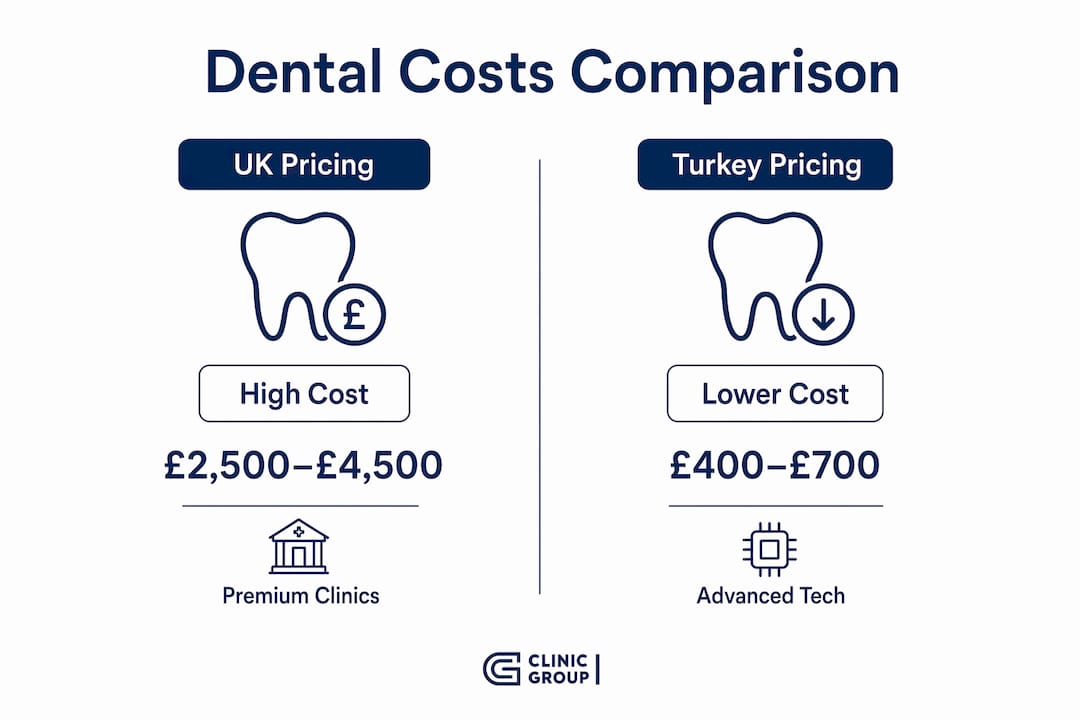
Prices are indicative ranges and vary by clinic and individual treatment plan.
Pro Tip: Ask any clinic you contact to confirm their International Health Tourism Authorization Certificate number before booking. Legitimate clinics will share this without hesitation.
How does patient support make dental tourism in Turkey accessible?
Cost savings matter, but the practical experience of travelling for treatment matters just as much. Turkey has built a well-organised international patient infrastructure that makes the process far less stressful than many patients expect.
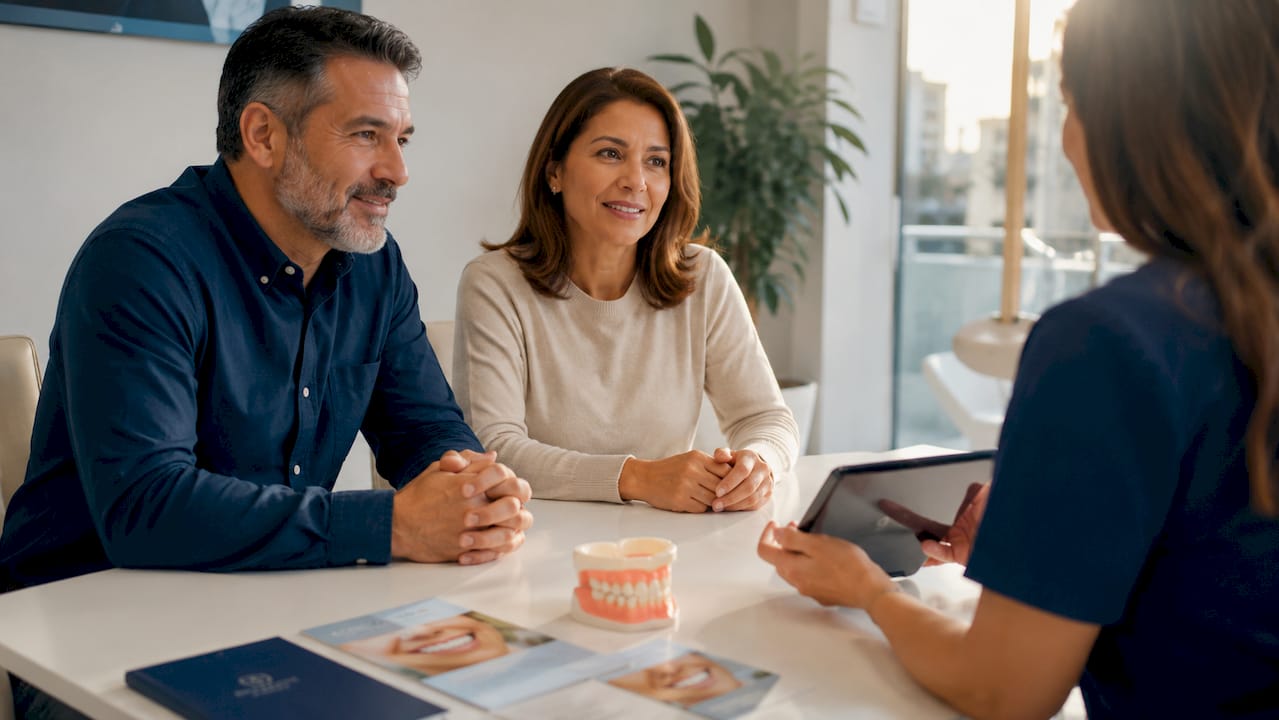
Most established Turkish dental clinics assign a dedicated patient coordinator from the first enquiry. This coordinator manages appointment scheduling, arranges airport transfers, recommends partner hotels, and provides translation support throughout the visit. Comprehensive packages including transfers, accommodation, and translation are standard at reputable clinics, not an optional extra.
Digital dentistry workflows such as intraoral scanning and CAD/CAM fabrication allow clinics to consolidate treatment into fewer visits. A patient who might wait six to eight weeks between appointments at home can often complete the same treatment within a single trip of five to seven days. Scheduling times are significantly shorter than in most European countries, with international patients often seen within days of arrival.
Cities such as Istanbul and Antalya combine world-class dental facilities with well-developed tourism infrastructure. Patients can recover comfortably, explore the city, and return home having completed a full course of treatment. This combination of medical access and travel convenience is a key reason dental tourism in Turkey continues to grow.
- Patient coordinators handle logistics from first contact to departure
- Translation services remove language barriers at every stage
- Airport transfers and hotel partnerships are included in most packages
- Consolidated appointment blocks reduce the number of trips required
- Digital workflows mean same-day or next-day fittings for crowns and veneers
Pro Tip: Before travelling, share your full dental records and any recent X-rays with the clinic digitally. This allows the treatment team to prepare a precise plan before you arrive, saving time and reducing surprises.
What are the risks of getting dental work done in Turkey?
Dental tourism in Turkey carries real risks, and understanding them is the foundation of a safe experience. The most underestimated risk is aftercare distance. If a complication arises months after treatment, you are far from the clinic that performed the work. Finding a local dentist willing to manage or correct treatment carried out abroad can be difficult and costly.
This does not mean dental tourism is unsafe. It means preparation is non-negotiable. Patients who plan treatment as a coordinated process, share medical records in advance, verify clinic credentials, and arrange post-treatment reviews get the best outcomes. Those who book on price alone and skip due diligence face the highest risk.
Financial realism matters too. Dental tourism makes financial sense for treatments that would cost over £2,000–£3,000 at home, once flights, accommodation, and time off work are factored in. For a single small filling, the travel costs will likely cancel out any savings. For implants, crowns, or a full smile makeover, the maths is compelling.
Choosing an unauthorised clinic is the single biggest avoidable risk in dental tourism. Always verify that a clinic holds an International Health Tourism Authorization Certificate before committing to treatment. No certificate means no regulatory oversight.
Key considerations before booking:
- Verify the clinic’s International Health Tourism Authorization Certificate
- Confirm that the treating dentist holds recognised qualifications
- Read patient reviews from verified sources before deciding
- Plan for at least one follow-up review, either remotely or in person
- Include all travel and accommodation costs in your total budget calculation
- Confirm the clinic’s protocol for managing complications remotely
For a thorough overview of safety standards when seeking care overseas, the dental treatment safety guide from Clinicgroup covers the key checks in detail.
Which dental treatments are most popular in Turkey?
Dental implants, porcelain crowns, veneers, and full smile makeovers are the most commonly chosen treatments by patients travelling to Turkey. These procedures share a common characteristic: they are expensive at home and highly suited to the consolidated, technology-driven workflows that Turkish clinics have perfected.
Dental implants are the most requested single procedure. The cost difference between Turkey and the UK is large enough to justify travel even for a single implant. For patients needing four, six, or eight implants, the savings are transformative. Clinics use 3D CBCT imaging for implant planning, which improves placement accuracy and reduces the risk of complications.
Veneers and crowns benefit from CAD/CAM technology, which allows same-day or next-day fabrication. A patient can have teeth prepared, scanned, and fitted with permanent restorations within a single visit. Digital smile design software lets patients preview their results before any preparation begins. This transparency builds confidence and reduces the chance of dissatisfaction.
Full smile makeovers, which typically combine veneers, crowns, whitening, and sometimes implants, are where the savings multiply most dramatically. A treatment plan costing £15,000 in the UK may cost £3,000–£5,000 in Turkey using the same materials and techniques. Most clinics structure these as all-inclusive packages covering diagnostics, fabrication, fitting, and a follow-up review.
| Treatment | Typical duration in Turkey | Recovery notes |
|---|---|---|
| Single implant | 3–5 days (initial), return for crown | Mild swelling for 2–3 days |
| Porcelain crowns (multiple) | 5–7 days | Minimal downtime |
| Veneers (full set) | 5–7 days | No significant recovery |
| Full smile makeover | 7–10 days | Varies by complexity |
For patients researching dental travel planning, understanding typical treatment timelines helps with booking flights and accommodation accurately.
Key takeaways
Turkey offers the most cost-effective combination of internationally accredited dental care, advanced technology, and organised patient support available to European patients in 2026.
| Point | Details |
|---|---|
| Savings are structural, not superficial | Lower operating costs drive prices down; premium materials like Straumann and IPS e.max are still used. |
| Accreditation is verifiable | Authorised clinics hold International Health Tourism Authorization Certificates from the Turkish Ministry of Health. |
| Aftercare requires planning | Distance from the treating clinic is the biggest risk; arrange remote reviews and local follow-up before travelling. |
| Best value for larger treatments | Dental tourism pays off for treatments costing over £2,000–£3,000 at home, once all travel costs are included. |
| Patient support is comprehensive | Coordinators, translators, transfers, and accommodation packages are standard at reputable Turkish clinics. |
My honest view on dental tourism in Turkey
Having worked with patients across Europe who have sought dental care abroad, I have seen the full range of outcomes. The patients who benefit most are not simply those who find the lowest price. They are the ones who treat the process with the same rigour they would apply to any significant medical decision.
Turkey’s dental sector is genuinely impressive. The technology in leading Istanbul and Antalya clinics matches or exceeds what most European patients have access to at home. The dentists are often trained to European or American postgraduate standards. The savings are real and, for complex treatment plans, they are life-changing.
What I caution against is the assumption that a good price means the hard work is done. Aftercare logistics are consistently undervalued. Patients sometimes return home relieved and satisfied, only to face a complication six months later with no clear plan for managing it. That is not a reason to avoid Turkey. It is a reason to plan properly.
The patients who get the best results are those who verify credentials, share records in advance, ask direct questions about complication protocols, and budget honestly for the full trip. When those conditions are met, dental tourism in Turkey is not just affordable. It is genuinely excellent care.
— Clinic
How Clinicgroup supports your dental care in Turkey
Clinicgroup connects patients with verified Turkish dental clinics that hold recognised accreditations and employ board-certified specialists. Every clinic in the Clinicgroup network is assessed against European standards of care, with transparent pricing provided before any commitment is made.
The service covers the full process: from initial consultation and clinic matching, through travel logistics and partner hotel arrangements, to aftercare coordination once you return home. Patients receive dedicated support at every stage, removing the uncertainty that makes dental tourism feel daunting for first-time travellers.
For patients ready to explore their options, the full range of verified dental treatments available through Clinicgroup is listed on the treatments page. Consultations are available to help you understand costs, timelines, and what to expect before you travel.
FAQ
How much can I save on dental implants in Turkey?
Patients save 60–90% on major dental procedures in Turkey compared to UK prices. A single implant costs $400–$800 in Turkey versus $3,000–$5,000 in the UK or USA.
Are Turkish dental clinics safe and regulated?
Yes, authorised clinics hold International Health Tourism Authorization Certificates issued by the Turkish Ministry of Health. Always verify a clinic’s certificate before booking.
What is the best treatment to get in Turkey?
Dental implants, porcelain crowns, veneers, and full smile makeovers offer the greatest savings and are well-suited to Turkey’s consolidated, technology-driven treatment model.
Is dental tourism in Turkey worth it for minor treatments?
Dental tourism is most cost-effective for treatments costing over £2,000–£3,000 at home. For minor procedures, travel costs often reduce or eliminate the savings.
How do I manage aftercare after returning home?
Arrange a remote review with your Turkish clinic before travelling home and identify a local dentist willing to manage follow-up care. Planning aftercare in advance is the most important step in a safe dental tourism experience.