Cosmetic dentistry is the specialised branch of dental care dedicated to improving the appearance of your teeth, gums, and smile. Unlike general dentistry, which focuses on diagnosing and treating disease, cosmetic dental procedures prioritise aesthetics: the colour, shape, alignment, and overall look of your smile. In the UK, cosmetic dentistry is almost exclusively a private service, since the NHS excludes purely cosmetic treatments such as teeth whitening, veneers, and aesthetic implants from its coverage.
Table of Contents
- What is cosmetic dentistry, and how does it differ from general dental care?
- Common cosmetic dental procedures available in the UK
- Benefits and risks: what you should weigh before proceeding
- Recovery, longevity, and when to see a cosmetic dentist
- How professionals approach cosmetic dentistry in the UK
- Clinicgroup connects you to verified cosmetic dental care abroad
- Key takeaways
- FAQ
What is cosmetic dentistry, and how does it differ from general dental care?
Cosmetic dentistry sits at the intersection of art and clinical science. A general dentist fills cavities, treats gum disease, and extracts teeth. A cosmetic dentist reshapes, brightens, and realigns teeth to create a smile that patients feel confident showing. The two disciplines often overlap: veneers, for instance, can protect a damaged tooth while also improving its appearance.
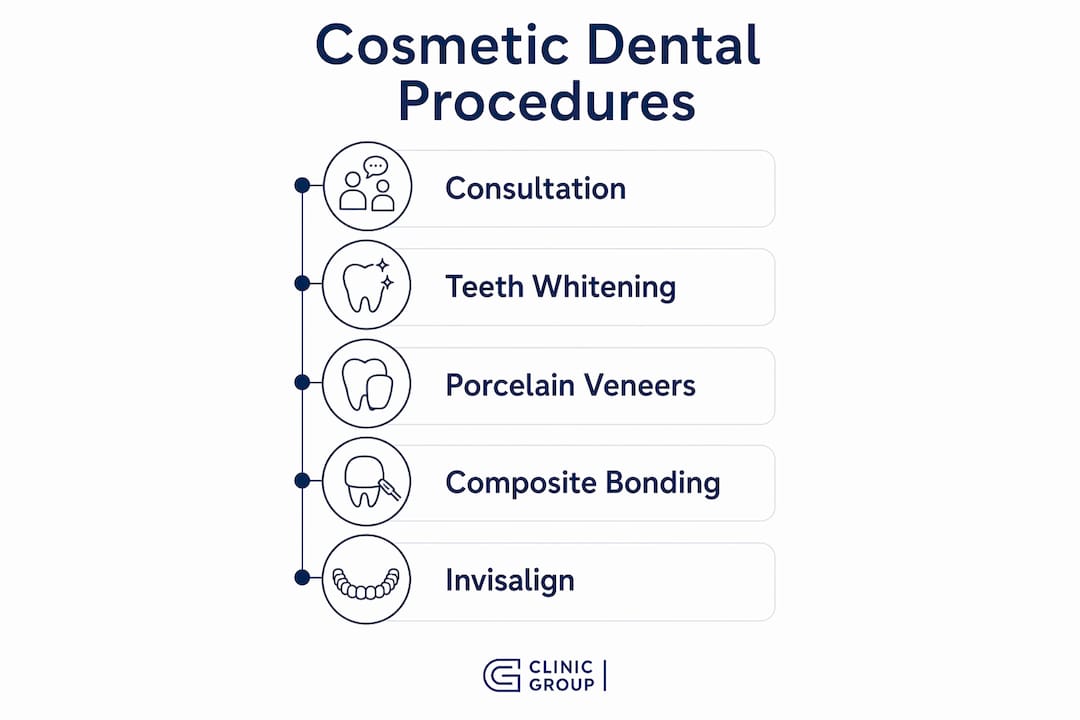
The most recognised cosmetic dental procedures in the UK include:
- Teeth whitening: The most requested cosmetic treatment in the UK, removing stains caused by food, drink, and ageing.
- Composite bonding: A tooth-coloured resin applied to repair chips, close gaps, or reshape minor imperfections.
- Porcelain veneers: Thin ceramic shells bonded to the front surface of teeth to correct colour, shape, or alignment.
- Clear aligners: Discreet, removable orthodontic trays that gradually straighten teeth without fixed braces.
Treatment goals centre on two outcomes: a visibly improved smile and a measurable gain in patient confidence.
Common cosmetic dental procedures available in the UK
The range of cosmetic dental procedures has expanded considerably, giving patients more targeted options than ever before.
- Teeth whitening uses peroxide-based gels, applied either in-clinic or via custom trays at home, to lighten tooth shade by several grades.
- Composite bonding is often completed in a single appointment, making it one of the most accessible entry points into cosmetic dentistry.
- Porcelain veneers require two or three visits and minimal enamel removal; they correct discolouration, chips, and minor misalignment simultaneously.
- Clear aligners suit patients who want orthodontic correction without the visibility of metal brackets. Full teeth straightening options vary widely in duration and cost depending on case complexity.
- Air polishing removes surface staining and biofilm as a preparatory or standalone aesthetic treatment.
- Smile makeovers combine several of the above into a single, coordinated plan. Consultations are crucial for mapping treatment stages and understanding total costs before committing.
All of these are private treatments in the UK. NHS dental charges cover clinically necessary work only, so patients fund cosmetic procedures themselves or seek care abroad.
Benefits and risks: what you should weigh before proceeding

The benefits of cosmetic dentistry extend well beyond appearance. Improvements in self-esteem contribute significantly to overall happiness linked to dental confidence, indicating a genuine psychosocial effect rather than a superficial one. Restorations such as veneers and crowns also support oral health and bite balance, meaning cosmetic and restorative goals frequently align.
That said, risks exist and deserve honest attention:
- Overtreatment: Marketing and social media pressure can push patients toward more extensive procedures than their situation warrants, sometimes at the cost of healthy tooth structure.
- Unmet expectations: Without clear communication and realistic previews, patients may be disappointed with results.
- Material longevity: Ceramic restorations achieve approximately 94% patient satisfaction compared to 85% for composites, reflecting differences in durability and aesthetics over time.
- Informed consent: Ethical care requires full explanations of risks, alternatives, and long-term maintenance before any procedure begins.
Personalised treatment planning is the most reliable safeguard against all of these risks.
Recovery, longevity, and when to see a cosmetic dentist
Recovery from most cosmetic procedures is straightforward. Teeth whitening causes temporary sensitivity in some patients, typically resolving within 48 hours. Composite bonding requires no downtime at all. Veneers involve mild sensitivity for a few days after fitting, while clear aligner treatment is ongoing and largely discomfort-free between tray changes.
Longevity varies by material and maintenance:
- Porcelain veneers typically last 10–15 years with good oral hygiene.
- Composite bonding generally needs refreshing or replacing after 5–7 years.
- Teeth whitening results fade over time and usually require top-up treatments annually.
Digital smile simulation is now standard practice at many clinics, allowing patients to preview outcomes before treatment begins. This step reduces uncertainty and sets realistic expectations from the outset.
You should consider consulting a cosmetic dentist if you are dissatisfied with the colour, shape, or alignment of your teeth, or if chips and gaps affect your confidence. A thorough dental consultation will clarify which procedures suit your anatomy, budget, and long-term oral health.

How professionals approach cosmetic dentistry in the UK
The most respected cosmetic dentists in the UK favour conservative, patient-specific enhancements over extensive or trend-driven treatments. Subtle enhancements that work with natural anatomy consistently produce more satisfying outcomes than full-mouth replacements undertaken without clinical need. More treatment does not automatically mean better value.
- Choose a dentist registered with the General Dental Council (GDC) and, where relevant, a member of the British Academy of Cosmetic Dentistry (BACD).
- Ask to see a digital smile design preview before committing to veneers or a full makeover. Digital smile design maps facial proportions and bite dynamics to improve predictability.
- Request a written treatment plan with itemised costs and a clear explanation of alternatives.
- Be cautious of any clinic that discourages questions or applies pressure to decide quickly.
Patient confidence linked to cosmetic dentistry also connects to broader mental well-being and social engagement, which is why clinicians increasingly treat the consultation as a collaborative, unhurried process. For patients exploring modern aesthetic dentistry options beyond the UK, the same principles of conservative, evidence-based care apply.
Pro Tip: Ask your dentist to photograph your teeth before any treatment and keep copies. This baseline record is invaluable if you ever need to compare results or discuss further work years later.
Clinicgroup connects you to verified cosmetic dental care abroad
For UK patients priced out of private dental fees at home, Clinicgroup offers a practical alternative: access to board-certified cosmetic dentists at verified clinics in Albania and Dubai, at a fraction of typical UK private costs. The dentistry treatments available through Clinicgroup include veneers, composite bonding, crowns, and implants, all delivered to European clinical standards with full patient support built in.
Every treatment journey through Clinicgroup includes clinic matching, travel logistics, partner hotel arrangements, and structured aftercare. Patients receive transparent pricing upfront, with no hidden fees. To take the first step, book a free consultation through Clinicgroup and receive a personalised treatment plan before you travel.
Key takeaways
Cosmetic dentistry improves smile appearance through targeted private treatments, and the best outcomes come from conservative, well-planned care matched to each patient’s anatomy and goals.
| Point | Details |
|---|---|
| NHS coverage | Cosmetic treatments such as whitening and veneers are excluded from NHS coverage and must be funded privately. |
| Top procedures | Teeth whitening, composite bonding, porcelain veneers, and clear aligners are the most common cosmetic options in the UK. |
| Patient satisfaction | Ceramic restorations achieve approximately 94% patient satisfaction compared to 85% for composites. |
| Risk management | Personalised treatment planning and digital smile simulation reduce the risk of overtreatment and unmet expectations. |
| Clinicgroup | Clinicgroup connects UK patients with verified cosmetic dental clinics in Albania and Dubai, with transparent pricing and full aftercare support. |
FAQ
What is cosmetic dentistry?
Cosmetic dentistry is the branch of dental care focused on improving the appearance of teeth, gums, and smiles through private treatments such as whitening, veneers, bonding, and clear aligners.
Is cosmetic dentistry available on the NHS?
No. The NHS covers only clinically necessary dental treatment. Cosmetic procedures such as teeth whitening, porcelain veneers, and aesthetic implants must be arranged and funded privately.
How long do cosmetic dental treatments last?
Porcelain veneers typically last 10–15 years, composite bonding around 5–7 years, and teeth whitening results require annual top-ups to maintain.
How do I find a qualified cosmetic dentist in the UK?
Look for a dentist registered with the General Dental Council (GDC) and consider members of the British Academy of Cosmetic Dentistry (BACD), who follow recognised standards of training and ethics.
Can Clinicgroup help with cosmetic dental treatment abroad?
Yes. Clinicgroup matches UK patients with verified clinics in Albania and Dubai offering cosmetic dentistry at transparent prices, with travel support and aftercare included in every treatment plan.