The most useful question isn’t simply whether dental treatment in Albania is right for you; it’s whether the proposed care, materials, timing and follow-up suit your needs. Albania may be an option for implant treatment, but a sound decision starts with a clear diagnosis and a treatment plan that explains each stage.
When considering implants or full-mouth restoration, focus on the whole treatment plan: implant placement and the final teeth may be separate stages, and complex care should not be rushed to fit a short trip.
This guide explains what to consider when reviewing implant proposals, how All-on-4 and full-mouth restoration are planned, and what records can support follow-up care after you return home. It also outlines the role Clinic Group’s dental treatment directory can play in finding a partner clinic in Albania, so you can make an informed decision with a clearer picture of the treatment journey.
Key Takeaways
- Assess an implant clinic by the clinical team, facilities and planning technology, not by one feature alone.
- Keep your implant records and written treatment summary organised to support follow-up after you return to the UK.
- Understand how individual implants, crowns, bridges and full-arch options differ before considering a treatment route.
- Consider how travel, treatment stages and ongoing care fit your circumstances when weighing treatment in Albania.
- Clinic Group’s directory can help you explore verified partner clinics in Albania and understand the role of a coordinator.
Is Albania a suitable option for dental treatment?
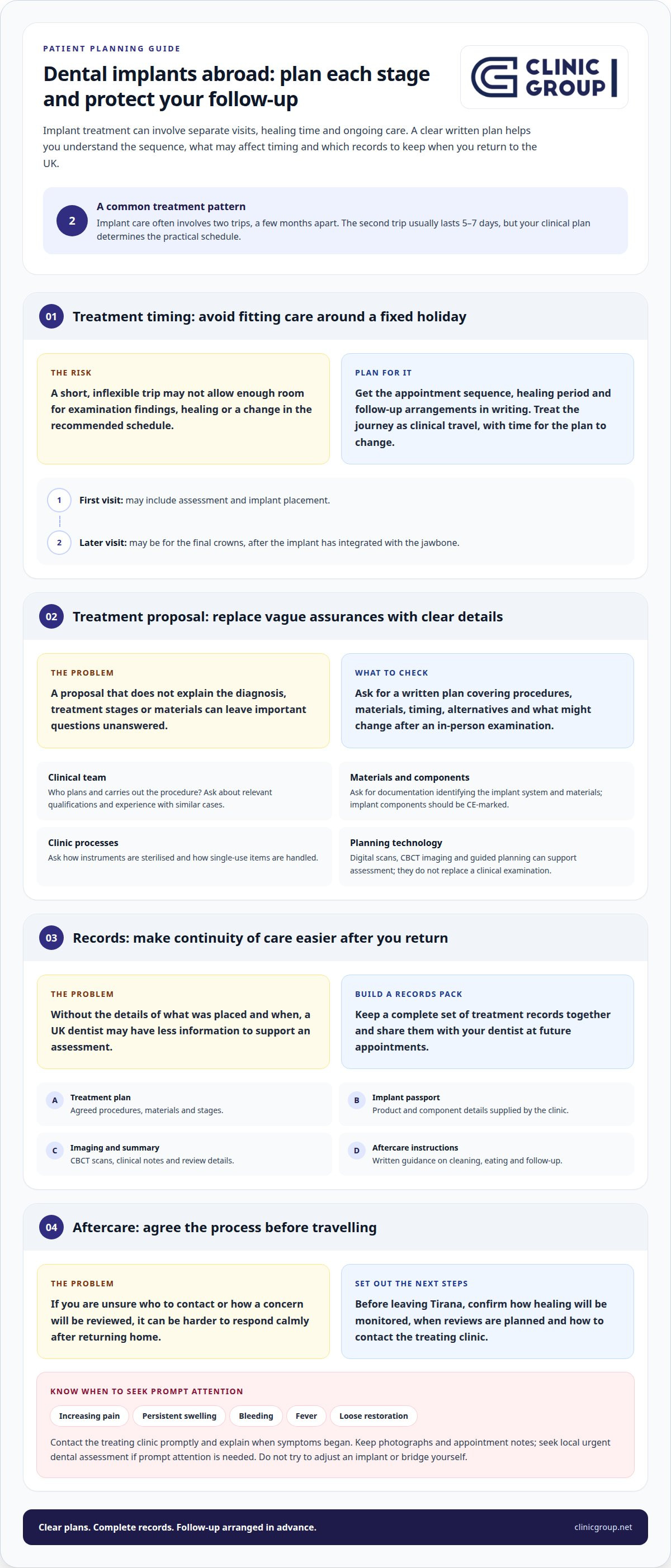
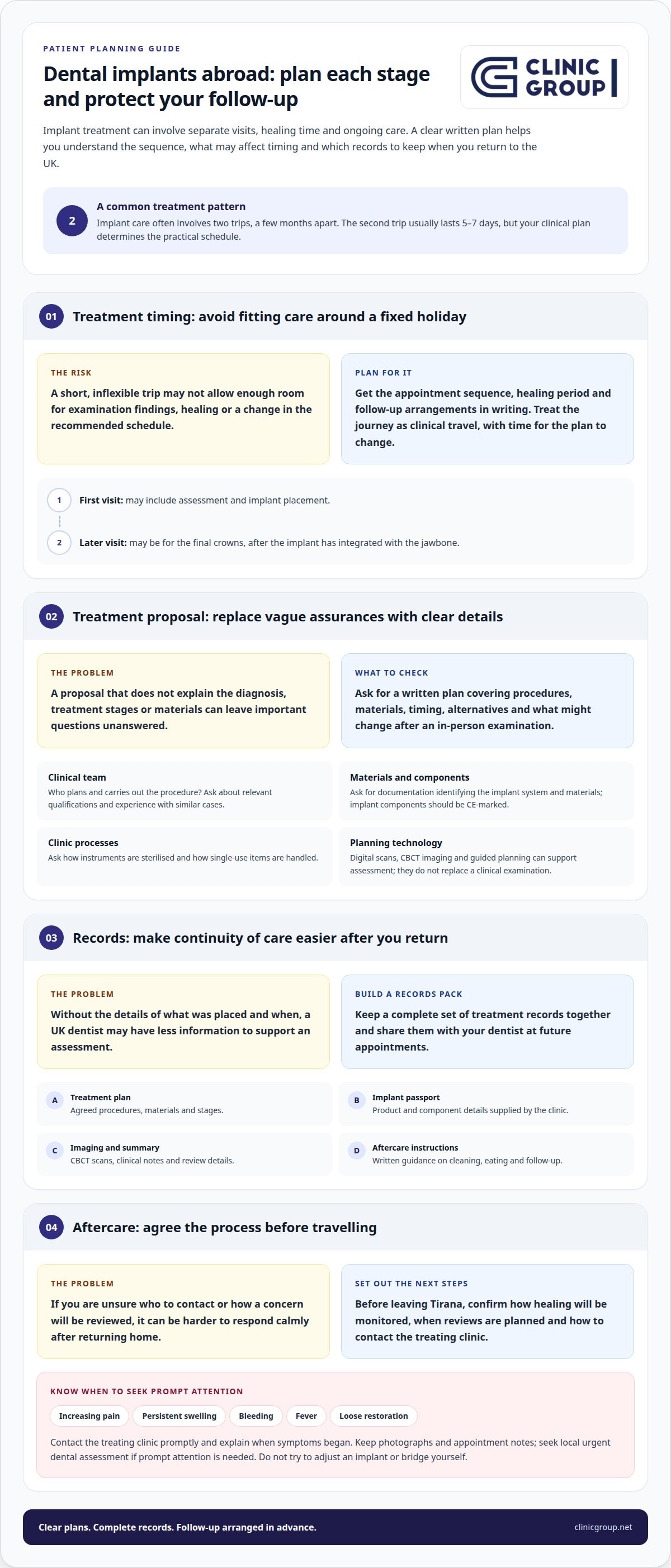
UK patients can assess a dentist’s qualifications, clinic credentials and infection-control procedures by requesting documents and clear explanations. Implant treatment commonly involves two trips a few months apart, with the second trip usually lasting 5-7 days.
Suitability depends on whether the clinic can explain the diagnosis, proposed treatment sequence, materials and follow-up clearly. For implants, a thorough assessment matters as much as the facilities used.
Professional Qualifications and Clinic Standards
Ask about the treating dentist’s qualifications, relevant implant training and experience with similar cases. The clinic should identify who plans and carries out the procedure. Ask how instruments are sterilised, how single-use items are handled and what happens between appointments. Any certificate should identify the organisation, facility and standard it covers; the word “certified” alone does not explain its scope.
ISO 9001 certification is one quality measure to consider, while implant components should be CE-marked. Ask for documentation identifying the implant system and materials, so these details can be retained with your treatment records.
Implant Clinic Selection
Choose a dental clinic that explains its facilities and the purpose of each technology. Some clinics in Albania use digital scans, CBCT imaging, guided implant planning and CAD/CAM design. CBCT imaging creates a three-dimensional view of the jaw, helping the team assess bone and plan implant positions. These tools support assessment but do not replace a clinical examination.
Ask how the clinic uses scans to shape your plan, and whether the proposed materials are traceable and documented. The Identico Dental clinic page is one starting point for reviewing a listed dental clinic in Tirana. A written plan should set out procedures, materials, timing, alternatives and what might change after examination.
Treatment Visits and Length of Stay
Implant care often needs two visits a few months apart. The first may include assessment and implant placement; the later visit may be for the final crowns, after the implant has integrated with the jawbone. The second trip usually lasts 5-7 days, but the treatment stages and clinical review determine the practical schedule.
Bone grafting adds or supports bone where needed, and can affect timing or mean a second trip. Surgery may take place the day after an initial appointment if the plan is confirmed, but that timing is not suitable for every case. Treat the journey as clinical travel, not a holiday with appointments that cannot move.
Before travelling, arrange a review of your dental history and current images, then discuss what further examination is needed in person. Get the appointment sequence, healing period and follow-up arrangements in writing. A careful plan allows for examination findings to change the recommended treatment or schedule.
What should UK patients know about dental aftercare?
Compare Albanian treatment plans by matching each procedure, material, review appointment and aftercare step. Ask for implant system details, written terms and a named contact for questions after travel. Domestic healthcare services assess patients independently, so do not assume local public health services will automatically resolve complications from dental work carried out abroad.
Before leaving Tirana, agree how the dental clinic will monitor healing and address concerns after you return home. A follow-up to check healing after implant placement may be scheduled a few days after surgery. Confirm the timing and what the appointment will assess before travelling.
Keep a complete set of records for continuity of care, including the treatment plan, clinical notes, implant details, CBCT scans, an implant passport and a written summary. These help a UK dentist understand what was placed and when, and can support an assessment if you develop pain, swelling or a change in your bite.
- Treatment plan: Keep the agreed procedures, materials and treatment stages.
- Implant passport: Retain the product and component details supplied by the clinic.
- Imaging and summary: Store CBCT scans and notes about treatment and review.
- Aftercare instructions: Keep written guidance on cleaning, eating and follow-up.
Read any written warranty terms alongside the clinical aftercare plan. A warranty sets out conditions for specified work; it does not replace reviews or routine care. Check what treatment it covers, how to report a concern, which records are needed and whether travelling back to Albania is part of the process. The precise wording matters more than a broad verbal assurance.
Long-term implant care also depends on daily cleaning and regular dental reviews. Brush carefully around the implant-supported crown or bridge, and use the cleaning method recommended for your restoration. Tell your UK dentist which teeth are implant-supported and share your records at appointments. They can assess the surrounding gum and restoration as part of your ongoing dental care.
If you notice increasing pain, persistent swelling, bleeding, fever or a loose restoration, contact the treating clinic promptly and explain when symptoms began. Keep photographs and appointment notes, and seek local urgent dental assessment if you need prompt attention. Do not try to adjust an implant or bridge yourself. Clear records help clinicians understand the situation.
Plan these arrangements before treatment, not during a post-operative concern. A written aftercare checklist can clarify who to contact, how follow-up is arranged and which records to share. For further preparation, use this dental aftercare checklist and browse patient treatment guidance for related planning information.
What dental implant treatments are available in Albania?
UK patients travel to Albania for individual dental implants, full-arch options such as All-on-4 and All-on-6, and restorative work. The right approach depends on the teeth affected, jawbone condition, bite and clinical assessment.
Implants replace missing tooth roots and support restorations such as crowns or bridges. Full-mouth treatment may combine several procedures, so make sure the sequence and healing stages are clear before travelling.
Treatments for Travelling Patients
A single implant is placed in the jaw to support a crown that replaces the visible tooth. Where several teeth are missing, a bridge can span the gap, supported by implants or remaining teeth as the dentist plans. An implant-supported bridge differs from placing a separate implant for every missing tooth.
For a full arch, All-on-4 and All-on-6 use four or six implants to support a fixed set of replacement teeth. A full-mouth restoration may involve treatment across both jaws, with implants, crowns or bridges selected according to the clinical findings. Explore the dental implant treatment overview for an explanation of the implant option.
Full-Arch Treatment and Restorations
Implant placement typically takes 1-2 hours, depending on the number of implants. This describes the procedure, not the complete treatment journey. After placement, the implants need time to integrate with the jawbone before final crowns are fitted. UK patients may need to return to Albania in 3-6 months for those crowns.
That interval affects travel planning. A flight booked around the first appointment does not cover the later restoration stage. The written treatment plan should distinguish temporary teeth, if used, from the final restoration and set out the expected sequence. It should also explain what may change if examination or healing affects the plan.
Before accepting a full-arch proposal, consider how the dentist assessed each jaw and why the suggested implant arrangement suits your needs. A CBCT scan shows the jaw in three dimensions; the clinical team uses examination and imaging to plan placement. Ask for the treatment stages, materials and restoration type to be recorded clearly.
Dental tourism combines clinical appointments with travel logistics, but airport timetables should not dictate treatment decisions. If a proposed schedule leaves little room for assessment, healing or review, clarify how those stages fit before booking. A package description should distinguish clinical care from any travel arrangements.
For complex treatment, the key comparison is not simply the number of implants. The plan should explain how each implant supports the proposed crowns or bridge, which stages happen during each visit, and what follow-up is arranged after you return to the UK. This gives you a clearer basis for discussing the proposed approach during consultation.
Why do UK patients consider dental treatment in Albania?
Dental treatment in Albania for UK patients may be worth considering when the proposed care, travel arrangements and follow-up suit their needs. Access to verified partner clinics, particularly in Tirana, offers a starting point for exploring implant and restorative care. Base the decision on an individual clinical plan, not the destination or convenience alone.
Travel can be a practical consideration. Direct flights from London, Manchester and Birmingham to Albania take about 3 hours. That may help patients plan a journey, but flight time does not determine the treatment schedule. Implant care can involve separate clinical stages, so each visit needs to fit the dentist’s plan rather than a fixed holiday itinerary.
Albanian clinics treat international patients and may offer dental implants, crowns, bridges and full-arch restoration. Implant systems such as Straumann, Zimmer and Nobel Biocare may be used. A system name alone does not show whether it suits an individual patient. The dentist’s plan should explain the recommendation, its clinical basis and how the restoration will be supported.
Some patients may value having a specialist team assess complex needs. For example, someone missing several teeth may need an assessment of bone, gums, bite and existing restorations before a dentist recommends individual implants or full-arch treatment. A consultation can clarify options and stages, but it does not replace the in-person examination needed to plan care.
Travel arrangements need attention too. Before booking, UK patients should check current passport and entry guidance, then read their insurance terms. Policies differ, so confirm whether elective dental treatment and related complications are covered. Keep relevant contact details and treatment documents accessible during travel. These practical steps help you plan around clinical appointments and find key information.
Combining treatment travel with a holiday may sound convenient, but appointments and recovery need priority. Allow flexibility in your travel dates in case the clinic needs to reassess symptoms or adjust the plan. Before departure, understand the appointment schedule, clinic location, and how airport transfers and accommodation fit around treatment.
- Clinical fit: Understand why the dentist recommends a particular implant or restoration plan.
- Travel fit: Align flights and accommodation with appointments and recovery.
- Preparation: Review passport guidance and insurance wording before booking.
- Continuity: Keep treatment records and clinic contact details accessible after returning home.
For patients weighing dental treatment in Albania for UK patients, the deciding factor should be a clear plan that suits their clinical needs and allows for each treatment stage. A considered proposal and practical arrangements provide a stronger basis for deciding than a destination claim alone. Verified partner clinics offer a starting point for exploring care, while the treating team’s assessment guides clinical decisions.
How can Clinic Group help UK patients find dental care?
Clinic Group helps UK patients explore dental care through its Dental Treatment Directory, which connects readers with verified partner clinics. It is a directory and coordination platform, not a dental clinic: diagnosis, treatment recommendations and procedures are the responsibility of the treating dental team. This distinction clarifies who answers clinical questions and who supports your search for a clinic.
The partner network is located almost entirely in Tirana, Albania, with a small number of clinics in Dubai, UAE. For patients considering Albania, this provides a clear geographic starting point. A clinic listing can help you explore a potential destination, while clinical suitability depends on an examination and the dentist’s review of your records.
Use the directory once you have identified the care you are considering, such as an implant, crown, bridge or full-arch restoration. Prepare a short summary of previous dental treatment, relevant health history and questions about treatment stages. This gives the clinic context for an initial discussion, while an examination establishes the clinical details.
For example, the Initio Dental listing in Tirana gives you a specific partner clinic page to explore as you consider location and dental care.
A focused enquiry can set out:
- The treatment you are considering and which teeth are affected.
- Whether you have existing scans or a written treatment plan.
- Questions about who assesses you and who carries out treatment.
- How the proposed visits and aftercare might fit your circumstances.
These details can make an initial conversation more relevant, but they do not replace a clinical assessment. The treating dentist must examine your mouth, explain appropriate options and set out the treatment sequence. Keep the written plan, materials information and follow-up arrangements together as you consider your next step.
The directory is most useful as a starting point for exploring verified partner clinics, not as a substitute for diagnosis. Clinic Group provides directory and coordination support; the clinic’s dental professionals assess and treat patients. This clear division helps you direct clinical questions to the treating team and understand who is responsible for each part of your care.
As you compare options, consider whether the proposed care addresses your needs, how its stages fit your travel plans and what follow-up is arranged after you return to the UK. A clinic listing can help you identify where to begin; the dentist’s examination and written plan provide the clinical basis for a decision.
Contact Clinic Group to explore dental care through its directory.
Take a considered next step
A decision about dental treatment in Albania for UK patients should begin with your priorities, not a travel schedule or headline claim. Before moving forward, write down what you want treatment to address and the questions you need the dental team to answer. This gives your first discussion a clear purpose and helps you judge whether the proposed approach fits your circumstances.
Clinic Group’s Dental Treatment Directory provides a way to explore partner dental care. Its Hair Transplant Referrals and Plastic Surgery Provider Listings support readers researching those separate treatments. For dental care, focus on understanding the treating clinic’s assessment, proposed stages and arrangements for after you return home.
Take time to consider your options and decide what information would help you feel prepared for the next conversation. An informed choice starts with clear questions and a treatment plan you understand.
A considered approach can help you move ahead with greater clarity and confidence.
Considering treatment in Albania? Request a free consultation with Clinic Group.
Frequently Asked Questions
How should I compare Albanian dental proposals with UK treatment plans?
Compare the clinical scope, not just the treatment label. One implant proposal may differ from another if it includes a crown, imaging or preparatory treatment. Check that each plan identifies the teeth involved, materials, treatment stages and follow-up. Travel and any return appointments also affect the overall commitment. A like-for-like comparison helps reveal important differences without relying on headline claims.
Is Albania safe for dental treatment?
Safety depends on the clinic’s procedures and the suitability of treatment for you, not the destination alone. Look for a named treating dentist, clear sterilisation processes and documented materials. Ask how the clinic assesses your health history and what happens if an examination changes the plan. A directory listing is a starting point, not a substitute for clinical assessment or a guarantee of results.
What payment methods do dentists in Albania accept?
Payment methods and schedules are set by the treating clinic, so do not assume a particular option is available. Before confirming travel, obtain written terms explaining when payment is due, which treatments it covers and how changes to the plan are handled. Keep payment confirmations with your treatment documents. This gives you a clear record if appointments or planned treatment stages change.
What happens if there is a complication after I return home?
Contact the treating clinic promptly and describe your symptoms, when they began and any changes since treatment. Keep copies of messages, photographs and clinical records. If you need urgent assessment, seek local dental care and explain which treatment was carried out abroad. NHS care is not an automatic guarantee of correction for elective treatment abroad, so clarify follow-up arrangements before travelling.
What standards and materials should a quality Albanian clinic use?
Ask for the implant system and restorative materials to be named in your treatment documents. Implant components should be CE-marked, and traceability records help identify the products used. ISO 9001 certification is one quality measure patients may consider, but a certificate does not replace review of the clinical plan. Check that the clinic explains how its materials suit the proposed restoration and records them for future care.
How should I compare plans for implants, crowns, veneers and full-mouth restoration?
Compare what each proposed treatment is intended to restore and which procedures it includes. For implants, check whether the plan includes the implant and its final crown; for full-mouth care, identify the teeth and arches involved. Veneers address a different need from implants. Ask for materials, stages and exclusions to be set out separately, so you can compare the same scope and understand any differences.
What should an Albanian dental treatment quote explain, and what extras should I plan for?
A written, itemised quote should identify each procedure, material and treatment stage. It should distinguish clinical care from travel arrangements, accommodation and any return visit. For example, a plan requiring a later appointment for final restorations may involve another trip. Build your travel schedule around the clinical timetable, and keep written confirmation of what the clinic’s quote includes and excludes.
What are the risks and complication rates of dental treatment abroad in Albania?
There is no single complication rate that applies to every treatment or patient. Risks depend on factors such as the procedure, oral health, medical history, healing and aftercare. Possible concerns include infection, pain, swelling or problems with a restoration. A dental assessment should explain the risks relevant to your case, warning signs and follow-up steps. Outcomes cannot be guaranteed, and treatment abroad requires a clear plan for care after you return home.

Article by
Clinic Group Editorial Team
The Clinic Group editorial team publishes clear, practical guides for UK and EU patients researching medical travel — from dental implants and hair transplants to plastic surgery and eye care — with a focus on verified clinics, transparent “from” pricing, and safe planning.
Disclaimer
This article is for general information only and is not medical advice, diagnosis, or a substitute for an in-person consultation with a qualified clinician. Treatment suitability, risks, timelines, and costs vary by individual. Clinic Group connects patients with independent clinics; those clinics are responsible for clinical care. Always verify credentials, obtain a written treatment plan and itemised quote, and confirm aftercare arrangements and travel insurance cover (elective procedures are often excluded) before booking. Outcomes cannot be guaranteed.