Yes, most patients having surgery should arrange a companion for the day of the procedure and the days that follow, because a second pair of hands and eyes lowers the risk of complications and makes discharge far smoother. This isn’t a formality clinics ask for out of caution alone. Someone who can watch for warning signs, manage medication timing, and get you home safely fills a genuine safety gap that hospital staff cannot cover once you leave the ward.
If you’re planning surgery abroad or at home, here’s what to sort out before the operation date:
- Designate one responsible adult as your primary shoqërues, and a backup if the first person cannot cover the entire recovery window.
- Confirm transport for discharge day in advance, including how you’ll get home if you can’t manage stairs or a long car journey.
- Prepare a written medication list, including allergies and current prescriptions, for your companion to carry.
- Ask your clinic directly what their visiting policy allows during recovery, since rules vary between wards and even between surgeons.
- Pack copies of your ID, insurance documents, and any consent forms your companion may need to present.
A quick safety note: structured family involvement in perioperative care has been linked to a meaningful drop in postoperative delirium and shorter hospital stays in trials reviewed by Frontiers, which is one reason clinics increasingly ask patients to name a companion before admission. This guidance is general information, not a substitute for medical advice. Always confirm specific instructions with your surgeon or treating clinic, and contact emergency services for any symptom that feels urgent.
Key Takeaways
Most patients benefit from having a trained, available companion arranged before surgery day, since this improves safety, speeds discharge, and reduces complication risk.
| Point | Details |
|---|---|
| Companion recommended for most surgeries | Arrange one responsible adult available for 24 to 72 hours after discharge. |
| Watch for red flags immediately | Fever, unusual bleeding, worsening pain, breathing difficulty, or confusion need urgent attention. |
| Prepare documents and logistics early | Medication lists, ID copies, and confirmed transport should be sorted before surgery day. |
| Ask clinics about visiting policies | ICU and ward rules vary, so confirm access and discharge instructions in writing. |
| Clinicgroup coordinates the logistics | Clinicgroup arranges clinic matching, travel, partner hotels, and aftercare follow-up for patients and companions. |
Table of Contents
- Why having a shoqërues pas operacionit matters
- Who should be your shoqërues after surgery?
- What your companion should do in the first 24 to 72 hours
- How your shoqërues should prepare before surgery day
- What are the hospital’s visiting and companion rules?
- What warning signs should a companion act on?
- What should go on your 48-hour companion checklist?
- What framework do clinics use for safe transitional care?
- How Clinicgroup helps you organise the trip and aftercare
- How Clinicgroup supports patients and their companions
- Where to find further guidance
- Sources
- FAQ
Why having a shoqërues pas operacionit matters
A companion changes the physical and emotional experience of recovery, not just the paperwork around it. Patients discharged with nobody at home to check on them are more likely to miss warning signs, mismanage pain relief, or simply struggle with tasks as basic as getting to the bathroom safely in the first day or two.
The clinical case for this is not vague reassurance. Family-inclusive programmes such as t‑HELP and FIP, reviewed by Frontiers, reduced postoperative delirium substantially in one older-adult surgical programme, and shortened hospital stays by several days. That is not a marginal effect. It reflects what happens when someone familiar is present to notice confusion, distress, or subtle changes that a rushed nursing round might miss.
Beyond delirium prevention, a companion covers ground that hospital staff simply cannot once you’re home:
- Reminding you when medication is due, particularly analgesics and anti‑nausea drugs on a strict schedule.
- Checking the surgical site for unusual swelling, discharge, or redness.
- Helping with safe transfers, whether that’s getting out of bed, into a car, or up stairs.
- Acting as the point of contact if the clinic or hospital needs to reach you, or vice versa.
NICE’s perioperative care guideline recommends structured information and support throughout the surgical pathway, including enhanced recovery steps like early drinking, eating, and mobilising. A companion is often the person who actually makes those steps happen on schedule.
Pro Tip: Ask your companion to keep a simple notebook or phone note logging medication times, pain levels, and anything unusual. It sounds basic, but it becomes invaluable if you need to describe your recovery accurately to a doctor days later.
Who should be your shoqërues after surgery?
Not everyone makes a good companion, however willing they are. The right person combines availability, a calm temperament, and the practical ability to follow instructions under pressure.
Look for someone who meets these baseline criteria:
- Over 18, in reasonably good health themselves, and not managing a demanding health issue of their own during your recovery window.
- Available for the full 24 to 72 hours immediately after discharge, not just the day of surgery itself.
- Comfortable driving, arranging taxis, or managing public transport if that’s how you’ll get home and to follow-up appointments.
- Able to read and follow written medication instructions without confusion, especially if English or Albanian isn’t their first language and instructions are provided in a different one.
- Willing to ask questions of medical staff on your behalf when you’re groggy or in pain.
If you’re travelling internationally for treatment, add a few more considerations. Your companion may need their own fit-to-fly clearance if flying home shortly after your procedure, along with valid travel insurance and, in some cases, a visa matching your own. Medical tourism guidance from Dr Prem stresses planning continuity of care before you even book flights, precisely because logistics abroad are less forgiving than at home.
Pro Tip: If your recovery is likely to run longer than a weekend, agree on a shift pattern with a second contact before surgery, not after. Caring for someone recovering from an operation is tiring, and one exhausted companion is a worse safety net than two well-rested ones sharing the load.
What your companion should do in the first 24 to 72 hours
The early recovery window is where most of the real work happens, and it breaks down into three fairly distinct phases.
In the first 0 to 24 hours, your companion’s job is mostly about monitoring and comfort. That means watching for excessive drowsiness, nausea, or pain that isn’t responding to prescribed medication, and helping you get from the recovery area or hospital bed into a car or taxi without strain. Fluids typically come before food. NICE recommends early, gentle steps like sipping water and light mobilising as soon as it’s clinically appropriate, and a companion is often the one gently encouraging that rather than a nurse who has a full ward to attend to.

Between 24 and 48 hours, attention shifts to routine: medication timing, wound checks, and short supervised walks if your surgeon has cleared you for movement. This is also when appetite tends to return, so light, easily digestible meals matter more than a full plate.
By 48 to 72 hours, most patients are more independent, but this is exactly when complacency creates risk. Your companion should still be checking the wound daily and confirming that pain levels are trending down, not staying flat or worsening.
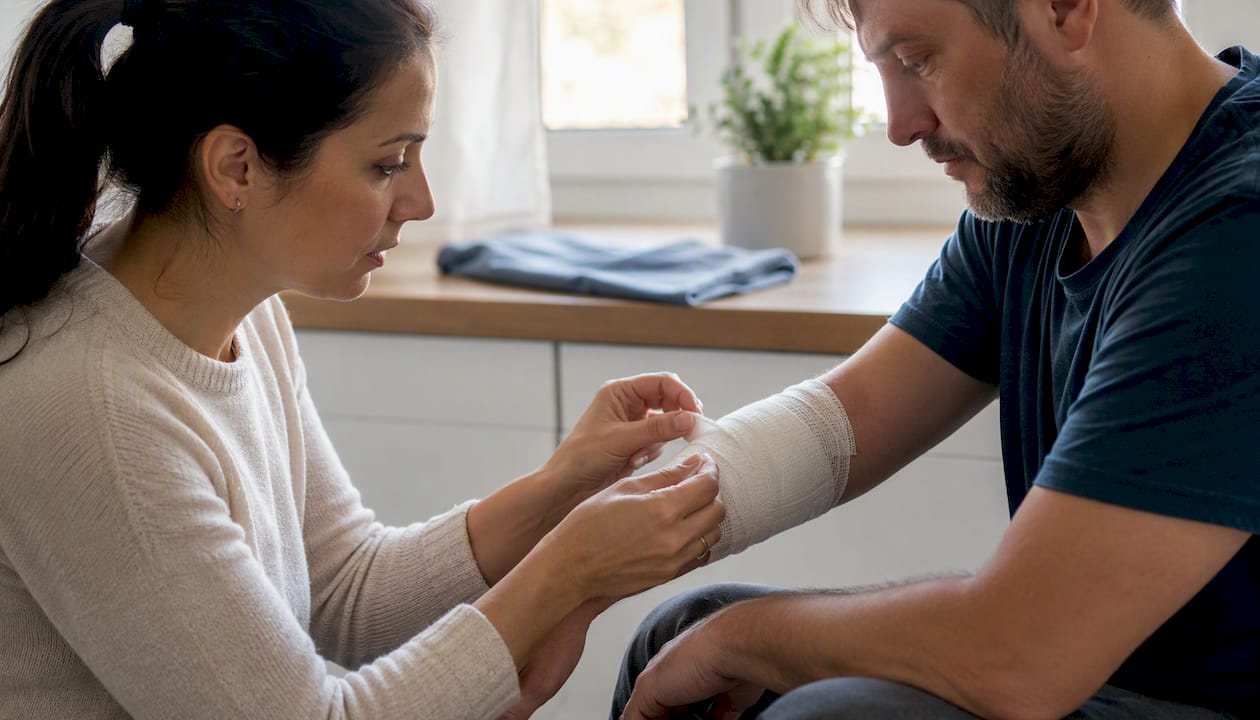
Certain signs require immediate action at any point in this window: a fever, sudden severe pain, unusual bleeding, or breathing difficulty. A companion trained even briefly on what to watch for reduces unnecessary panic and, just as importantly, catches genuine problems faster. Reviews of transitional care confirm companions often act as an early warning system precisely because they notice subtle changes staff on a busy ward might miss, according to research on the patient companion’s role.
How your shoqërues should prepare before surgery day
Preparation for a companion starts well before the operating theatre. Discharge guidance from the Centre for Perioperative Care specifically recommends planning, in advance, who will support activities of daily living such as washing, dressing, and taking medication. That conversation should happen days before surgery, not in the recovery bay.
Practical documents your companion should carry or have access to:
- A copy of your ID, insurance policy number, and any consent or power-of-attorney paperwork relevant to your case.
- A full medication list, including dosage times and any allergies.
- Contact details for the clinic, the ward, and a local emergency number if you’re recovering somewhere unfamiliar.
- Confirmation of transport for discharge day, plus a backup plan if that transport falls through.
Logistics deserve equal attention. If accommodation is involved, check that it’s genuinely accessible, ground floor or lift access, close to a pharmacy, and not a long walk from wherever follow-up appointments happen. Reading through what pre-surgery consultations typically cover can help your companion know what questions to raise with the surgical team beforehand.
Pro Tip: Ask the clinic for a short training session, even just 15 to 30 minutes, covering wound checks, medication timing, and exactly who to call if something looks wrong. It costs little and noticeably improves a companion’s confidence during the first anxious hours at home.
What are the hospital’s visiting and companion rules?
Every hospital handles visiting and companion access differently, and assuming your clinic follows the same policy as your last one is a common mistake. ICU and high-dependency units almost always have tighter restrictions than general wards, sometimes limiting visits to short, scheduled windows or a single named person.
Rather than guessing, ask your clinic these questions directly before travelling or admission:
- What are the standard visiting hours for the ward I’ll be recovering on?
- Is my companion allowed to stay overnight, and if so, where?
- Are there separate rules if I need time in intensive care or high-dependency recovery?
- Will my companion be included in the discharge briefing, and can they get written instructions?
- Who should my companion contact if they have questions after we’ve left the hospital?
Government-level discharge guidance in the UK, for example, expects multidisciplinary teams to involve family members and unpaid carers directly in discharge planning, according to Gov. Ask whether your clinic follows a similar principle, and request that discharge instructions be provided in writing, not just spoken quickly on your way out the door.
What warning signs should a companion act on?
A companion doesn’t need medical training to be useful here, just a clear list of what’s normal and what isn’t, and the confidence to act rather than wait and see.
Watch for these signs in particular:
- A fever, especially above 38°C, that doesn’t settle with paracetamol.
- Bleeding that soaks through a dressing rather than just staining it lightly.
- Pain that suddenly worsens instead of gradually improving.
- Difficulty breathing, chest tightness, or unusual swelling in the legs.
- Sudden confusion, disorientation, or a patient who seems “not themselves.”
If any of these appear, the sequence matters. First, check your discharge notes for specific guidance tied to your procedure. Second, call the ward or clinic directly using the number provided at discharge, not a generic hotline. Third, if symptoms feel severe or rapidly worsening, use local emergency services without waiting for a call back. Keeping a simple written note of when a symptom started and how it’s changed makes it much easier for a doctor to assess the situation quickly.
Qualitative research into companion roles found that family members often catch these changes before staff do, precisely because they know the patient’s baseline, as noted in studies on transitional care. This section is general guidance only; always follow the specific instructions given by your treating clinic, and treat any severe or rapidly worsening symptom as a reason to seek urgent medical care immediately.
What should go on your 48-hour companion checklist?
A short, practical list beats a long one nobody actually reads on the morning of surgery. Here’s what to pack and plan for.
Packing list:
- Written medication list and any prescribed painkillers or anti-nausea tablets.
- Phone chargers, since hospital stays and slow recovery days drain batteries faster than expected.
- Loose, comfortable clothing that’s easy to get on and off without raising the arms or bending awkwardly.
- Copies of ID, insurance details, and consent paperwork.
- Snacks and water for the companion, who is easy to forget once attention shifts entirely to the patient.
A simple 48-hour plan:
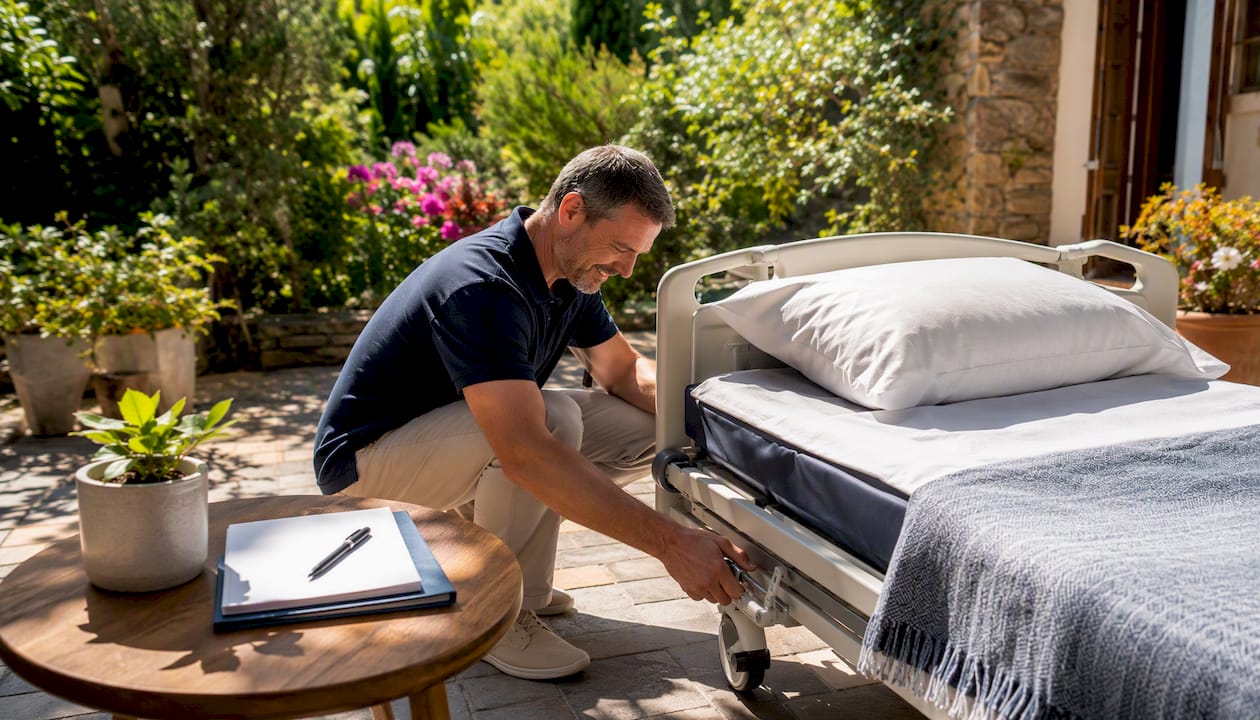
Decide in advance who handles the first night, who handles daytime tasks the next day, and who’s on call if either of you needs a break. Build in rest breaks for the companion too, not just the patient, and plan light, easy meals rather than anything requiring much preparation. If recovery is likely to be longer or more involved, a proper hospital bed for home use can make positioning and mobility considerably easier for both of you.
Pro Tip: If your companion is also managing jet lag or an overnight flight before surgery, bring earplugs and an eye mask for their own sleep, not just yours. A companion running on no sleep makes worse decisions, and that matters when the decisions involve your recovery.
What framework do clinics use for safe transitional care?
Structured programmes that formally involve companions consistently outperform ad-hoc arrangements where a family member simply shows up and hopes for the best. Five elements recur across the research on this topic.
| Framework element | Why it matters |
|---|---|
| Structured milestone updates | Timed updates during and after surgery reduce family anxiety compared with a single update at the end, based on findings from perioperative communication studies. |
| Short caregiver training | A brief session on wound checks and warning signs improves confidence and reduces unnecessary calls to emergency services. |
| Active companion inclusion | Involving companions in ward rounds and handovers helps them act as an early warning system rather than a passive visitor. |
| Digital or phone follow-up | Remote check-ins after discharge catch problems earlier than waiting for a scheduled in-person visit. |
| Culturally tailored communication | Instructions delivered in a patient’s own language and adjusted to their expectations improve adherence and reduce confusion. |
The t‑HELP and FIP programmes reviewed by Frontiers combine several of these elements, structured caregiver training, ward-round participation, and post-discharge support, and reported measurable drops in delirium and readmissions among older surgical patients.
If you’re booking treatment through any clinic, it’s reasonable to ask for:
- A scheduled update at key surgical milestones, not just a single call once you’re out.
- A short, practical training session for your companion before discharge.
- Access to a phone number or messaging channel for follow-up questions in the days after you leave.
How Clinicgroup helps you organise the trip and aftercare
Coordinating a companion, transport, and aftercare across borders is genuinely one of the more stressful parts of planning treatment abroad, and it’s the part we spend the most time getting right. Clinicgroup matches patients with verified clinics across Albania and Dubai, and every partner clinic works to European standards of care with board-certified specialists, so the clinical side of your trip isn’t where the uncertainty should sit.
What we focus on instead is the logistics your companion will actually be dealing with: coordinating travel dates around your procedure, arranging partner hotel accommodation that’s genuinely accessible, and following up after you’ve returned home to check recovery is on track. None of that replaces medical advice, but it removes a lot of the guesswork that otherwise falls entirely on your companion’s shoulders.
If you’re planning a procedure and want to talk through what companion support might look like for your specific case, we’re happy to walk through it before you book anything.
How Clinicgroup supports patients and their companions
Booking treatment abroad shouldn’t mean your companion is left figuring out logistics alone, and that’s exactly the gap Clinicgroup is built to close. Unlike arranging everything independently, where you’re chasing hotel accessibility, transport, and discharge paperwork yourself, Clinicgroup builds these pieces into the treatment journey from the start.
Here’s what’s included for companions specifically:
- Clinic matching with verified, board-certified specialists across Albania and Dubai.
- Travel logistics coordinated around your procedure date, not left for you to sort out at the last minute.
- Partner hotel bookings chosen with accessibility and proximity to the clinic in mind.
- Aftercare coordination and printed discharge summaries your companion can actually reference at home.
Before you travel, always confirm the specific visiting and companion policy with your chosen clinic and request written discharge instructions, since these details vary by hospital and by procedure. Whether you’re exploring plastic surgery options or considering a hair transplant, get in touch through our contact page to talk through what companion support would look like for your specific treatment and travel dates.
Where to find further guidance
A few sources are worth bookmarking if you want to go deeper than this guide, particularly if you’re planning surgery with a clinic you haven’t used before.
- NICE’s perioperative care guideline (NG180) for national recommendations on surgical pathway support.
- CPOC’s discharge guidance for practical discharge planning checklists.
- Frontiers’ review of family involvement in perioperative care for evidence on structured caregiver programmes.
- The role of the patient’s companion in transitional care for qualitative research on how companions actually help during recovery.
- Gov for how discharge teams are expected to involve family and carers.
Always check policies with your specific clinic before travelling, since visiting hours, companion access, and discharge procedures vary between hospitals and even between departments within the same building. For a fuller look at what recovery involves once you’re home, our guide to step-by-step patient aftercare covers the weeks beyond the initial 72-hour window.
Sources
- Frontiers review on family involvement in perioperative care
- The role of the patients’ companion in transitional care (PMC8053208)
- NICE guideline: perioperative care in adults (NG180)
- Gov
FAQ
Do I really need a companion after every type of surgery?
Most procedures involving anaesthesia or sedation call for a companion, at minimum for the discharge journey and the first 24 hours at home. Minor procedures under local anaesthetic may need less support, but always confirm with your specific clinic.
How long should my shoqërues stay with me after surgery?
Plan for at least 24 to 72 hours of close support, longer for more complex procedures or if you’re recovering somewhere unfamiliar while travelling. Your surgeon can give guidance specific to your procedure.
Can my companion attend appointments and ask questions on my behalf?
Yes, and it’s genuinely useful, since patients are often groggy or anxious immediately after surgery and may not absorb instructions clearly. Ask your clinic in advance whether your companion can be included in discharge briefings.
What if my companion notices something concerning but isn’t sure it’s serious?
Encourage them to call the ward or clinic using the number provided at discharge rather than waiting to see if it improves. If symptoms feel severe or are worsening quickly, treat it as a reason to seek urgent care immediately.
Does Clinicgroup help arrange accommodation for companions travelling with patients?
Yes, Clinicgroup coordinates partner hotel bookings with accessibility in mind alongside clinic matching and travel logistics, so companions aren’t left arranging separate accommodation on short notice.