TL;DR:
- Dental packages combine clinical treatment, travel, and support services into one coordinated offer. Patients should carefully review detailed documentation, verify provider credentials, and consider aftercare before choosing a package. UK regulations prohibit unregistered assessments and emphasize transparency and safety in dental tourism.
Dental packages are coordinated bundles that combine clinical dental treatment with travel, accommodation, and patient support services into a single offering. They exist specifically to simplify the process of receiving dental care abroad, removing the need for patients to arrange each element independently. For UK patients considering dental tourism in Europe, understanding what a package actually contains, how it is structured, and what the 2026 regulatory environment means for your choices is the difference between a successful trip and a costly mistake. This explanation of dental packages covers everything you need to make a confident, informed decision.
What does an explanation of dental packages actually cover?
A dental package is a service bundle, not a single product. All-inclusive dental packages typically include clinical treatments, return flights, airport transfers, local transport, hotel accommodation, on-site coordination, and language support. That breadth of coverage is what separates a genuine package from a clinic simply quoting a treatment price.
The clinical side of a package usually covers one or more of the following:
- Dental implants (single tooth, multiple teeth, or full-arch systems such as All-on-4 or All-on-6)
- Porcelain crowns and bridges
- Composite or porcelain veneers
- Teeth whitening and smile makeover combinations
- Bone grafting or sinus lifts where required before implant placement
The logistics side covers the patient’s entire stay. Flights, hotel accommodation, transfers between the airport and clinic, and a local coordinator who manages daily scheduling are all standard in a well-structured package. Some providers also include pre-travel consultations via video call and post-treatment follow-up appointments.
A detailed written treatment summary is the document that separates a trustworthy package from a marketing promise. Relying on the term “all-inclusive” without reading the written breakdown is the single most common mistake patients make. Always request a document that lists every procedure, the materials used, the number of clinic visits required, and what happens if a complication arises.

Pro Tip: Ask the provider to confirm in writing which items are excluded from the package price. Hidden costs most often appear as charges for X-rays, CBCT scans, temporary restorations, or additional nights if treatment runs longer than planned.
What types of dental packages are available?
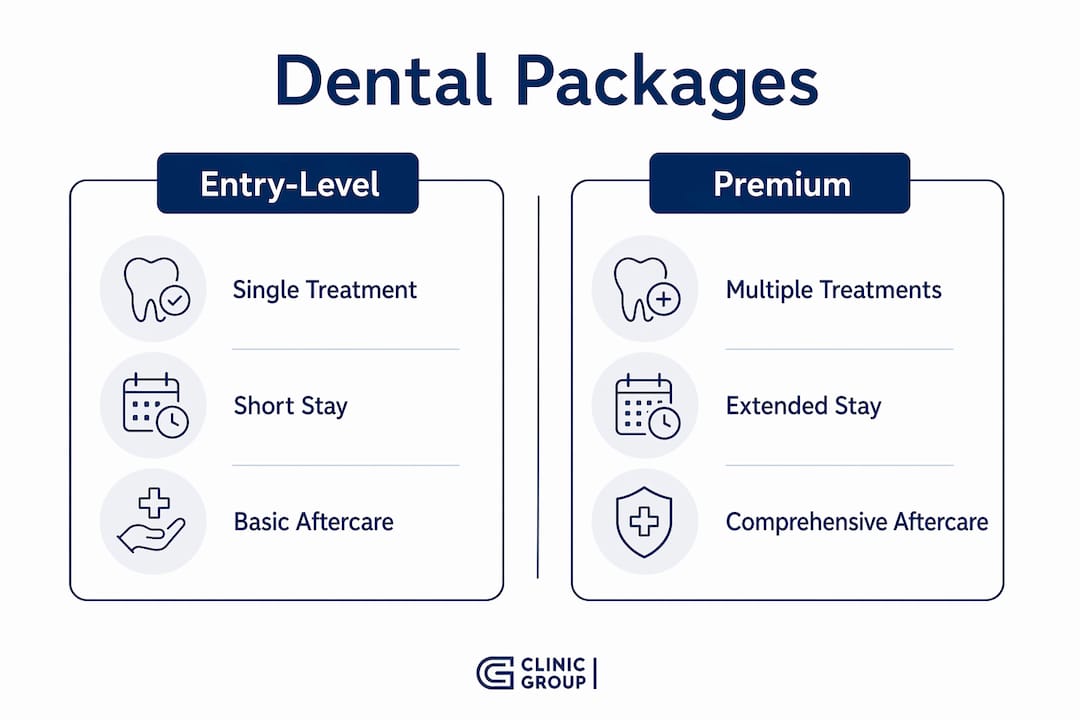
Dental packages broadly fall into two categories: entry-level and premium. Understanding the difference helps patients match their clinical needs to the right level of service.
Entry-level packages focus on a single treatment type, typically crowns or veneers, and cover the clinical procedure plus basic accommodation. They suit patients with straightforward treatment needs and a shorter stay of two to four days. Premium packages cover complex or multi-stage treatments, include higher-grade accommodation, dedicated patient coordinators, and often provide a longer aftercare window.
Staged treatments such as implants require at least two visits: one for implant placement and one for fitting the final crown after osseointegration. This means patients must plan for two separate trips, and a reliable package will communicate this clearly before booking.
The table below outlines the most common package types and their typical treatment bundles.
| Package type | Typical treatments included | Usual stay length | Aftercare included |
|---|---|---|---|
| Entry-level crown or veneer | Crowns, composite veneers, whitening | 3–5 days | Basic written guidance |
| Smile makeover | Porcelain veneers, whitening, gum contouring | 5–7 days | Follow-up video consultation |
| Implant package | Single or multiple implants, bone graft if needed | 2 visits over 3–6 months | Coordinator support between visits |
| Full-arch restoration | All-on-4 or All-on-6, extractions, temporaries | 7–10 days (first visit) | Ongoing coordinator and clinic contact |
| Combined aesthetic | Implants plus veneers or crowns | Multiple visits | Written plan with staged aftercare |
Aftercare inclusion is the most frequently overlooked element when patients compare packages. A package that ends the moment you board your return flight is not a complete package. Confirm that the provider offers a clear process for managing complications after you return home, including contact with a local dentist if needed.
How should patients evaluate costs and risks?
The headline price of a dental package abroad is rarely the full cost. UK government guidance advises patients to assess regulatory compliance, quality assurance, and aftercare needs alongside price. Focusing on price alone increases the risk of complications and unexpected expenses.
A realistic cost assessment for dental tourism should include:
- The package price itself (treatment plus logistics)
- Any items excluded from the package (scans, temporaries, additional nights)
- Travel insurance with specific coverage for planned dental procedures
- The cost of a follow-up appointment with a UK dentist on return
- Potential costs of a second visit if staged treatment is required
- Emergency dental costs if complications arise at home
Insurance is a critical and frequently misunderstood area. Standard travel insurance typically excludes planned dental or medical procedures unless you disclose them to your insurer and obtain specialist coverage. Failing to disclose your planned treatment risks invalidating your entire policy. Complications such as wound infections or failed implant integration can generate significant costs that an undisclosed policy will not cover.
A 2022 British Dental Association survey found that 86% of UK dentists had treated patients returning with complications from dental treatment abroad. That figure reflects the scale of the issue, not a reason to avoid dental tourism entirely. It is a reason to choose verified providers and plan thoroughly.
Pro Tip: Some UK dental practices offer staged treatment plans or 0% finance options as an alternative to travelling abroad. If your treatment is straightforward, staged payment plans may reduce the financial gap between UK and overseas costs.
Checking clinic verification is non-negotiable. Confirm that the treating dentist holds recognised qualifications, that the clinic operates under European clinical standards, and that sterilisation protocols meet accepted infection control guidelines. Clinicgroup’s network of verified clinics in Albania, for example, operates under European standards with board-certified specialists and transparent pricing published before booking.
What are the 2026 UK regulatory considerations for dental tourism?
UK regulations create specific legal boundaries that affect how dental tourism packages can be marketed and delivered to British patients. Every patient considering a package should understand these rules before engaging with any provider.
The General Dental Council (GDC) prohibits anyone not registered with it from assessing patients in the UK for overseas dental treatment. This rule applies directly to dental tourism events held in UK hotels, where overseas clinics sometimes offer “no pressure” consultations with promotional discounts. The GDC has powers to prosecute violators and has issued repeated warnings about this practice.
“It is illegal in the UK for anyone not registered with the GDC to carry out patient assessments for overseas dental treatment. Patients who receive assessments from unregistered practitioners risk receiving substandard advice and have no regulatory recourse if things go wrong.” General Dental Council and British Dental Association, joint guidance
Practical steps to protect yourself under current UK regulations:
- Verify that any dentist assessing you in the UK holds current GDC registration, which you can check on the GDC’s public register
- Avoid signing treatment agreements at UK hotel events without independent verification of the assessing dentist’s credentials
- Request written confirmation of the treating clinic’s regulatory status in its home country
- Check that pricing is communicated transparently at every stage, as UK regulations require private clinics to do
- Read patient reviews from verified sources before committing to any provider
The British Dental Association consistently advises patients to verify provider compliance with both UK and destination-country regulations before travelling. Reputable dental tourism networks publish their clinic verification criteria and make dentist credentials available on request.
Key takeaways
Dental packages combine clinical treatment, travel logistics, and patient support into one coordinated offering, and evaluating them thoroughly on safety, regulatory compliance, and aftercare is as important as comparing prices.
| Point | Details |
|---|---|
| Package components | A genuine package covers treatment, flights, transfers, accommodation, and on-site coordination. |
| Written treatment summary | Always request a detailed document listing procedures, materials, visit numbers, and exclusions. |
| Insurance disclosure | Inform your travel insurer about planned dental procedures to avoid invalidating your policy. |
| GDC registration | Verify that any dentist assessing you in the UK holds current GDC registration before proceeding. |
| Aftercare inclusion | Confirm the package includes a clear process for managing complications after you return home. |
What I have learned from coordinating dental tourism packages
Having worked with patients across the UK and Europe who are considering dental treatment abroad, the pattern I see most often is this: patients research the clinical procedure thoroughly but spend very little time evaluating the package structure around it.
The term “all-inclusive” is used loosely across the industry. I have seen packages described that way which excluded CBCT scans, temporary crowns, and the second visit required to fit permanent restorations. None of those exclusions were hidden in small print. They simply were not mentioned, because the patient never asked. The lesson is straightforward: a package is only as good as its written documentation.
Verified clinics with board-certified specialists and transparent pricing are not difficult to find, but they do require deliberate research. Patient reviews from verified sources tell you more about the real patient experience than any marketing brochure. The cost savings available through dental tourism in Albania or other European destinations are genuine and significant. Protecting those savings means choosing a provider who communicates clearly, documents everything, and supports you after you return home.
— Clinic
Clinicgroup’s verified dental packages for European patients
Clinicgroup connects patients with verified dental clinics across Europe, including specialist centres in Albania offering dental implants, crowns, and veneers at transparent, pre-published prices. Every clinic in the network meets European clinical standards, and each patient receives a written treatment plan before any commitment is made. Travel logistics, partner hotel accommodation, and airport transfers are coordinated as part of the package. Aftercare support continues after patients return home, with coordinator access and guidance on follow-up care. For patients who want to understand their full range of treatment options, Clinicgroup’s complete treatments catalogue covers dentistry alongside cosmetic and wellness services.
FAQ
What is a dental package?
A dental package is a coordinated bundle that combines clinical dental treatment with travel, accommodation, transfers, and patient support services. It is designed to simplify dental tourism by managing all elements of the trip in one arrangement.
What does an all-inclusive dental package include?
An all-inclusive dental package typically covers the clinical procedure, return flights, airport transfers, hotel accommodation, local transport, and on-site coordination. Always request a written breakdown, as inclusions vary between providers.
Do I need to tell my travel insurer about dental treatment abroad?
Yes. Failing to disclose planned dental procedures to your travel insurer risks invalidating your policy. Obtain specialist coverage that specifically includes your planned treatment before travelling.
Is it legal for overseas clinics to assess patients at UK hotel events?
No. The GDC prohibits anyone not registered with it from assessing patients in the UK for overseas dental treatment. Unregistered assessments risk substandard advice and carry no regulatory protection for the patient.
How do I compare dental packages safely?
Compare packages by requesting written treatment summaries, verifying dentist credentials, confirming aftercare arrangements, and checking that pricing is fully transparent at every stage. Never base a decision on headline price alone.