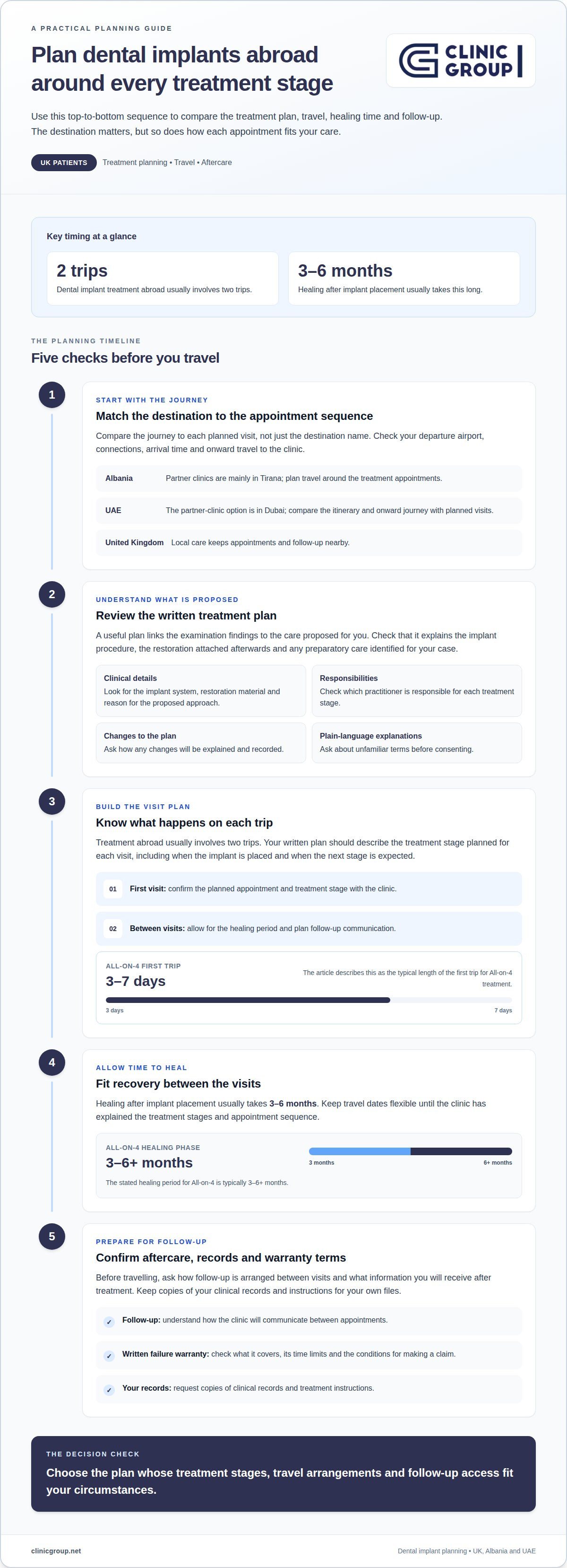
There isn’t one best country for dental implants for every UK patient. The right choice depends on the full treatment plan, how easily you can return for follow-up, and what happens if an implant fails. Healing after implant placement usually takes three to six months, and treatment abroad usually involves two trips.
Comparing headline prices is understandable, but aftercare arrangements and written warranty terms matter too. This guide explains how to compare prices, clinics, treatment timelines, aftercare and failure warranties across six countries, and what to look for in a written treatment plan. It also offers a practical way to weigh travel and follow-up needs alongside treatment, so you can assess which destination may suit your circumstances.
Key Takeaways
- Compare the full treatment plan, not just the implant: the crown, scans, any preparatory work and follow-up can affect what is included.
- Plan around the treatment timeline, as implant healing usually takes three to six months and treatment abroad usually involves two trips.
- Assess clinic information such as the proposed treatment steps, the clinician’s experience and how the clinic will communicate with you.
- Read the written failure warranty closely, including what it covers, its time limits and any conditions for making a claim.
- Weigh travel and follow-up arrangements alongside the treatment plan when deciding which destination best fits your needs.
How Do I Choose Which Country Is Best for Dental Implants?
For UK patients, Albania and the UAE are overseas options, with Clinic Group partner clinics primarily in Tirana and a small number in Dubai. The best country for dental implants depends on treatment stages, travel practicalities and follow-up access, not the destination alone.
Destinations for UK patients
Albania and the UAE provide two different destination choices for patients comparing overseas dental treatment. Albania’s partner clinics are mainly in Tirana, while the UAE option is in Dubai. Both require planning around flights and appointments, but their location and journey arrangements differ. An Albanian dental clinic profile offers a starting point for considering care in Albania.
Keep your comparison focused on the treatment plan: where each stage takes place, how appointments are arranged and how you will travel between the airport and clinic. A destination is a practical fit only if its location works with the visits your treatment requires.
Treatment timelines and travel planning
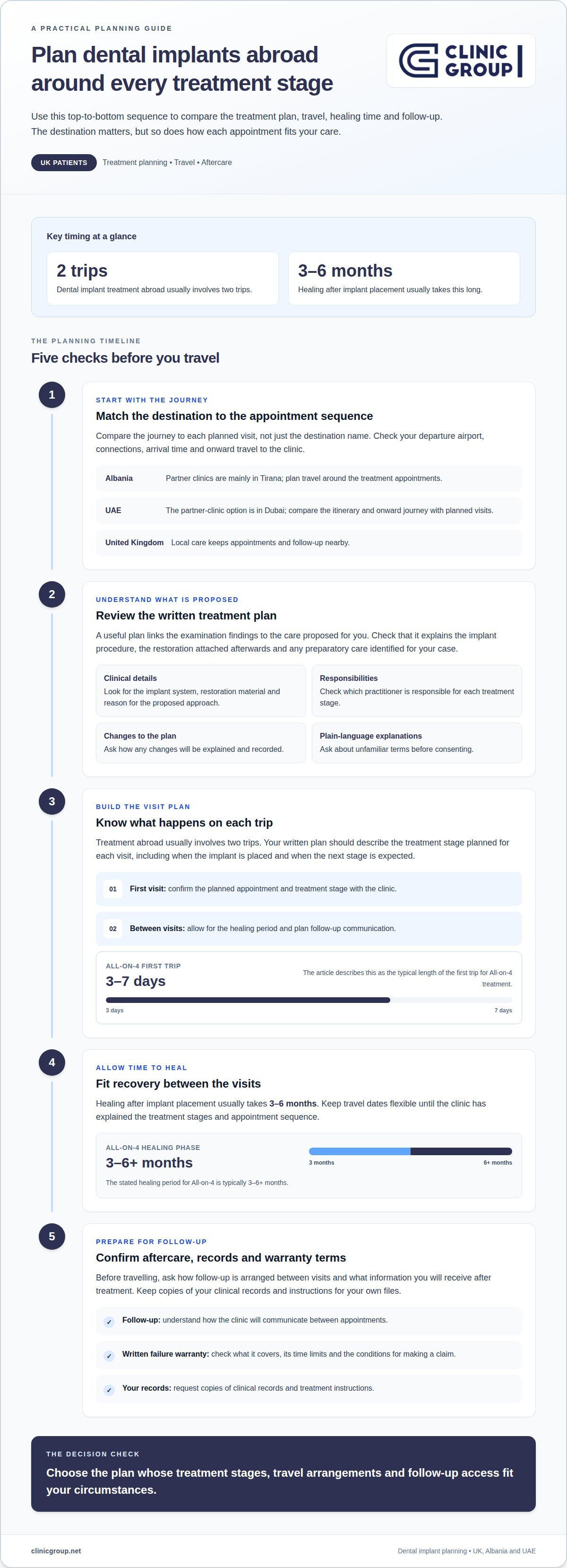
Dental implant treatment abroad usually involves two trips, so plan for both before booking travel. Healing after implant placement usually takes three to six months. Your written plan should explain what happens on each trip, including when the implant is placed and when the next stage is planned.
Some patients need multiple visits over a few months. Build the appointment sequence into your travel plan rather than treating the first trip as the whole course of care. For All-on-4 treatment, the first trip typically lasts 3–7 days; the healing phase typically takes 3–6+ months.
Travel distance and flight convenience
Flight time is only one part of comparing destinations. Check the full itinerary, including connections, departure airport, arrival time and the onward journey to the clinic. A shorter flight may make repeat travel easier, while a more complex route can affect the time and planning needed around appointments.
Compare actual routes to Tirana and Dubai from your UK departure airport. Consider whether each itinerary leaves enough time for scheduled appointments and recovery before flying home. Keep travel dates flexible until you understand the treatment stages and the clinic’s appointment sequence.
Travel considerations and recovery
Plan recovery around the procedure and treatment plan, not just the destination. Before travelling, map each appointment against flights, accommodation and time away from home. Ask how follow-up is arranged between visits and what information you will receive after treatment, so these details are included in your plan.
Use this comparison to narrow your options:
| Option | Location | Travel and treatment consideration |
|---|---|---|
| Albania | Tirana | Plan travel around the appointments in your treatment sequence. |
| UAE | Dubai | Compare the itinerary and onward journey with your planned visits. |
| United Kingdom | Local care | Consider how staying nearby affects access to appointments and follow-up. |
Choose the destination whose travel arrangements best fit your treatment stages and follow-up needs.
Dental implant prices by country
For UK patients, the destination alone cannot show whether two implant plans describe the same care. Compare the clinical stages, materials and information in each plan, then consider how they fit your dental needs.
Albania and UAE treatment plans
For Albania and the UAE, start by checking how the clinic explains its assessment. A useful plan links your examination findings to the proposed treatment rather than presenting a generic sequence. Look for clear descriptions of the implant procedure, the restoration planned afterwards and any preparatory care identified for your case.
Next, review the clinical details that explain what is proposed. Does the plan name the implant system and restoration material? Does it explain why that approach is recommended? Are expected appointments and the records you will receive described? These details help you compare plans from Tirana and Dubai without treating destination as a measure of clinical suitability.
Before deciding, prepare questions about unfamiliar terms. For example, ask the clinic to explain the difference between the implant placed in the jaw and the visible tooth restoration attached to it. Clinic Group’s dental implant information can help you understand the treatment category and terminology.
UK and overseas treatment plans
When comparing UK care with treatment abroad, focus on how each plan documents assessment, consent and clinical responsibility. Check that it identifies the proposed practitioner and states which clinician is responsible for each stage. This gives you a clearer basis for discussing the proposed care with your regular dentist.
Use a consistent review process for every plan:
- Match the proposed procedure to the examination findings recorded for you.
- Identify the implant system, restoration material and any planned preparation.
- Check that the treatment sequence and practitioner responsibilities are clear.
- Ask how changes to the plan will be explained and recorded.
- Request copies of the clinical records and instructions for your own files.
These checks are useful whether treatment is planned in the UK, Albania or the UAE. They help distinguish a plan tailored to your clinical findings from one that leaves important steps unclear. A written explanation also gives you a practical record to discuss with your dentist.
Keep the plans together and compare the same clinical details line by line. If a term or proposed step is unclear, ask for a plain-language explanation before consenting. Focus on understanding the care being proposed rather than making a decision based on a destination label alone.
Choosing a dental clinic abroad
For treatment abroad, establish which country’s regulator oversees the clinic and practitioner; UK rules do not set an overseas clinic’s local requirements. The General Dental Council advises patients to speak to their own dentist before considering treatment abroad, and that discussion can help identify questions about the proposed procedure.
Clinic safety checks
When comparing clinics, consider their procedures and communication alongside practitioner qualifications and implant brand. Before agreeing to surgery, ask for a written treatment plan describing assessment, implant placement, restoration and follow-up. Check that the clinic explains who handles concerns after you return to the UK and how your records will be shared with your dentist.
Review the plan for clear steps and named clinical responsibilities. If a scan or examination changes the proposed procedure, the clinic should explain how that affects the plan and consent.
Clinic qualifications and implant brands
Qualifications help you understand who assesses your case and performs each part of the procedure; an implant brand identifies the components proposed for treatment. Ask for the practitioner’s name, relevant implant experience and the exact system planned. These details make it easier to discuss the procedure with your UK dentist and keep an accurate treatment record.
Request the implant system’s product information and written details of the components to be used. Brand recognition alone does not establish whether a treatment plan suits your dental needs. Compare the explanations of your assessment, implant placement and restoration, not just the brand name.
Regulation and quality standards
Regulation concerns the rules that apply where the clinic operates, while quality standards describe how care is organised. Ask which authority registers or oversees the clinic and practitioner in that destination, and how patients can raise a complaint. Do not assume that a European location means identical rules across countries.
Ask for the clinic’s written consent process, infection-control information and records policy. These are practical points to compare across medical tourism destinations. A clear answer should identify the relevant process and the person responsible, rather than relying only on broad claims about quality.
Implant risks and complications
Risks include infection, healing problems and an implant failing to integrate with the jawbone. In a 2022 British Dental Association survey, 86% of 1,000 UK dentists who had examined patients treated abroad said they had treated cases that developed problems afterwards. This describes dentists’ reported experience, not the percentage of overseas patients who develop complications.
Compare how clinics explain risks, respond to complications and provide follow-up. Ask what symptoms require urgent attention, who assesses them and how clinical records reach your UK dentist. Discussing these practical arrangements with your own dentist before treatment may help you decide what you need.
Before deciding, put the clinic’s answers in writing and compare:
- The practitioner responsible for each treatment stage.
- The implant system and components named in the plan.
- The destination’s oversight and complaints process.
- Arrangements for records, follow-up and complications.
Comparing dental implant prices across six countries
For UK readers, compare destinations using the clinical information each plan provides, not a country label. Review the proposed procedure, the assessment behind it and the practitioners responsible. This gives you a consistent way to understand the care being considered in the UK, Albania or the UAE.
Factors for comparing destinations
Start with the assessment. A plan should explain how the clinic reached its recommendation and how it relates to your dental needs. Check that it distinguishes the implant placed in the jaw from the crown or bridge fitted afterwards. If the plan uses unfamiliar terms, ask for a plain-language explanation before deciding.
Next, compare the clinical sequence and documentation. Look for the practitioner responsible for each stage, the proposed implant system and restoration materials, and the consent information provided. These details help you compare plans from different destinations without assuming that location determines clinical quality.
Use the same criteria for each option:
- Whether the proposed procedure is linked to your assessment findings.
- Which practitioner plans and carries out each clinical stage.
- Which implant system and restoration materials are identified.
- How the clinic explains consent and changes to the plan.
- Which clinical records and instructions you will receive.
Written answers make it easier to spot differences that need clarification. Keep the documents together and note questions beside the relevant treatment step. This turns a broad destination comparison into a review of the actual care proposed.
Comparing destination options
Albania, the UAE and the UK offer different locations for dental care. The table compares location and what to review in a treatment plan; it does not rank clinical quality. Apply the same clinical criteria to each option and base your decision on the information about your proposed care.
| Option | Location | Review focus |
|---|---|---|
| Albania | Tirana | Read the proposed treatment steps and practitioner responsibilities. |
| UAE | Dubai | Review how the plan explains the assessment and restoration. |
| United Kingdom | Your local area | Compare the proposed clinical stages and documentation. |
A single implant and a wider restoration are different treatment scopes, so compare like with like. Check whether the plan covers one tooth or a larger area and whether it explains the intended restoration. If two plans address different needs, ask the clinic to clarify their clinical differences instead of treating them as equivalent.
Discuss the plans with your dentist and keep a copy of the explanation you receive. A sound comparison is one you can understand, question and use to make an informed decision about your care.
Aftercare and implant failure warranties
Aftercare is the planned support following treatment; a warranty sets out specific conditions for addressing implant failure. Read them as separate documents, because a warranty does not describe every part of routine follow-up.
Aftercare after returning home
After returning to the UK, organise your dental records so another practitioner can understand the work completed. Keep the final treatment summary, implant details, restoration information and care instructions together. Note the date of each procedure and the clinic contact responsible for follow-up. This creates a useful record for future dental appointments without relying on memory.
Ask the treating clinic how it handles a concern raised from the UK and what information it needs to assess it. Keep the response with your records. If you notice a change around the implant or restoration, contact a dental professional for an assessment rather than trying to adjust the dental work yourself.
Planning aftercare in the UK
Before treatment, discuss the proposed dental work with your regular dentist and ask what information would help with future care. Agree how you will share the treatment summary and implant specifications after returning. This is separate from the overseas clinic’s follow-up: it helps you plan how your existing dental care can account for the new implant.
Note whom you spoke to and any documents they requested. At your next appointment, bring the clinic’s records and explain which tooth or area was treated. A clear handover can help your UK dentist understand the treatment history and identify what further assessment is appropriate.
Visits and ongoing aftercare
Ask the clinic to distinguish planned reviews from appointments needed because of a concern. Find out how routine checks are arranged, who conducts them and how findings are recorded. For example, ask whether the treating clinic expects to review the restoration after fitting and how it shares the outcome with you.
Keep a simple appointment record with dates, the practitioner’s name and any instructions received. If the plan changes, request an updated written summary. This makes follow-up easier to organise and gives you a reliable reference when speaking with another dentist.
Read the failure warranty alongside the aftercare plan. The written terms may define an implant integration window, such as 12–36 months, and explain what circumstances qualify. Check whether the warranty concerns the implant component, the restoration, or both; these can be treated differently in the document. Also note the claim process, required evidence and any conditions about attending reviews.
Before agreeing, make sure you can answer these questions from the paperwork:
- Which component does the warranty cover?
- What event or failure qualifies under its terms?
- What documents must accompany a claim?
- Who assesses the problem and explains the next steps?
- How does the clinic record routine follow-up?
Keep the warranty, treatment summary and correspondence together, and share relevant records with your dentist. Patients planning dental travel can also use practical dental travel guidance to organise their arrangements.
Clinic Group: Dental Treatment Directory
Clinic Group’s Dental Treatment Directory helps patients explore dental implant treatment and clinics, including verified partner clinics primarily in Tirana, Albania, and a small number in Dubai. It can be a useful next step once you have compared treatment plans, travel requirements and aftercare and want to review clinic options in those destinations.
Use the directory to explore relevant clinics and assess how their proposed treatment and follow-up arrangements fit your needs. Clinic Group also provides Medical Tourism Treatment Guides for patients planning care abroad. These resources support informed comparison; clinical assessment and treatment are provided by the clinic you choose.
Contact Clinic Group to explore the directory and discuss your next step.
Make your next step a considered one
The best country for dental implants is the destination that fits your priorities and practical circumstances. Before moving forward, create a short decision brief: note the treatment you are considering, the questions you still have and the factors that matter most to you. You could include how you prefer to manage appointments, what follow-up information you need and which details you want a clinic to clarify.
This brief gives you a focused starting point for a conversation, rather than leaving you to weigh every detail at once. Clinic Group’s Dental Treatment Directory can help you explore relevant clinic options as you consider your next step.
Take the decision at a pace that lets you understand the treatment plan and feel prepared to proceed.
Considering treatment in Albania? Request a free consultation with Clinic Group.
Frequently Asked Questions
Considering dental implants abroad?
Start by deciding what you need from the treatment and which practical arrangements matter most. For example, note whether you need a single tooth replaced or a wider restoration, then consider travel, appointment flexibility and communication after treatment. Take your questions to a consultation and request a written plan explaining the proposed stages. Discuss it with your regular dentist before deciding whether to travel.
How much can you really save with dental tourism?
There is no single saving figure that applies to every patient. The comparison depends on the treatment proposed and what each quote includes, as well as travel, accommodation and any return appointments. Rather than relying on a headline claim, compare itemised plans for the same treatment scope. Include practical arrangements and follow-up in your assessment, so the apparent difference reflects the care and travel you actually need.
Is an EU clinic always preferable to a clinic elsewhere?
No, location alone does not show whether a clinic or treatment plan suits you. Compare the practitioner’s qualifications, the clinic’s oversight in its own country, the written procedure plan and follow-up arrangements. EU and non-EU destinations may have different local systems, so do not assume their rules are identical. Focus on the information the clinic provides and whether it clearly answers your questions.
Which country is cheapest for All-on-4?
There is no dependable single answer for every All-on-4 patient, because plans can cover different stages and components. Check whether the proposed treatment includes temporary teeth, the final bridge, diagnostic imaging, preparatory procedures and later adjustments. Also consider whether follow-up requires another journey. Compare written plans with the same scope before judging which destination offers the most suitable arrangement for your circumstances.
Are dental implants cheaper in Europe?
Europe is not one uniform dental market, so a continent-wide answer can hide differences between clinics and treatment plans. Compare the same procedure and restoration, then review what each quote includes. For example, an implant-only figure and an implant with its crown describe different scopes of treatment. Travel and follow-up arrangements also affect the decision, so use itemised plans rather than a broad regional label.
What is included in overseas dental implant package prices?
Inclusions vary, so request a written breakdown before booking. A package may cover implant placement and a temporary restoration, while diagnostic scans, bone grafting, the final bridge and later adjustments may be outside the quoted treatment. Check whether clinical appointments, medicines, accommodation or transfers are included, and whether follow-up is covered. Keep the answer with your treatment plan to compare offers accurately.
How do implant brands, materials and treatment quality compare between countries?
A country name or implant brand cannot establish the quality of an individual treatment plan. Ask for the exact implant system and restoration materials proposed, then request their details in writing. Make sure the plan distinguishes the implant placed in the jaw from the crown or bridge attached to it. Clear records help you and your dentist understand which components were used and what future care may involve.
What qualifications and accreditations should overseas implant dentists have?
Ask which local authority registers or oversees the dentist, what qualifications they hold and what experience relates to your proposed procedure. Request the practitioner’s name and a clear explanation of their role in planning, surgery and restoration. If a clinic cites accreditation, ask which organisation issued it and what it covers. Accreditation does not replace reviewing the treatment plan, consent information and aftercare arrangements.

Article by
Clinic Group Editorial Team
The Clinic Group editorial team publishes clear, practical guides for UK and EU patients researching medical travel — from dental implants and hair transplants to plastic surgery and eye care — with a focus on verified clinics, transparent “from” pricing, and safe planning.
Disclaimer
This article is for general information only and is not medical advice, diagnosis, or a substitute for an in-person consultation with a qualified clinician. Treatment suitability, risks, timelines, and costs vary by individual. Clinic Group connects patients with independent clinics; those clinics are responsible for clinical care. Always verify credentials, obtain a written treatment plan and itemised quote, and confirm aftercare arrangements and travel insurance cover (elective procedures are often excluded) before booking. Outcomes cannot be guaranteed.