TL;DR:
- A dental cost comparison workflow involves evaluating multiple verified clinics with detailed itemized quotes before booking treatment abroad. It ensures consideration of total costs, clinic credentials, and guarantees, reducing risks and maximizing savings. Proper preparation, including baseline treatment plans and independent verification, leads to safer, more informed dental tourism decisions.
A dental cost comparison workflow is the structured process by which patients evaluate dental treatment options abroad based on cost, quality, and clinic services before committing to a provider. For UK patients, this process is not optional. The NHS does not cover non-emergency follow-up care arising from overseas dental treatment, meaning any complications become your financial responsibility. Getting the comparison right before you travel protects both your health and your money. This guide walks you through every stage, from gathering your baseline documents to analysing total costs, so you can make a confident, well-informed decision.
What does a dental cost comparison workflow actually involve?
A dental cost comparison workflow, known in clinical planning circles as a structured treatment evaluation process, begins long before you contact a single clinic abroad. Experts recommend comparing at least three clinics simultaneously to achieve a true like-for-like evaluation. That figure matters because a single quote gives you no benchmark, and two quotes rarely reveal the full range of quality and pricing available.

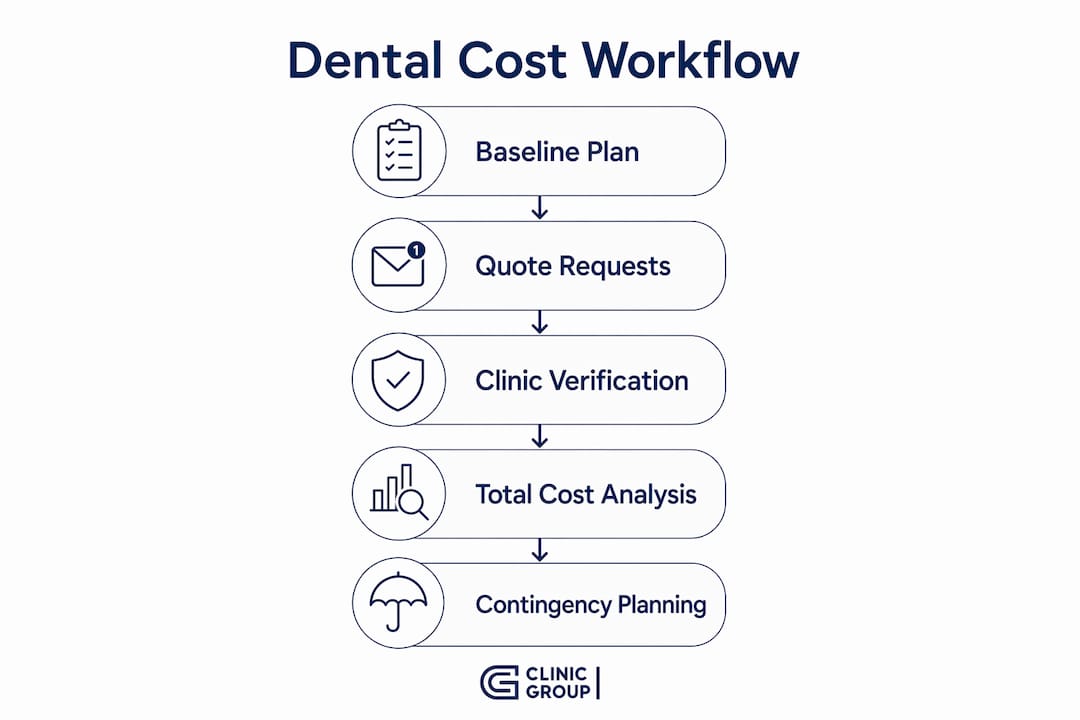
The process has five core stages: obtaining a baseline treatment plan from a UK or EU dentist, requesting multiple simultaneous itemised quotes, verifying clinic credentials, analysing total costs including travel and aftercare, and confirming written guarantees before booking. Each stage builds on the last. Skipping any one of them increases the risk of a poor outcome significantly.
The regulatory context shapes everything. The General Dental Council (GDC) has no jurisdiction beyond UK borders, so legal recourse against overseas clinics is limited and often economically impractical for cases under £10,000. Pre-travel vetting is therefore the only reliable form of risk mitigation available to UK patients.
What prerequisites and tools do you need before comparing dental costs?
The right preparation separates patients who make confident decisions from those who get misled by headline prices. Before you request a single quote, you need four things in place.
- A baseline treatment plan and recent X-rays from a UK or EU dentist. This document tells overseas clinics exactly what work is required. Without it, you will receive vague estimates rather than accurate quotes.
- A checklist for verifying clinic credentials. This should cover accreditation status, named specialist qualifications, implant brand provenance, and written guarantee terms.
- A multi-quote platform or process. Platforms like Offerqo allow patients to receive anonymous verified quotes across multiple destinations without sharing personal contact details, which reduces pressure selling.
- A total cost spreadsheet. This captures clinical fees, materials, scans, flights, accommodation, and potential follow-up costs in one place.
| Prerequisite | Purpose |
|---|---|
| Baseline treatment plan and X-rays | Enables like-for-like quote requests |
| Credential verification checklist | Confirms clinic and specialist quality |
| Multi-quote platform access | Generates comparable, anonymous quotes |
| Total cost spreadsheet | Captures all direct and indirect expenses |
| Written guarantee template | Ensures aftercare terms are documented |
Understanding why dental costs differ between countries and clinics is also part of this preparation stage. Material quality, overhead costs, and specialist experience all affect pricing in ways that a headline figure will never reveal.
Pro Tip: Ask your UK dentist to write the treatment plan using internationally recognised terminology such as ISO tooth numbering. This removes ambiguity when overseas clinics interpret your requirements.
How do you obtain and evaluate multiple detailed quotes?
Requesting quotes is a skill. Done poorly, it produces incomparable figures that waste your time. Done well, it reveals which clinics are professional, transparent, and worth trusting.
- Send your baseline treatment plan and X-rays to at least three verified clinics simultaneously. Simultaneous requests prevent you from anchoring on the first figure you receive.
- Request a fully itemised breakdown. Each quote should specify the implant brand and model, whether CBCT scans are included, the number of appointments required, and the cost of temporary restorations.
- Ask for a fixed total price, not an indicative or “from £X” figure. Clinics offering fixed, fully inclusive quotes that specify implant brands and guarantee terms signal higher professionalism than those providing vague estimates.
- Assess the quality of communication, not just the numbers. A systematic multi-clinic approach reveals clinic responsiveness, patient communication quality, and transparency, all of which are crucial for safety.
- Compare guarantee terms explicitly. Ask whether the guarantee is transferable to a local dentist, how long it lasts, and what it covers. A five-year guarantee that requires you to return to Albania for every review is not the same as one that your UK dentist can administer.
- Reject any clinic that applies pressure to book within 48 hours. Clinics pushing rapid booking or offering only “from £X” pricing should be avoided, as these are recognised warning signs of unreliable providers.
The price differences on offer are real and substantial. Dental implants typically cost £400–£650 abroad at accredited clinics, compared with £2,000–£2,500 in the UK. All-on-4 implants run around 65% cheaper abroad when sourced from verified providers. Those savings justify the effort of a rigorous comparison process.
Pro Tip: Use a temporary email address when submitting quote requests through open directories. This keeps your primary inbox clear and prevents aggressive follow-up marketing from clinics you decide not to pursue.
What should you verify about clinics and specialists?
Clinic selection determines your outcome more than the country you travel to or the price you pay. High-volume “factory” clinics that compete on price alone are the most common source of complications. Named specialists at verified clinics are the essential safeguard.
The verification checklist for any clinic you are seriously considering should cover the following:
- Accreditation status. Look for Joint Commission International (JCI) accreditation, EU standards compliance, or recognition by the relevant national health ministry.
- Named specialist qualifications. Confirm the treating dentist’s name, registration number, and specialist status. Do not accept “our team of specialists” as an answer.
- Implant brand provenance. Ask for the implant brand, model, and batch certificate. Reputable clinics use brands such as Straumann, Nobel Biocare, or Osstem, and will provide documentation without hesitation.
- Written aftercare and guarantee policy. The policy should state duration, coverage, and whether it is transferable to a dentist in your home country.
- Patient reviews from verified sources. Checking patient reviews from verified sources adds an independent layer of evidence that clinic marketing cannot replicate.
It is also illegal for non-GDC-registered practitioners to assess UK patients for overseas treatment while on UK soil. Any clinic representative offering in-person UK consultations without GDC registration is operating outside the law, which is itself a red flag about how that clinic operates.
Pro Tip: Request a video consultation with the named treating dentist before booking. A clinic that cannot arrange this is unlikely to offer the level of personal specialist care you need.
How do you analyse total costs for dental tourism?
The headline treatment price is rarely the true cost. A thorough dental expense analysis accounts for every category of expenditure before you can assess whether the savings are genuine.
Treatment cost components
The clinical fee covers the core procedure, but itemised quotes should also list CBCT scan costs, temporary restorations, anaesthesia, and any bone grafting or sinus lift procedures. These additions can add several hundred pounds to a base implant price if they are not included upfront.
Non-treatment costs
Flights, accommodation, airport transfers, travel insurance with medical cover, and time off work all belong in your budget. For a two-trip implant procedure, which is standard practice, you need to double the travel costs. Partner hotels arranged through a trusted network can reduce accommodation costs, but they still represent a real expense.
Hidden and contingency costs
Hidden and follow-up costs can substantially reduce initial savings. Budget for at least one emergency return trip in your contingency plan. Also factor in translation costs for medical records and the possibility of remedial work. The NHS will not cover non-emergency follow-up care after overseas dental treatment, so any revision work falls entirely to you or your private insurer.
| Cost category | UK treatment | Overseas (verified clinic) |
|---|---|---|
| Single implant (clinical fee) | £2,000–£2,500 | £400–£650 |
| CBCT scan | Often included | Confirm in quote |
| Return flights (two trips) | N/A | £150–£400 |
| Accommodation (two trips) | N/A | £100–£300 |
| Travel insurance | N/A | £50–£150 |
| NHS follow-up cover | Standard | Not available |
| Contingency (complications) | NHS accessible | Self-funded |
A realistic dental cost estimation process adds all these figures together before drawing conclusions. Patients who compare only the clinical fee often underestimate the true cost of overseas treatment by a significant margin.
Pro Tip: Build a 15–20% contingency buffer into your total overseas budget. This covers unexpected costs without derailing the financial case for travelling abroad.
What mistakes should you avoid in the comparison process?
The most costly errors in dental tourism are predictable and preventable. Knowing them in advance is the most practical form of protection available.
Do:
- Compare at least three verified clinics using identical treatment plans.
- Request fixed, itemised quotes that name materials and include all scans.
- Verify the named treating specialist’s qualifications independently.
- Confirm written aftercare guarantees before paying any deposit.
- Establish a relationship with a UK dentist willing to monitor your recovery. UK dentists may be reluctant to handle foreign dental work due to liability concerns, so arrange this before you travel.
- Read the key risks and planning considerations for UK patients before committing.
Do not:
- Book based on the lowest price without verifying quality.
- Accept vague or “from £X” quotes as a basis for comparison.
- Ignore a clinic’s communication quality during the quote stage.
- Assume that a popular destination guarantees a safe clinic.
- Pay a large deposit before receiving written confirmation of all treatment details and guarantee terms.
Pro Tip: If a clinic’s quote arrives within hours of your request with no clarifying questions, treat that as a warning sign. Thorough clinics ask about your medical history, current medications, and bone density before quoting.
Key takeaways
A structured dental cost comparison workflow is the single most effective way to protect both your health and your money when seeking dental treatment abroad.
| Point | Details |
|---|---|
| Start with a baseline plan | Obtain a UK treatment plan and X-rays before contacting any overseas clinic. |
| Compare at least three clinics | Simultaneous quotes from verified clinics enable genuine like-for-like evaluation. |
| Verify specialists, not just clinics | Confirm the named treating dentist’s qualifications and registration independently. |
| Calculate total costs, not just fees | Include flights, accommodation, insurance, and a contingency budget in every comparison. |
| Secure written guarantees before booking | Confirm guarantee duration, coverage, and transferability in writing before paying any deposit. |
The clinic matters more than the country
Having worked with patients across the UK, Italy, and wider Europe, the pattern I see most often is this: patients who struggle after dental tourism abroad almost always chose a clinic based on price or destination popularity rather than specialist credentials. The country is rarely the problem. The clinic almost always is.
The patients who report the best outcomes are those who treated the comparison process as seriously as the treatment itself. They requested itemised quotes, asked to speak with the named dentist before booking, and confirmed their aftercare arrangements in writing. That level of preparation is not excessive caution. It is the minimum standard for a safe outcome.
At Clinicgroup, we see the difference that verified clinic matching makes. Patients who arrive at our partner clinics in Albania with a clear treatment plan, confirmed specialist, and written guarantee terms have a fundamentally different experience from those who booked through a directory or a social media advertisement. The quality criteria for dental treatment abroad are well established. The challenge is applying them consistently, and that is where a structured process pays for itself.
My honest advice: do not let the savings figure drive the timeline. Take the extra two weeks to complete a proper comparison. The financial case for dental tourism is strong when the process is done correctly. It becomes a liability when it is rushed.
— Clinic
How Clinicgroup supports verified dental treatment abroad
Clinicgroup connects UK and European patients with verified dental clinics in Albania and Dubai, including specialists in implants, crowns, and veneers. Every clinic in the network has been assessed for accreditation, specialist qualifications, and aftercare standards. Transparent pricing is provided upfront, with itemised quotes that specify materials and treatment details. Clinicgroup also coordinates travel logistics, partner hotel arrangements, and aftercare follow-up, so patients have support at every stage. For patients ready to move from comparison to confirmed booking, the dentistry treatments page provides full details of available procedures, verified clinics, and specialist care options in Albania.
FAQ
What is a dental cost comparison workflow?
A dental cost comparison workflow is a structured process for evaluating dental treatment options abroad by comparing itemised quotes, clinic credentials, and total costs before booking. It typically involves at least three simultaneous clinic comparisons using a baseline treatment plan from a home-country dentist.
How many clinics should I compare for dental treatment abroad?
Experts recommend comparing at least three verified clinics simultaneously to achieve a genuine like-for-like evaluation. Fewer comparisons make it difficult to identify outliers in pricing, quality, or communication standards.
Will the NHS cover complications from dental treatment abroad?
The NHS does not cover non-emergency follow-up care or revisions arising from overseas dental treatment. Patients are fully liable for any remedial costs, which makes pre-travel vetting the most important step in the process.
What should an itemised dental quote include?
A reliable itemised quote specifies the implant brand and model, CBCT scan inclusion, number of appointments, temporary restoration costs, and guarantee terms. Clinics that provide only a total figure or a “from £X” price are not offering a comparable quote.
Is legal recourse available if something goes wrong abroad?
Legal recourse against overseas clinics is limited and often economically impractical for cases under £10,000, as GDC jurisdiction ends at the UK border. Pre-travel vetting and written guarantees are the only reliable protections available to UK patients.