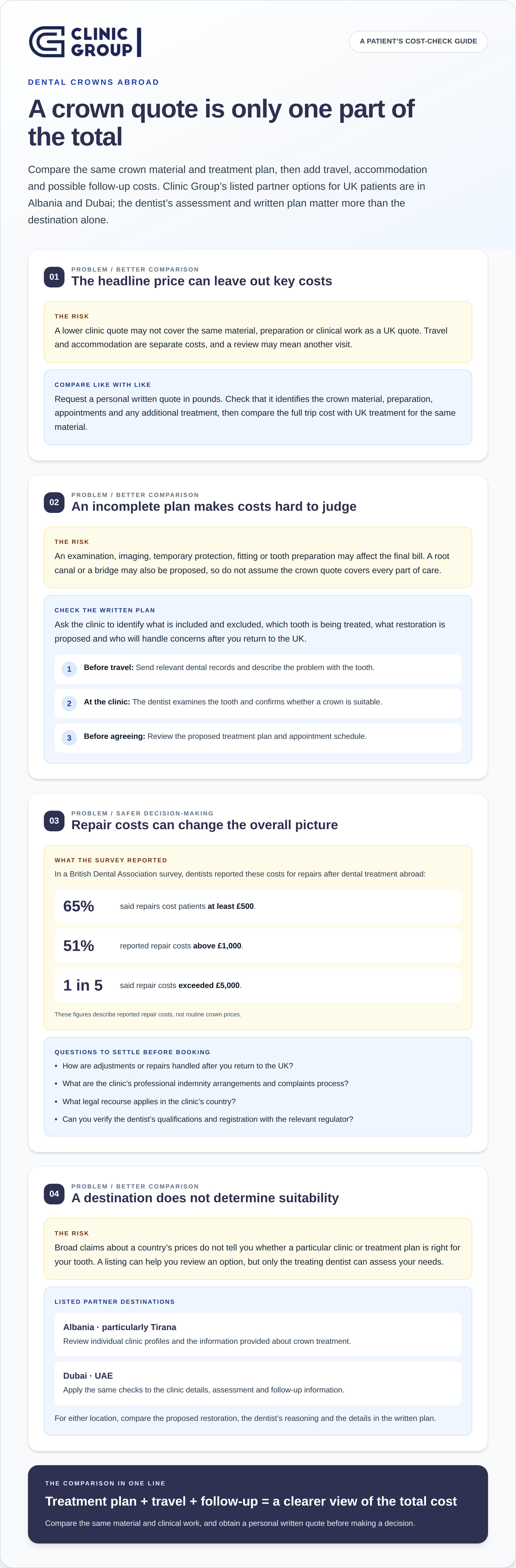
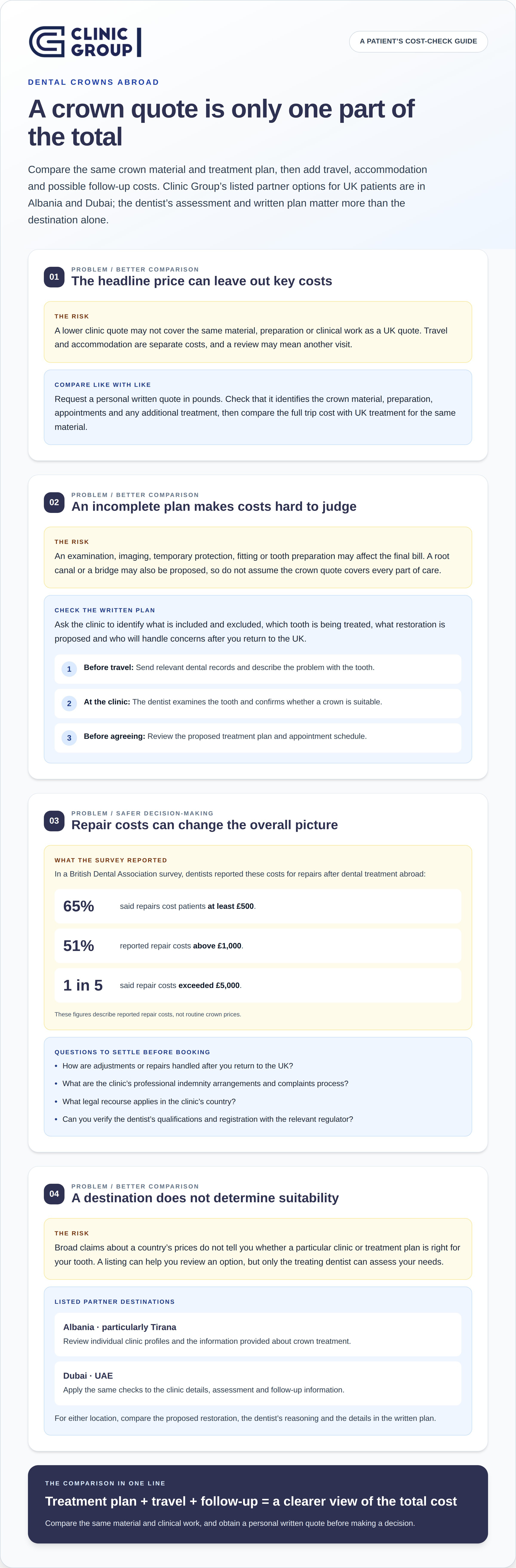
A lower quote abroad does not automatically mean a lower overall cost. For UK patients considering cheap dental crowns abroad, Clinic Group’s listed options are in Albania and Dubai, but the final comparison also depends on crown material, preparatory treatment, travel and aftercare. The right choice balances cost with a suitable treatment plan and ongoing care.
It’s understandable to focus on the initial quote, especially when private dental treatment in the UK can feel expensive. But a crown’s value also depends on its fit, material and care over time. Comparing like with like helps you assess an overseas option.
This guide compares overseas crown treatment with UK costs, explains what can affect the total bill and outlines the practical steps and risks of travelling for dental care. It also covers crown lifespan and aftercare, helping you make a considered decision rather than relying on the headline price alone.
Key Takeaways
- Compare like-for-like crown materials and treatment plans, then account for travel, accommodation and possible UK follow-up costs.
- Clinic Group’s verified dental clinic options are in Albania and Dubai, giving UK patients destinations to explore without broadening the comparison to other countries.
- Understand the assessment, treatment plan and appointment sequence before arranging travel, so the visit fits your clinical needs.
- Learn which daily care habits support a crown’s lifespan and what changes may mean it is time to seek dental advice.
- Use clear treatment details, safety protocols and aftercare arrangements to assess your options through Clinic Group’s dental directory.
How much do dental crowns abroad cost?
The total cost depends on the material, preparation and travel, not just the clinic’s quote. When comparing cheap dental crowns abroad, review the full treatment plan and follow-up arrangements alongside UK costs before deciding.
Overseas treatment savings
Lower operating costs can contribute to lower treatment prices abroad. However, cheap dental crowns abroad are comparable only when quotes cover the same material and clinical work. UK private crown prices vary by material, as the indicative figures below show. These figures are for UK comparison, not prices for treatment overseas.
| UK crown type | Indicative price range | Lower end |
|---|---|---|
| Porcelain-fused-to-metal | ||
| Zirconia | ||
| Emax |
Travel and accommodation expenses
Add transport and accommodation to the clinic’s treatment quote. Appointment timing affects how long you need to stay, so ask for the planned schedule before booking flights. Find out whether a review would require another visit. Compare the full trip cost with the UK price for the same material, rather than treating the crown quote as the total.
Costs beyond the crown
Ask whether examination, imaging, temporary protection, fitting and preparation are included. The dental crown treatment information explains the procedure; your written plan should specify proposed care. Clarify how adjustments or repairs are handled after returning to the UK.
In a British Dental Association survey, 65% of dentists said repairs after dental treatment abroad cost patients at least £500; 51% reported costs above £1,000. One in five said repairs exceeded £5,000. These are repair costs, not routine crown prices.
Before booking, ask about the clinic’s professional indemnity arrangements, complaints process and legal recourse in its country. Request the dentist’s qualifications and registration details, then verify them with the relevant regulator. Read reviews that discuss crown treatment and follow-up, not just general impressions.
Ask what the quote excludes, whether root canal treatment or a bridge is proposed, and who will handle concerns after you return. Obtain a personal written quote before committing.
Where can UK patients find verified dental crown treatment?
For UK patients considering dental crowns abroad, Clinic Group’s partner clinics are located mainly in Albania, with a smaller number in Dubai, UAE. Compare the clinic information, the dentist’s assessment and the proposed care for your tooth. A destination alone cannot establish which clinic or treatment plan is right for you.
Albania is the main location, with partner clinics concentrated in Tirana. A verified dental clinic listing in Tirana provides a specific profile to review. Look at the information about the clinic and its dental services, then consider whether its stated treatment approach addresses your needs. A listing helps you identify an option, but the treating dentist must assess the tooth before recommending a crown.
Dubai is also a listed destination for partner clinics. Review clinic information using the same criteria you would apply to a listing in Albania. For example, note whether it explains how the clinic assesses a damaged tooth, discusses crown materials and sets out follow-up arrangements. Consistent criteria make it easier to compare locations without assuming geography determines suitability.
If you’re asking which country offers the cheapest crowns, distinguish broad destination claims from a real treatment comparison. The relevant choice here is between partner clinics in Albania and Dubai, not a general ranking of countries. A like-for-like comparison considers the proposed restoration, the dentist’s reasoning and the details in the written plan. Crowns and veneers are different cosmetic dentistry treatments and should not be treated as interchangeable.
- Albania, particularly Tirana: Review individual clinic profiles and the information provided about crown treatment.
- Dubai, UAE: Apply the same criteria to clinic details, assessment and follow-up information.
- Either location: Look for a treatment plan that identifies the tooth and explains the proposed restoration.
Before choosing a destination, consider how it fits your travel plans and how you would communicate with the clinic. Read the profile alongside the treatment information, noting questions about assessment, appointments or follow-up. A plan for one damaged tooth, for example, may differ from care involving several teeth. Focus on the clinical proposal and available details, not broad claims about a country’s prices or cosmetic dentistry.
How does dental crown treatment abroad work?
A crown journey abroad usually begins before travel, with records and an initial discussion about the tooth. The clinic then assesses your needs, prepares a treatment plan and schedules appointments. Many crown cases are completed in one trip, but the visit length depends on the planned care and clinic schedule.
Before booking, send relevant dental records and describe the problem, such as a damaged tooth or an existing crown that needs attention. The dentist can use this information to prepare an initial plan, then confirm the assessment and recommended treatment in person. Ask the plan to identify the tooth, proposed crown material and any additional procedures.
- Assessment: The dentist examines the tooth and decides whether a crown is suitable. If the plan includes root canal treatment or other preparation, it should explain why.
- Treatment planning: Review the proposed steps, appointment schedule and what happens if the assessment changes the initial plan. Confirm arrangements before booking travel.
- Appointments: Crown and bridge cases abroad are typically completed in a single trip of about 5-7 days. Clinics may arrange several appointments over a few days.
- Before travelling home: Clarify how the clinic will provide treatment records and manage follow-up questions after your return to the UK.
Stay lengths vary: the listed minimum for crowns abroad ranges from 3 to 14 days. This broad range reflects differences in treatment plans and clinic schedules, so don’t use a general estimate to set flights. Ask the clinic to confirm the planned appointment sequence and the time required before arranging travel. The practical considerations for dental treatment abroad include planning around appointments and travel logistics.
A crown is not the same journey as a dental implant. An implant replaces a missing tooth’s root and normally involves two trips, with 3-6 months between implant placement and the final crown. A crown fitted to an existing tooth follows a different plan. Make sure the written treatment plan names the procedure, rather than describing everything simply as dental treatment abroad.
Before departure, keep the treatment plan, appointment details and clinic contact information together. Confirm the follow-up arrangements after your final appointment and how to share concerns once you’re home. Plan travel around the clinic’s written schedule, not a general promise of a quick visit.
How long do dental crowns last, and what aftercare is needed?
A crown’s lifespan depends on upkeep, oral hygiene and its condition over time. Follow the clinic’s aftercare advice and arrange dental reviews after treatment, including after you return to the UK.
Crown lifespan
A dental crown may last 20-30 years with good upkeep and excellent oral hygiene, but this is not a guaranteed lifespan. Daily cleaning and attention to changes around the tooth matter. Gum recession may expose the metal base of a porcelain-fused-to-metal crown over time. Ask the dentist which material was used and what changes to watch for.
Overseas warranties and aftercare
Warranty terms vary between clinics, so read the written policy before treatment. Check what it covers, which conditions apply, how to report a problem and whether return visits or travel costs are included. If a crown fails, who pays depends on the policy, the circumstances and any exclusions. A warranty may not cover every repair or the cost of flights.
After fitting, follow the treating dentist’s instructions for cleaning and eating. Brush around the crown and gumline, clean between your teeth and avoid biting hard objects with the crown. Keep your treatment record, crown details and the clinic’s follow-up instructions together. This information can help a UK dentist understand the work if you need advice later.
- Contact a dentist promptly if the crown becomes loose, cracks or falls out.
- Seek advice for persistent pain, sensitivity that worsens, or swelling around the tooth.
- Keep scheduled reviews, and tell the dentist when the crown was fitted abroad.
Understand the follow-up plan before booking flights home. Confirm how to reach the clinic after you return, what information it needs to assess a concern, and whether an appointment can be arranged remotely or requires another visit. Keep copies of the treatment plan and any instructions provided at your final appointment.
Good aftercare supports oral hygiene, but it cannot prevent every problem. Changes in your bite, discomfort when chewing or irritation around the gum are reasons to seek dental advice rather than wait for a routine review. For example, a crown that suddenly feels high when you bite should be assessed by a dentist.
How can you choose a verified dental clinic?
Assess a clinic’s credentials, safety procedures, treatment plan and aftercare arrangements together. A professional profile or positive review alone cannot show whether the proposed crown suits your tooth. Compare the written information, identify anything unclear and resolve those questions before arranging travel.
Start by confirming the treating dentist’s identity and qualifications. Check their qualifications, registration details and current professional status with the relevant regulator in the clinic’s country. If the clinic states that it holds an accreditation, verify the certificate’s name, scope and validity with the issuing organisation. These checks help distinguish verifiable credentials from general claims.
Next, look for a clear explanation of how the clinic manages safety at each stage. The treatment plan should identify the tooth, explain why a crown is recommended, name the proposed material and outline any preparation. Ask how the clinic records your medical and dental history, explains consent, manages sterilisation and responds if the assessment changes the planned procedure.
- Credentials: Match the dentist’s name to the qualifications and registration details provided.
- Safety: Look for specific explanations of sterilisation, clinical records and consent procedures.
- Treatment: Check that the plan describes the crown, preparation and any additional work separately.
- Aftercare: Establish who answers questions after you return to the UK and how follow-up is arranged.
Reviews can provide context, especially when they describe the crown process, communication and follow-up rather than general impressions. Read several accounts and note whether patients discuss similar treatment. Reviews reflect personal experiences, not proof of a clinical result. A structured comparison of dental clinics can help you organise your criteria without relying on a single rating.
Before committing, read the written quote alongside the treatment plan. Check what is included, what could change after an in-person examination and whether the clinic explains possible alternatives. If the plan mentions a bridge or root canal treatment, make sure each procedure is explained separately. This makes the proposed care easier to understand and discuss.
Establish the aftercare arrangements before travelling. Keep the clinic’s contact details, treatment records and instructions together, and clarify how concerns will be assessed once you’re home. A practical rule is to proceed only when you can explain the dentist’s credentials, clinical steps and follow-up arrangements in your own words.
How can Clinic Group help you find dental treatment?
Clinic Group’s Dental Treatment Directory helps UK patients explore dental crown treatment through verified clinic listings. Clinic Group is a directory and coordinator, not a dental provider: assessment and clinical decisions remain with the treating dentist. For patients considering care abroad, the directory is a starting point for reviewing relevant clinics and understanding the options.
Clinic Group’s partner clinics are located almost entirely in Albania, mainly Tirana, with a small number in Dubai, UAE. This gives patients a defined set of destinations to explore. Clinic profiles can help you identify which location to consider, then review the clinic information alongside your own treatment needs and travel plans.
Use the directory to organise your comparison around practical questions. Note whether a clinic lists crown treatment, what it explains about the treatment journey and how it describes follow-up. A profile can help you find relevant options, but it does not replace a dentist’s examination or a personalised treatment plan.
- Start with the treatment: Identify that you are exploring a crown, rather than an implant, veneer or bridge.
- Review clinic details: Compare the available information for verified clinics in the listed destinations.
- Prepare your questions: Note anything you need clarified about assessment, treatment steps or aftercare.
- Use patient guides: Build your understanding of dental treatment abroad before making decisions.
Clinic Group’s Medical Tourism Treatment Guides offer educational context for patients planning care abroad. Use them to prepare for conversations with a clinic and understand what to look for in a clear treatment plan. If you’re still comparing options, the directory can help you review relevant clinic profiles without treating a headline quote as a clinical recommendation.
The directory is useful when you’re exploring overseas dental care and want a clearer route through verified clinic listings. It can help you move from general research to reviewing relevant clinic information, while the dentist remains responsible for examining your teeth and advising on treatment.
Browse verified dental clinic options with Clinic Group when you’re ready to explore the listed clinics.
Considering treatment in Albania? Request a free consultation with Clinic Group.
Frequently Asked Questions
Is it worth going abroad for a single crown?
It can be, but compare the full trip cost with the treatment quote before deciding. When considering cheap dental crowns abroad, include transport, accommodation and the practicalities of follow-up once you’re home. Consider whether the initial assessment could lead to additional treatment. If travel costs and time away outweigh the treatment savings, care in the UK may be more practical for one tooth.
Can crowns and bridges really be done in one trip?
Often, yes. A crown or bridge may be completed during one planned visit if the assessment and appointment schedule allow. The clinic needs time to prepare the tooth, make the restoration and check its fit. Ask what happens if an adjustment is needed or the examination identifies further treatment. This helps you understand how a change to the plan might affect your visit.
What is a dental crown and why might I need one?
A dental crown is a made-to-fit covering placed over a prepared tooth. A dentist may recommend one to restore or protect a tooth, for example after substantial damage. The recommendation depends on the tooth’s condition and the proposed care. Ask why a crown is appropriate, whether alternatives could suit the tooth and how the treatment addresses its specific needs.
Which is better abroad, zirconia or porcelain-fused-to-metal?
Neither material is automatically better for every tooth. Zirconia is a ceramic material, while porcelain-fused-to-metal crowns have a metal base covered by porcelain. A dentist considers the tooth’s position, appearance, bite and remaining structure when recommending a material. Ask the clinic to name the proposed material in the treatment plan and explain why it suits the tooth being treated.
Why are crowns the most common complication from treatment abroad?
A British Dental Association survey found that 87% of UK dentists who had examined patients treated abroad named crowns as the treatment most likely to need follow-up work. This reports dentists’ experiences, not the proportion of crowns that develop problems. Keep your treatment records and details of the crown material, so a dentist assessing you later can understand what was fitted and when.
Will my UK dentist maintain crowns fitted abroad?
Your UK dentist can assess a crown and discuss routine care, but each practice decides how it handles treatment completed elsewhere. Bring your treatment plan, material details and fitting records to an appointment. These help the dentist understand the work and identify the restoration if it needs attention. Contact the practice beforehand, explain that the crown was fitted abroad and ask how it can support your ongoing care.
How much do dental crowns cost in the UK compared with popular dental tourism destinations?
Costs vary by clinic, crown material and the work included, so compare itemised written plans rather than headline figures. When comparing cheap dental crowns abroad, include travel, accommodation, preparation and possible UK follow-up. Check whether scans, temporary crowns and additional treatment are included. A personal quote for the same proposed treatment is more useful than a broad estimate based on destination.
What is included in overseas dental crown package prices, such as consultations, scans, and temporary crowns?
Package inclusions vary, so don’t assume consultations, scans or temporary crowns are covered. Ask for an itemised written quote naming each appointment, investigation and restoration included. Check separately for tooth preparation, fitting, adjustments and follow-up. If a temporary crown is planned, ask whether it is included and what arrangements apply if the final restoration needs further work after fitting.

Article by
Clinic Group Editorial Team
The Clinic Group editorial team publishes clear, practical guides for UK and EU patients researching medical travel — from dental implants and hair transplants to plastic surgery and eye care — with a focus on verified clinics, transparent “from” pricing, and safe planning.
Disclaimer
This article is for general information only and is not medical advice, diagnosis, or a substitute for an in-person consultation with a qualified clinician. Treatment suitability, risks, timelines, and costs vary by individual. Clinic Group connects patients with independent clinics; those clinics are responsible for clinical care. Always verify credentials, obtain a written treatment plan and itemised quote, and confirm aftercare arrangements and travel insurance cover (elective procedures are often excluded) before booking. Outcomes cannot be guaranteed.