A facelift changes the appearance of the face by addressing signs of ageing. Facelift surgery abroad may involve travel arrangements, but what is included varies. Understanding the proposed procedure, recovery and follow-up is essential when considering treatment.
It is understandable to focus on the procedure, but the details of surgery, recovery and follow-up matter just as much. A facelift is surgery, and recovery requires careful planning, particularly when you will travel home afterwards.
This guide explains what facelift surgery involves, what arrangements may be available and which practical considerations to discuss before deciding. It also outlines questions about complications, travel after surgery and aftercare, so you can assess the commitment involved.
Key Takeaways
- Understand the key considerations when researching a facelift through a clinic directory.
- Look beyond package descriptions to understand which travel, accommodation and care arrangements may be included.
- Plan for recovery and follow-up, including the practical considerations of travelling home after surgery.
- Learn which extra expenses and potential complications to factor into your decision.
- Explore Clinic Group’s plastic surgery provider listings to learn about the listed treatments and providers available through its directory.
Clinic Group: Plastic Surgery Provider Listings
Clinic Group’s Plastic Surgery Provider Listings help readers explore providers and treatment information when considering cosmetic surgery abroad. The directory supports your research, while clinical assessment and treatment remain the responsibility of the independent provider you choose.
That distinction matters. A directory can help organise your search, but it cannot assess whether a procedure is suitable for you, examine your health or perform surgery. Those decisions belong in a clinical conversation with the treating team. Use the listings to guide your research, then raise questions about suitability, risks, recovery and follow-up directly with the provider.
Plastic surgery covers a broad range of procedures, from liposuction and breast augmentation to facelifts and rhinoplasty. Each has different aims and recovery needs. Clinic Group’s listings help you explore providers and treatments represented in the directory, so you can focus your research on the area relevant to your decision.
If you are at an early stage, the directory can help you explore the treatment categories and provider information available through the network. If you already know which procedure you want to research, it can help you find relevant information. In either case, treat the directory as a starting point, not a substitute for an individual assessment by the clinician responsible for your care.
What can the listings help you explore?
The listings bring relevant plastic surgery provider information together in one place. Use them to understand the treatment area, identify what you still need to know and prepare for a focused discussion with a provider, rather than making a decision from a procedure name alone.
For example, someone considering liposuction may want to ask which body areas the provider discusses treating and what the assessment involves. Someone considering breast augmentation may have separate questions about implant options, incision placement and recovery. The directory helps organise your research, while a clinical consultation addresses personal suitability and the details of an individual plan.
Some people begin without choosing a procedure. They may be interested in body contouring or facial surgery but unsure which approach fits their aims. The listings can help them explore relevant providers and treatment categories without treating a procedure description as a recommendation. Learning about the options is a useful first step, but a listing cannot establish which option is suitable for an individual.
Other readers have a more specific question. They may have read about a treatment and want to explore providers connected with that area of plastic surgery. The directory can help orient their research and identify points to discuss with the treating team. Its purpose is to make the search clearer, not to replace the medical judgement involved in planning surgery.
How should you use a directory while comparing options?
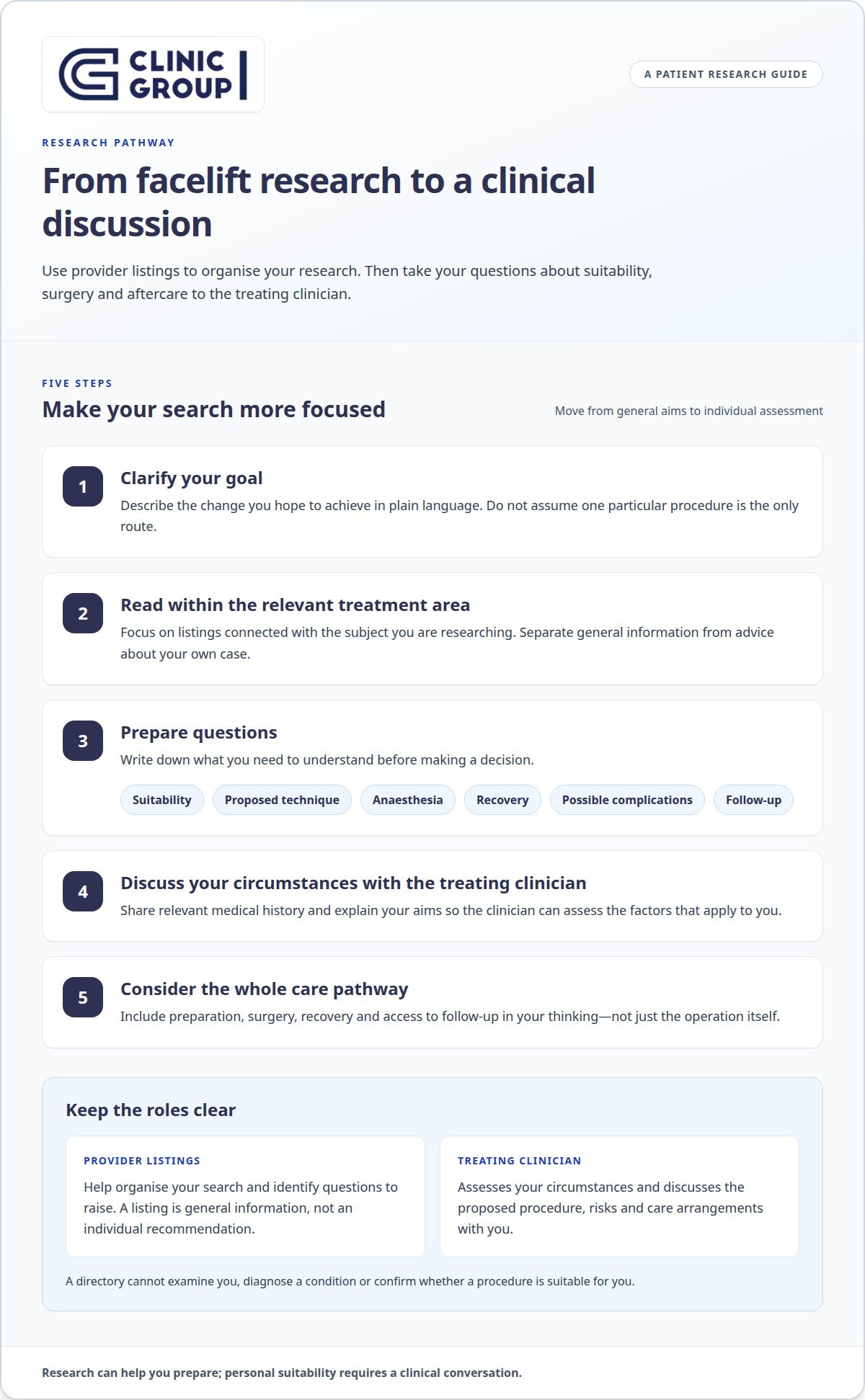
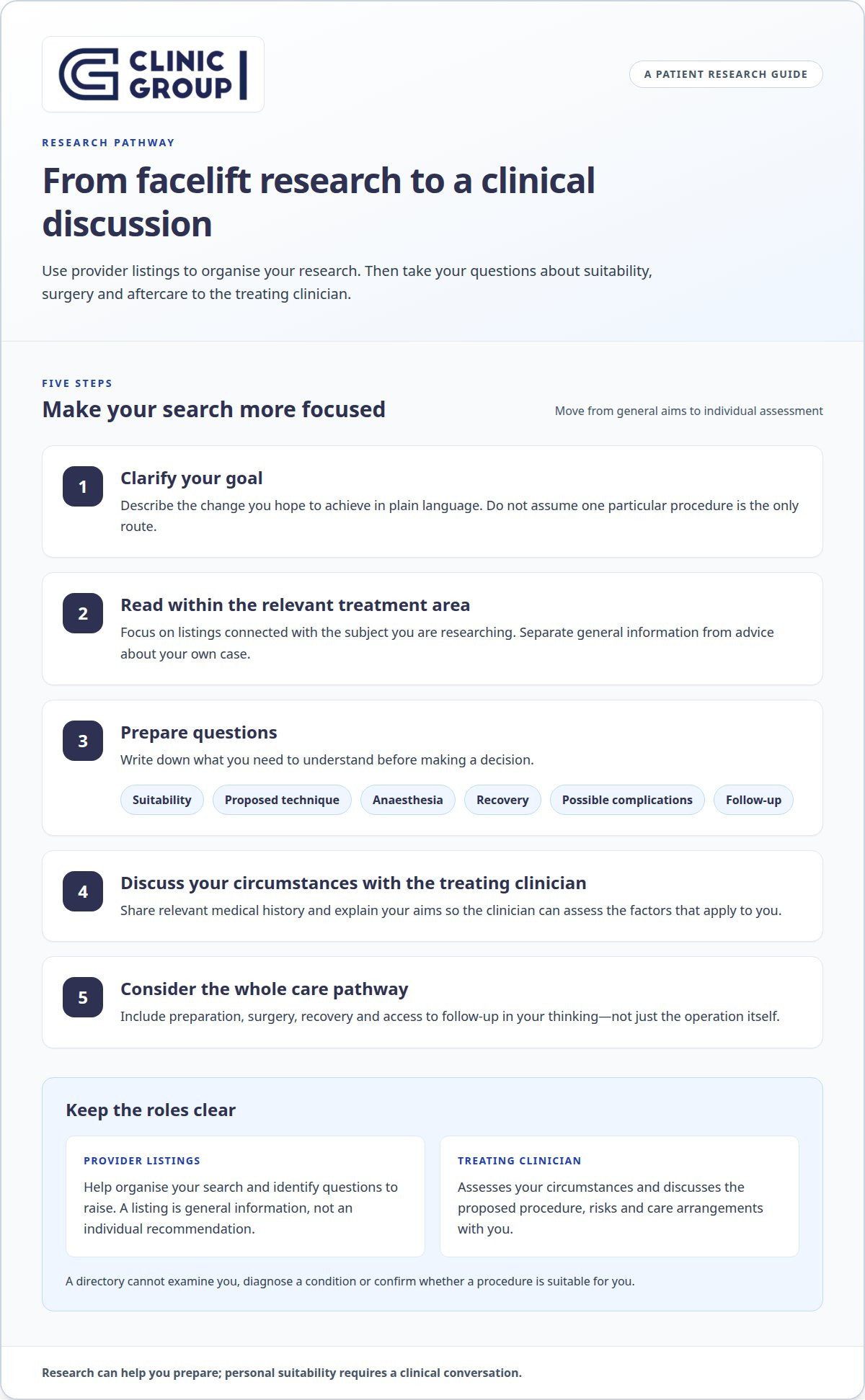
Move from general information to specific clinical questions. First, identify the treatment area you are researching. Then note what the listing tells you and what you still need to understand before deciding. This keeps your search practical and helps you avoid assuming a brief description contains the full details of a surgical plan.
- Clarify your goal. Describe the change you hope to achieve in plain language, without assuming that one particular procedure is the only route.
- Read within the relevant treatment area. Focus on listings connected with the subject you are researching, and distinguish general information from advice about your own case.
- Make a question list. Record what you want to ask about suitability, the proposed technique, anaesthesia, recovery, possible complications and follow-up.
- Discuss your circumstances with the treating clinician. Share relevant medical history and explain your aims so the clinician can assess the factors that apply to you.
- Consider the whole care pathway. Include preparation, surgery, recovery and access to follow-up in your thinking, rather than viewing the operation as an isolated event.
You do not need to pass a test before exploring the directory. The aim is to make an open-ended search more manageable. If you have not settled on a procedure, describe the change you are considering, explore relevant treatment categories and leave questions of clinical suitability for a proper assessment.
When comparing provider information, look for clear descriptions that help you understand the treatment and the questions to raise. Favour clarity over persuasive wording. An informed decision depends on understanding what is proposed, why it may be suitable and what the care plan involves, not on a headline or broad claim about results.
Clinic Group’s guide to plastic surgery abroad for UK patients can provide further context as you think through the practical and clinical considerations involved in treatment abroad. Use such information to prepare for a discussion, not to draw conclusions about your own eligibility or expected outcome.
Where does the directory end and clinical care begin?
The directory connects readers with provider information; it does not examine patients, diagnose conditions, recommend an operation for an individual or provide treatment. The treating provider is responsible for assessment, explaining the proposed procedure and discussing risks and care arrangements. Keeping these roles clear helps you understand what the directory can tell you and what requires a clinical consultation.
A listing can help you identify a relevant area of care, but it cannot account for every detail that may affect a surgical decision. A clinician may need to consider your medical history, current health, anatomy, expectations and previous procedures. Read a treatment description as general information, not confirmation that the procedure is suitable for you or that a particular result can be achieved.
Learning about a procedure is different from agreeing to have it. Research can help you identify unfamiliar terms and questions to raise. A consultation is where the provider should address those questions in relation to your circumstances. You should understand the proposed plan and have time to consider whether it fits your aims and comfort level.
For surgery abroad, consider the care pathway as well as the procedure. Before making plans, ask how the provider handles pre-operative assessment, communicates changes to the plan, gives recovery guidance and arranges follow-up. Find out how you will receive instructions and whom to contact with concerns after leaving the clinic. These are practical questions to clarify, not predictions that something will go wrong.
Follow-up matters when you will return home after treatment. The directory can help you find provider information, but it does not provide ongoing clinical care. Ask the provider what follow-up is planned, how it will take place and how concerns after your return will be handled. Understand these arrangements before deciding whether the overall pathway suits your needs.
When is Clinic Group’s directory a useful next step?
The listings are useful when you want to explore plastic surgery providers connected with a relevant treatment area. You do not need to have settled every detail before starting. The directory can structure your research, while the provider’s clinical assessment is the right place for personal medical advice and an individual plan.
The directory may help if you are gathering information about a procedure, considering treatment abroad or preparing questions for a consultation. It can also help you compare treatment categories and identify the area of plastic surgery related to your aims. The listings support exploration; they do not rank procedures by personal suitability.
If you are researching other types of care, Clinic Group also has a Dental Treatment Directory, Hair Transplant Referrals and an Ophthalmology Clinic Directory. These are separate areas of the platform, relevant when they match your interests. For a plastic surgery decision, focus on listings and information related to that subject.
As you explore, consider a few practical questions: does the treatment relate to your aims; have you spoken with the clinician who would assess and treat you; do you understand the possible risks and recovery demands; and are the follow-up arrangements clear? These questions help you judge whether you have enough information to take the next step, without relying on a general description to answer personal clinical questions.
Consider your expectations, too. Cosmetic surgery may change body shape or appearance, but the outcome depends on the procedure and the individual. A responsible discussion should cover what the treatment aims to address, what it cannot address and what remains uncertain. Clear expectations can help you decide whether the proposed approach fits your priorities.
Exploring the directory does not commit you to treatment. Use the listings to review provider information, take notes and identify the questions that matter to you. If you decide to progress, discuss your health, aims and treatment details with the provider so they can assess your circumstances.
Clinic Group helps readers explore listed plastic surgery providers and relevant information; it is not the treating clinic. When planning care abroad, remember that the directory supports your research, while the independent provider is responsible for clinical assessment, treatment and the care arrangements discussed with you. Consider both roles as you decide whether to proceed.
Explore Clinic Group’s plastic surgery listings to review relevant provider information and plan your next steps.
Take a considered next step
Choosing whether to pursue surgery is a personal decision. The next step should bring clarity, not pressure to commit. If you are assessing facelift surgery abroad, consider whether the care pathway suits your needs, whether you understand the clinical plan and whether you are ready to discuss your circumstances with a treating provider.
Clinic Group’s Plastic Surgery Provider Listings help you explore providers and relevant treatment information. The directory supports your research; the provider is responsible for assessing your suitability, explaining the procedure and discussing care. Before deciding how to proceed, identify any questions you still need answered.
With clear questions and a pace that feels right for you, you can move forward with greater confidence in your decision.
Frequently Asked Questions
What should I clarify about an overseas BBL package?
Clarify who is responsible for each part of your care, from pre-operative assessment to instructions after discharge. Ask how changes to the plan are communicated, who provides written recovery guidance and how to reach the clinical team if a concern arises. These details help you understand the care pathway behind BBL surgery abroad packages, beyond a short package description.
How can I decide whether having a BBL abroad suits me?
Consider whether you can manage recovery away from home and whether the follow-up arrangements fit your circumstances. Think about practical matters such as travelling with someone, getting help with daily tasks and allowing flexibility if recovery takes longer than expected. Discuss your health history and expectations with the treating clinician, then take time to consider the advice before deciding.
Why do UK patients consider BBL surgery abroad?
Some UK patients explore overseas care to understand how providers organise treatment, travel and recovery. Others research options before deciding whether to proceed. Whatever prompts your search, travel convenience should not be the only consideration. Communication, personal assessment and a clear plan for concerns after returning home matter, too.
Why can overseas BBL packages differ?
Packages vary because providers arrange clinical care and travel differently. One may describe hospital stay and accommodation together; another may set out each element separately. The wording alone does not explain how care will be delivered. Look for clear responsibilities, appointment sequences and follow-up arrangements, and raise anything unclear during clinical discussions.
Can I combine a BBL with other procedures?
Combining procedures is a clinical decision, not simply a way to organise a trip. The treating clinician needs to consider your health, the operations involved and the demands of recovering from them together. Ask how a combined plan would affect anaesthesia, aftercare and follow-up timing. Seek clarification before agreeing to treatment if the proposed approach is not clear.
What travel arrangements should I consider for a BBL?
Plan your journey around the clinical team’s recovery and travel instructions, rather than treating the return trip as a routine flight. Consider who will accompany you, how you will travel between accommodation and appointments, and what you would do if you needed extra support. Keep the clinic’s contact details and discharge instructions accessible, and allow clinical advice to guide your travel plans.
How can I compare package inclusions across destinations?
Compare the care pathway, not just the destination. For BBL surgery abroad packages, note whether the provider clearly explains pre-operative assessment, hospital arrangements, accommodation, transfers, recovery guidance and follow-up. Differences in what packages include can make comparisons difficult. Ask for a written outline of responsibilities to understand each arrangement and identify unanswered questions.
How can I assess a surgeon’s qualifications and clinic accreditation?
Request the surgeon’s full name and details of relevant qualifications and professional registration. Verify them with the issuing or registering organisation, and establish which facility an accreditation applies to and what it covers. Treat promotional wording and logos as prompts for questions, not proof on their own. Confirm that the clinician who will treat you is involved in your assessment and discussions.

Article by
Clinic Group Editorial Team
The Clinic Group editorial team publishes clear, practical guides for UK and EU patients researching medical travel — from dental implants and hair transplants to plastic surgery and eye care — with a focus on verified clinics, transparent “from” pricing, and safe planning.
Disclaimer
This article is for general information only and is not medical advice, diagnosis, or a substitute for an in-person consultation with a qualified clinician. Treatment suitability, risks, timelines, and costs vary by individual. Clinic Group connects patients with independent clinics; those clinics are responsible for clinical care. Always verify credentials, obtain a written treatment plan and itemised quote, and confirm aftercare arrangements and travel insurance cover (elective procedures are often excluded) before booking. Outcomes cannot be guaranteed.