TL;DR:
- A dental consultation is a comprehensive diagnostic and planning session lasting 60 to 90 minutes, not just a simple check-up. It involves a detailed assessment of oral and medical health, diagnostic imaging, and collaborative treatment planning to prevent and address issues early. Preparing by bringing medical records and articulating concerns enhances the consultation’s effectiveness and helps build trust for ongoing oral health management.
Many people assume a dental consultation is simply a check-up with a brief clean at the end. It is not. Understanding what a dental consultation actually involves before you book your first appointment can change the entire experience. Rather than arriving uncertain and leaving confused, you can walk in prepared, ask the right questions, and leave with a clear picture of your oral health. This guide explains the dental consultation process from start to finish, including what happens, why it matters, and how to prepare.
Table of Contents
- Key takeaways
- What is a dental consultation?
- What happens during a dental consultation
- Importance and benefits of dental consultations
- How to prepare for your dental consultation
- Our perspective on dental consultations
- Plan your dental care with Clinicgroup
- FAQ
Key takeaways
| Point | Details |
|---|---|
| More than a check-up | A dental consultation is a full diagnostic and planning session, not simply a cleaning appointment. |
| Takes up to 90 minutes | Consultations typically last between 60 and 90 minutes to allow thorough examination and discussion. |
| Preparation improves outcomes | Bringing your medication list and dental records helps your dentist create a safer, more accurate treatment plan. |
| Early detection saves money | Regular consultations catch hidden problems early, preventing costly and complex procedures down the line. |
| Abroad is a viable option | Verified clinics in Albania and Dubai offer consultation and treatment packages to European standard at significantly lower cost. |
What is a dental consultation?
A dental consultation is a structured, diagnostic appointment with a qualified dentist. Its primary purpose is assessment and planning, not treatment. Think of it as the foundation on which all future dental care is built. Before any procedure can be recommended safely, a dentist needs a complete picture of your current oral health, your medical background, and your personal goals.
The dental checkup meaning is often misunderstood. Many patients use the words “check-up,” “exam,” and “consultation” interchangeably, but they refer to different types of appointments. A routine check-up is typically a short, scheduled visit to monitor existing oral health. An examination is a clinical assessment of specific teeth or structures. A consultation, by contrast, is a comprehensive diagnostic session covering the full scope of your oral health, medical history, lifestyle factors, and treatment needs.
The goals of a dental consultation typically include:
- Diagnosis: Identifying existing problems such as cavities, gum disease, or worn enamel
- Risk assessment: Evaluating factors like diet, smoking, or medication use that affect oral health
- Treatment planning: Outlining what procedures may be needed, in what order, and at what cost
- Patient education: Correcting misconceptions, explaining conditions clearly, and answering questions
- Preventive guidance: Advising on oral hygiene practices tailored to your specific needs
This shift toward a preventive philosophy is one of the most meaningful benefits of a dental consultation. Rather than waiting until pain or visible damage forces a visit, a consultation puts you in control of your oral health from the start.
Pro Tip: If you have not seen a dentist for several years, specifically request an initial consultation rather than a routine check-up. This signals to the practice that you need a thorough assessment rather than a brief monitoring visit.
What happens during a dental consultation
Understanding exactly what happens in a dental consultation removes much of the anxiety that keeps people from booking. The process follows a consistent structure, even if the specific findings and discussions vary from patient to patient.
-
Medical and dental history review. The appointment begins with a detailed review of your health background. Your dentist will ask about current medications, allergies, past dental treatments, and any systemic conditions such as diabetes or heart disease. Medical history significantly influences treatment planning and anaesthetic safety, so this step is not a formality.
-
Discussion of concerns and goals. You will be invited to describe any symptoms, concerns, or goals you have. This might range from tooth sensitivity and cosmetic worries to a desire for implants or orthodontic treatment. Your input directly shapes the focus of the examination.
-
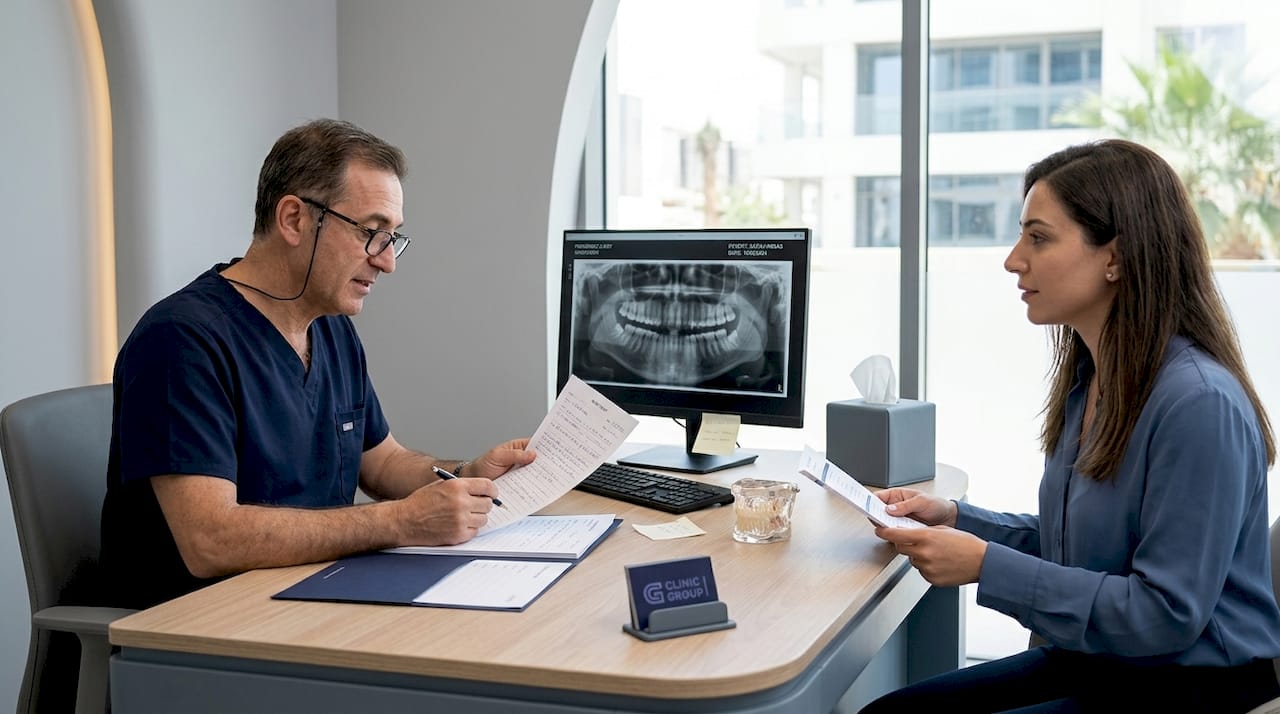
Full oral examination. The dentist conducts a full mouth assessment covering your teeth, gums, bite alignment, tongue, soft tissues, and any existing restorations or implants. Each area is assessed systematically for signs of disease, wear, or structural issues.
-
Diagnostic imaging. Where clinically indicated, your dentist may take X-rays, photographs, or digital scans. These provide information that a visual examination alone cannot reveal, such as bone levels, root health, or hidden decay between teeth. Advanced clinics may use CBCT scans for more complex cases.
-
Explanation of findings. Once the assessment is complete, your dentist explains what they have found. This includes existing issues, areas at risk, and what they recommend addressing first. Good clinics present findings clearly, without pressure.
-
Treatment planning and cost discussion. A proposed plan is outlined, covering recommended procedures, approximate timelines, and cost estimates. You are under no obligation to agree on the day. Transparent pricing at this stage is a sign of a trustworthy practice.
-
Questions and next steps. Before the appointment closes, you have the opportunity to ask any remaining questions. Your dentist should clarify anything you are uncertain about regarding findings, options, or procedures.
A consultation typically runs 60 to 90 minutes. It is worth noting that cleanings are usually separate from consultations unless pre-arranged, so do not expect a hygienist appointment on the same visit unless this has been specifically confirmed.
Pro Tip: Bring a written list of all medications, including supplements and over-the-counter products. A detailed medication list allows your dentist to plan treatment and anaesthesia more safely from the very first session.
Importance and benefits of dental consultations
The importance of dental consultation goes beyond identifying cavities. Consultations serve as one of the most reliable tools for protecting your long-term health, both oral and systemic.
One of the most significant benefits is early detection. Many oral health problems, including early-stage gum disease, enamel erosion, and lesions that may indicate oral cancer, produce no noticeable symptoms in their initial stages. A trained dentist can identify these at a point when intervention is straightforward and affordable. Waiting until symptoms appear often means facing more complex, time-consuming, and costly treatment.
“Dental consultations shift care from reactive to a managed, preventive strategy, significantly reducing long-term costs and complexity for patients.” Global Healthcare Magazine
The link between oral health and overall health is well established. Dentists can detect early signs of systemic conditions such as diabetes and certain blood disorders during a consultation, sometimes before a patient has received a formal medical diagnosis. This makes the consultation a valuable screen for general health, not just dental care.
Regular consultations also protect existing dental work. Crowns, veneers, bridges, and implants all require ongoing monitoring. A consultation provides the opportunity to assess whether restorations remain sound and catch any early failures before they escalate. For patients with complex dental histories, consistent consultation schedules are particularly valuable.
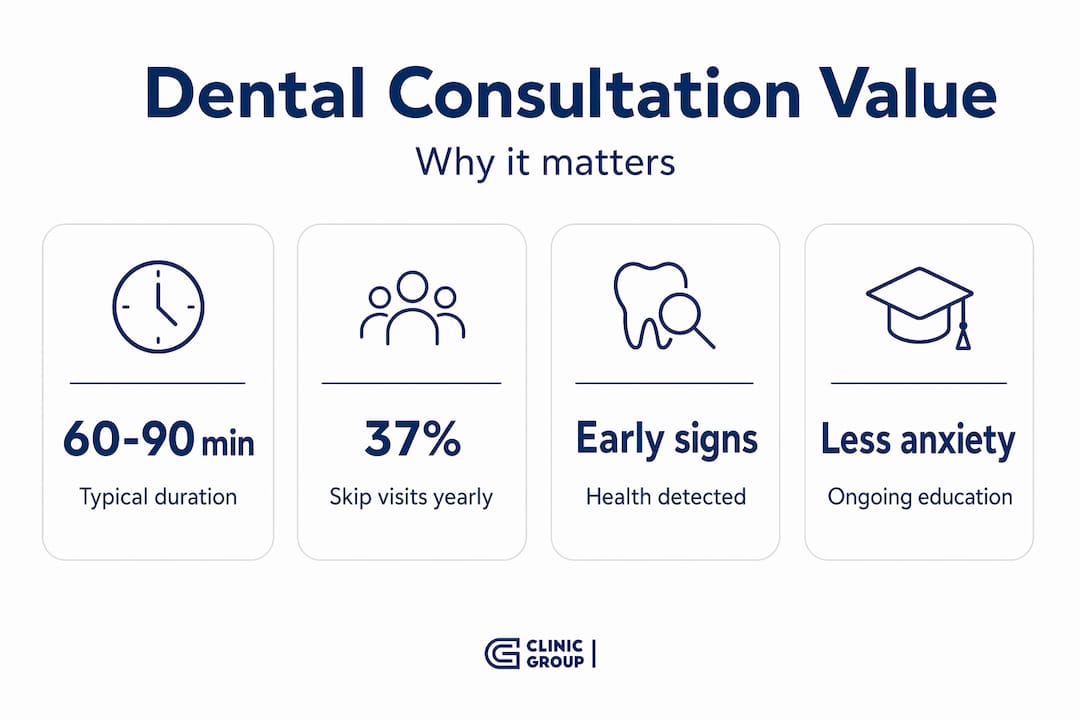
Skipping annual appointments carries measurable risk. Around 37% of adults forgo dental visits each year, leaving themselves exposed to undetected disease and more expensive remedial treatment in the future. Dental care is recommended every 6 to 12 months for most adults, though patients with higher risk factors may need more frequent visits.
Beyond clinical outcomes, regular patient education during consultations demonstrably reduces anxiety over time and improves cooperation with treatment. Patients who understand what is happening and why are more likely to follow through with recommended care.
How to prepare for your dental consultation
Knowing how to prepare for a dental consultation makes a real difference to the quality of information your dentist receives and the relevance of the plan they create for you. Preparation takes less than 30 minutes but significantly improves the value of the appointment.
Documents and information to bring:
- Valid identification and any insurance or payment documentation
- A full list of current medications, including supplements and vitamins
- Details of any systemic conditions or recent medical treatments
- Previous dental records, X-rays, or treatment summaries if available
- A note of any specific symptoms, such as pain location, frequency, or triggers
Common dental consultation questions worth raising:
- Are there any problems I am not currently aware of?
- What treatment do you recommend and in what order?
- Are there alternatives to the procedure you are suggesting?
- What are the costs involved, and is phased payment possible?
- How long will treatment take in total?
Arrive a few minutes early. Most practices will ask you to complete a health questionnaire, and doing this calmly rather than in a rush gives more accurate answers. Be honest about your dental anxiety if you have it. Dentists are trained to adjust their approach for anxious patients, and acknowledging it upfront leads to a better experience.
You have the right to ask for clarification at any stage. If a recommended treatment is not clear, ask the dentist to explain it again using plain language. You also have the right to request a second opinion before agreeing to any major procedure. Trustworthy clinics welcome this rather than discourage it.
Our perspective on dental consultations
From my experience coordinating dental care for patients travelling from the UK and across Europe, the most common barrier I see is not cost or distance. It is uncertainty about what to expect. Patients who understand the dental consultation process ahead of time arrive calmer, ask better questions, and leave with more confidence in their treatment plan.
I have noticed a clear shift in recent years. Patients are moving away from fear-driven visits and towards informed, preventive care. The consultation is where that shift begins. When a patient sits down knowing what the appointment involves, the dynamic changes entirely. The conversation becomes a genuine dialogue rather than a passive experience.
What I find particularly valuable is how a good consultation builds trust before any treatment begins. At Clinicgroup, we connect patients with verified specialist clinics abroad that hold their consultations to the same standard as their treatments. That consistency matters. When you know that the same rigorous process applies whether you are sitting in a London clinic or one in Tirana, you make decisions from a far more secure position.
My view is simple. A dental consultation is not a preliminary you endure before treatment. It is a meaningful investment in understanding your own health.
— Clinic
Plan your dental care with Clinicgroup
Clinicgroup connects patients from the UK and across Europe with verified dental clinics in Albania and Dubai, where board-certified specialists deliver care to European standards at a fraction of the cost at home. Every patient benefits from transparent pricing, thorough initial consultations, and full support throughout the treatment process.
From clinic matching and booking appointments abroad to travel logistics, partner hotels, and post-treatment aftercare, Clinicgroup manages the details so you can focus on your health. Whether you are exploring implants, veneers, crowns, or full smile rehabilitation, you can browse available dental treatments and request a personalised quote directly through the platform.
FAQ
What is the difference between a dental consultation and a check-up?
A dental consultation is a comprehensive diagnostic and planning appointment, typically lasting 60 to 90 minutes. A routine check-up is a shorter monitoring visit for patients with established, stable oral health.
Does a dental consultation include a cleaning?
Not usually. Cleanings are typically scheduled separately from consultations unless specifically pre-arranged with the clinic in advance.
How often should I have a dental consultation?
Dental visits are recommended every 6 to 12 months for most adults. Patients with complex histories or higher risk factors may need more frequent appointments.
What should I bring to a dental consultation?
Bring valid identification, a full list of medications including supplements, details of any medical conditions, and any previous dental records or X-rays you have access to.
Can a dental consultation detect health problems beyond teeth?
Yes. Dentists can identify signs of systemic diseases such as diabetes and blood disorders during an oral examination, making consultations valuable for overall health screening.