TL;DR:
- Getting a second dental opinion involves an independent review from a qualified dentist with no ties to your original provider. It requires your complete dental records, including X-rays, diagnosis, and photographs, to ensure an accurate assessment. Second opinions often lead to different diagnoses or treatment plans in a significant percentage of complex cases, empowering patients to make more informed decisions.
A second dental opinion is an independent clinical assessment of your diagnosis or proposed treatment, provided by a qualified dentist who has no professional connection to your original provider. Knowing how to get a second dental opinion is a straightforward process, and it is one of the most effective steps you can take before committing to costly or irreversible dental work. Research shows that second opinions change outcomes in 42%–67% of cases involving complex procedures. That figure means a significant proportion of patients who ask for a second assessment receive a different diagnosis, a different treatment plan, or both. Seeking independent dental advice is not a sign of distrust. It is standard patient self-advocacy.
How to get a second dental opinion: what you need first
Before you book an appointment with another dentist, you need your complete dental records. Without them, the second dentist is working blind, which limits the quality of their assessment considerably.
The documents you should gather include:
- Dental X-rays and radiographs. Request all recent images, including periapical, bitewing, and panoramic X-rays. CBCT scans, if taken, are particularly valuable for implant or surgical assessments.
- Your written diagnosis. Ask your current dentist to provide a written summary of their findings and the clinical reasoning behind the recommended treatment.
- The proposed treatment plan. This should include the specific procedures, materials, and costs involved.
- Photographs. Intraoral photographs taken during your examination provide visual context that X-rays alone cannot capture.
- Your full dental history. Previous treatment notes help the second dentist understand the broader clinical picture.
Requesting these records is your legal right in the UK under the Data Protection Act 2018. Most dental practices will provide them within 30 days, though many release them sooner on request. Administrative fees for records can range from a nominal charge to nothing at all, depending on the practice. Digital records are now standard across most UK and European clinics, meaning your dentist can email or share records via a secure cloud link rather than printing physical copies. This reduces both cost and delay.
Pro Tip: When requesting your records, specify that you need them for a second opinion consultation. This signals urgency and often results in faster processing.

How do you find the right dentist for a second opinion?
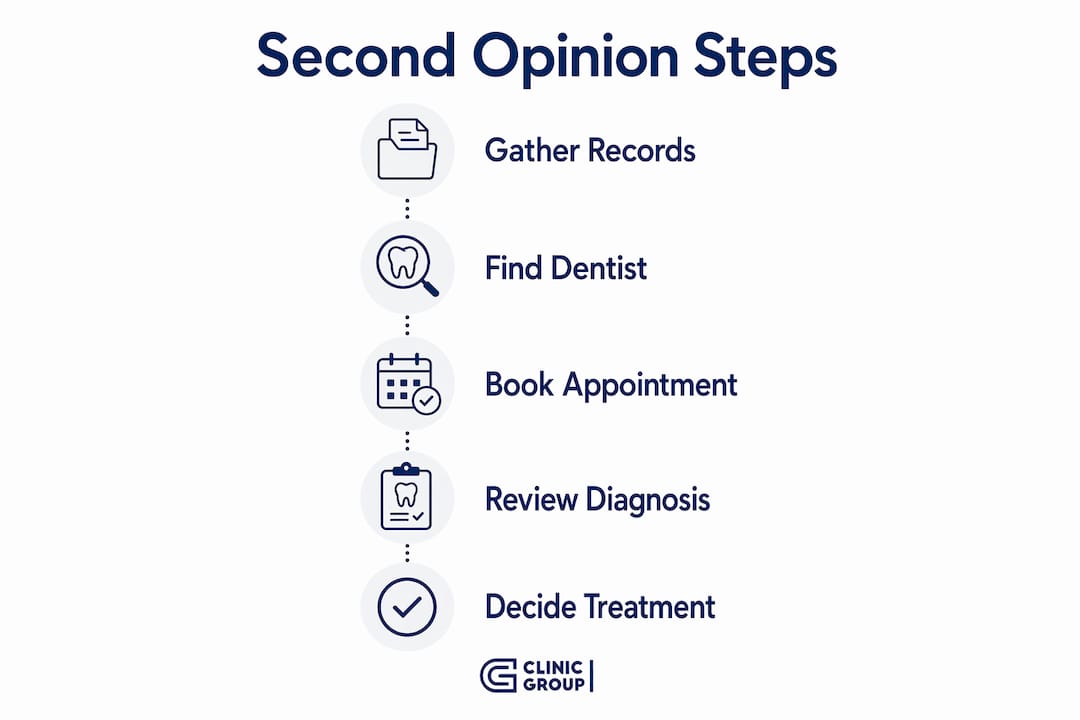
Choosing the right dentist for your second assessment is as important as the assessment itself. An independent opinion only has value if it is genuinely independent.
Follow these principles when selecting a second dentist:
- Avoid professional associates of your current dentist. Dentists who trained together, share referral networks, or work in the same practice group are less likely to give unbiased opinions. Shared professional relationships can subtly influence clinical judgement.
- Seek a specialist for complex cases. If your treatment involves dental implants, oral surgery, orthodontics, or periodontal disease, a specialist in that field will provide a more authoritative assessment than a general dentist.
- Use verified clinic directories. Platforms that list board-certified practitioners with patient reviews give you a reliable starting point. Clinicgroup connects patients with verified dental specialists across Europe and the Middle East, including clinics in Albania and Dubai that meet European standards of care.
- Check registration. In the UK, confirm the dentist is registered with the General Dental Council (GDC). In Europe, look for equivalent national regulatory body registration.
- Read patient reviews. Reviews that specifically mention diagnostic thoroughness and communication quality are more useful than general satisfaction scores. Clinicgroup publishes verified patient reviews to help you assess clinic quality before booking.
When you contact the practice, state clearly that you are seeking a second opinion rather than a new patient examination. Booking as a second opinion consultation ensures the dentist allocates the right amount of time and focuses on reviewing your existing diagnosis rather than starting from scratch.
What happens during a second dental opinion appointment?
A second opinion consultation follows a structured process. Knowing what to expect helps you prepare and get the most from the appointment.
- Records review. The dentist begins by examining all the materials you have brought: X-rays, photographs, treatment plans, and clinical notes. This typically takes 10–15 minutes and forms the foundation of their assessment.
- Physical examination. The dentist conducts their own clinical examination of your mouth. This may include probing, percussion testing, or soft tissue assessment, depending on the area of concern.
- New imaging, if required. In some cases, the dentist may request additional radiographs or a CBCT scan to form their own view. A comprehensive second opinion appointment typically lasts 30–60 minutes, with additional time if new imaging is needed.
- Discussion of findings. The dentist explains their clinical assessment, whether it confirms or differs from the original diagnosis, and outlines any alternative treatment options they consider appropriate.
- Written summary. Ask for a written record of the second dentist’s findings. This document is essential if you later need to compare opinions or discuss options with your original provider.
Questions worth asking during the appointment include: Is this treatment clinically necessary now, or can it be monitored? What are the risks of delaying treatment? Are there less invasive alternatives? What materials or techniques would you use, and why?
Pro Tip: Present your clinical records before sharing your feelings about the original diagnosis. Presenting facts first produces a more objective clinical assessment and reduces the risk of the second dentist being influenced by your concerns rather than the evidence.
How do you interpret and use your second dental opinion?
Once you have two clinical assessments in hand, the task is to compare them clearly and make a decision based on evidence rather than emotion.
Second opinions alter diagnoses or treatment plans in 42%–67% of complex cases. This does not mean one dentist is wrong and the other is right. It often reflects genuine clinical variation in how practitioners weigh risk, timing, and treatment philosophy.
| Scenario | What it means | Recommended action |
|---|---|---|
| Both opinions agree | The diagnosis and treatment plan are consistent | Proceed with confidence, choosing the provider you trust most |
| Opinions differ on timing | One dentist recommends immediate treatment; the other suggests monitoring | Ask both for their clinical reasoning in writing before deciding |
| Opinions differ on treatment type | Different procedures are recommended for the same problem | Consult a specialist in the relevant field for a third, definitive view |
| Opinions differ on necessity | One dentist says treatment is required; the other disagrees | Seek a specialist opinion, particularly for irreversible procedures |
When opinions conflict, consider the following steps:
- Review the advanced dental diagnostics each dentist used. A CBCT scan provides more detail than a standard X-ray, and its findings carry more clinical weight.
- Ask each dentist to explain the evidence behind their recommendation, not just the conclusion.
- Consult a specialist if the disagreement involves a procedure that is irreversible, such as tooth extraction or implant placement.
- Recognise that seeking a second opinion is a recognised form of patient self-advocacy, not a confrontation with your dentist.
The American Medical Association and equivalent bodies in the UK recognise that second opinions foster clinical objectivity and patient autonomy. The goal is not to find a dentist who tells you what you want to hear. The goal is to make a decision you can stand behind, based on the best available clinical evidence.
Key takeaways
Obtaining a second dental opinion is a structured, evidence-based process that gives patients the information they need to make confident, well-informed treatment decisions.
| Point | Details |
|---|---|
| Gather records first | Collect X-rays, diagnosis, treatment plan, and photographs before booking a second appointment. |
| Choose an independent dentist | Avoid dentists affiliated with your current provider to protect the objectivity of the assessment. |
| Book as a second opinion | State your intent when booking so the dentist allocates appropriate time and focus. |
| Second opinions frequently change outcomes | Research shows 42%–67% of complex cases result in a changed diagnosis or treatment plan. |
| Use written summaries to compare | Request written findings from both dentists to make a clear, evidence-based comparison. |
Why second opinions matter more than most patients realise
From working with patients across the UK and Europe, one pattern stands out clearly. Patients who seek a second dental opinion before major treatment almost always feel more confident in their final decision, regardless of whether the second assessment confirms or changes the first.
The most common reason patients give for not seeking a second opinion is that they worry it will offend their dentist. That concern is understandable, but it is misplaced. Reputable dental professionals expect and respect the process. The role of a second medical opinion is not to undermine the original clinician. It is to give the patient a fuller picture.
What I have seen repeatedly is that patients who present their records clearly, choose an independent specialist, and ask the right questions during the consultation leave with far better information than those who rely on a single assessment. The written summary is the step most patients skip, and it is the most valuable one. Without it, comparing two opinions becomes a matter of memory rather than evidence.
For patients considering dental treatment abroad, the second opinion process is even more valuable. It gives you a benchmark against which to assess the quality and necessity of treatment recommendations from overseas clinics. Clinicgroup facilitates this process by connecting patients with verified specialists who provide transparent, written assessments before any treatment begins.
— Clinic
Trusted dental care abroad with Clinicgroup
Clinicgroup connects patients from the UK and across Europe with verified dental clinics in Albania and Dubai, where board-certified specialists provide thorough consultations at a fraction of UK costs. Whether you need a second opinion on a proposed implant, crown, or more complex procedure, Clinicgroup manages clinic matching, travel logistics, partner hotel arrangements, and aftercare support from start to finish. Every clinic in the network meets European standards of care, and pricing is transparent before you commit. Browse the full range of dental treatments and services available through Clinicgroup, or explore the verified clinic directory to find a specialist suited to your needs.
FAQ
What is a second dental opinion?
A second dental opinion is an independent clinical assessment of your diagnosis or treatment plan, provided by a qualified dentist who has no connection to your original provider. It helps confirm whether proposed treatment is necessary and appropriate.
How long does a second opinion dental appointment take?
A second opinion consultation typically lasts 30–60 minutes, covering a review of your records, a physical examination, and a discussion of findings. Additional time may be needed if new imaging is required.
Do I need to tell my dentist I am seeking a second opinion?
You are not obliged to inform your current dentist, but you do need to request your dental records from them. Most practices provide records promptly and without issue when asked.
How often do second opinions change the recommended treatment?
Second opinions alter diagnoses or treatment plans in 42%–67% of complex cases. The rate is higher for major or irreversible procedures such as extractions, implants, and oral surgery.
Can I get a second dental opinion abroad?
Yes. Patients regularly obtain second opinions from dental specialists in Europe and the Middle East. Clinicgroup facilitates this process by connecting patients with verified dental clinics that provide written assessments and transparent pricing before any treatment is agreed.