TL;DR:
- South Korea is the world leader in aesthetic procedures per capita, chiefly driven by its cultural normalization and specialized clinics. Its industry is mainly composed of small clinics concentrated in Seoul’s Gangnam district, offering high-volume, competitive, and highly specialized treatments. UK patients should carefully consider risks like limited aftercare, indemnity gaps, and safety concerns before opting for abroad cosmetic surgery.
South Korea is widely regarded as the world capital of plastic surgery, and the evidence is difficult to dispute. The country consistently ranks first globally for aesthetic procedures per capita, according to data compiled by the International Society of Aesthetic Plastic Surgery (ISAPS), the most authoritative cross-country dataset in the field. Seoul’s Gangnam district alone houses hundreds of specialist clinics within a few square kilometres, a concentration unmatched anywhere else on earth. If you are a UK patient researching cosmetic surgery abroad, the scale of Korea’s industry is striking — but so are the safety and aftercare considerations covered later in this article.
Key facts at a glance:
- South Korea leads the world in aesthetic procedures per capita by a significant margin, per ISAPS global survey data.
- Gangnam, Seoul, is the recognised hub, with specialist clinics clustered along a single commercial strip.
- The most common procedures driving volume are double-eyelid surgery (blepharoplasty), rhinoplasty, jaw contouring, and non-surgical injectables.
- Cultural normalisation, employment pressures, and social media have all accelerated demand over recent decades.
- UK patients face specific risks: limited aftercare, indemnity gaps, and NHS complications management on return. See the safety and UK guidance sections below.
Table of Contents
- What do the numbers actually show?
- How is the Korean aesthetic industry organised?
- What are the safety risks and controversies you should know about?
- Practical guidance for UK patients considering surgery abroad
- Key takeaways
- Clinicgroup can help you plan cosmetic treatment abroad safely
- FAQ
What do the numbers actually show?
The claim that South Korea is the top plastic surgery destination rests primarily on per-capita procedure rates rather than absolute totals. The United States performs the highest absolute number of aesthetic procedures globally, but its population is roughly six times larger than South Korea’s. When procedures are measured against population size, South Korea moves to the top of the ranking.
The ISAPS Global Survey is the primary dataset analysts use for these comparisons. It collects self-reported procedure counts from member surgeons across more than 100 countries, covering both surgical procedures (such as blepharoplasty, rhinoplasty, and liposuction) and non-surgical treatments (such as botulinum toxin injections and dermal fillers). The ISAPS 2024 press release confirms Asia as the fastest-growing region for aesthetic procedures globally, with South Korea among the leading contributors to that growth.
A key limitation worth noting: ISAPS data relies on voluntary reporting by member surgeons, so it captures a portion of total procedures rather than a complete census. Non-surgical treatments performed in non-medical settings (beauty clinics, spas) are often excluded. This means the real per-capita figures for South Korea are likely higher than the survey records.
| Metric | South Korea | United States | Brazil |
|---|---|---|---|
| Procedures per capita | Highest globally (ISAPS) | High (large absolute volume) | High (second largest absolute volume) |
| Absolute procedure volume | High | Highest globally | Second highest globally |
| Dominant procedure type | Blepharoplasty, rhinoplasty | Breast augmentation, liposuction | Liposuction, breast augmentation |
| Non-surgical share | Very high (injectables, skin) | High | Moderate |
Note: Per-capita figures are drawn from ISAPS survey methodology; absolute rankings reflect ISAPS 2024 press release data. Exact per-capita percentages vary by survey year and reporting completeness.
The Korea JoongAng Daily’s investigative feature on Korea’s cosmetic surgery industry synthesises both statistical and cultural evidence, concluding that the per-capita rate is the most defensible basis for the “world capital” label. Academic peer-reviewed analysis published on PubMed corroborates this, linking Korea’s procedure prevalence to socio-economic development and shifting beauty norms rather than any single policy or event.
How is the Korean aesthetic industry organised?
The industry’s structure is as important as its scale. South Korea’s cosmetic surgery market is not dominated by large hospital groups. Instead, it is built around thousands of small, highly specialised clinics, many of which focus on a single procedure category or anatomical area. This specialisation drives both volume and technical refinement.
The Gangnam ecosystem
Gangnam-gu, the affluent southern district of Seoul, is the geographic heart of the industry. A single street, Apgujeong-ro, and its surrounding blocks contain hundreds of clinics operating in purpose-built medical buildings. Patients can, in theory, consult multiple surgeons in a single afternoon. This concentration creates intense price competition, which keeps costs lower than in Western markets, but it also means that marketing spend and patient acquisition can take priority over clinical depth in some clinics.
Multi-disciplinary hospitals offering anaesthesia, surgery, and recovery under one roof sit alongside small boutique clinics staffed by one or two surgeons. The distinction matters for safety: larger facilities generally have more robust emergency protocols, while smaller specialist clinics may offer more personalised attention for routine procedures.
Non-surgical treatments have expanded the patient base substantially. Academic research confirms that “petit” procedures — skin treatments, injectables, laser therapies — lower the threshold for first-time patients and bring in a demographic that would not consider surgery. This has broadened the market considerably and contributes to Korea’s high per-capita totals.
What are the safety risks and controversies you should know about?
South Korea’s cosmetic surgery industry is not without serious concerns, and UK patients need a clear-eyed view of the risks before making any decisions.
Regulatory differences
The UK’s cosmetic surgery sector is overseen by the Care Quality Commission (CQC), with professional standards set by the General Medical Council (GMC) and specialist guidance from BAPRAS (the British Association of Plastic, Reconstructive and Aesthetic Surgeons). BAPRAS explicitly advises against travelling abroad for cosmetic surgery, citing increased risks and aftercare limitations. South Korea has its own regulatory framework, but the standards, complaint mechanisms, and indemnity requirements differ materially from those UK patients are accustomed to.
Common safety risks
- Complications (infection, haematoma, asymmetry, nerve damage) that emerge after the patient has returned home.
- “Ghost surgery” — a documented controversy in South Korea where the operating surgeon is substituted without the patient’s knowledge, sometimes by a less qualified practitioner.
- Variable aftercare: most packages provide minimal follow-up beyond the immediate post-operative period.
- Communication barriers: consent forms, post-operative instructions, and complication reporting may not be available in English.
- Indemnity gaps: many Korean clinics do not hold indemnity insurance that covers foreign patients for complications arising after departure.
A ten-year retrospective study published in a peer-reviewed journal examined complications from cosmetic surgery abroad presenting to a London tertiary unit. The findings document a measurable caseload of patients requiring emergency or specialist care on return to the UK, creating both clinical burden and significant patient distress.
Pre-booking safety checklist
- Verify the surgeon’s qualifications and board certification independently (not solely through the clinic’s website).
- Confirm the clinic holds valid indemnity insurance covering foreign patients for post-operative complications.
- Request a written aftercare plan specifying what support is available after you return to the UK.
- Ask explicitly whether the surgeon performing your procedure will be the same person you consulted.
- Check whether the clinic has a formal complaints procedure accessible to international patients.
- Obtain all consent documentation in English before travel.
Pro Tip: Request written confirmation of your surgeon’s name, qualifications, and the specific procedure plan before you pay any deposit. If a clinic is unwilling to provide this in writing, treat that as a serious warning sign.
Practical guidance for UK patients considering surgery abroad
If you are a UK patient seriously considering cosmetic surgery in South Korea or any overseas destination, preparation is the single most important factor in a safe outcome.
Pre-travel checklist
- Obtain a second opinion from a GMC-registered surgeon in the UK before committing to any overseas procedure.
- Check that your travel insurance policy specifically covers medical complications arising from elective cosmetic surgery abroad (many standard policies exclude this).
- Confirm the clinic’s accreditation status through an independent body, not the clinic’s own marketing materials.
- Arrange a UK-based GP or specialist who is willing to manage post-operative follow-up on your return.
- Keep copies of all surgical records, implant details (if applicable), and post-operative instructions in English.
The NHS and complications
The NHS will treat life-threatening complications regardless of where surgery was performed. However, for non-emergency complications from elective cosmetic procedures performed abroad, NHS provision is limited and inconsistent. Patients often face a “care gap”: the overseas clinic is no longer accessible, and NHS plastic surgery units may decline to manage elective revision work. The TravelHealthPro (NaTHNaC) guidance on medical tourism highlights this variability explicitly and advises patients to plan for the full cost of complication management before travelling.
BAPRAS’s position is unambiguous: the BAPRAS guidance on cosmetic surgery abroad states that lower costs overseas frequently reflect a “safety discount” — the absence of long-term indemnity and comprehensive aftercare that UK-regulated providers are required to maintain.
How we verified the claim: sources and editorial process
The “world capital of plastic surgery” label is widely used in journalism and marketing, but it requires specific evidence to stand up. Here is how the sources used in this article were selected and checked.
Core sources:
- [WHY] What makes Korea the plastic surgery capital of the world?
- Cosmetic Surgery Abroad | BAPRAS
- PubMed: academic review on Korean beauty trends
- Global Survey 2024: Full Report and Press Releases | ISAPS
- ISAPS global survey 2024 press release (PDF)
- Outbound cosmetic tourism from the United Kingdom: Patient experiences following a decade of complication management at a tertiary plastic surgery unit
- Travelling for treatment (medical tourism) | TravelHealthPro (NaTHNaC)
- Quality assurance checklist for medical tourism 2026
Methodology note: Per-capita metrics were chosen over absolute procedure counts because they are the most meaningful basis for comparing countries of different sizes. Where ISAPS data and journalistic sources gave different framings, the ISAPS primary data was treated as authoritative. Surgical and non-surgical procedure counts were kept separate in analysis because combining them can inflate totals in ways that obscure meaningful comparisons.
Key takeaways
South Korea leads the world in aesthetic procedures per capita, driven by deep cultural normalisation, a concentrated specialist clinic ecosystem in Seoul’s Gangnam district, and the global spread of Korean beauty standards.
| Point | Details |
|---|---|
| Per-capita leadership | South Korea ranks first globally for aesthetic procedures per capita, per ISAPS global survey data. |
| Cultural normalisation | Employment pressure, physiognomy traditions, and social media have made procedures socially routine in South Korea. |
| Gangnam as the hub | Seoul’s Gangnam district concentrates hundreds of specialist clinics, offering high volume and competitive pricing. |
| Safety and aftercare gaps | UK patients face indemnity gaps, ghost surgery risks, and limited NHS support for complications from elective procedures abroad. |
| Clinicgroup’s role | Clinicgroup connects UK patients with verified clinics offering transparent pricing, documented aftercare, and board-certified specialists. |
Clinic Group’s perspective on patient safety
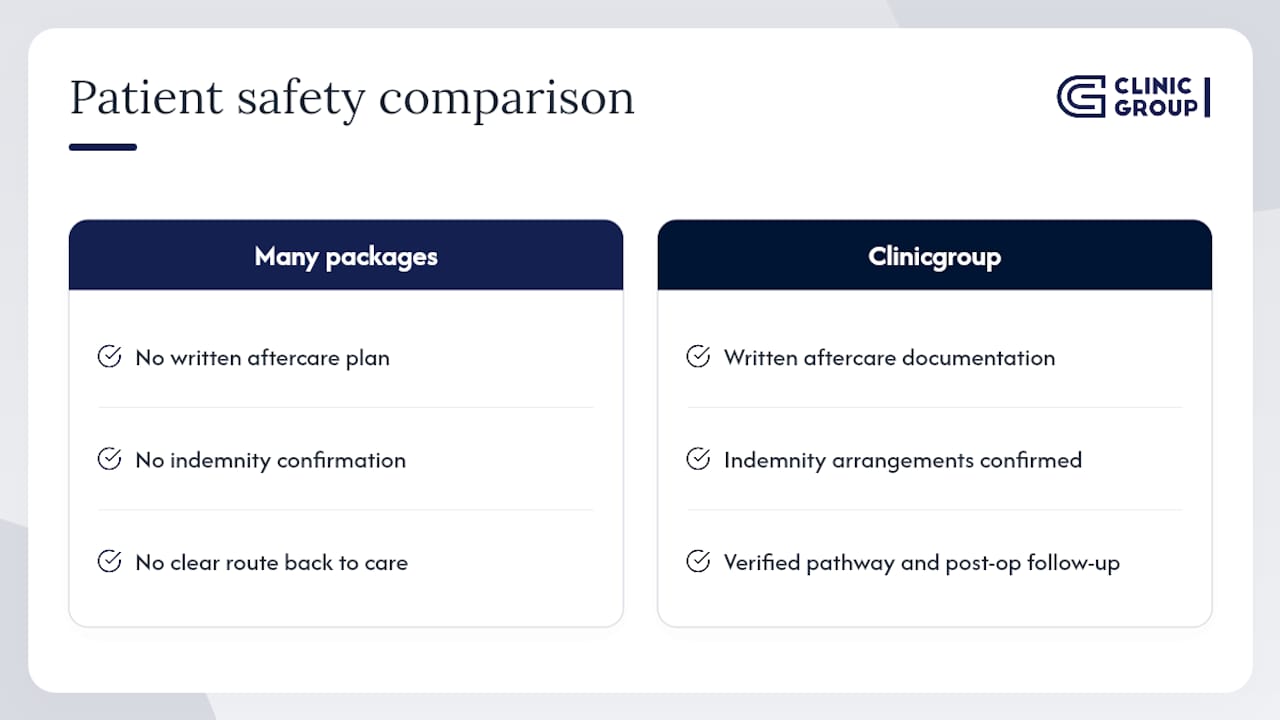
South Korea’s status as a leading cosmetic surgery destination is well-documented, and the cultural and statistical case for it is strong. What concerns us at Clinicgroup is not the destination itself but the gap between what patients expect and what many packages actually deliver. The patients who encounter the most serious difficulties are rarely those who chose a bad surgeon. They are patients who had no written aftercare plan, no indemnity confirmation, and no clear route back to care when something went wrong weeks after returning home.
Clinicgroup’s approach is built around closing that gap. Every clinic in our network goes through a structured quality assurance checklist that covers surgeon credentials, facility standards, aftercare documentation, and indemnity arrangements. We are an intermediary, not a medical provider, and we do not offer medical advice or guarantees of results. What we do offer is a verified, transparent pathway to treatment abroad, with support at every stage from initial enquiry through to post-operative follow-up coordination.
Clinicgroup can help you plan cosmetic treatment abroad safely
For UK patients who want the cost advantages of treatment abroad without the uncertainty of navigating an unfamiliar system alone, Clinicgroup offers a structured alternative. Rather than researching clinics independently in an unfamiliar market, you can access a network of verified clinics with documented standards, board-certified surgeons, and transparent pricing.
Clinicgroup’s plastic surgery treatments include rhinoplasty, liposuction, and breast augmentation, facilitated through partner clinics in Albania and Dubai that meet European standards of care. The practical difference from booking independently is significant: clinic matching based on your specific procedure, travel logistics support, partner hotel arrangements, aftercare coordination, and help with documentation.
Services included when you book through Clinicgroup:
- Clinic vetting and matching to your procedure and budget
- Verified surgeon credentials and facility accreditation checks
- Travel logistics and partner hotel coordination
- Pre- and post-operative documentation support
- Aftercare coordination and follow-up guidance
Clinicgroup does not make medical guarantees or promise specific outcomes. The goal is to give you a reliable, transparent process so that the decision you make is an informed one. To find out which clinics and procedures are available for your situation, browse verified clinics or contact the team directly to discuss your options.
Useful sources
- ISAPS Global Survey 2024 — Full Report and Press Releases: — The primary international dataset for aesthetic procedure volumes by country. Covers both surgical and non-surgical procedures; updated annually.
- PubMed: Academic review on Korean beauty trends: — Peer-reviewed analysis of the socio-economic and cultural factors behind Korea’s procedure prevalence. Independent, non-commercial perspective.
- Clinicgroup quality assurance checklist for medical tourism 2026: Clinicgroup’s own framework for vetting partner clinics, covering surgeon credentials, facility standards, aftercare documentation, and indemnity.
FAQ
Which country leads the world in plastic surgery per capita?
South Korea consistently ranks first globally for aesthetic procedures per capita, according to ISAPS global survey data, making it the most widely cited answer to what is the plastic surgery capital of the world.
What is the plastic surgery capital of the world?
South Korea, and specifically Seoul’s Gangnam district, is recognised as the world capital of plastic surgery based on per-capita procedure rates, the concentration of specialist clinics, and the cultural normalisation of cosmetic enhancement.
Where is the most plastic surgery performed in absolute terms?
The United States performs the highest absolute number of aesthetic procedures globally, per ISAPS data, but South Korea surpasses it on a per-capita basis due to its smaller population and very high procedure volumes.
Is it safe for UK patients to have cosmetic surgery in South Korea?
UK patients face specific risks including indemnity gaps, limited aftercare after returning home, and the documented “ghost surgery” controversy. BAPRAS advises caution and recommends thorough pre-booking verification of surgeon credentials, indemnity cover, and aftercare arrangements.
Can Clinicgroup help UK patients access cosmetic surgery abroad safely?
Clinicgroup connects UK patients with verified clinics in Albania and Dubai, covering surgeon credential checks, transparent pricing, travel logistics, and aftercare coordination. It does not offer medical advice or guarantee outcomes, but provides a structured, documented pathway to treatment abroad.