TL;DR:
- Dental implants are artificial tooth roots that support crowns, bridges, or dentures and vary based on bone condition and clinical need. Proper treatment planning, including imaging like CBCT scans, ensures the right implant type and long-term success.
Dental implants are artificial tooth roots, typically titanium screws, placed into the jawbone to support crowns, bridges, or dentures. There are five principal types used in UK dental practice today, each suited to different bone conditions and clinical needs:
- Endosteal implants — the most common type, placed directly into the jawbone and suitable for patients with adequate bone volume
- Subperiosteal implants — positioned on top of the jawbone beneath the gum, used when bone height is insufficient for endosteal placement
- Zygomatic implants — anchored into the cheekbone rather than the jaw, reserved for severe upper jaw bone loss
- Immediate loading implants — allow a temporary prosthetic tooth to be fitted on the same day as implant placement
- All-on-4 implants — a full-arch restoration supported by just four strategically angled implants, often avoiding the need for bone grafting
The right choice depends on your bone density, overall health, and how many teeth need replacing. No single implant suits every patient, which is why bespoke treatment planning based on clinical imaging is the starting point for every case.
Table of Contents
- What are the main types of dental implants?
- Implant-supported restorations: crowns, bridges, and dentures
- Are you a suitable candidate for dental implants?
- What does the dental implant procedure involve?
- Benefits and risks of dental implants
- Cost and treatment timelines for dental implants in the UK
- Why consider Clinicgroup for dental implant treatment abroad?
- How long do dental implants actually last?
- How to care for your dental implants long-term
- Clinicgroup: dental implants at a fraction of UK costs
- Key takeaways
- FAQ
What are the main types of dental implants?
Understanding each implant type in detail helps you ask the right questions at your consultation and approach treatment with realistic expectations.
Endosteal implants
Endosteal implants are the standard of care in the UK and have largely replaced older implant methods. A titanium screw is inserted directly into the jawbone, where it undergoes osseointegration — a biological process in which the bone gradually fuses around the implant over a period of 3–6 months, creating a stable foundation for the final crown, bridge, or denture. They work best for patients with good bone density and volume, and they deliver highly predictable outcomes across a wide range of clinical situations.

Subperiosteal implants
Subperiosteal implants sit on top of the jawbone, beneath the gum tissue, rather than inside the bone itself. A custom metal framework is fabricated to fit the shape of the patient’s jaw, and posts protrude through the gum to hold the prosthetic teeth. This approach is used when bone height is too limited for endosteal placement and the patient is not a candidate for bone grafting. Subperiosteal implants are less common today, largely because bone grafting techniques and zygomatic implants now offer more reliable alternatives in complex cases.
Zygomatic implants
Zygomatic implants anchor into the zygomatic bone (the cheekbone) rather than the upper jaw, bypassing the need for bone grafting entirely in patients with severe maxillary bone loss. They are considerably longer than standard implants and require specialist surgical expertise. Placement is more complex and invasive, so zygomatic implants are reserved for cases where conventional options are not viable. For patients who have been told they lack sufficient bone for standard implants, this can be a significant alternative worth discussing with a specialist.
Immediate loading implants
Immediate loading implants, sometimes called same-day implants, allow a temporary prosthetic tooth to be attached to the implant on the day of surgery. This approach reduces overall treatment time and is particularly appealing to patients who want to avoid a prolonged period without teeth. Not every patient qualifies; adequate bone density and implant stability at the time of placement are prerequisites. When the conditions are right, immediate loading produces outcomes comparable to conventional staged treatment.
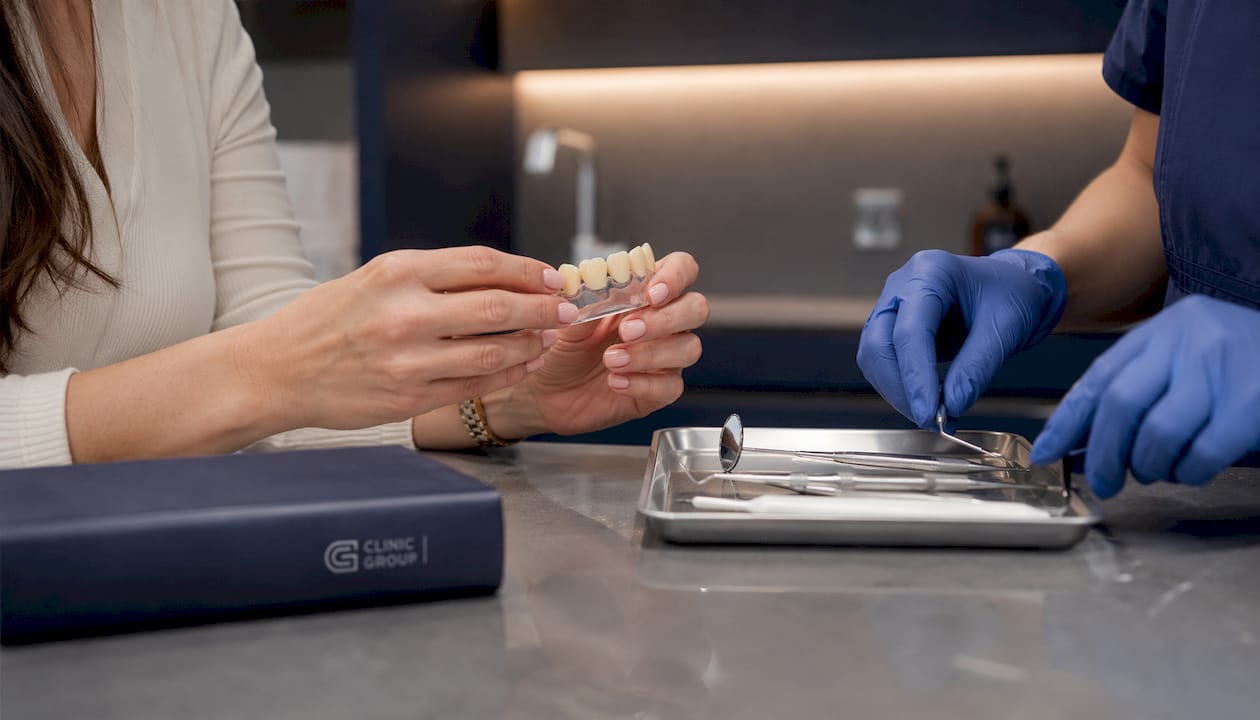
All-on-4 implants
All-on-4 is a full-arch restoration technique that uses four implants — two placed vertically at the front of the jaw and two angled at the rear — to support a complete set of fixed teeth. The angled posterior implants engage denser bone and often avoid the need for bone grafting, making this a practical solution for patients with moderate bone loss who want a permanent, non-removable result. A provisional prosthesis is typically fitted on the same day, with the definitive restoration placed once osseointegration is complete.
Pro Tip: Ask your implant specialist whether CBCT (cone beam computed tomography) scanning is included in your initial assessment. This 3D imaging is the most reliable way to evaluate bone volume and plan implant positioning accurately, and it can determine which implant type is genuinely appropriate for your anatomy.
Implant-supported restorations: crowns, bridges, and dentures
The implant itself is only part of the picture. What sits on top — the restoration — determines how your replacement teeth look, feel, and function day to day.
Single implant crowns
A single implant crown replaces one missing tooth without affecting the adjacent natural teeth. The implant acts as the root, and a custom-made crown is attached via an abutment. This is the preferred option when neighbouring teeth are healthy, since a conventional bridge would require those teeth to be ground down. Single implant crowns are the most straightforward dental implant option for isolated tooth loss and are widely available across UK dental practices.
Implant-supported bridges
When two or more adjacent teeth are missing, an implant-supported bridge can span the gap using fewer implants than the number of teeth being replaced. For example, three missing teeth might be restored with two implants supporting a three-unit bridge. This approach distributes the load across the implants rather than relying on natural teeth, making it more stable than a conventional bridge and preserving the surrounding bone.
Implant-retained versus implant-supported dentures
The distinction here matters clinically and practically:
- Implant-retained dentures (also called overdentures) clip onto implants but still rest partly on the gum tissue, which shares the chewing load. They are removable for cleaning and typically require as few as two implants in the lower jaw.
- Implant-supported dentures transfer the full chewing load to the implants, with no reliance on gum support. They tend to feel more stable and natural, though they require more implants and a higher initial investment.
British Society of Periodontology and Restorative Dentistry guidance notes that two implants are the recommended minimum for mandibular (lower jaw) denture retention, though more implants generally improve stability and comfort. The choice between retained and supported designs depends on bone availability, patient preference, and budget.
Are you a suitable candidate for dental implants?
Suitability for dental implants is not simply a matter of wanting them. Several clinical and personal factors influence which type is appropriate, or whether implants are viable at all.
- Bone quality and quantity — sufficient bone volume is needed to anchor an endosteal implant securely. Where bone has been lost through tooth extraction, gum disease, or atrophy, grafting or alternative implant types may be required.
- Periodontal health — active gum disease must be treated and stabilised before implant placement. Untreated periodontitis significantly increases the risk of implant failure.
- Smoking — smoking impairs healing and reduces blood supply to the gum tissue, which can compromise osseointegration. Patients who smoke are counselled on the elevated risk before proceeding.
- Systemic health — conditions such as uncontrolled diabetes, certain autoimmune disorders, and medications that affect bone metabolism (including some bisphosphonates) can affect implant success and require careful assessment.
- Age — implants are generally not placed in patients whose jaws are still growing, so younger teenagers are typically advised to wait until skeletal maturity.
- Diagnostic imaging — CBCT scans and detailed 3D implant planning are the standard approach for mapping bone structure, identifying nerve pathways, and selecting the correct implant type and position.
A thorough clinical assessment, including a review of medical history and current medications, is the only reliable way to determine which dental implant option is right for you.
What does the dental implant procedure involve?
The treatment unfolds in stages, and understanding the timeline helps set realistic expectations from the outset.
- Initial consultation and imaging — your specialist reviews your dental and medical history, takes CBCT scans, and discusses which implant type suits your anatomy and goals.
- Preparatory treatment — if needed, gum disease is treated, extractions are completed, and bone grafting is carried out. Bone grafts typically require several months of healing before implant placement.
- Implant placement — the implant is inserted under local anaesthetic (sedation is available for anxious patients). The procedure itself usually takes one to two hours depending on complexity.
- Osseointegration — the implant fuses with the jawbone over 3–6 months. During this period, a temporary restoration may be worn.
- Abutment and final restoration — once integration is confirmed, the abutment is attached and impressions are taken for the final crown, bridge, or denture.
- Follow-up and review — the final restoration is fitted and checked for bite alignment, with follow-up appointments scheduled to monitor healing and function.
Post-operative care in the first days is straightforward but includes essential advice on recovery management, as detailed in this post-operative care guide. Avoid wearing dentures for approximately one to two weeks after surgery, and begin gentle warm salt water rinses from days 4–6 to support soft tissue healing. Vigorous rinsing immediately after surgery should be avoided, as it can disturb the healing site. Pain is typically managed with over-the-counter analgesics such as ibuprofen or paracetamol, and most patients return to normal activities within a few days.
Benefits and risks of dental implants
Benefits
Dental implants offer advantages that no other tooth replacement option fully replicates:
- Function — they restore near-normal biting and chewing force, unlike removable dentures which can shift during eating
- Aesthetics — a well-made implant crown is visually indistinguishable from a natural tooth
- Bone preservation — the implant stimulates the jawbone, preventing the bone loss that typically follows tooth extraction
- Longevity — modern dental implants achieve 92–98% survival over ten or more years when patient factors and maintenance are optimised
- Comfort — fixed implant restorations do not move or require adhesives
Risks and complications
No surgical procedure is without risk, and dental implants are no exception:
- Infection (peri-implantitis) — bacterial infection around the implant is the most common biological complication and can lead to bone loss if untreated
- Implant failure — osseointegration may not occur in a small proportion of cases, particularly in patients who smoke or have poorly controlled diabetes
- Nerve or sinus involvement — incorrect placement can affect nearby nerves or, in the upper jaw, the sinus cavity
- Mechanical issues — crowns, abutments, or the implant itself can fracture or loosen over time
The British Society of Periodontology and Restorative Dentistry emphasises that dental implants are the gold standard for tooth replacement but require lifelong maintenance to avoid biological and mechanical complications. Regular professional check-ups and rigorous daily hygiene are not optional extras — they are what sustains long-term implant success.
Patient education on hygiene and follow-up is as important as the surgery itself. Interdental brushes, water flossers, and regular professional cleaning appointments are the practical tools that protect your investment over the long term.
Cost and treatment timelines for dental implants in the UK
Dental implant costs in the UK vary considerably depending on the type of implant, the number of teeth being replaced, and whether preparatory treatments such as bone grafting are needed.
- Single implant with crown — typically ranges from £2,000 to £3,000 per tooth at UK private practices
- Implant-supported bridge — costs rise with the number of units; a three-unit bridge supported by two implants can reach £4,000–£6,000
- All-on-4 full arch — full-arch restorations in the UK are commonly priced between £10,000 and £15,000 per jaw
- Bone grafting — adds cost and extends the treatment timeline by several months when required
- Zygomatic implants — specialist placement commands a premium and is typically available only at specialist centres
Treatment duration from first consultation to final crown placement ranges from three months (for straightforward immediate loading cases) to twelve to eighteen months when bone grafting is involved. Most standard endosteal implant cases fall in the six to nine month range, accounting for the osseointegration period.
For patients open to dental treatment abroad, verified clinics in Albania and Dubai offer comparable clinical standards at substantially lower costs, with savings of up to 70% reported by patients who choose this route. Clinicgroup coordinates the full patient journey, including clinic matching, travel logistics, and aftercare, so the process is straightforward from the UK.
Why consider Clinicgroup for dental implant treatment abroad?
Clinicgroup connects UK patients with EU-certified dental clinics in Albania and Dubai, where board-certified implant specialists work to European standards of care. The network is built around verified clinics, transparent pricing, and a patient journey that is managed from initial enquiry through to post-treatment aftercare.
- Verified clinics and specialists — every partner clinic in the Clinicgroup network is assessed for clinical standards, sterilisation protocols, and specialist credentials before being listed
- Transparent pricing — treatment costs are confirmed before travel, with no hidden fees
- Comprehensive patient journey — clinic matching, travel logistics, partner hotel arrangements, and aftercare coordination are included as standard
- Realistic savings — patients travelling through Clinicgroup for dental implants in Albania report savings of up to 70% compared with equivalent UK private treatment costs
- Safety emphasis — all clinics use CBCT scanning and digital treatment planning, consistent with Royal College of Surgeons guidelines on bespoke implant planning
For patients who have been quoted high costs in the UK, or who have been told they need complex preparatory treatment, Clinicgroup offers a reliable route to a second opinion and a high-quality alternative.
How long do dental implants actually last?
Long-term durability is one of the most important factors when weighing up different dental implant options, and the evidence is reassuring. Modern implants achieve 92–98% survival over ten or more years when patient selection is thorough and maintenance is consistent. Endosteal implants have the longest clinical track record and the most robust survival data. All-on-4 restorations show comparable long-term outcomes in well-selected patients, though the prosthetic components (the teeth themselves) may need replacement or adjustment over time.
Zygomatic implants have a shorter evidence base simply because they are used less frequently, but published outcomes from specialist centres are positive for appropriately selected patients. Subperiosteal implants, now rarely placed, have a more variable historical record compared with endosteal designs.
The factors that most consistently predict long-term success are periodontal health, smoking cessation, diabetes control, and adherence to professional maintenance schedules. Bone quality at the time of placement also plays a role, which is why imaging-guided planning matters so much before any implant is placed.
How to care for your dental implants long-term
Implants do not decay, but the tissue and bone surrounding them can be affected by bacterial biofilm in exactly the same way as natural teeth. Peri-implantitis — infection around the implant — is the leading cause of late implant failure, and it is largely preventable with the right daily habits.
Daily hygiene by implant type:
- Single crowns — brush twice daily with a soft-bristled brush, and use interdental brushes or floss designed for implants to clean around the abutment
- Implant-supported bridges — floss threaders or water flossers are particularly useful for cleaning beneath the bridge pontic, where a standard brush cannot reach
- Implant-retained overdentures — remove the denture daily, clean the implant attachments with a small brush, and soak the denture in a non-bleach cleaning solution
- All-on-4 fixed prostheses — a water flosser (such as a Waterpik) is the most effective tool for cleaning beneath the full-arch bridge; professional cleaning with specialist instruments is needed at every check-up
Professional maintenance appointments every six months are the standard recommendation for implant patients, though your clinician may suggest more frequent visits in the first year or if risk factors are present. At these appointments, the implant, abutment, and surrounding tissue are assessed, and any early signs of peri-implantitis are addressed before they progress. Choosing a reliable clinic with long-term oral health expertise is as important as the implant placement itself.
Clinicgroup: dental implants at a fraction of UK costs
For UK patients who want high-quality dental implant treatment without the high-street price tag, Clinicgroup offers a concrete alternative. The network’s partner clinics in Tirana, Albania, including Dental Med Austria Tirana, use the same implant systems, imaging technology, and sterilisation standards as leading UK practices, with treatment costs that are typically 60–70% lower.
The process is designed to be straightforward. Clinicgroup handles clinic matching based on your specific implant needs, coordinates travel and accommodation through partner hotels, and provides aftercare support once you return home. There are no hidden costs, and your treatment plan is confirmed in writing before you travel.
Whether you need a single crown, an All-on-4 restoration, or a complex case involving bone grafting, Clinicgroup’s verified specialists can assess your suitability and outline a clear, costed plan. Explore dentistry in Albania through Clinicgroup and request a free consultation to find out what treatment would cost for your specific case.
Key takeaways
Endosteal implants are the most widely used and best-evidenced dental implant type, achieving 92–98% survival over ten or more years when patient selection and maintenance are optimised.
| Point | Details |
|---|---|
| Five main implant types | Endosteal, subperiosteal, zygomatic, immediate loading, and All-on-4 each suit different bone conditions and clinical needs. |
| Long-term survival rates | Modern implants achieve 92–98% survival over ten or more years with proper patient selection and maintenance. |
| Osseointegration timeline | Bone fusion around an endosteal implant takes 3–6 months before the final restoration can be fitted. |
| Maintenance is non-negotiable | Daily interdental cleaning and six-monthly professional check-ups are the primary defence against peri-implantitis. |
| Clinicgroup for cost savings | Verified clinics in Albania offer comparable clinical standards to UK practices at up to 70% lower cost, with full patient journey support. |
Treatment in Albania
Clinic Group connects UK and EU patients with vetted partner clinics in Tirana, Albania for dentistry, starting with a free consultation before you book or travel.
Typical starting prices in Albania range from €120 to €7,000, depending on the treatment. Your final quote follows a free consultation.
Related guides: Veneers in Europe: Compare Prices, Travel Costs and Dentist Checks · Dental Clinics in Tirana: Treatment Options and Prices
Considering treatment in Albania? Request a free consultation with Clinic Group.
FAQ
What is the best type of dental implant?
There is no single best type. Endosteal implants are the most common and best-evidenced option for patients with adequate bone volume, but zygomatic or All-on-4 implants may be more appropriate for those with significant bone loss. The right choice depends on your bone density, health history, and the number of teeth being replaced.
What are the four main types of dental implants?
The four types most frequently referenced clinically are endosteal, subperiosteal, zygomatic, and immediate loading implants. All-on-4 is a restorative technique rather than a distinct implant type, though it is widely listed alongside them because it represents a distinct treatment approach for full-arch replacement.
What is the newest type of dental implant?
Immediate loading implants represent one of the more recent advances in implant dentistry, allowing a provisional tooth to be placed on the same day as the implant. All-on-4 protocols have also evolved significantly in recent years, with digital planning and angled implant positioning reducing the need for bone grafting in full-arch cases.
What do patients wish they had known before getting dental implants?
The most common reflections from patients centre on the timeline — osseointegration takes 3–6 months, and the full process from consultation to final crown can take six to eighteen months depending on complexity. Patients also frequently note that post-operative care, particularly the restriction on denture wearing in the first two weeks and the importance of daily interdental cleaning, is more involved than they anticipated.