Rhinoplasty performed overseas carries measurably higher risks than the same procedure carried out in the UK, and the NHS, BAAPS, BAPRAS, and Clinicgroup all advise careful preparation before you book. The risks of rhinoplasty abroad, known in Albanian as rreziqet rinoplastika jashtë vendit, are not simply clinical. They are structural: different regulatory frameworks, limited continuity of care, and the physical demands of flying home before your body has healed all compound the standard surgical risks. A BMJ Open rapid review identified 655 patients treated in UK hospitals for complications following elective surgery abroad between 2006 and 2024, with estimated NHS costs per patient ranging from £1,058 to £19,549 in 2024 prices (very low certainty). That figure alone reframes the apparent cost saving.
Before booking, take two immediate steps:
- Verify your surgeon’s registration independently. In the UK, surgeons are registered with the General Medical Council and regulated by the Care Quality Commission. Overseas, equivalent protections may not exist. Ask for the surgeon’s full name, qualifications, and registration number, then check them directly with the relevant national body.
- Insist on a named operating surgeon confirmed in writing, a full written aftercare plan in English, and a specialist medical travel insurance policy that explicitly covers postoperative complications, evacuation, and return travel.
Pro Tip: Demand at least two face-to-face consultations with the surgeon who will actually operate on you, not a patient coordinator or a different doctor. The NHS specifically recommends this. If the clinic cannot arrange it, treat that as a firm reason not to proceed.
Key takeaways
Rhinoplasty abroad carries additional risks beyond the standard surgical complications, and the most effective way to reduce those risks is thorough preparation before you book, not after.
| Point | Details |
|---|---|
| Risks are higher abroad | Regulatory gaps, limited continuity of care, and travel itself all add risk beyond standard rhinoplasty complications. |
| NHS cover is limited | The NHS treats life-threatening emergencies but is not obliged to provide routine post-op follow-up for elective procedures performed overseas. |
| Wait before flying | BAPRAS recommends waiting at least 7–10 days after facial procedures before flying, to reduce DVT and PE risk. |
| Specialist insurance is essential | Standard holiday policies exclude planned elective surgery; a specialist policy covering complications and repatriation is required. |
| Clinicgroup reduces the gap | Clinicgroup verifies surgeons and clinics, confirms named surgeons in writing, and coordinates English-language aftercare for rhinoplasty patients. |
Table of Contents
- Why does rhinoplasty overseas carry extra risks?
- What clinical complications can rhinoplasty cause?
- How do travel and logistics increase your risk?
- What aftercare should you expect, and what will the NHS provide?
- What does UK evidence say about complications from surgery abroad?
- How do you verify a clinic and what should you check before booking?
- What should you do if complications arise after returning to the UK?
- Clinicgroup’s perspective on safer rhinoplasty abroad
- How Clinicgroup supports safer rhinoplasty abroad
- Sources
- FAQ
Why does rhinoplasty overseas carry extra risks?
The core problem is not the surgery itself. It is the system surrounding it. UK patients undergoing rhinoplasty at home benefit from CQC-regulated facilities, GMC-registered surgeons with verifiable specialist credentials, and a legal framework that gives them clear recourse if something goes wrong. Overseas, those protections vary considerably by country and clinic.
Several structural factors raise the risk profile:
- Regulatory gaps. The joint BAAPS/BOMSS statement states directly that inadequate expert pre-operative assessment and differing regulatory standards abroad increase the likelihood of inappropriate procedures and complicate clinical or legal redress. A surgeon may be qualified by local standards but lack the specialist rhinoplasty training that UK GMC registration requires.
- Third-party packaging. Many overseas rhinoplasty packages are sold through agents or coordinators, not the operating surgeon. This creates a gap between what is promised and what is clinically assessed. The BAAPS/BOMSS statement identifies this as one of the main practical dangers.
- Language and record-keeping barriers. Medical records kept in a foreign language are difficult for UK GPs and surgeons to interpret quickly in an emergency. Incomplete or untranslated discharge summaries delay treatment.
- Pressure to combine procedures. Bundled packages sometimes encourage patients to add procedures during the same visit, increasing anaesthetic time and complication risk.
Statistic: The UK government’s awareness campaign with social media platforms was launched specifically because marketing and social media content frequently understates the risks of cosmetic procedures abroad. Slick branding is not a substitute for clinical transparency.
What clinical complications can rhinoplasty cause?
Rhinoplasty carries a defined set of complications regardless of where it is performed. Overseas, the ability to detect and manage them quickly is often reduced.
Short-term complications (days 0–14)
Bleeding and infection are the most common early concerns. Swelling and bruising are expected, but heavy bleeding from the nostrils or a sudden increase in pain after the first 48 hours warrants urgent review. Adverse reactions to anaesthesia, though uncommon, can occur and require immediate hospital management.

Medium-term issues (weeks 3–12)
Wound dehiscence (where the surgical wound reopens) and persistent swelling are frequently reported in the literature on foreign cosmetic surgery. Altered sense of smell and nasal obstruction can develop as swelling changes the internal nasal structure. These issues often require in-person assessment, which is logistically difficult once you have returned to the UK.
Long-term outcomes (months 3–12 and beyond)
Asymmetry, contour irregularities, and structural collapse are the complications that most often lead to revision surgery. Revision rhinoplasty after an initial procedure abroad is consistently more complex and more expensive than primary surgery, because scar tissue and altered anatomy make the second operation technically harder. Surgeons in the UK may also be reluctant to take on revision cases without full operative notes from the original procedure.
Complication overview
| Complication | Typical timing | First response |
|---|---|---|
| Bleeding | Days 0–3 | Urgent medical review if heavy |
| Infection | Days 3–14 | GP or urgent care; antibiotics |
| Wound dehiscence | Weeks 3–12 | In-person surgical review |
| Persistent swelling | Weeks 4–12 | Monitor; review if worsening |
| Altered sense of smell | Weeks 4–16 | GP referral; ENT if persistent |
| Nasal obstruction | Months 3–12 | GP referral; imaging if needed |
| Asymmetry / contour issues | Months 3–12 | Plastic surgeon consultation |
| Structural collapse | Months 3–12 and beyond | Specialist revision assessment |
Red-flag signs requiring immediate attention
- Fever above 38°C combined with increasing facial pain or swelling
- Heavy or uncontrolled bleeding from the nose
- Sudden difficulty breathing through both nostrils
- Severe headache, visual changes, or confusion after surgery
- Skin discolouration or necrosis around the nose
Statistic: The BMJ Open rapid review found that infection and wound dehiscence were the most commonly described complications in UK case series of patients returning from cosmetic surgery abroad, with NHS treatment costs estimated at £1,058 to £19,549 per patient (2024 prices, very low certainty).
How do travel and logistics increase your risk?
Flying home too soon after rhinoplasty is one of the most underestimated dangers. BAPRAS advises waiting at least 7–10 days after facial cosmetic procedures before boarding a flight, because cabin pressure changes and prolonged immobility significantly raise the risk of deep vein thrombosis (DVT) and pulmonary embolism (PE). Anti-embolism stockings and staying hydrated reduce but do not eliminate that risk.
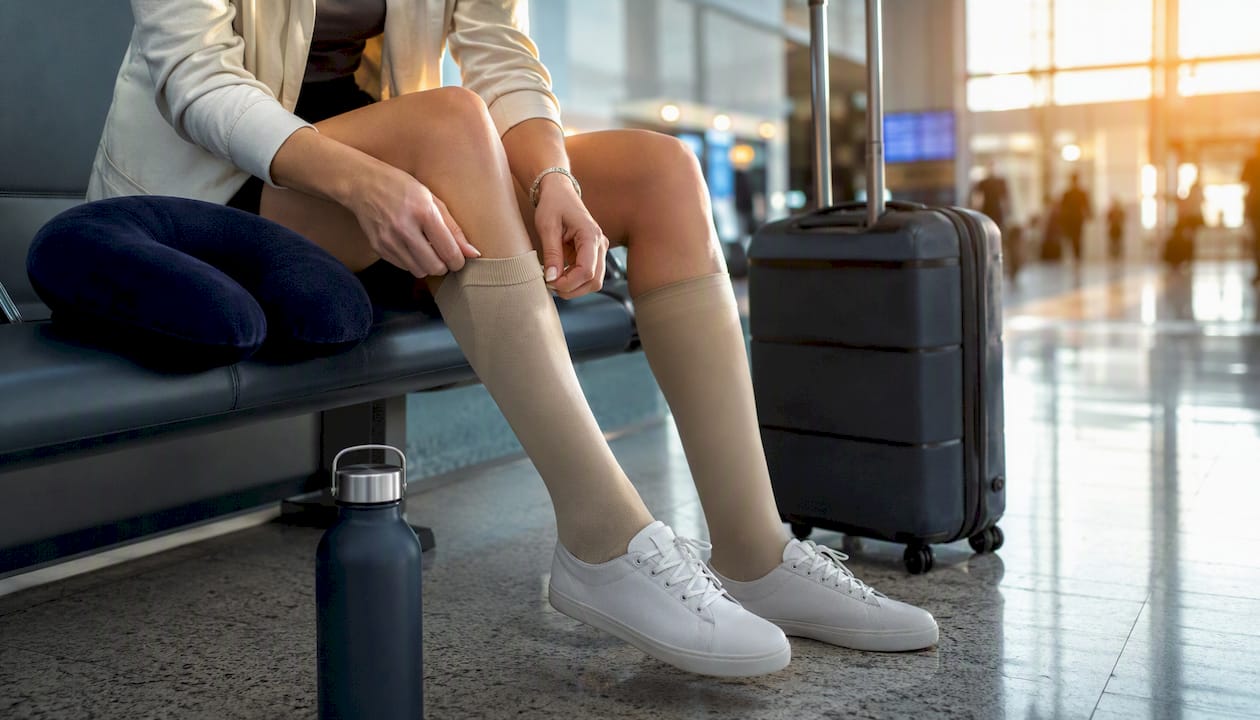
Combining surgery with a holiday compounds the problem. Sunbathing increases swelling and can cause hyperpigmentation around healing incisions. Swimming introduces infection risk. Sightseeing means walking, heat exposure, and fatigue, none of which support recovery. The NHS is explicit: plan dedicated downtime, not a holiday.
Practical planning points:
- Budget for a minimum of 10–14 days in-country after rhinoplasty before flying, not the 5–7 days some packages advertise.
- Arrange suture or drain removal with the operating clinic before you leave, and confirm who handles this if you need to return home earlier.
- Standard holiday insurance policies almost always exclude planned elective surgery complications. You need a specialist medical travel insurance policy that explicitly covers postoperative complications, emergency evacuation, and extended stays.
- Keep all clinic contact details, your discharge summary, and your surgeon’s direct phone number in a single physical folder and a digital backup.
Pro Tip: On long flights home, book an aisle seat and set a reminder to stand and walk for two minutes every hour. Wear graduated compression stockings from the moment you leave the clinic. These steps are simple and meaningfully reduce DVT risk during the critical post-surgical window.
What aftercare should you expect, and what will the NHS provide?
The NHS will treat life-threatening emergencies arising from overseas surgery. It will not provide routine postoperative follow-up for elective procedures you chose to have abroad. That distinction matters practically: if your wound becomes infected two weeks after returning home, your GP can prescribe antibiotics, but specialist review, imaging, or revision surgery may need to be funded privately. The NHS guidance is clear on this point, and patients who have not planned for it often face unexpected costs.
BAPRAS and the BAAPS/BOMSS joint statement both recommend that patients receive in-country post-operative reviews with the named operating surgeon before travelling home. A credible aftercare package should include:
- A written post-operative care plan in English, signed by the operating surgeon
- At least one in-person review with the surgeon before departure
- A full English-language discharge summary to present to your UK GP
- Named contact details for the surgeon or clinic for phone and video follow-up
- Arranged appointments for suture removal and wound checks, either in-country or with a confirmed local provider in the UK
TravelHealthPro also recommends discussing your plans with your GP before booking, confirming your fitness to travel, and verifying that the foreign clinician will remain contactable for follow-up questions while you are still abroad.
Statistic: The BMJ Open rapid review estimated that NHS costs for treating complications from elective surgery tourism ranged from £1,058 to £19,549 per patient in 2024 prices. These are costs that fall on the health system and, in some cases, on the patient when NHS treatment is not available for their specific complication.
Pro Tip: Before you travel, register your planned procedure with your GP and leave a copy of your discharge summary template with them. When you return, book a GP appointment within 48 hours, even if you feel well. Early review catches complications before they escalate.
What does UK evidence say about complications from surgery abroad?
The most comprehensive UK-focused evidence comes from a rapid review published in BMJ Open, which summarised case reports and series describing 655 patients treated in UK hospitals for complications following elective surgery abroad between 2006 and 2024. For cosmetic surgery specifically, infection and wound dehiscence were the most commonly described complications. NHS treatment costs per patient ranged from £1,058 to £19,549 in 2024 prices, though the review’s authors stress this is very low certainty evidence, drawn from case series rather than population-level data.
Statistic: 655 patients were identified in UK hospital records as having been treated for complications after elective surgery abroad over an 18-year period, with cosmetic surgery among the most commonly reported categories. The true number is likely higher, as not all cases are captured in published series.
BAPRAS and the NHS both publish factual guidance on the specific risks of cosmetic surgery abroad, and the UK government has run public awareness campaigns warning that social media marketing frequently understates complication rates. TravelHealthPro provides pre-travel health advice for UK residents planning medical procedures overseas.
Key sources readers can consult directly:
- BMJ Open rapid review: case series data and NHS cost estimates
- NHS cosmetic surgery abroad guidance: patient rights and NHS responsibilities
- BAPRAS patient information: DVT risk and follow-up recommendations
- BAAPS/BOMSS joint statement: pre-operative assessment and regulatory concerns
- TravelHealthPro factsheet: pre-travel health checks and fitness to fly
How do you verify a clinic and what should you check before booking?
Verification is not a single step. It is a sequence of checks across four areas: the surgeon’s credentials, the clinic’s standards, your insurance cover, and your aftercare plan. Use this grouped checklist before committing to any booking.
Verification: surgeon and clinic credentials
- Confirm the full name of the surgeon who will perform your rhinoplasty in writing before you pay any deposit.
- Ask for their qualifications, specialist training in rhinoplasty specifically, and their registration number with the relevant national medical body.
- Check the clinic’s accreditation status. Clinicgroup’s quality assurance checklist and accreditation guide explain what to look for.
- Ask how many rhinoplasties the surgeon performs per year and request their revision rate.
Logistics: stay duration and travel
- Confirm you can stay in-country for at least 10–14 days post-surgery before flying.
- Book flexible return flights that can be extended without prohibitive cost.
- Arrange accommodation near the clinic, not a resort or tourist area.
- Check the clinic’s emergency escalation path: is there an on-site ICU and a named anaesthesia team?
Insurance: specialist cover
- Purchase a specialist medical travel insurance policy before booking, not after.
- Confirm the policy explicitly covers planned elective surgery complications, extended stays, and emergency repatriation.
- Keep the insurer’s emergency number saved separately from your phone’s main contacts.
Aftercare: post-operative schedule
- Obtain a written post-operative plan in English before surgery.
- Confirm at least one in-person review with the operating surgeon before departure.
- Arrange a GP appointment in the UK for within 48 hours of returning home.
- Secure a full English discharge summary to present to any UK clinician.
Red flags that should stop you booking
- The clinic cannot or will not confirm the name of your operating surgeon in advance.
- No face-to-face pre-operative assessment is offered before surgery day.
- The package requires same-day consultation and surgery.
- Revision surgery or complication management is not addressed in the contract.
- The price seems significantly lower than comparable procedures without a clear explanation.
What should you do if complications arise after returning to the UK?
Act in a specific order. Speed and documentation both matter.
Immediate steps
- If you have a fever above 38°C, heavy bleeding, breathing difficulty, or severe pain, call 999 or go directly to your nearest A&E. Present your discharge summary and explain you have had recent surgery abroad.
- For non-emergency concerns (wound changes, persistent swelling, altered sensation), contact your GP within 24 hours and request an urgent appointment.
- Call your specialist medical travel insurer on their emergency line. Report the complication and ask what cover applies. Do this before arranging any private treatment.
Documentation to gather immediately
- All discharge paperwork from the overseas clinic, including consent forms and operative notes
- Dated photographs of the affected area, taken in good lighting
- Receipts for all payments made to the clinic
- Your written contract and any correspondence with the clinic or booking agent
- Your insurance policy documents and claim reference number
Follow-up and financial considerations
The NHS will treat life-threatening complications. For non-emergency revision surgery or specialist follow-up, you will likely need to fund this privately or claim through your specialist insurance. Contact the overseas clinic in writing to request a full English-language medical report; this is your legal right in most jurisdictions and is essential for any UK surgeon taking on your case.

If you used Clinicgroup to arrange your procedure, contact your Clinicgroup case manager directly. They can coordinate communication with the clinic, assist with documentation, and help arrange local follow-up appointments.
Pro Tip: When seeking a second opinion from a UK plastic surgeon, bring three things: your full operative notes (translated if necessary), dated photographs taken at 24 hours, one week, and one month post-surgery, and a written timeline of your symptoms. A surgeon can assess your case in a single consultation with this information; without it, they may need to order imaging before advising anything.
Clinicgroup’s perspective on safer rhinoplasty abroad
The most consistent finding across UK evidence and professional guidance is that the risks of rhinoplasty abroad are not inherent to the surgery. They are inherent to the process surrounding it: how the clinic is selected, how the surgeon is verified, how aftercare is planned, and how complications are managed if they arise. Patients who approach international rhinoplasty with the same rigour they would apply to a major financial decision tend to have far better outcomes than those who prioritise price or convenience alone.
What concerns us most, having worked with patients across the UK and Europe, is the gap between what is marketed and what is clinically delivered. A package that includes flights, hotel, and surgery for a fixed price sounds reassuring. It rarely specifies who performs the surgery, what happens if you need a revision, or how the clinic handles a complication at 2 AM. Those are the questions that determine whether an international rhinoplasty is safe, not the headline price.
Clinicgroup exists to close that gap. Every clinic in our network is verified against defined quality standards, every surgeon is board-certified in their specialty, and every patient receives a named surgeon confirmation, an English medical summary, and coordinated aftercare before they travel. We do not guarantee clinical outcomes, because no ethical provider does. We do guarantee transparency, and we think that is what patients considering rhinoplasty abroad most need.
How Clinicgroup supports safer rhinoplasty abroad
For patients weighing the risks of rhinoplasty abroad, Clinicgroup offers a structured alternative to booking directly through an unknown clinic or a third-party agent. Our plastic surgery services connect you with board-certified rhinoplasty surgeons at verified clinics in Albania and Dubai, with pricing that is transparent and inclusive of the support most packages leave out.
What that means in practice:
- Named surgeon confirmed in writing before any payment is made
- Pre-operative consultation arranged with the operating surgeon, not a coordinator
- English-language medical summaries prepared for your UK GP
- Guidance on specialist medical travel insurance policies that cover elective surgery complications
- Partner hotel arrangements near the clinic for your recovery period
- Coordinated aftercare, including local follow-up appointments and direct access to your Clinicgroup case manager after you return home
To discuss your options without obligation, contact Clinicgroup for a pre-booking consultation. Our team can walk you through the verification process, help you compare clinics, and answer the practical questions that matter most before you commit to anything.
Sources
- Cosmetic surgery abroad - NHS
- Cosmetic surgery abroad | BAPRAS
- Complications and costs to the UK National Health Service due to outward medical tourism for elective surgery: a rapid review | BMJ Open
- Gov
FAQ
Does rhinoplasty abroad carry higher risks than in the UK?
Yes. Regulatory differences, limited pre-operative assessment, language barriers, and the physical demands of flying home before healing is complete all add risk beyond the standard surgical complications of rhinoplasty.
Will the NHS treat me if I have complications after rhinoplasty abroad?
The NHS will provide emergency care for life-threatening complications, but it is not obliged to offer routine post-operative follow-up for elective procedures performed overseas, as the NHS guidance states clearly.
How long should I stay abroad after rhinoplasty before flying home?
BAPRAS recommends waiting at least 7–10 days after facial cosmetic procedures before flying, to reduce the risk of DVT and pulmonary embolism. Many surgeons advise 10–14 days for rhinoplasty specifically.
What insurance do I need for rhinoplasty abroad?
Standard holiday insurance typically excludes planned elective surgery complications. You need a specialist medical travel insurance policy that explicitly covers postoperative complications, extended stays, and emergency repatriation.
How can Clinicgroup help me have rhinoplasty abroad more safely?
Clinicgroup verifies clinics and surgeons against defined quality standards, confirms your named operating surgeon in writing before payment, arranges pre-operative consultations, and coordinates English-language aftercare and follow-up after you return home.