Ophthalmology clinics abroad assess patients and provide eye care outside their home country. Clinic Group’s directory connects UK and EU patients with verified partner clinics, while each independent clinic remains responsible for clinical decisions and care. Before making plans, compare assessment, clinician details, written treatment plans, after-care and insurance, then discuss suitability directly with the treating clinic.
It’s reasonable to have questions about how to compare clinics, understand a proposed plan and arrange follow-up after treatment. A step-by-step approach helps you identify what you know, what still needs clarification and which questions need an answer from the treating clinician.
This guide explains how to explore listed eye-care options, compare clinic information and prepare for consultation and travel. It also covers questions about individual risks, after-care and insurance, and how Clinic Group’s directory and coordination support can help you explore partner clinics. Use this information to prepare for discussions, not as a substitute for an individual clinical assessment or medical advice.
Key Takeaways
- Ophthalmology clinics abroad provide eye-care assessments and treatment. Independent partner clinics are responsible for clinical care.
- Compare clinics using clear information about assessment, clinician credentials, the written treatment plan, after-care and insurance.
- Organise consultation, case review and travel in sequence. Ask the treating clinic about timing and whether travel is suitable for you.
- Discuss the individual risks, potential benefits and eligibility for each eye-care option with the treating clinician.
- Clinic Group can support your search, consultation and clinic matching, as well as travel coordination based on the clinic’s arrangements.
What do ophthalmology clinics abroad offer UK patients?
Ophthalmology clinics abroad are independent clinics outside a patient’s home country that assess patients and provide eye-care treatment. Clinic Group’s directory connects UK and EU patients with verified partner clinics. A partner clinic is responsible for clinical assessment, diagnosis, treatment and follow-up. A service listing can help you discover options, but it does not determine whether a particular treatment is suitable for you.
Ophthalmology is the medical specialty concerned with the eyes and vision. For a general introduction to the field, see What is Ophthalmology? The options listed below cover different kinds of eye care. Understanding the terms can help you prepare questions for a treating clinic, but a procedure’s name alone does not explain what a clinician may recommend after assessing you.
Which eye-care procedures are listed?
Clinic Group’s eye-care directory includes LASIK, premium multifocal lens surgery, blepharoplasty and canthoplasty. These are distinct services, not interchangeable labels. Their inclusion means patients can explore them through the directory. It does not mean every patient is eligible or that a particular option is recommended for an individual concern.
- LASIK: a listed eye-care service. Ask the treating clinic what the procedure involves, how it will assess your circumstances and what potential benefits and risks apply to you.
- Premium multifocal lens surgery: a listed lens-surgery option. Ask the treating clinician to explain the proposed approach and why it may be considered in your case.
- Blepharoplasty: an eyelid-related procedure involving changes to eyelid tissue, which can include surgical techniques as well as non-surgical plasma options such as those supplied by Jett Medical Canada. The clinic can explain the proposed treatment and its intended purpose for you.
- Canthoplasty: an eyelid-related procedure involving the outer corner of the eye. Ask the treating clinician what the procedure would involve as part of your individual plan.
Use a consultation to distinguish general information from advice based on your examination. Ask the clinician to explain unfamiliar terms and how any recommendation relates to your assessment. Avoid relying on broad descriptions as a guide to what will be suitable for you.
What does an overseas clinic directory do?
A directory supports clinic discovery and coordination. It gives patients a way to explore partner options and start arranging contact with a clinic. It does not carry out examinations, diagnose eye conditions or make clinical decisions. Those responsibilities belong to the independent treating clinic, whose clinicians assess each patient and determine the care they consider appropriate.
This distinction sets clear expectations: Clinic Group helps patients access its partner network, while the clinic provides care and answers clinical questions. You can use directory information to identify services you want to discuss, then rely on an individual clinical assessment to understand whether an option may be appropriate. This article provides general information, not medical advice. Individual suitability and outcomes cannot be guaranteed.
How should you compare ophthalmology clinics abroad?
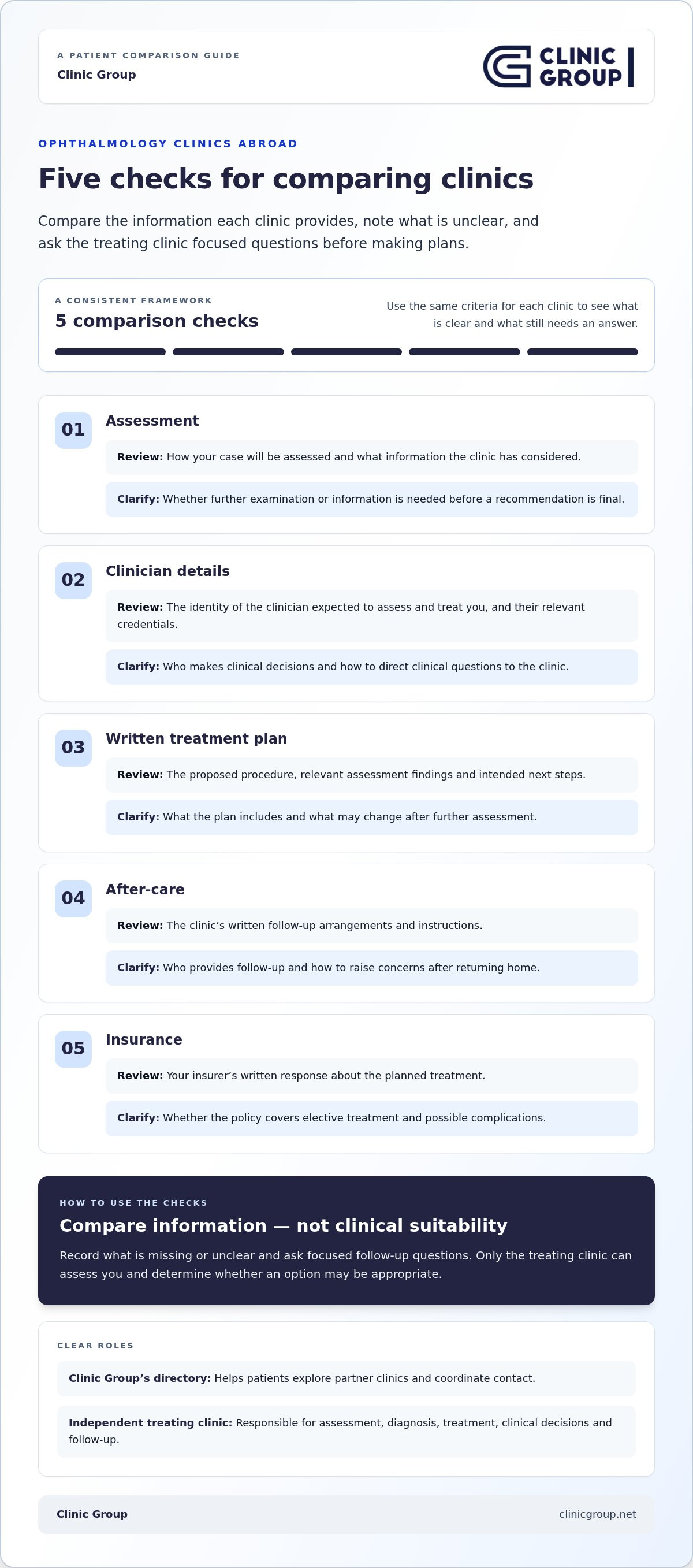
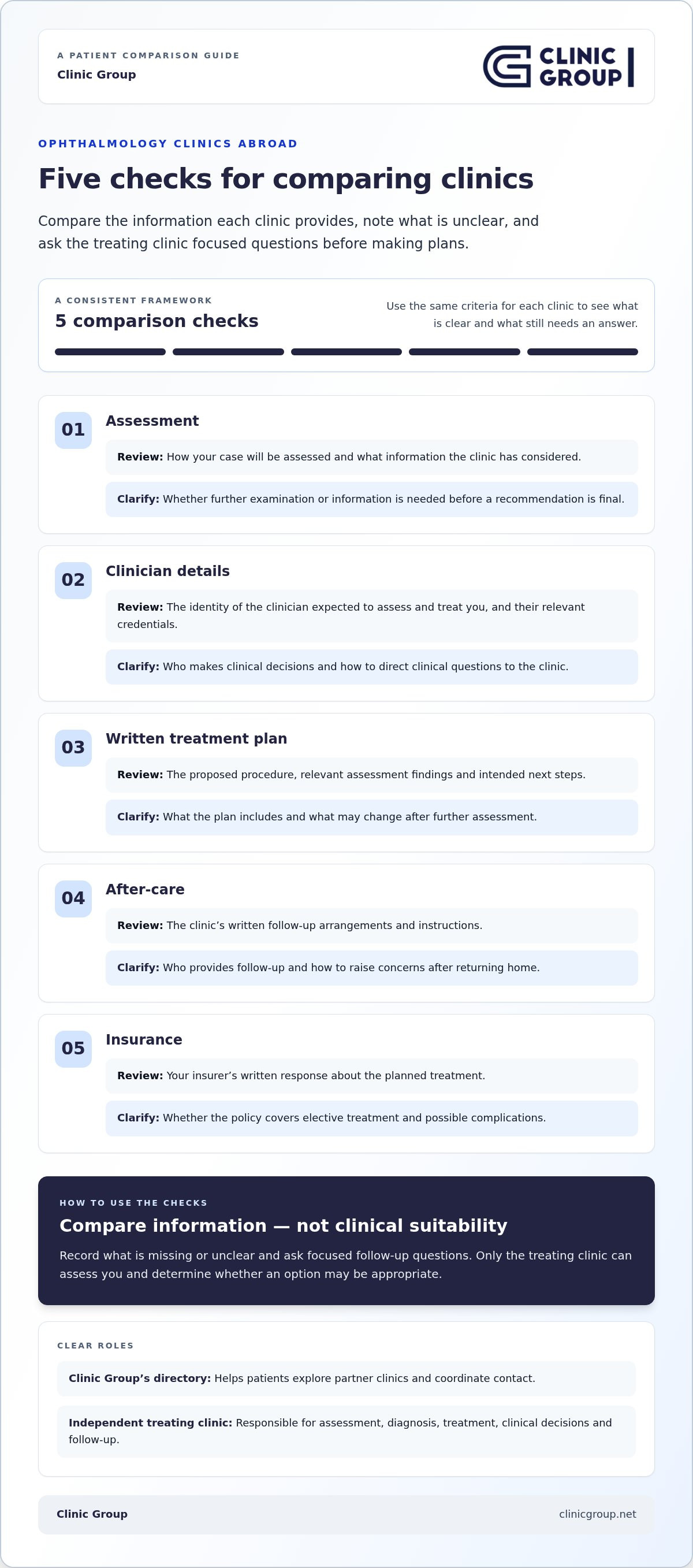
To compare ophthalmology clinics abroad, assess the clarity and completeness of the information each clinic provides, rather than relying on a procedure name or short overview. Use the same criteria for each clinic and record what is missing or unclear. This makes it easier to ask focused follow-up questions and compare written proposals consistently.
| What to compare | What to review | What to clarify |
|---|---|---|
| Assessment | How your case will be assessed and what information the clinic has considered. | Whether further examination or information is needed before a recommendation is final. |
| Clinician details | The identity of the clinician expected to assess and treat you, and their relevant credentials. | Who makes clinical decisions and how to direct clinical questions to the clinic. |
| Written plan | The proposed procedure, relevant assessment findings and intended next steps. | What the plan includes and what may change after further assessment. |
| After-care | The clinic’s written follow-up arrangements and instructions. | Who provides follow-up and how to raise concerns after returning home. |
| Insurance | Your insurer’s written response about the planned treatment. | Whether the policy covers elective treatment and possible complications. |
Use this framework to prepare questions, not to decide clinical suitability yourself. That judgement belongs to the treating clinic after assessing you. If you’re still exploring options, browse listed eye-care treatments through Clinic Group’s directory.
What should a written eye-care plan include?
Request a written plan from the treating clinic that sets out the proposed procedure, the findings relevant to its recommendation and the follow-up it expects to provide. Ask for an itemised written quote so you can see what is included and compare documents consistently. If the plan uses unfamiliar terms, ask the clinic to explain them. The treating clinician should answer questions about clinical suitability and whether another approach may be appropriate.
How can you assess clinic credentials and quality information?
Ask for the treating clinician’s identity and relevant credentials, then review the clinic’s stated quality and safety standards. If the clinic refers to an accreditation, request evidence and establish which organisation and facility it applies to. JCI means Joint Commission International, an accreditation associated with hospital quality and patient safety. Mention of JCI alone does not establish that a specific clinic holds it. Clinic Group’s clinic accreditation guide explains how to interpret accreditation information.
Keep your notes alongside the clinic’s documents. For each clinic, record the answers received, the questions still open and the documents provided. Before deciding, check that the written information reflects the proposal discussed and gives you enough detail to consider it carefully.
What should you plan before travelling for eye care?
Plan in sequence, with the treating clinic’s advice guiding clinical decisions. A directory or coordinator can help with discovery and arrangements, but only the clinic assessing you can advise on treatment timing and whether travel is suitable for your circumstances. Before booking, get the clinical, travel and follow-up details in writing.
- Arrange a consultation and case review. Share the information requested by the treating clinic and ask what further assessment it needs. A remote discussion can help with initial planning, but the clinic will advise whether an in-person assessment is needed before confirming a treatment plan.
- Review the clinic’s written plan. Check that it explains the proposed procedure, relevant assessment findings and follow-up arrangements. Request an itemised written quote and ask the treating clinic to explain anything you don’t understand.
- Confirm timing and travel suitability. Ask the treating clinic when treatment could take place and whether your travel arrangements are appropriate. Don’t set flights or return plans around assumptions about clinical timing or recovery.
- Organise practical arrangements. Confirm accommodation, transfers and appointment logistics. Coordination support depends on the clinic and the arrangements for your treatment.
- Settle after-care and insurance questions. Get written instructions, confirm who will provide follow-up, and review insurance wording for planned elective treatment and possible complications before committing.
What should you arrange before departure?
Keep the treatment plan, itemised quote and clinic contact details together with appointment information and instructions from the treating team. Confirm that your accommodation and transport arrangements fit the appointment schedule. Read your insurance policy closely and ask the insurer to clarify exclusions in writing. Never assume standard travel cover includes elective treatment or complications related to it.
Pause before booking if key details remain unresolved. For example, if the clinic has not confirmed the appointment schedule or explained what the quote covers, request the missing information in writing. The treating clinic must advise on clinical timing and suitability for travel.
How should you plan follow-up after treatment?
Ask the treating clinic for written after-care instructions and a clear outline of planned follow-up. Clarify who to contact if you have a concern after returning to the UK, how that contact is arranged and what the clinic advises if a problem arises. Save the contact details before departure rather than relying on finding them later.
Establish what your insurance covers and how to report a concern under the policy. Don’t assume public health services will provide or fund treatment for complications arising from elective care abroad. Base your plans on written information from the clinic and insurer, and seek medical advice about individual concerns.
What questions should you ask about eye-care options and risks?
A consultation is your opportunity to understand the proposed care, the clinician’s reasoning and what to expect if plans change. Prepare questions in advance and ask for clear answers in writing where practical. Risks, potential benefits and eligibility vary according to the individual assessment and procedure. Information about another person or treatment should not be treated as a prediction for you.
What should you ask about assessment and clinical responsibility?
Establish who will examine you, who will make clinical decisions and which independent clinic will provide treatment. Ask what further assessment may be needed before the plan is final, and how the clinic will explain its findings. Make sure you know how to contact the clinic’s clinical team directly about questions concerning your care.
- Who will carry out my examination and discuss the results with me?
- What information or further assessment is needed before you can finalise a plan?
- Which clinician is responsible for the clinical recommendations and treatment?
- Which clinic will provide my care, and how can I contact its clinical team?
- What are the relevant risks and potential benefits of the proposed option in my circumstances?
These questions apply whether you’re discussing LASIK, premium multifocal lens surgery, blepharoplasty or canthoplasty. Ask the clinician to explain why an option may or may not suit your individual needs, rather than trying to decide from a procedure description alone. If an explanation is unclear, ask for it in plain language before moving on.
What should you clarify about after-care and complications?
Before making travel arrangements, ask for written after-care instructions and an explanation of the clinic’s process for handling concerns after you return home. Clarify who to contact, how follow-up is arranged and what the clinic advises if a problem arises. Review your insurance policy’s wording for elective procedures and possible complications, and ask the insurer to clarify exclusions. Don’t assume you are covered.
- What follow-up does the treating clinic recommend, and who will provide it?
- How should I contact the clinic if I have a concern after returning to the UK?
- What arrangements does the clinic describe for assessing or managing complications?
- Does my insurance cover the planned treatment and related complications?
Don’t assume that public healthcare services will provide or fund treatment for complications arising from elective care abroad. Clarify the clinic’s arrangements and your insurance position before deciding to proceed. A structured comparison can help you keep answers consistent across options. Use Clinic Group’s clinic comparison checklist to organise your notes.
This guide provides general information, not medical advice. The treating clinic must assess your individual circumstances, and outcomes cannot be guaranteed.
How can Clinic Group help you find an ophthalmology clinic abroad?
Clinic Group’s directory helps UK and EU patients explore listed eye-care options and connect with verified partner clinics. The process can begin with finding relevant services, followed by a free consultation and case review to help identify a partner clinic for further discussion. Clinic Group coordinates access; the independent clinic remains responsible for clinical assessment and treatment.
What happens after a consultation request?
During a free consultation and case review, you can explain what you’re looking for and explore which listed options may be relevant to discuss with a treating clinic. Clinic Group can support clinic matching, while the clinic assesses your circumstances and determines clinical suitability. You can review its written plan and request an optional second opinion before deciding how to proceed.
A typical journey is:
- Explore: Review listed eye-care services and partner clinic information.
- Discuss: Use a free consultation and case review to explain what you’re looking for.
- Connect: Clinic Group helps match you with a relevant partner clinic for clinical discussion.
- Review: Consider the clinic’s written plan and raise questions directly with its clinical team. An optional second opinion can offer another clinical perspective.
- Arrange: Travel coordination support depends on the clinic and its arrangements.
This process supports clinic discovery and coordination, but does not replace a clinical consultation. Clinic Group does not diagnose, recommend treatment as a clinician or provide surgery. The independent partner clinic is responsible for clinical decisions, care and treatment.
What should you have in writing before booking?
Before committing, gather the documents that explain what is planned and who is responsible. The treating clinic should provide clinical information and care arrangements. Your insurer should explain the terms of your cover. Keep copies together so you can refer to the same details when planning treatment, travel and follow-up.
- Treatment plan: The proposed care and relevant assessment findings from the clinic.
- Itemised quote: A written breakdown of what the clinic has proposed.
- After-care arrangements: Follow-up instructions and how to contact the clinic’s clinical team with concerns.
- Insurance confirmation: Written clarification from your insurer about elective treatment and possible complications.
Clinic Group helps patients access its verified partner network, while the independent clinic remains responsible for clinical care. This article is general information, not medical advice, and treatment outcomes cannot be guaranteed. Review the written plan, after-care and insurance, then explore the ophthalmology clinic directory when you’re ready to consider listed partner options.
Take the next step with clear information
Exploring ophthalmology clinics abroad doesn’t require an immediate booking. Take time to consider what matters to you, what information you still need and whether you understand the options being discussed. A considered decision should feel informed and unpressured.
Write down any questions that remain and take them to your next conversation with the clinic. You may also want to discuss your plans with someone you trust, particularly if you’re weighing up different approaches. The aim is to make your own decision when you have the information you need.
Clinic Group’s directory offers a starting point for exploring listed eye-care options and arranging consultation support. Browse at your own pace, and continue only when the information you need to decide is clear.
A confident next step begins with clarity. Take the time you need to find it.
Frequently Asked Questions
Are ophthalmology clinics abroad safe for UK patients?
Safety depends on the clinic, treating clinician, procedure and your individual circumstances, so it cannot be judged from a directory listing alone. Ask who will assess you, how the clinic handles concerns and what happens if its assessment finds you are not suitable for the proposed treatment. A verified partner listing helps you discover clinics in Clinic Group’s network, but it does not guarantee a particular clinical outcome.
Can I have LASIK at a clinic abroad through Clinic Group?
LASIK is among the eye-care options listed in Clinic Group’s directory, which connects patients with independent partner clinics. Clinic Group does not perform the procedure or decide whether you’re eligible. The treating clinic must examine you, discuss your circumstances and determine whether LASIK is suitable. An initial discussion can help establish what information the clinic needs to assess your case.
How do I compare ophthalmology clinics abroad?
Compare how clearly each clinic explains your assessment, the clinician responsible, the proposed care and how to raise concerns. Keep a separate note for each clinic, including unanswered questions and differences in the written proposal. This helps you identify where clarification is needed instead of relying on a short description or assuming similarly named procedures involve the same plan.
What happens if I need follow-up care after eye treatment abroad?
Follow the written instructions from the treating clinic and use its stated contact route if you have concerns. Before travelling, clarify how follow-up is arranged, who will respond and what the clinic advises if you need further assessment after returning to the UK. Don’t assume public healthcare services will provide or fund treatment for an elective complication. Your clinic and insurer can explain their respective arrangements.
Does Clinic Group perform eye surgery?
No. Clinic Group is a directory and coordinator, not a treating clinic. It does not examine patients, make clinical decisions or perform eye surgery. Its role is to help patients explore listed services and connect with verified partner clinics. The independent clinic remains responsible for clinical assessment, treatment and related care. Direct clinical questions should go to that clinic’s team.
Will travel insurance cover complications from elective eye treatment abroad?
Don’t assume it will. Cover depends on the terms of your individual policy, and planned treatment or related complications may be excluded. Before booking, tell your insurer what treatment you’re considering and request written clarification of what is and isn’t covered, including how to seek help if a complication occurs. Keep the insurer’s response with your clinic plan and contact details.
Is this guide medical advice about eye treatment?
No. This guide provides general information to help you understand the process of exploring overseas eye care. It cannot assess your eyes, diagnose a condition or recommend a procedure for you. An independent treating clinician must consider your circumstances and explain relevant options. Treatment outcomes cannot be guaranteed. Raise questions about your health or suitability with a qualified clinician responsible for your assessment.

Article by
Clinic Group Editorial Team
The Clinic Group editorial team publishes clear, practical guides for UK and EU patients researching medical travel — from dental implants and hair transplants to plastic surgery and eye care — with a focus on verified clinics, transparent “from” pricing, and safe planning.
Disclaimer
This article is for general information only and is not medical advice, diagnosis, or a substitute for an in-person consultation with a qualified clinician. Treatment suitability, risks, timelines, and costs vary by individual. Clinic Group connects patients with independent clinics; those clinics are responsible for clinical care. Always verify credentials, obtain a written treatment plan and itemised quote, and confirm aftercare arrangements and travel insurance cover (elective procedures are often excluded) before booking. Outcomes cannot be guaranteed.