Combined plastic surgery, or kombinim operacionesh plastike, can be appropriate for many patients, but it always has to be judged case by case. Surgeons weigh your health, the total time you would spend under anaesthetic, and the specific procedures you want paired together before agreeing to combine them at all.
A large majority of plastic surgeons report that patients actively ask for combined procedures, mainly because the results last as long as doing them separately but the recovery period is shorter overall. That said, longer operative time is the single biggest safety concern, and some published series show meaningfully higher complication rates when certain procedures are stacked together.
- Ask your surgeon for their maximum safe operative time and stick to it.
- Confirm the surgeon is board-certified and has handled this exact combination before.
- Expect, and insist on, a proper cooling-off period before signing anything.
Pro Tip: If a clinic pushes you to add a second procedure during your first consultation, treat that as a warning sign rather than a bargain.
Key Takeaways
Combined plastic surgery can work well for many patients, but safety depends entirely on total operative time, honest risk assessment, and a surgeon willing to say no or stage procedures when needed.
| Point | Details |
|---|---|
| Combinations are common | Many patients request pairings like abdominoplasty with liposuction for shorter overall recovery. |
| Risk rises with combining | Published data shows notably higher complication rates for some combined procedures versus single ones. |
| Operative time is the limit | Surgeons cap safe anaesthetic duration and will stage procedures if combining exceeds it. |
| Consent needs a cooling-off period | Reputable practice means reflection time, not pressure sales or group event offers. |
| Clinicgroup supports the full journey | Verified clinics, board-certified surgeons, and coordinated travel and aftercare for combined-procedure patients. |
Table of Contents
- Which plastic surgery combinations do patients usually ask for?
- Why do patients and surgeons choose to combine procedures?
- What are the risks of combining plastic surgery procedures?
- How do surgeons decide if a combined approach suits you?
- What does recovery look like after combined surgery?
- What drives the cost of combined procedures?
- A clinician’s view on where the safety line sits
- How Clinicgroup supports patients considering combined procedures
- Sources
- FAQ
Which plastic surgery combinations do patients usually ask for?
Certain pairings come up again and again in consultation rooms, largely because they address related concerns in one region of the body.
On the face, facelift combined with blepharoplasty (eyelid surgery) is common because both address signs of ageing around the same area, letting the surgeon create a more balanced result in one sitting. Rhinoplasty with chin augmentation is another frequent pairing, since adjusting the nose can throw facial proportions off until the chin is brought into balance too.
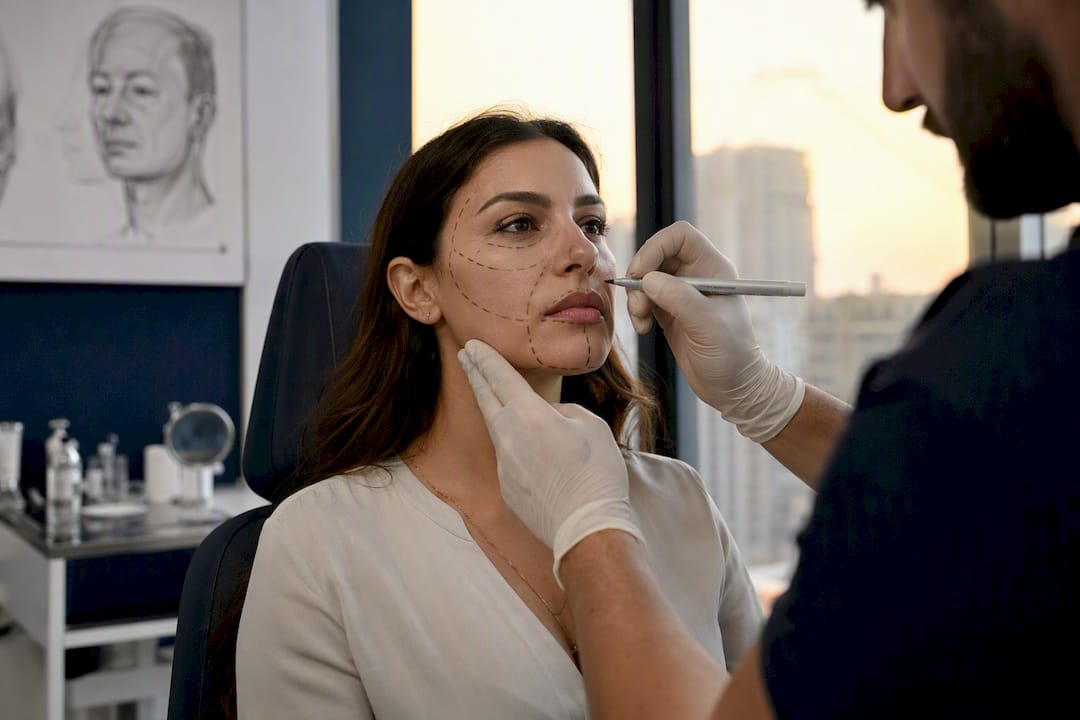
On the body, abdominoplasty (tummy tuck) with liposuction is arguably the most requested combination in aesthetic surgery, contouring the abdomen and flanks together for a smoother overall line. The so-called “mummy makeover” extends this further, blending abdominal work with breast augmentation or a breast lift to address changes from pregnancy in a single recovery window.
Other combinations worth knowing about:
- Breast augmentation with mastopexy (breast lift), often paired with abdominoplasty for a fuller body contouring plan.
- Male chest reduction (gynaecomastia surgery) combined with flank or abdominal liposuction.
- A surgical procedure paired with immediate fat grafting, where fat removed from one area is used to add volume elsewhere.
- Minor skin procedures, such as scar revision, sometimes added on when they involve minimal extra operative time.
Why do patients and surgeons choose to combine procedures?
The appeal is practical as much as aesthetic. Combining procedures means one anaesthetic episode rather than two, and one overall recovery period instead of stretching healing across separate surgeries months apart.
There are financial reasons too. A single anaesthesia fee and one hospital stay usually work out cheaper than paying for two separate episodes, and patients only need to take one block of time off work or away from family responsibilities. Surgeons also point to a genuine clinical advantage: working on related areas together, such as the abdomen and breasts in a mummy makeover, tends to produce more harmonious, coordinated contouring than treating them months apart.
- Fewer anaesthetic episodes overall.
- Reduced total time away from work or caring duties.
- Potentially lower combined cost versus two separate procedures.
- More consistent, coordinated aesthetic results across related areas.
Pro Tip: Combining procedures saves time, but it should never be the deciding factor over what your surgeon considers medically sound for your body.
What are the risks of combining plastic surgery procedures?
The evidence here is worth taking seriously. A retrospective analysis of 670 patients found that combined aesthetic procedures carried a markedly higher complication rate than single procedures, with rates of 49.1% versus 26.3% in that cohort. The same research flagged abdominoplasty combined with liposuction or breast surgery as a particularly high-risk pairing.
Several factors drive this increased risk:
- Total operative time. Longer procedures under general anaesthetic raise the risk of blood clots and other complications.
- Patient health. Higher BMI, smoking status, and existing conditions like diabetes all compound risk when procedures are stacked.
- Procedure complexity. Combining two technically demanding procedures multiplies the chance something needs closer monitoring afterwards.
Before agreeing to any combination, ask your surgeon directly: what is my individual risk profile, and does it change if we stage these procedures instead?
Pro Tip: Be wary of clinics offering combined-procedure discounts at group events or through time-limited promotions. Reputable surgeons assess you individually, not on a sales timetable.

How do surgeons decide if a combined approach suits you?
Surgeons work through a structured assessment before agreeing to any combination, and a good clinic will never skip these steps to save time.
Preoperative assessment typically covers medical history, BMI, an anaesthetic review, and blood tests or imaging where relevant. Many surgeons set a personal cap on safe operative time and will recommend staging procedures rather than combining them if that limit would be exceeded. This is a normal, responsible outcome, not a failure of planning, and Clinicgroup’s guide to pre-surgery consultations walks through what that assessment involves in more detail.
Questions worth raising at consultation:
- How many times have you performed this specific combination together?
- What is the estimated total operating time for both procedures?
- What complication rates apply specifically to this combination, not just each procedure alone?
You should also expect a clear consent process and a genuine cooling-off period. NHS guidance is explicit that patients deserve time to reflect and clear information on risks before committing, and a surgeon who rushes you past that stage is not acting in your interest.
What does recovery look like after combined surgery?
Recovering from two procedures at once follows a broadly predictable pattern, though it varies by the exact combination.
In the first 72 hours, expect closer monitoring, more pain management, and limited mobility across multiple surgical sites. The first two weeks bring gradual improvement, with drains and compression garments typically still in use and follow-up appointments scheduled to check healing. By four to twelve weeks, most patients return to normal activity, though final results at the deeper tissue level often take longer to settle.
- First 72 hours: rest, monitoring, and pain control take priority.
- First two weeks: garments, drain care, and short follow-up visits.
- Four to twelve weeks: gradual return to normal activity and exercise.
- Arrange help at home for at least the first week.
- Confirm 24/7 contact arrangements with your clinic for urgent questions.
- If travelling for treatment, build in extra recovery days before flying home, as covered in Clinicgroup’s aftercare guide for medical tourists.
What drives the cost of combined procedures?
Combining procedures changes the cost structure in ways worth understanding before you commit.
Typical cost elements include the surgeon’s fee, theatre and anaesthesia charges, any implants or consumables, aftercare, and potentially extra inpatient time if recovery needs closer supervision. You may save on some fixed costs, such as a single anaesthesia charge instead of two, but if complications arise, the higher risk profile of combined procedures can add unplanned costs.
Because these are almost always aesthetic rather than reconstructive procedures, NHS commissioning guidance confirms cosmetic surgery is rarely publicly funded, so budgeting privately is the reality for most patients.
- Build in a contingency for staged follow-up work if your surgeon recommends it.
- Factor in travel, accommodation, and aftercare if treating abroad.
Pro Tip: Ask for a written cost breakdown covering every fee separately, not a single bundled figure, so you can see exactly what changes if your plan is adjusted.
A clinician’s view on where the safety line sits
Staging procedures instead of combining them is not a compromise. It is often the more responsible choice, and any surgeon worth trusting will tell you so even if it means less revenue from a single booking. Patient selection matters more than convenience, and a clinic that rushes consent or brushes past your medical history is not one you want operating on you twice in one session. Clinicgroup works only with verified, board-certified specialists precisely because combined procedures demand that level of judgement, backed by proper logistics and aftercare support throughout your journey.
How Clinicgroup supports patients considering combined procedures
Deciding whether to combine procedures is easier with the right support around you, not just a surgeon’s opinion in isolation. Clinicgroup connects you with verified clinics and board-certified specialists across Albania and Dubai, with transparent pricing set out before you travel, so you know what a combined plan costs against separate procedures at home. Every treatment journey includes clinic matching based on your specific combination request, travel logistics, partner hotel arrangements, and structured aftercare once you are home. If you are weighing whether a combined approach suits your circumstances, explore Clinicgroup’s plastic surgery services and request an initial consultation to get a clear, individualised assessment before you decide anything.
Sources
These are the sources behind the safety guidance and figures used throughout this article:
- Two procedures in one? Why patients are opting to combine plastic surgery procedures when going under the knife
- Combined aesthetic surgeries: risk factors and complication rates (PubMed entry)
- Is a cosmetic procedure right for me? - NHS
This article is general information, not a substitute for advice from a qualified doctor. Consult a qualified healthcare professional about your own circumstances before acting on anything here.
FAQ
Is it safe to combine two plastic surgery procedures?
It can be, provided your surgeon confirms your health, BMI, and total operative time fall within safe limits. Some pairings, particularly abdominoplasty with liposuction or breast surgery, carry higher documented complication rates, so an individual risk assessment matters more than convenience.
What is the most common plastic surgery combination?
Abdominoplasty combined with liposuction is among the most frequently requested pairings, along with breast procedures combined into a mummy makeover. On the face, facelift with blepharoplasty and rhinoplasty with chin augmentation are common choices.

Why do surgeons sometimes refuse to combine procedures?
Surgeons decline combinations when total operative time would exceed safe limits, or when a patient’s health profile, such as high BMI or smoking status, raises the risk of complications too far. Staging procedures separately is often the safer, more responsible route in these cases.
Does combining procedures save money?
It can reduce some fixed costs, like a single anaesthesia fee and one hospital stay, but if complications occur, the higher risk profile of combined surgery can add unplanned expense. A full written cost breakdown before committing helps you plan realistically.
How does Clinicgroup help patients considering combined surgery?
Clinicgroup matches patients with verified, board-certified surgeons experienced in specific procedure combinations, provides transparent pricing, and coordinates travel, accommodation, and aftercare throughout the treatment journey.