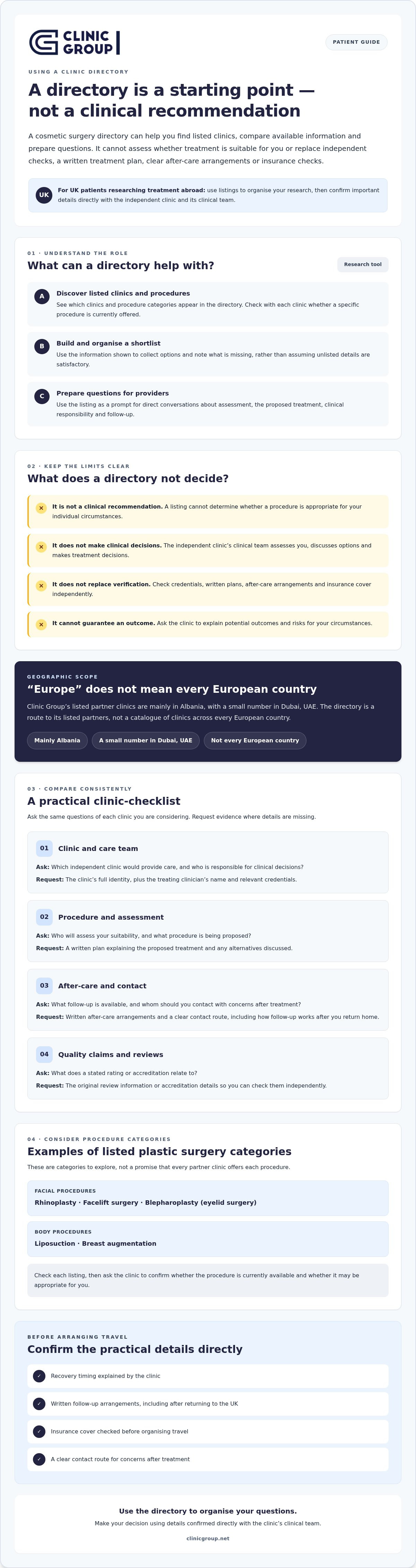
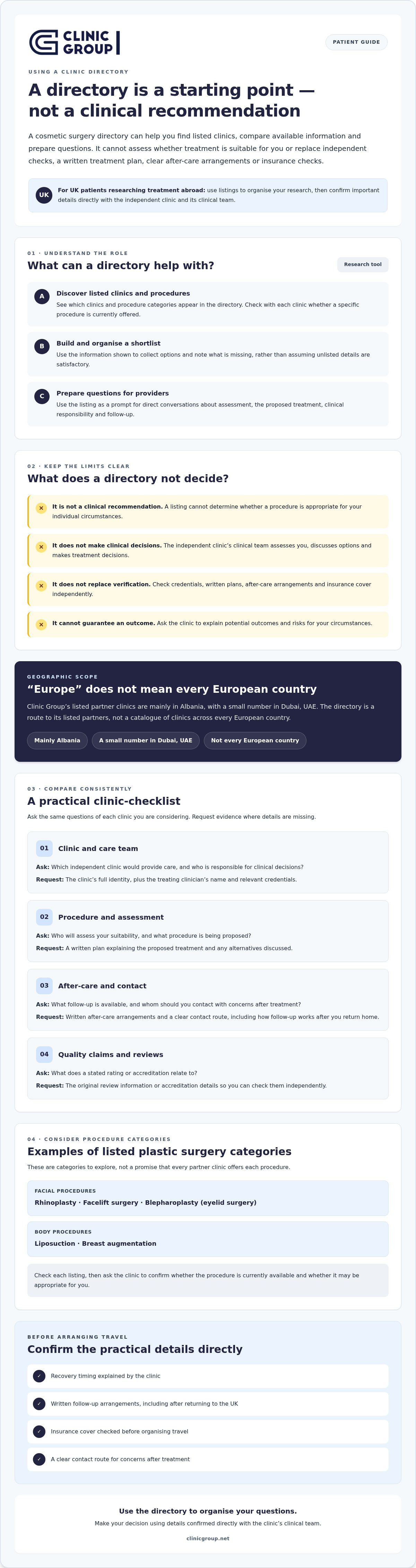
What can a cosmetic surgery directory Europe actually tell you? It can help you find and compare listed clinics, see which procedures are available and prepare questions before making contact. It can’t replace independent checks of clinical credentials, a written treatment plan, after-care arrangements or insurance cover.
Comparing listings isn’t always straightforward: details may be presented differently, and it can be hard to know what to verify before arranging treatment abroad. This guide explains what a directory can and can’t do, and gives you practical questions to use when assessing clinics and planning your next steps.
It also sets out what to confirm with a provider before booking, including who will make clinical decisions, what your written plan covers and how follow-up care will work once you return to the UK. Clinic Group’s listed partner clinics are almost entirely in Albania, with a small number in Dubai, UAE, so its directory doesn’t represent clinics across every European country. Use it to build a shortlist, then make an informed decision based on the details you confirm directly.
Key Takeaways
- A cosmetic surgery directory Europe can help you discover listed clinics and compare options, but it isn’t a clinical recommendation.
- Compare listings using the same questions, and ask for evidence when key details are missing.
- Confirm who will assess your suitability, make treatment decisions and provide your written plan before booking.
- Check recovery timing, follow-up arrangements and insurance cover before organising travel.
- Clinic Group’s directory can help you explore partner clinics, mainly in Albania, and prepare questions for your next steps.
What does a cosmetic surgery directory in Europe do?
A cosmetic surgery directory in Europe is a discovery and comparison resource. It brings together listed clinics and procedure information to help patients organise an initial shortlist. It isn’t a clinical recommendation and can’t determine whether a procedure is suitable for you. Independent partner clinics assess patients, make clinical decisions and provide treatment.
For UK patients searching “cosmetic surgery directory Europe”, it helps to treat listings as a research tool, not a decision made on your behalf. A directory can help you see which procedures are listed and prepare questions for providers. You’ll still need to discuss your health, expectations and options directly with a clinic’s clinical team. The clinic, not the directory, is responsible for assessing your individual circumstances and explaining potential outcomes and risks.
Which cosmetic surgery services can a directory help you explore?
Listed treatment categories may include facial procedures such as rhinoplasty, which changes the shape of the nose, and facelift surgery, which aims to address visible signs of ageing in the face. Body procedures may include liposuction, which removes deposits of fat from selected areas, and breast augmentation. Blepharoplasty, or eyelid surgery, may also appear as a listed category. These are areas to explore, not a promise that every partner clinic offers each procedure.
For an introductory overview of the specialty, you can read about understanding plastic surgery, including how cosmetic surgery fits within the wider field. Clinic Group’s plastic surgery listings can help you review the categories available through its partner network. Check each listing and ask the clinic to confirm whether the specific procedure is currently offered and whether it may be appropriate for you.
Does a European directory include clinics across every country?
No. “Europe” in a directory’s title doesn’t mean that clinics in every European country are represented. Clinic Group’s partner clinics are mainly in Albania, with a small number in the UAE. Its directory should therefore be understood as a route to those listed partners, rather than a catalogue of clinics across Europe.
Before contacting a provider, note the clinic’s location and ask which independent clinical team would assess and treat you. A listing can organise your research, but it can’t confirm medical suitability, guarantee an outcome or replace a direct consultation. Keep those limits in mind as you build a shortlist and compare the information each clinic provides.
How can you compare cosmetic surgery directory listings responsibly?
Use the same checklist for every clinic you’re considering. A cosmetic surgery directory Europe can help you organise information, but listing descriptions and promotional claims aren’t the same as evidence from the clinic or an independent source. Record missing details as questions to follow up, rather than assuming they’re satisfactory.
| What to compare | Question to ask | Evidence to request |
|---|---|---|
| Clinic and care team | Which independent clinic would provide care, and who is responsible for clinical decisions? | The clinic’s full identity and the name and relevant credentials of the treating clinician. |
| Procedure and assessment | Who will assess my suitability, and what procedure is being proposed? | A written plan from the clinic that explains the proposed treatment and any alternatives discussed. |
| After-care and contact | What follow-up is available, and whom should I contact with concerns after treatment? | Written after-care arrangements and a clear contact route, including how follow-up will work when you return home. |
| Quality claims and reviews | What does a stated rating or accreditation relate to? | The original review information or accreditation details, which you can check with the relevant organisation. |
What clinic details should you check before making a shortlist?
Separate information shown in a directory from details confirmed directly by the clinic. Ask who would treat you, who would make clinical decisions and how your consultation will assess your individual circumstances. Request the treating clinician’s relevant credentials from the clinic, alongside a written plan describing the proposed procedure. Confirm follow-up arrangements and a contact route before you shortlist a provider.
If a credential or other detail isn’t listed, mark it as “to confirm”. Don’t fill gaps with assumptions or treat a directory entry as proof of suitability. The European Society of Plastic, Reconstructive & Aesthetic Surgery offers patient information to help people find a European board-certified plastic surgeon; check any details relevant to your shortlisted clinician directly with the appropriate source.
How should you interpret reviews and quality claims?
Ratings can offer one perspective on patient experiences, but they don’t establish that a clinic is right for you or predict your result. Check what an accreditation applies to, then verify the claim with the organisation named. If a listing doesn’t provide review numbers, success rates or credentials, don’t infer them. Clinic Group’s guide on how reviews shape clinic selection in Europe can help you consider ratings alongside other information.
For a starting point, you can browse Clinic Group’s listed clinics and services, then apply the same questions to each relevant listing.
What questions should you ask before choosing a listed clinic?
A directory can help you identify clinics to contact, but it can’t assess your health or confirm whether surgery is suitable for you. Ask the independent clinic directly, and keep its answers with your records. Before booking, request a written treatment plan and itemised quote, then check that you understand who will provide care, what is included and how follow-up will work.
Who is the provider, and who makes clinical decisions?
Confirm the independent clinic that would provide your care and the treating clinician’s identity and relevant credentials. Ask who will assess you, explain the options and make decisions about treatment. A cosmetic surgery directory Europe listing is a starting point for these checks, not proof of a clinician’s qualifications or a recommendation for your individual needs.
How will the clinic assess your suitability?
Ask what information the clinic needs to understand your health and what the assessment will involve. Find out how the clinician will discuss individual risks, expected recovery and possible outcomes. Be prepared to share relevant medical information accurately. A directory or matching service can support your enquiries, but only the clinic’s clinical team can assess your suitability. Outcomes can’t be guaranteed.
What should the written plan and quote include?
Ask for the proposed procedure and responsibilities to be set out in writing before you commit. Check that the plan explains who is responsible for each part of your care and what follow-up arrangements have been agreed. Request an itemised quote and ask the clinic to clarify any unclear or excluded items. Don’t rely on verbal assurances if you need the details to make an informed decision.
A consultation is also a chance to raise concerns and check that you feel informed, rather than rushed. If you need clarification or reassurance, ask whether a second opinion is appropriate. Clinic Group’s guide to pre-surgery consultations offers further questions to consider before proceeding.
How will after-care and insurance work?
Before booking, get the clinic’s after-care instructions and contact arrangements in writing. Ask what follow-up is available after you return home, who will provide it and how to reach the clinic if you have concerns. Check directly with your insurer whether your policy covers elective treatment and any complications. Don’t assume cover applies; ask for confirmation of the terms and any exclusions before making travel plans.
How do travel, timing and follow-up affect your clinic decision?
Travel plans should follow clinical advice, not set the pace for treatment. Timing, recovery and readiness to travel depend on the procedure and the clinic’s assessment of your individual circumstances. Before booking, agree the clinical plan with the independent clinic and confirm which travel arrangements, if any, are coordinated separately.
Use this sequence to plan carefully:
- Consult the clinic. Discuss your health, the proposed procedure, individual risks and the recovery guidance relevant to you. Ask the clinical team when it considers travel appropriate.
- Get key details in writing. Confirm appointment dates and obtain the clinic’s written treatment plan before arranging non-refundable travel or accommodation.
- Clarify logistics. Ask who, if anyone, coordinates accommodation, transfers and appointment arrangements. Support and availability may vary by clinic, so confirm responsibilities directly rather than assuming they are included.
- Check booking terms and insurance. Review cancellation and change terms with the relevant providers. Ask your insurer directly whether your policy covers elective treatment and related complications, and request confirmation of any limits or exclusions.
- Agree follow-up before departure. Find out who will answer questions after treatment, how to contact them and what follow-up the clinic offers once you’ve returned home.
What should you confirm before arranging travel?
Keep medical decisions separate from travel coordination. A patient coordinator or medical concierge may help organise logistics where that support is available, but this isn’t clinical advice and doesn’t replace the treating team’s instructions. Before you commit, make sure the clinic has confirmed your appointments and plan, and that you know who is responsible for each practical arrangement.
How can you plan follow-up after returning home?
Ask the partner clinic to describe its follow-up arrangements in writing, including how to raise concerns and who will respond. Clarify whether follow-up is remote or requires another appointment, and what arrangements apply after you’re back in the UK. Don’t assume another health service will automatically manage complications from elective treatment abroad. Consider how you would seek appropriate help and confirm this plan with the clinic before travelling.
Travel coordination can make the process easier to organise, but the clinic remains responsible for clinical care and medical after-care. A directory such as a cosmetic surgery directory Europe can help you identify providers to contact; your treatment schedule and travel readiness must be agreed with the treating team. For further planning advice, read this guide to after-care in the UK following surgery abroad.
How can Clinic Group’s cosmetic surgery directory help with your next steps?
Clinic Group’s cosmetic surgery directory can help you move from searching to contacting relevant independent partner clinics. You can explore listed treatments, request a free consultation or case review, and receive support with clinic matching and travel coordination. This support can help organise your enquiries, but it isn’t a clinical assessment: the clinic’s own team must assess suitability, recommend care and make treatment decisions.
What happens after you request a consultation?
A consultation or case review can help clarify what you’re looking for and identify relevant options among the listed partner clinics. It’s an opportunity to organise your questions and understand possible next steps, not confirmation that a procedure is suitable. The independent clinic remains responsible for assessing your circumstances and deciding what care, if any, it can offer.
Once you contact a clinic, ask its clinical team to discuss your needs and provide the proposed plan in writing. Request an itemised quote directly from the clinic and check that you understand the proposed procedure, responsibilities and follow-up arrangements. If you’d like another clinical view, ask about arranging a second opinion. Any matching or coordination is support, not a substitute for that independent medical advice.
What should you have in writing before you book?
Before making a commitment, make sure you have clear written details from the clinic covering:
- Provider and care: the independent clinic responsible for treatment, the proposed procedure and who will make clinical decisions.
- Plan and quote: the treatment plan and an itemised quote, with any questions or unclear terms addressed by the clinic.
- Responsibilities: who is responsible for appointments, travel arrangements and communication, and which arrangements are not included.
- After-care and insurance: the clinic’s follow-up terms and contact route, plus confirmation from your insurer about whether complications related to elective treatment are covered.
Travel coordination may help with practical arrangements, but it isn’t clinical care or after-care. Partner clinics are independent and responsible for treatment decisions and patient care. If a detail is missing or unclear, ask the relevant clinic or service to confirm it in writing before booking.
This article provides general information, not medical advice. A directory or matching service cannot establish your individual medical suitability, and outcomes cannot be guaranteed. Use the information to prepare your questions, then discuss your options directly with the clinic’s clinical team.
Take your next step with clear questions
A cosmetic surgery directory Europe can help you discover listed clinics and organise your research, but it can’t decide whether a procedure is right for you. Compare providers using the same questions, verify clinical details directly, and ask the independent clinic for a written treatment plan and itemised quote.
Before booking, make sure you understand who will provide care, what follow-up is available and how to contact the clinic after treatment. Check insurance cover directly with your insurer, including any terms relating to complications. These practical checks can help you make a more informed decision without rushing.
Clinic Group connects patients with independent partner clinics and does not provide clinical care. Free consultation and coordination support may be available, depending on the service requested; this support can help with next steps, but clinical decisions remain with the clinic.
Take the time you need to ask questions and review the answers. A careful, informed choice is a positive next step.
Frequently Asked Questions
What is a cosmetic surgery directory in Europe?
A cosmetic surgery directory in Europe helps patients discover listed clinics and compare treatment information when building an initial shortlist. It can make research easier, but it isn’t a medical assessment and can’t confirm that a clinic or procedure is right for you. Check provider details with the independent clinic, discuss your individual circumstances and potential risks with its clinical team, and request a written plan before deciding whether to proceed.
How do I check whether a cosmetic surgery clinic listed in a directory is verified?
Ask the directory what “verified” means, which clinic or clinicians the term applies to, and what evidence supports any stated credentials. Then confirm relevant details with the clinic and the professional or accrediting organisation named. A listing alone doesn’t prove clinical quality, personal suitability or likely results. Ask the clinic for written information about the proposed care and after-care, and note any details that remain unconfirmed before you make a decision.
Can a directory tell me which cosmetic surgery procedure is right for me?
No. A directory can help you find listed clinics and prepare questions, but it can’t assess your health or recommend a procedure for you. An appropriately qualified clinician at the independent clinic needs to consider your circumstances and discuss suitability. Ask about potential risks, alternatives and expected recovery, and consider seeking a second opinion if you’re unsure. Directory information is general guidance, not medical advice, and shouldn’t replace a clinical consultation.
What should I ask a clinic before booking cosmetic surgery abroad?
Ask which independent clinic and clinician would provide your care, how your suitability will be assessed, and what the proposed treatment plan covers. Request an itemised quote and written details of responsibilities, after-care and follow-up. Clarify whom to contact with questions or concerns. Check directly with your insurer whether elective treatment and complications are covered. Make travel arrangements only after the clinic has answered your questions clearly and you’ve reviewed the written terms.
Does Clinic Group provide cosmetic surgery?
No. Clinic Group is a directory and coordination platform, not a treating clinic. Cosmetic surgery and clinical decisions are handled by independent partner clinics, which are responsible for patient care. Depending on the service requested, Clinic Group may provide free consultation and coordination support, such as clinic matching or case review. This support doesn’t determine medical suitability. Discuss your circumstances with the clinic’s clinical team, verify relevant details and obtain a written plan before booking.
Are Clinic Group’s partner clinics located throughout Europe?
No. Clinic Group’s partner network isn’t present in every European country. Its partner clinics are almost entirely in Albania, with a small number in the UAE. Check the current directory to see which options are listed, and confirm directly with the independent clinic whether the relevant procedure is available. A directory described as European doesn’t mean it lists providers across the whole continent or that a clinic is available in every country.
Can outcomes from cosmetic surgery abroad be guaranteed?
No. Individual surgical outcomes can’t be guaranteed, and a directory listing doesn’t change this. Discuss potential benefits, risks, alternatives and recovery with the independent clinic’s clinical team, which can assess your circumstances. Before booking, obtain the treatment plan and after-care arrangements in writing, and ask your insurer whether complications are covered. This article provides general information only, not medical advice; a direct consultation is needed to discuss your individual situation.

Article by
Clinic Group Editorial Team
The Clinic Group editorial team publishes clear, practical guides for UK and EU patients researching medical travel — from dental implants and hair transplants to plastic surgery and eye care — with a focus on verified clinics, transparent “from” pricing, and safe planning.
Disclaimer
This article is for general information only and is not medical advice, diagnosis, or a substitute for an in-person consultation with a qualified clinician. Treatment suitability, risks, timelines, and costs vary by individual. Clinic Group connects patients with independent clinics; those clinics are responsible for clinical care. Always verify credentials, obtain a written treatment plan and itemised quote, and confirm aftercare arrangements and travel insurance cover (elective procedures are often excluded) before booking. Outcomes cannot be guaranteed.