A dental holiday can bring planned treatment and time away together, but the clinical plan needs to shape the trip. Combining a holiday with dental work may involve treatment, travel arrangements and leisure time, with the balance depending on the procedure and its appointment schedule. It is worth understanding those moving parts before deciding whether this approach suits your plans.
For UK patients, combining a holiday with dental work means planning more than an appointment around travel dates. Consider how treatment affects time away from work, the trip itself and follow-up after you return home. A clear treatment plan helps you weigh these practicalities before booking.
This guide explains what dental holiday packages may include and how to think through the relationship between appointments and sightseeing. It also covers treatment pathways, destination considerations and aftercare planning for your return to the UK. By the end, you’ll have a clearer basis for discussing your options and deciding what information you need before making arrangements.
Key Takeaways
- Dental holiday packages may combine treatment with accommodation, transport and excursions, but the planned appointments should shape the itinerary.
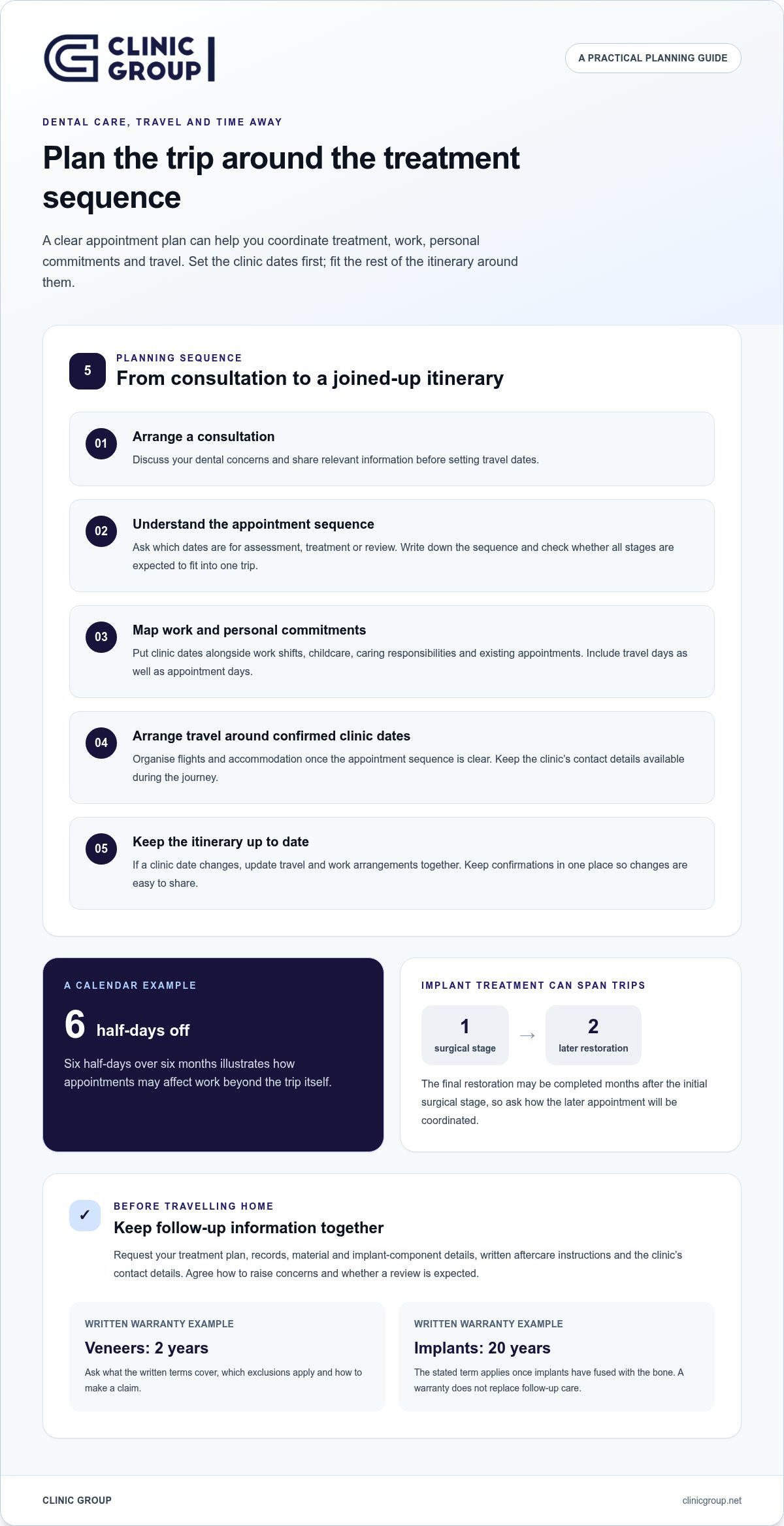
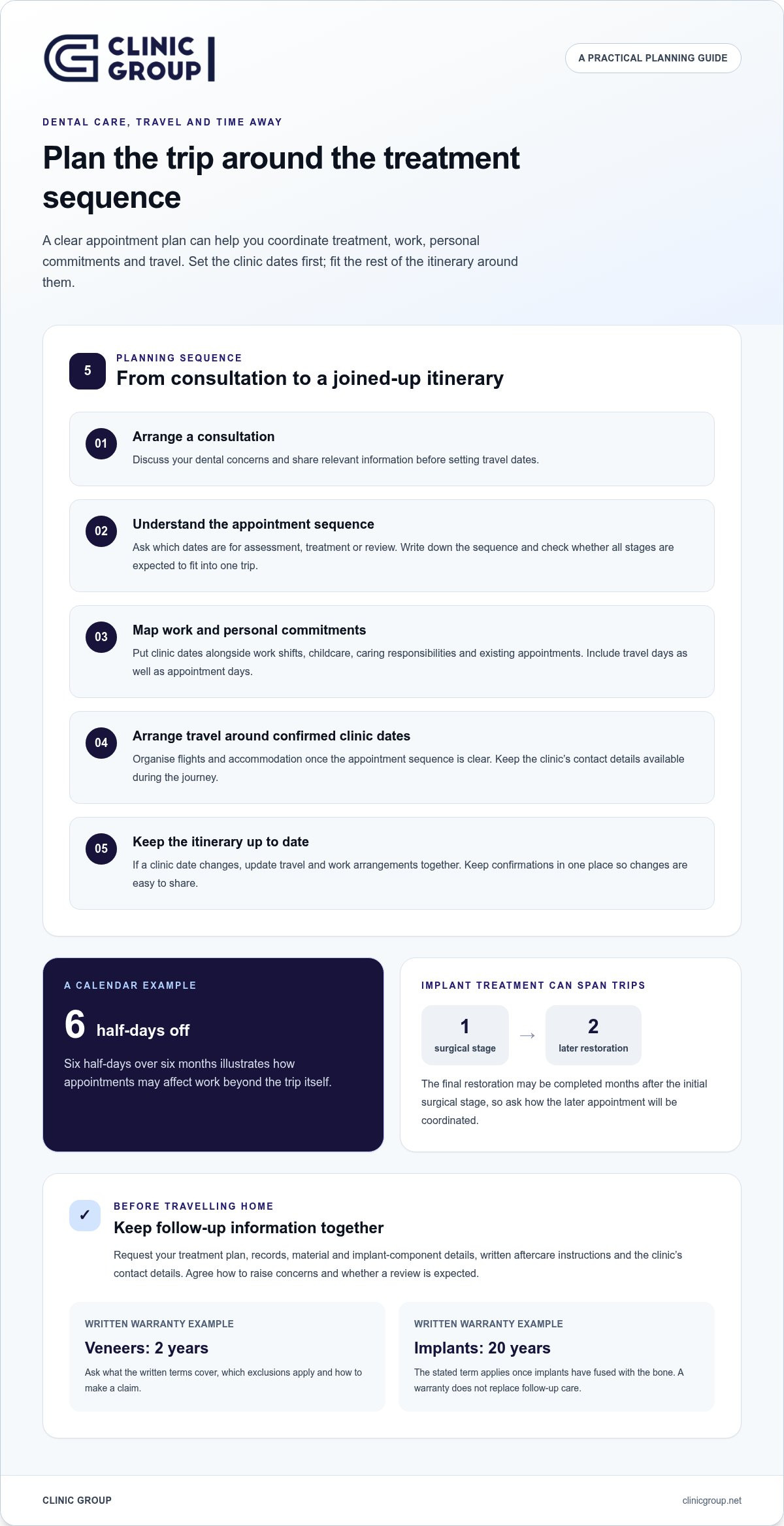
- Implant treatment can involve two trips, with the final restoration completed months after the surgical stage.
- Veneer and crown appointments may fit within a short stay, so leave room in the schedule for treatment and recovery.
- Plan work commitments around consultations, procedures and follow-up, rather than assuming every appointment can be completed in one visit.
- On returning to the UK, follow the treating dentist’s aftercare instructions and contact the clinic if you have concerns.
Aftercare and support after returning to the UK
Before booking, ask for the materials used, written warranty terms, copies of your treatment records and a clear follow-up plan. For example, the stated written warranty for veneers is 2 years; for implants, it is 20 years once they have fused with the bone.
Ask the dentist abroad to explain what each warranty covers, how to make a claim and which exclusions apply. A warranty does not replace follow-up care, so find out who will answer questions after you return. The guide to dental warranties can help you understand the terms and questions involved.
Before travelling home, request your records: the treatment plan, details of materials and implant components, and notes on the work completed. Keep them with your aftercare instructions and the clinic’s contact details. If a UK dentist later assesses your teeth, these documents provide useful background.
Agree follow-up arrangements before treatment begins. Ask whether the treating clinic expects a review, how to report concerns and which contact route to use. For implant treatment, ask how the clinic will coordinate the later restoration stage, which follows the initial surgical stage. Keep appointment correspondence so you can distinguish planned reviews from new concerns.
If you develop pain after treatment, follow the dentist’s aftercare instructions and contact the clinic with your concerns. Describe the problem clearly, including when it began and which part of your mouth is affected. If you seek an assessment from a UK dentist, bring your records and explain what procedure you had abroad. This gives the dentist useful context beyond your recollection.
- Save the clinic’s written aftercare instructions and contact details.
- Keep treatment records and material information together for any UK appointment.
- Make sure you understand the warranty terms, exclusions and claims process.
- Record planned follow-up appointments and the clinic’s instructions for raising concerns.
- Contact the treating clinic if pain occurs, and follow its aftercare guidance.
These preparations can make the return-home stage easier to manage. Keep digital copies of your records as well as paper documents, and make sure a trusted family member can find the clinic’s contact details if needed. When comparing dental plans abroad, consider how follow-up, records and written warranty terms fit together, not just appointment dates. Clear documentation helps you explain your treatment and direct questions to the clinic.
Arranging appointments around work and personal schedules
Start by matching the treatment plan to your work calendar and personal responsibilities. Before booking travel, attend a consultation, discuss the proposed care and understand the appointment sequence. Then coordinate clinic dates with leave, childcare, caring duties and other commitments. This helps prevent a flight or work deadline from dictating treatment decisions.
For example, six half-days off over six months illustrates how dental appointments can affect work beyond the trip itself. If your rota changes regularly, compare proposed appointment dates with confirmed shifts before arranging travel. If you’re self-employed, identify client commitments that could be moved and periods when taking time away would be difficult.
- Arrange a consultation. Discuss your dental concerns and provide relevant information before setting travel dates.
- Understand the proposed schedule. Ask which appointments involve assessment, treatment or review, and record each date.
- Map personal commitments. Add work shifts, childcare, caring responsibilities and existing appointments to the same calendar.
- Plan travel around clinic visits. Organise flights and accommodation once the appointment sequence is clear.
- Keep the itinerary current. If a clinic date changes, update travel and work arrangements together.
A patient with fixed weekly shifts can compare the clinic’s proposed dates with their rota. A parent can use the same calendar to coordinate childcare for each appointment. Include travel days as well as appointment days to avoid overlapping commitments. Keep confirmations together so you can share changes easily with an employer or family member.
Travel arrangements should make it easier to attend appointments, not squeeze them into an inconvenient gap. Check that your arrival plans allow you to reach the clinic at the agreed time, and keep its contact details accessible during the journey. If several appointments are planned, record their sequence clearly. A written itinerary separates confirmed arrangements from personal activities that can be moved.
When considering dental tourism, ask how the consultation, treatment dates and any follow-up appointments fit together. Don’t assume every stage will happen in one trip. Allow time for practical arrangements at home, such as notifying your employer or organising help with family responsibilities. A dental itinerary guide can help you organise these details.
Once the calendar is coherent, review it with anyone whose plans depend on yours. This final step can reveal a clash before travel is booked. For information to support your planning, explore dental treatment options.
Combining dental care with sightseeing
A dental holiday can include sightseeing, but the clinic schedule should anchor the itinerary. Dental implant holiday packages may include hotel accommodation, transport and tourist excursions. These arrangements can simplify logistics, but they don’t mean every day is suitable for planned activities.
Some dental procedures abroad may be completed in one or two short visits, but the treatment type and appointment sequence determine how much free time remains. If you’re travelling for an implant, for example, build the trip around the clinical plan rather than assuming sightseeing can fill every gap.
Treat the package as a framework, not a fixed holiday timetable. Check which practical arrangements are included, then map clinic visits, transfers and excursions onto the same itinerary. A transfer between your accommodation and the clinic may affect the time available for an activity, even if both appear in the package.
- Place confirmed clinic appointments first on the itinerary.
- Keep travel between the hotel, clinic and planned excursions visible in the schedule.
- Choose activities that can be moved if appointment timings change.
- Leave unplanned space rather than booking every part of the day.
For a stay in Tirana, for instance, you could plan city sightseeing around the clinic timetable and the location of your accommodation. Avoid arranging a non-refundable excursion immediately after an appointment. A flexible plan makes it easier to prioritise clinic visits while still enjoying the holiday.
Ask how excursions are arranged and whether transport is shared or scheduled around clinic appointments. These details shape the practical flow of the day. A guided outing may have a set departure time, while independent sightseeing can be easier to move. If the package includes transport, clarify which journeys it covers, such as clinic transfers or trips to tourist sites.
Build the itinerary in stages: mark appointment times, add necessary travel, then consider sightseeing in the remaining gaps. Follow the treating dentist’s guidance about activities around treatment. If an excursion conflicts with that guidance, the appointment and recovery instructions take priority.
A holiday should not make the treatment timetable harder to manage. Patients combining dental care with a break can create a more balanced trip by treating sightseeing as flexible, rather than expecting every day to be free. The most useful package is one whose accommodation, transport and excursions fit around the dental plan, not compete with it.
Popular dental implant holiday destinations
For UK patients considering dental implants abroad, destination choice affects more than the flight. Clinic location, appointment planning, accommodation and follow-up arrangements all shape the trip. Clinic Group’s partner clinics are almost entirely in Albania, particularly Tirana, with a small number in Dubai, UAE. These are the destinations available within its network.
Tirana may suit patients who want to centre treatment and travel arrangements in Albania’s capital. Before planning sightseeing, map the clinic, accommodation and airport journeys together. Ask how appointment dates fit the proposed treatment plan and what travel arrangements are available. The guide to dental implants in Albania offers further context about this destination.
Dubai is another location represented in the partner network. It may suit a patient whose travel plans already focus on the UAE, but the same questions apply: how will clinic visits fit the stay, and what arrangements support follow-up? Compare the practical itineraries for Dubai and Tirana rather than choosing solely on the appeal of a holiday destination.
Dental implant treatment can extend beyond the initial appointment. Before treating any destination as a convenient short break, consider how future visits would work. Ask the clinic to explain the planned stages, which appointments require attendance and how follow-up is arranged. Keep these details with your flight and accommodation plans.
- Location: map the clinic’s position against your accommodation and arrival arrangements in Tirana or Dubai.
- Appointment plan: understand the proposed treatment stages before deciding how long to stay.
- Continuity: establish how questions and follow-up are handled after returning to the UK.
- Trip flexibility: avoid building a fixed holiday itinerary around appointment times that may change.
Use the same criteria for both destinations. A patient comparing Tirana and Dubai, for example, can lay out clinic appointments, transfers, accommodation and return travel side by side. This makes practical differences visible without relying on assumptions about convenience or treatment quality. A destination is workable only if its schedule supports the dental plan.
The key is to compare treatment logistics, not just locations on a map. Albania, particularly Tirana, is the main focus of the partner network, while Dubai is also represented. For patients considering dental implants abroad, the right destination is one where clinic arrangements, travel plans and follow-up fit the treatment journey.
Which dental treatments are commonly combined with a holiday abroad?
Dental implants, crowns, bridges and orthodontics are among the treatments patients may plan alongside travel abroad. The practical fit depends on the treatment plan: some appointments may be grouped during a stay, while others require further visits. A consultation should establish the proposed treatment, appointment sequence and any later stages before you arrange travel.
Implants need particularly careful scheduling. Treatment involves two trips: the initial surgical stage, followed by final restorations a few months later. An implant holiday therefore does not usually complete every stage in one uninterrupted visit. Plan for the initial trip and the later return separately, and consider how both fit with work and personal commitments.
Crowns and bridges cover or replace damaged or missing teeth, while orthodontics aims to align teeth. These treatments have different appointment requirements, so they are not interchangeable holiday options. If you’re considering a crown, discuss the planned preparation and fitting appointments. If you’re considering orthodontics, understand how ongoing appointments fit into the treatment plan.
- Implants: account for the surgical stage, the later restoration and the separate return trip.
- Crowns: clarify the proposed appointment sequence and what happens during each visit.
- Bridges: discuss how the replacement teeth will be planned and fitted.
- Orthodontics: understand how continued treatment and appointments fit after the initial visit.
Veneers may also be discussed as part of a planned dental trip. They are thin coverings fitted to the front of teeth, and the dentist should explain the proposed work and its stages. Leave room for appointments rather than assuming treatment will fit around fixed sightseeing plans. The same principle applies to crowns and bridges: let the agreed clinical schedule guide your travel arrangements.
Before choosing treatment for a short stay, ask what can reasonably be completed during that visit and what must happen later. Request a written treatment plan naming each proposed procedure and appointment, then compare it with the length and structure of your trip. This helps you distinguish treatment that may fit within one journey from care requiring a return visit.
The key distinction is the treatment pathway, not simply the destination. Implant treatment may involve appointments at different stages, so consider whether you could return after the initial visit. Crowns, bridges, veneers and orthodontics each need a plan suited to the proposed work. Explore dental implant treatment information as you consider which pathway fits your travel plans.
Clinic Group: Dental Treatment Directory
Clinic Group’s Dental Treatment Directory helps UK patients explore dental treatments and partner clinics when planning care abroad. Its partner clinics are located almost entirely in Albania, particularly Tirana, with a small number in Dubai, UAE.
Use the directory and Medical Tourism Treatment Guides to compare treatment pathways, appointment planning and travel considerations. This is a useful next step once you’ve identified the treatment you want to explore and understand that implant care, for example, may involve separate visits.
Clinic Group provides directory and guide information, rather than delivering dental treatment. To explore combining travel with dental care, visit clinicgroup.net and browse the available information or request a free consultation.
Make your next step an informed one
Before booking travel, make a clear decision based on the dental plan: understand the proposed treatment, appointment sequence and follow-up arrangements. Combining a holiday with dental work works best when the clinical plan leads and the holiday fits around it. Keep your questions and treatment documents together so you can discuss them clearly.
Clinic Group’s Dental Treatment Directory can help you explore dental options and partner clinics. Its wider listings also include Hair Transplant Referrals and Plastic Surgery Provider Listings, alongside dental information. For this decision, focus on the dental pathway and the practical arrangements that matter to your plans.
Take time to compare the information and consider what you need from the treatment journey. A considered plan can help you approach the next conversation with greater clarity and confidence.
Your next step can be a calm, informed conversation about the options that fit your needs.
Frequently Asked Questions
What are some benefits of dental tourism?
Dental tourism lets patients consider treatment abroad while arranging travel and accommodation around clinic appointments. It can also offer access to a wider choice of clinics and treatment pathways. The practical benefit depends on the individual plan: compare the proposed care, travel arrangements and follow-up process, not just the destination. If you’re exploring implants, for example, account for later treatment stages before viewing the trip as a single holiday.
How soon can you travel after dental implants?
Patients are advised to wait 10-14 days after dental implants are fitted before travelling. This is a planning point, not a substitute for the treating dentist’s instructions. Before booking return travel, ask how the timing relates to your procedure and any follow-up appointment. Keep the clinic’s written guidance accessible, and contact the treating clinic if you have concerns about pain or recovery before travelling.
What is dental tourism and how does combining dental treatment with a holiday work?
Dental tourism means travelling abroad for dental care, with travel arrangements organised around appointments. Combining a holiday with dental work may involve accommodation, transport or sightseeing alongside treatment, but the clinical plan should determine the itinerary. For example, a traveller could keep activities flexible between appointments rather than schedule fixed excursions throughout the stay. The dentist’s instructions and appointment sequence guide what fits.
Which countries are popular for dental holidays from the UK, and what are typical travel costs?
Clinic Group’s partner network is centred mainly in Albania, particularly Tirana, and includes a small number of clinics in Dubai, UAE. Travel costs depend on your departure airport, dates, baggage and local transport, so there is no single typical figure. Compare the full journey for each destination, including flights, accommodation and clinic transfers, alongside the treatment schedule and follow-up plan.
What are the risks of having dental work abroad, including complications after returning to the UK?
Possible difficulties include needing advice after returning home, uncertainty about follow-up or travel plans conflicting with treatment needs. Keep the treating clinic’s contact details and written instructions accessible. If you experience pain, follow the dentist’s aftercare guidance and contact the clinic with concerns. Bring your treatment records to any UK dental appointment so the dentist can understand what work was completed abroad.
How many visits and how much recovery time do common dental treatments require?
The schedule depends on the procedure. Dental implant treatment may involve multiple stages, so plan travel around the treatment schedule and follow-up needs. Other treatment plans may fit into one or two short visits, but recovery needs vary with the work performed and the dentist’s instructions. Ask for the planned appointments and aftercare guidance in writing, then arrange leave and travel around them rather than assuming every treatment follows the same timetable.
Can a UK dentist provide aftercare for dental work done abroad, and what might it cost?
A UK dentist can assess a dental concern, but don’t assume corrective treatment will automatically be provided for elective work completed abroad. Care and any charges depend on the assessment and service provided; there is no general aftercare fee that applies to every case. Keep your treatment records, contact the clinic that performed the work and ask a UK dental practice about an appointment if you need a local assessment.
How much does dental work abroad cost compared with private treatment in the UK?
Costs vary by treatment, but the listed prices are generally lower abroad.

Article by
Clinic Group Editorial Team
The Clinic Group editorial team publishes clear, practical guides for UK and EU patients researching medical travel — from dental implants and hair transplants to plastic surgery and eye care — with a focus on verified clinics, transparent “from” pricing, and safe planning.
Disclaimer
This article is for general information only and is not medical advice, diagnosis, or a substitute for an in-person consultation with a qualified clinician. Treatment suitability, risks, timelines, and costs vary by individual. Clinic Group connects patients with independent clinics; those clinics are responsible for clinical care. Always verify credentials, obtain a written treatment plan and itemised quote, and confirm aftercare arrangements and travel insurance cover (elective procedures are often excluded) before booking. Outcomes cannot be guaranteed.