TL;DR:
- Proper dental aftercare is essential for quick and safe recovery after any dental procedure. Following tailored instructions helps prevent complications like dry socket, infection, and excessive bleeding.
Dental aftercare is defined as the set of care routines, instructions, and precautions patients follow after a dental procedure to support healing, prevent complications, and protect the results of their treatment. Whether you have had a tooth extraction, dental implants, orthodontic work, or treatment under sedation, the recovery process requires specific steps that go well beyond simply resting at home. Clinicians at institutions including the NHS, Cleveland Clinic, and Harvard School of Dental Medicine all emphasise that post-procedure care is not optional. Getting it right is the difference between a smooth recovery and a painful setback.
What is dental aftercare and what does it involve?
Dental aftercare refers to the full range of actions a patient takes in the hours, days, and weeks following a dental procedure. These actions cover pain management, oral hygiene, diet, physical activity, and scheduled follow-up appointments. The goal is to protect the surgical site, reduce the risk of infection, and give the body the conditions it needs to heal properly.
The core principles of post dental treatment care apply across most procedures:
- Pain management: Take prescribed or recommended pain relief as directed. Do not wait until pain becomes severe before taking medication.
- Oral hygiene: Continue brushing teeth gently, but avoid the surgical site on the first day. Rinse carefully and only when your clinician advises.
- Diet: Eat soft foods such as yoghurt, mashed potato, and soup. Avoid hard, crunchy, or chewy foods.
- Rest: Limit physical activity for at least 24 hours. Raised heart rate can increase bleeding at the surgical site.
- Medication adherence: Complete any course of antibiotics or antiseptic mouthwash as prescribed, even if symptoms improve quickly.
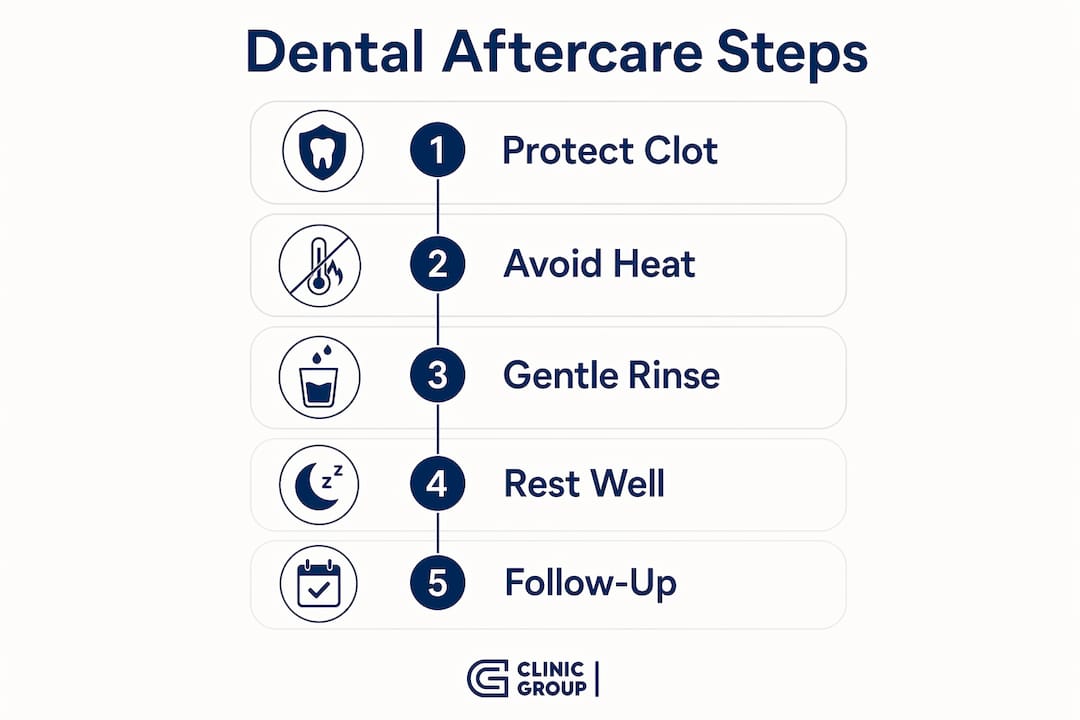
One of the most overlooked dental aftercare tips concerns the blood clot that forms in an extraction socket. Protecting this clot is the primary reason clinicians advise against using straws, smoking, or rinsing vigorously in the first 24 hours. The clot is not merely a sign of healing. It is the foundation of it.
Pro Tip: Write down your clinician’s aftercare instructions before you leave the appointment. Sedation and post-procedure discomfort can make it difficult to recall verbal guidance accurately.

Timing for saltwater rinses varies between providers. Some recommend starting 24 hours after surgery, while NHS guidance advises waiting 3–4 days before using a warm salty mouthwash. This variation highlights why following your own clinician’s specific instructions matters more than applying generic advice.
How does aftercare differ by procedure type?
Tailored dental aftercare produces better healing outcomes than generic instructions. The reason is straightforward: a tooth extraction creates an open socket, a dental implant involves titanium integration with bone, and sedation affects the entire nervous system. Each scenario demands a different recovery approach.
The table below summarises the key aftercare differences across common procedures.
| Procedure | Key aftercare priorities | Timing considerations |
|---|---|---|
| Tooth extraction | Protect blood clot, soft diet, no straws or smoking | Avoid hard foods for 24–48 hours; rinse after 24 hours or as advised |
| Dental implants | Gentle wound care, soft diet, no pressure on implant site | Follow-up checks over several weeks during osseointegration |
| Sedation or general anaesthesia | Supervised rest, no driving or machinery, escort required | Supervision needed for full 24 hours post-procedure |
| Orthodontic surgery | Manage swelling, follow dietary restrictions, attend review appointments | Recovery timelines vary; follow clinician’s written plan |
| Periodontal surgery | Careful hygiene around gum sites, prescribed rinses, avoid smoking | First 48 hours are the most critical for gum healing |
Extraction aftercare
Avoiding hot food and drinks on the day of surgery and hard or chewy foods for 24–48 hours reduces the risk of disturbing the extraction site. Stitches, where used, typically dissolve within 7–14 days. Patients should avoid poking the site with their tongue or fingers.
Sedation and general anaesthesia aftercare
NHS guidance is clear: patients must rest for the remainder of the day after treatment under general anaesthesia and must not operate machinery, cook, or carry out complex household tasks. A responsible adult must be present for the full 24 hours following the procedure. Many patients underestimate this requirement. Lingering sedation effects can impair judgement and coordination well beyond the point at which a patient feels alert.
Implant and orthodontic aftercare
Dental implant aftercare focuses on protecting the implant site from pressure and infection during the weeks when the implant integrates with the jawbone. Orthodontic and periodontal surgery aftercare involves careful cleaning around brackets or sutures and attending all scheduled review appointments. In both cases, the aftercare checklist for patients should be prepared before the procedure, not after.
What complications can arise without proper dental aftercare?
Complications from inadequate dental care instructions are preventable in the majority of cases. The most common problems include dry socket, infection, prolonged bleeding, and delayed healing. Recognising the warning signs early is the most reliable way to avoid a minor issue becoming a serious one.
Watch for the following signs and act promptly:
- Dry socket: A dull, throbbing ache that begins 2–4 days after extraction, often accompanied by a bad taste or odour. This occurs when the blood clot is lost or fails to form.
- Infection: Increasing pain, swelling, or redness after the first 48 hours, sometimes with fever or discharge from the site.
- Prolonged bleeding: Light oozing is normal for a few hours. Bleeding that continues beyond this or restarts heavily requires urgent attention.
- Excessive swelling: Some swelling is expected, but swelling that worsens after day two rather than improving is a warning sign.
- Numbness or altered sensation: Persistent numbness beyond the expected anaesthetic window should be reported to your clinician.
Smoking is one of the most significant risk factors for complications. NHS guidance advises avoiding smoking and vaping for at least 24 hours after extraction, and ideally longer. Nicotine restricts blood flow to healing tissue and dramatically increases dry socket risk.
When to seek urgent help: Contact your dental clinic or call NHS 111 if you experience severe or worsening pain after 48 hours, signs of infection, or bleeding that does not stop with gentle pressure. Keep your clinic’s emergency contact number saved before your procedure.
Pro Tip: The first 1–3 days post-procedure are the most critical window for recovery. Plan your schedule so you can rest properly during this period rather than returning to full activity too soon.
The best practices for dental healing consistently point to the same conclusion: small behavioural choices in the first 48 hours have a disproportionate effect on the overall recovery. Avoiding straws, refraining from vigorous rinsing, and keeping the site clean are not minor suggestions. They are the foundation of complication prevention.
How to arrange dental aftercare and follow-up appointments
Knowing how to arrange dental aftercare is as important as knowing what to do at home. Scheduled follow-up appointments allow your clinician to check healing progress, remove non-dissolvable stitches if needed, and identify any early signs of complications before they escalate.
A well-organised aftercare plan typically includes:
- A confirmed follow-up appointment booked before you leave the clinic on the day of treatment.
- Written aftercare instructions covering hygiene, diet, medication, and warning signs, given to you and your escort.
- Emergency contact details for your clinic or dental team, saved in your phone before the procedure.
- A suture review if non-dissolvable stitches were placed. Dissolvable stitches typically break down within 7–14 days without intervention.
- A long-term maintenance plan covering ongoing oral hygiene, professional cleaning schedules, and any further treatment required.
Early follow-ups and emergency contacts are the most reliable safeguard against complications worsening into hospital-level problems. Patients who attend their review appointments consistently report smoother recoveries and fewer unplanned returns to the clinic.
For patients travelling abroad for dental treatment, arranging aftercare requires additional planning. You need to confirm what follow-up care is available locally when you return home, and whether your treating clinic offers remote consultations or written reports for your UK dentist. Clinicgroup coordinates this process for patients, connecting them with verified clinics that provide clear aftercare documentation and ongoing support. Guidance on dental treatment safety abroad covers the specific steps international patients should take to protect their recovery.
Key takeaways
Proper dental aftercare is the single most important factor in determining how quickly and safely a patient recovers after any dental procedure.
| Point | Details |
|---|---|
| Aftercare is procedure-specific | Follow your clinician’s tailored instructions rather than generic advice for the best outcomes. |
| First 48 hours are critical | Complications such as dry socket and infection are most likely to develop in this window. |
| Blood clot protection is non-negotiable | Avoid straws, smoking, and vigorous rinsing to preserve the clot that drives healing. |
| Sedation requires supervised rest | A responsible adult must be present for 24 hours after treatment under general anaesthesia. |
| Follow-ups prevent serious problems | Booked review appointments and saved emergency contacts reduce the risk of complications escalating. |
Why dental aftercare is often the part patients underestimate most
Patients frequently arrive at procedures well-prepared for the treatment itself but underprepared for what comes after. The consultation, the X-rays, the clinical team: all of that feels managed. Then the procedure ends, the anaesthetic wears off, and the real work begins at home, often without a clinician present.
What I have observed consistently is that the patients who struggle most with recovery are not those with the most complex procedures. They are the ones who received unclear aftercare instructions, or who assumed that feeling fine after 24 hours meant they could return to normal behaviour. Eating a hard roll on day two after an extraction is one of the most common ways a straightforward recovery becomes a dry socket case.
The other pattern worth naming is the underestimation of sedation recovery. Many patients arrange their own transport home after sedation, or plan to be alone that evening, because they feel alert. The NHS is explicit on this point: supervised care for 24 hours after sedation or general anaesthesia is a safety requirement, not a suggestion. Lingering sedation effects can affect coordination and decision-making in ways patients do not always notice themselves.
At Clinicgroup, we make aftercare communication a central part of the clinic-matching process. Verified clinics in our network provide written aftercare plans in English, confirm follow-up arrangements before discharge, and offer remote support for patients who return home after treatment. That continuity of care is what separates a well-managed dental experience from one that leaves patients uncertain and unsupported.
— Clinic
Dental care with Clinicgroup: verified clinics and full aftercare support
Clinicgroup connects patients with verified dental clinics across Albania and Dubai, where board-certified specialists deliver treatments including dental implants, crowns, and veneers to European standards. Every clinic in the network is assessed for safety protocols, sterilisation standards, and patient communication quality. Aftercare coordination is built into the process: patients receive written instructions, confirmed follow-up plans, and access to remote support after returning home. Clinicgroup also assists with travel logistics and partner hotel arrangements, so the practical side of recovering abroad is handled alongside the clinical side. Browse the full range of dental treatments available or search the verified clinic directory to find a provider that fits your needs.
FAQ
What is dental aftercare?
Dental aftercare is the set of care routines and instructions patients follow after a dental procedure to support healing and prevent complications. It covers pain management, oral hygiene, diet, rest, and follow-up appointments.
How long does dental aftercare last?
The most critical period is the first 48–72 hours after a procedure, but full aftercare including follow-up appointments and dietary adjustments can extend over several weeks depending on the treatment.
What should I avoid after a tooth extraction?
Avoid straws, smoking, vaping, and vigorous rinsing for at least 24 hours after extraction to protect the blood clot. Hard, chewy, or hot foods should also be avoided for 24–48 hours.
Do I need someone with me after dental sedation?
Yes. NHS guidance requires a responsible adult to escort you home and remain with you for 24 hours after treatment under sedation or general anaesthesia. You must not drive or operate machinery during this period.
When should I contact my dentist after a procedure?
Contact your dental clinic or NHS 111 if you experience worsening pain after 48 hours, signs of infection such as swelling or discharge, or bleeding that does not stop with gentle pressure. Save your clinic’s emergency number before your procedure date.