What is a pre-surgery consultation and why does it matter?
A pre-surgery consultation is a dedicated meeting between you and your operating surgeon, held before any procedure is planned or scheduled. During this appointment, your surgeon reviews your medical history, discusses your goals, explains the procedure in detail, and outlines the risks, benefits, and alternatives available to you. This is the foundation of informed consent, and it is where shared decision-making begins.
The consultation is not the same as a pre-operative assessment. The pre-op assessment comes later and focuses on clinical readiness, checking vital signs, medications, and fitness for anaesthesia. The consultation is surgeon-led and treatment-focused. Confusing the two is one of the most common sources of patient anxiety, so the distinction is worth holding onto.
In the UK, professional standards for surgical consultations are set by bodies including the General Medical Council (GMC), the Royal College of Surgeons (RCS), the British Association of Aesthetic Plastic Surgeons (BAAPS), and the British Association of Plastic, Reconstructive and Aesthetic Surgeons (BAPRAS). These organisations define what a responsible consultation looks like and what patients are entitled to expect.
Key purposes of the pre-surgery consultation:
- Establish your goals and whether surgery is the right path for you
- Receive a transparent explanation of risks, benefits, and realistic outcomes
- Discuss non-surgical alternatives where they exist
- Begin the informed consent process with your operating surgeon
- Ask questions freely, without pressure or time constraints
What happens during a pre-surgery consultation?
The consultation covers more ground than most patients anticipate. Your surgeon is not simply describing a procedure. They are building a clinical picture of you as an individual, assessing whether surgery is appropriate, and ensuring you leave with a clear, honest understanding of what lies ahead.

The Royal College of Surgeons is explicit: only the surgeon who will perform your procedure should advise you about it. Be cautious of any clinic where a sales coordinator or non-clinical staff member leads the consultation.
What the consultation typically covers:
- Medical history and medications: Your surgeon will ask about current conditions, past surgeries, allergies, and all medications including vitamins and herbal supplements. This affects both surgical planning and anaesthetic safety.
- Your goals and expectations: The surgeon needs to understand precisely what you hope to achieve. Realistic expectations matter here. Surgeons are trained to discuss reasonable improvement, not perfection.
- Treatment options and alternatives: Surgery is not always the first or only option. Your surgeon should present non-surgical alternatives where they are clinically appropriate.
- Procedure details: What exactly will be done, how long it takes, what type of anaesthetic is required, and where the procedure will take place.
- Risks, complications, and likely results: A thorough discussion of what could go wrong, how likely complications are, and how they would be managed.
- Physical examination: Where clinically necessary, the surgeon may carry out an examination at this stage.
- Support persons and translators: You are entitled to bring a trusted person with you. If you need a translator or communication support, arrange this in advance with the clinic.
How to prepare for your pre-surgery consultation
Preparation makes a real difference to the quality of your consultation. Patients who arrive organised get more out of the appointment and leave with fewer unanswered questions.

Bringing a written list of questions, your medical history, and current medications is strongly advised. Under the pressure of a clinical appointment, it is easy to forget the things that matter most to you.
Practical steps before your appointment:
- Gather all relevant medical records, previous test results, and a full medication list including supplements
- Write down your goals clearly: what you want to change, what you would consider a successful outcome, and what you would not be comfortable with
- Note any lifestyle factors your surgeon should know about, including smoking, alcohol intake, or recent weight changes
- Consider bringing a friend or family member for support and to help you remember what was discussed
- If you have a disability or specific communication need, contact the clinic beforehand so appropriate arrangements can be made
Pro Tip: Surgeons may require you to stop smoking or reach a specific BMI before proceeding. Starting these changes before your consultation shows commitment and gives your surgeon a more accurate picture of your health.
The consent process and making an informed decision
Consent in UK healthcare is both a legal requirement and an ethical one. It must be informed, voluntary, and given after you have had adequate time to consider all the information. Signing a consent form at the end of a consultation is not the standard. The Royal College of Surgeons advises taking at least two weeks after your consultation with the operating surgeon before giving formal consent.
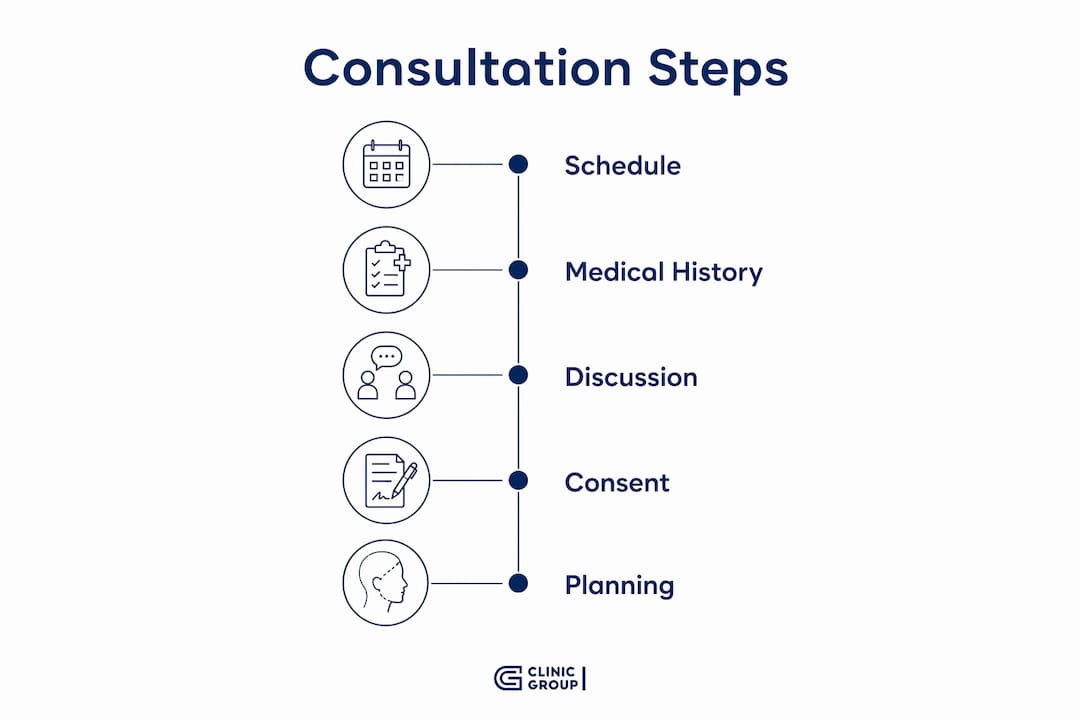
This cooling-off period exists for good reason. Decisions made under time pressure, or in response to limited-time offers and discounts, are not truly free decisions. Reputable surgeons and clinics will never rush you.
What informed consent requires:
- A clear understanding of what the procedure involves and what it will not achieve
- Knowledge of the risks, complications, and how they would be managed
- Awareness of the alternatives, including doing nothing
- Freedom to ask further questions or seek a second opinion at any point
- The ability to withdraw consent at any time before surgery, without penalty
You can seek a second opinion from another surgeon at any stage. A confident, ethical surgeon will not object to this. If a clinic discourages it, treat that as a warning sign.
What happens after the consultation?
Once your consultation is complete and you have decided to proceed, the pathway moves into clinical preparation. This is where the pre-operative assessment takes place, a separate appointment focused entirely on whether your body is ready for surgery and anaesthesia.
Pre-operative assessments typically occur one or more days before surgery. They are usually nurse-led and last around 45 minutes, though complex health histories can extend this to two hours.
During the pre-op assessment, the clinical team will:
- Record observations including blood pressure, heart rate, BMI, and respiratory levels
- Carry out tests such as blood work, urine analysis, or an ECG where indicated
- Review your medications and advise on any adjustments needed before surgery
- Provide fasting instructions, typically no food for six hours before admission and no fluids for two hours
- Confirm your transport arrangements and post-operative care plans
Practical planning should begin well before this stage. Arrange 24-hour support for the day of surgery, cover for any caring responsibilities, and confirm your transport home. You will not be able to drive yourself.
How to verify surgeon credentials in the UK
Checking your surgeon’s qualifications is not optional. In the UK, every practising surgeon must be registered with the GMC register, which is publicly searchable. For cosmetic procedures specifically, look for surgeons holding a Cosmetic Surgery Certificate from the Royal College of Surgeons, or membership of BAAPS or BAPRAS.
The difference between the initial consultation and the pre-op assessment matters here too. Your consultation should always be with the surgeon who will operate on you. A pre-op assessment conducted by a nurse is appropriate at the clinical readiness stage, but the treatment planning conversation must happen with your surgeon directly.
Warning signs to watch for:
- Reluctance to discuss risks, complications, or their own outcomes
- Inability or unwillingness to show before-and-after photographs from their own cases
- Pressure to decide quickly or accept a time-limited offer
- Vague answers about qualifications or professional memberships
- No clear aftercare plan or named point of contact for complications
Pro Tip: Ask your surgeon directly about their complication rates and how they manage secondary procedures. A surgeon confident in their practice will answer this without hesitation.
Clinicgroup connects patients with verified clinics and board-certified specialists across Albania and Dubai, with credential checks built into the clinic matching process. For patients travelling from the UK, this removes the uncertainty of navigating unfamiliar healthcare systems independently.
What timeline should you expect after your consultation?
The period between consultation and surgery varies depending on the procedure, your health, and the clinic’s scheduling. For elective and cosmetic procedures, the RCS recommends a minimum of two weeks between consultation and consent. More complex procedures or patients with underlying health conditions may require additional assessments before a surgery date is confirmed.
A general outline of the typical timeline:
- Consultation: Surgeon-led discussion of treatment, risks, and expectations
- Reflection period: At least two weeks to consider the information and seek further opinions if needed
- Formal consent: Given to the operating surgeon, not administrative staff
- Pre-operative assessment: Nurse-led clinical checks, tests, and fasting instructions, usually within days of the surgery date
- Surgery date confirmed: Once the pre-op team confirms clinical fitness to proceed
You remain free to change your mind at any point before surgery. Clinics are required to accommodate this without pressure or financial penalty for the consultation itself.
Common patient concerns and how surgeons address them
Most patients arrive at a consultation with a mix of practical questions and deeper anxieties. Both are valid, and a good surgeon addresses them directly rather than deflecting.
“Will the results look natural?” Surgeons are trained to discuss realistic outcomes honestly. The consultation is the right moment to ask for before-and-after photographs from the surgeon’s own cases and to be clear about what “success” means to you personally.
“What if something goes wrong?” Your surgeon should explain the management plan for complications, who your named contact is post-surgery, and what the aftercare package covers. Vague answers here are a red flag.
“Am I a suitable candidate?” A consultation is not a guarantee of surgery. The surgeon weighs benefits against risks and may advise against a procedure if it is not in your best interest. This is a mark of clinical integrity, not rejection.
“Can I bring someone with me?” Yes. The NHS confirms that patients may bring a support person to surgical appointments. If you need a translator or British Sign Language interpreter, contact the clinic in advance to arrange this.
“What does it cost, including complications?” Ask for a full cost breakdown at the consultation, including what happens financially if the procedure needs to be repeated or corrected. Reputable clinics provide this in writing.
Thinking about surgery abroad? How Clinicgroup supports your pathway
For patients considering procedures abroad, the consultation process carries the same weight as it does in the UK. Clinicgroup’s network of verified clinics across Albania and Dubai operates to European standards of care, with board-certified surgeons, transparent pricing, and structured aftercare included in every treatment pathway.
Every patient journey through Clinicgroup includes clinic matching, assistance with travel logistics, partner hotel arrangements, and post-operative follow-up. The consultation, whether in person or via video call, is always conducted by the surgeon who will perform your procedure.
If you are exploring surgical or non-surgical options and want to understand what a verified consultation looks like in practice, Clinicgroup’s team is available to guide you through the process from first enquiry to aftercare.
Key takeaways
A pre-surgery consultation is a surgeon-led meeting focused on treatment planning, informed consent, and realistic expectations, and it is entirely separate from the nurse-led pre-operative assessment that follows later.
| Point | Details |
|---|---|
| Consultation vs. pre-op assessment | The consultation is surgeon-led and treatment-focused; the pre-op assessment is nurse-led and checks clinical fitness for anaesthesia. |
| Reflection period | The Royal College of Surgeons advises waiting at least two weeks after consultation before giving formal consent. |
| Credential verification | Check your surgeon on the GMC register; for cosmetic procedures, look for RCS certification or BAAPS/BAPRAS membership. |
| Pre-op assessment timing | Pre-operative assessments typically occur one or more days before surgery and last around 45 minutes to two hours. |
| Right to withdraw | You can change your mind or seek a second opinion at any point before surgery, without pressure or penalty. |
FAQ
What happens at a pre-op consultation?
Your surgeon reviews your medical history, discusses your goals and expectations, explains the procedure, and outlines the risks, benefits, and alternatives. This is also your opportunity to ask questions before giving informed consent.
What is the difference between a consultation and a pre-op assessment?
A consultation is a surgeon-led discussion about treatment planning and informed consent. A pre-operative assessment is a separate, usually nurse-led appointment that checks your clinical fitness for anaesthesia, typically occurring one or more days before surgery.
What should you not do before a pre-op appointment?
Do not eat or drink within the fasting window given by your clinical team (usually no food for six hours and no fluids for two hours before admission). Also avoid stopping or changing medications without specific advice from your surgical team.
What questions should you ask at a pre-op assessment?
Ask about fasting instructions, which medications to stop and when, what tests will be carried out, and what the plan is if further investigations are needed. You should also confirm transport arrangements and post-operative care plans at this stage.
Can you change your mind after a consultation?
Yes. You can withdraw consent or seek a second opinion at any point before surgery. The Royal College of Surgeons advises that no patient should ever feel pressured to decide quickly, and reputable clinics will not apply financial or social pressure to proceed.