TL;DR:
- Understanding procedural categories and key principles improves confidence in choosing dental treatments abroad.
- Advanced procedures require specialist skills and equipment, with success heavily dependent on proper protocols.
- Comparing clinics involves examining technical details like success rates, techniques, and aftercare, not just prices.
Choosing the right dental treatment is rarely straightforward. The range of available procedures is broad, the terminology can be confusing, and the decision becomes even more demanding when you are considering care abroad. Whether you need a simple filling or a full-arch reconstruction, the quality of your outcome depends not just on which procedure you choose, but on how well you understand your options. This guide walks you through the most important dental treatment examples, what each procedure involves, how to compare providers, and what evidence-based benchmarks you should know before committing to treatment anywhere in Europe.
Table of Contents
- How dental treatments are categorised and why it matters
- Examples of common dental treatments and their procedures
- Advanced and specialist dental procedures: what makes them different
- How to compare dental treatment options and success rates
- What most people miss when comparing dental treatments abroad
- Take the next step: explore high-quality dental treatments with Clinic Group
- Frequently asked questions
Key Takeaways
| Point | Details |
|---|---|
| Dental treatment categories | Most treatments are grouped as preventive, restorative, cosmetic, orthodontic, or surgical, each requiring different care. |
| Selection matters abroad | Knowing which procedures need advanced techniques helps you make safer choices when seeking treatment abroad. |
| Benchmark outcomes | Use published success rates, not just marketing, to compare providers and procedures confidently. |
| Ask about mechanics | Question your provider about materials, isolation protocols, and aftercare for durable results. |
How dental treatments are categorised and why it matters
Understanding how dental procedures are grouped is the first step towards making a confident, informed decision. Common dental procedures include preventive care such as check-ups, X-rays, cleanings, and sealants; restorative care including fillings, inlays, onlays, crowns, bridges, implants, and dentures; cosmetic care such as whitening, bonding, and veneers; and orthodontic treatments including braces and aligners. Each category serves a distinct clinical purpose, and knowing the difference helps you ask the right questions when speaking with a provider abroad.
Beyond the categories themselves, five core mechanical principles influence the success of any dental treatment:
- Isolation: Keeping the treatment area free from saliva and moisture is critical for adhesive procedures. Poor isolation is one of the most common causes of restoration failure.
- Access: The dentist must be able to see and reach all relevant anatomy. Limited access leads to compromised results, particularly in complex cases.
- Retention: How a restoration is held in place, whether by mechanical, chemical, or adhesive means, directly affects longevity.
- Occlusion: The way your teeth meet when you bite must be accounted for in any restoration. Poorly balanced occlusion causes premature wear and pain.
- Restorative design: The shape and material of a restoration affect both function and aesthetics. A well-designed restoration mimics natural tooth structure and integrates seamlessly.
Understanding these principles helps you evaluate whether a provider abroad has the right protocols in place. For practical guidance on vetting international providers, reading up on safe dental care abroad is a valuable starting point. You should also familiarise yourself with dental travel tips before booking any appointments.
Pro Tip: When consulting a clinic abroad, ask specifically how they manage moisture control during adhesive procedures. A detailed answer signals genuine technical expertise.
Examples of common dental treatments and their procedures
With a clear framework in place, it is easier to evaluate individual procedures on their merits. Below is a structured overview of the most common dental treatments, what each involves, and what to look for when seeking care away from home.
Check-ups and X-rays form the foundation of preventive care. A routine check-up includes a clinical examination and, where necessary, radiographs to detect decay, bone loss, or other concerns not visible to the naked eye. These appointments are also an opportunity to discuss any planned treatments.
Professional cleaning (scale and polish) removes plaque and tartar build-up that brushing alone cannot address. Clinics abroad often include this as part of a wider treatment package, so confirm what is included before you travel.
Fillings are among the most common restorative procedures. The process typically involves local anaesthesia, removal of decay using instruments or lasers, cavity preparation with liners or bases where needed, bonding or etching for composite fillings, light-curing for resin composites, then finishing and polishing. Composite (tooth-coloured) fillings are now the standard in most European clinics.
Crowns cover a damaged or weakened tooth entirely. The procedure generally requires two appointments: one for preparation and impressions, and one for fitting the permanent crown. Many clinics abroad now offer same-day crowns using CAD/CAM (computer-aided design and manufacturing) technology, which can streamline your travel.
Root canal treatment removes infected or inflamed pulp tissue from inside the tooth, cleaning and sealing the root canals. It is performed under local anaesthesia and is rarely as uncomfortable as its reputation suggests.
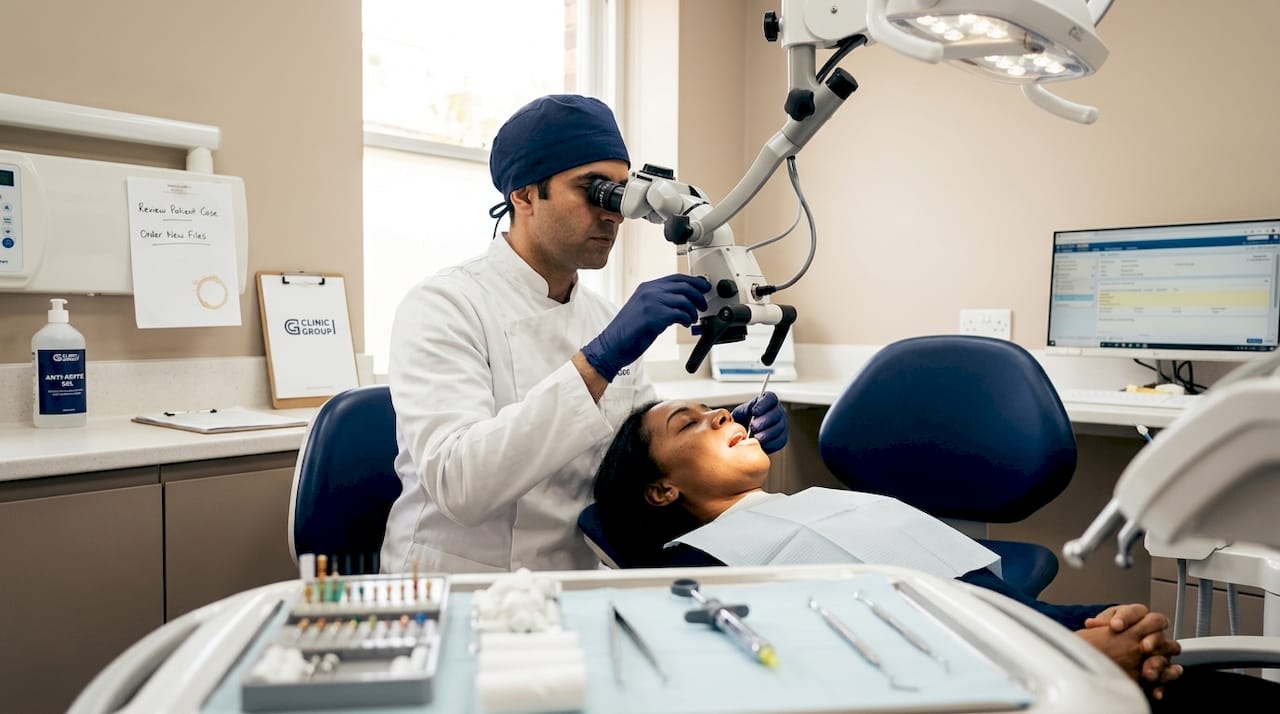
Dental implants replace missing teeth at the root level, providing a stable foundation for a crown. The process involves placing a titanium post into the jawbone, a healing period of several months (osseointegration), and then fitting the final restoration.
Dentures and bridges are alternative solutions for replacing missing teeth, with bridges being fixed and dentures being removable. Both require careful occlusal planning.
Teeth whitening uses peroxide-based gels to lighten enamel. Professional in-clinic treatments produce faster and more reliable results than over-the-counter kits.
Composite bonding applies tooth-coloured resin to repair chips, gaps, or discolouration, and is completed in a single appointment. Veneers are thin porcelain or composite shells bonded to the front surface of teeth for a more durable cosmetic upgrade.
Orthodontics, including fixed braces and clear aligners, corrects misalignment over several months to years. Many patients combine orthodontic assessment with other treatments during a single trip abroad.
For a full overview of available options, visit the full dental treatments list. And when planning your recovery, it is worth reviewing guidance on dental aftercare to understand what support you should expect after returning home.
Pro Tip: Always ask for a written treatment plan and post-procedure instructions before your appointment begins. This is standard practice in reputable clinics and protects you if complications arise after you return home.
| Procedure | Typical duration | Anaesthesia | Recovery time |
|---|---|---|---|
| Check-up and X-ray | 30–60 minutes | None | Immediate |
| Professional cleaning | 30–60 minutes | None | Immediate |
| Composite filling | 30–90 minutes | Local | Minimal (hours) |
| Crown (two-visit) | 2 x 60 minutes | Local | 1–3 days sensitivity |
| Root canal treatment | 60–120 minutes | Local | 2–5 days mild discomfort |
| Dental implant (staged) | Multiple visits | Local or sedation | 3–6 months healing |
| Denture fitting | Multiple visits | Usually none | Days to weeks adaptation |
| Teeth whitening | 60–90 minutes | None | Minimal (24 hrs sensitivity) |
| Composite bonding | 30–90 minutes | Rarely needed | Immediate |
| Porcelain veneers | 2 x 60 minutes | Local | Minimal |
| Fixed braces or aligners | Ongoing reviews | None | Ongoing adjustment |
Advanced and specialist dental procedures: what makes them different
After the basics, a different tier of treatment comes into focus. Advanced procedures require specialist training, specific equipment, and a deeper understanding of anatomy and materials science. Knowing what sets them apart helps you recognise when a general dentist may not be sufficient.
When caries margins extend deep below the gumline, two approaches can address the challenge: Deep Margin Elevation (DME) and Surgical Crown Lengthening (SCL). DME is an adhesive, restorative technique that moves the margin above the gumline using composite, making it accessible for bonding. SCL is a surgical option that repositions the gum and bone to expose more of the tooth. Both require precision and an understanding of the biological width of the gum attachment.
Endocrowns are a specialist restorative option for teeth with significantly compromised structure. Unlike a conventional crown, which sits on a prepared tooth stub, an endocrown uses the pulp chamber itself for retention. This is particularly useful where the clinical crown is very short, space is limited, or the canals are calcified.
In endodontics, complex canal anatomies such as C-shaped canals in lower second molars can require modified retreatment mechanics. These include enhanced coronal access, ultrasonic assistance to locate additional canals, and activated irrigation systems to improve disinfection in areas where conventional instruments simply cannot reach.
“Moisture control and isolation are not optional extras in complex restorations. They are the foundation on which long-term success is built. Any provider who cannot explain their isolation protocols in detail warrants further scrutiny.” — Clinical perspective on advanced restorative dentistry
When assessing a clinic abroad for advanced treatment, look for these indicators:
- Use of rubber dam for isolation during root canal treatment and adhesive restorations
- Access to cone beam CT (CBCT) scanning for three-dimensional assessment of canal anatomy
- On-site or partnered specialist endodontist, periodontist, or prosthodontist
- Digital workflow including CAD/CAM for restorative design
- Documented sterilisation and infection control protocols
For guidance on arranging specialist assessments internationally, you can find useful information on medical consultations abroad.
| Feature | Conventional procedure | Specialist procedure |
|---|---|---|
| Provider level | General dentist | Specialist or experienced GDP |
| Equipment required | Standard dental unit | Microscope, ultrasonic, CBCT |
| Duration | 30–120 minutes | 60–180+ minutes |
| Isolation | Standard | Rubber dam mandatory |
| Success rate | Good for straightforward cases | Higher for complex anatomy |
| Aftercare needs | Standard | Enhanced monitoring needed |
How to compare dental treatment options and success rates
Having seen the full spectrum of procedures, the next step is knowing how to compare them rigorously. Numbers matter here, and it is important to know how to read them.
Endodontic success rates vary depending on whether you are looking at primary treatment or retreatment. Primary root canal treatment shows success rates as high as 85.2–92.6%, while retreatment success sits in the range of 77.2–83%. These figures change depending on how “success” is defined: strict radiographic healing versus absence of clinical symptoms are two different standards.
Endocrowns show promising survival data when case selection is appropriate, particularly for posterior teeth with limited interocclusal space. Survival rates depend heavily on the material used, the quality of the adhesive protocol, and whether the pulp chamber provides adequate volume for retention.
Here is a step-by-step process for evaluating your options:
- Define your treatment goal. Is your priority function, aesthetics, longevity, or minimising invasiveness? Different procedures optimise for different outcomes.
- Ask about provider protocols. Request specific detail on isolation methods, materials used, and how restorative design is planned.
- Request outcome benchmarks. Any reputable clinic should be able to share information about the success rates they achieve and how they measure results.
- Check restorative design implications. Ask how the proposed restoration will affect adjacent teeth, bite balance, and long-term bone health.
Statistic to know: Primary root canal treatment achieves success rates of up to 92.6%. Retreatment is slightly lower at up to 83%. When a clinic’s quoted figures significantly exceed these published ranges, ask for the evidence behind their claims.
| Procedure | Success or survival rate | Key factors |
|---|---|---|
| Primary root canal | 85.2–92.6% | Canal cleanliness, seal quality |
| Root canal retreatment | 77.2–83% | Original cause, anatomy |
| Endocrown | Variable; material dependent | Adhesion protocol, case selection |
| Dental implant | ~95% at 10 years | Bone volume, systemic health |
| Composite veneer | 80–90% at 5 years | Occlusal load, oral hygiene |
For further reading on how reputable clinics benchmark their outcomes, the quality dental benchmarks resource offers clear, practical guidance.
What most people miss when comparing dental treatments abroad
Most guides focus on price comparisons and clinic ratings. These matter, but they are rarely the deciding factor in a successful outcome. What actually determines the quality of your treatment is far more technical, and it is worth being frank about this.
The single most overlooked element is the mechanical protocol. Patients travelling for restorative or complex treatment rarely ask about isolation techniques. Yet moisture control for deep subgingival restorations is one of the most technically demanding aspects of adhesive dentistry. A clinic that cannot clearly explain how they manage DME versus SCL, or how they ensure a dry bonding field, may be cutting corners in ways that do not show up immediately but lead to restoration failure within a few years.
A second common trap is underestimating the complexity of your own case. Many patients believe their treatment is routine when it actually involves anatomical challenges, compromised tooth structure, or pre-existing restorations that complicate the plan. Travelling for a “simple” crown that turns out to need specialist input can leave you in a difficult position if the clinic lacks the expertise or equipment to escalate care.
Aftercare is the third area that patients routinely underestimate. A successful procedure followed by inadequate follow-up is still a risk. Before travelling, confirm exactly what happens if you experience complications at home. Does the clinic offer remote consultation? Will they provide documentation for your local dentist?
Here are the non-negotiables to check when vetting a clinic for complex dental treatment abroad:
- Written treatment plan with materials, techniques, and stages clearly documented
- Rubber dam use confirmed for root canal treatment and adhesive restorations
- CBCT scanning available for implant and endodontic planning
- Specialist referral pathway if your case exceeds general dentistry scope
- Clear aftercare protocol including what to do if you return home with complications
- Transparent pricing with no hidden costs for follow-up appointments
Take the next step: explore high-quality dental treatments with Clinic Group
If this guide has helped you understand your options, the natural next step is finding a provider you can trust. Clinic Group connects patients across Europe with verified clinics and qualified specialists, offering transparent information, patient support, and assistance with travel coordination. Whether you are considering a straightforward cosmetic procedure or a complex restorative case, you can explore dental treatments through a platform built around safety, quality, and reliable outcomes. The team at Clinic Group is experienced in matching patients to the right level of care and ensuring you have the aftercare support you need once you return home. Browse current treatment options, read verified clinic reviews, and take the first step towards confident, evidence-based dental care abroad.
Frequently asked questions
What are the main types of dental procedures?
The main types are preventive, restorative, cosmetic, orthodontic, and surgical treatments, each serving a distinct clinical purpose depending on your dental health needs.
How do I know if a dental clinic abroad is safe?
Check for professional credentials, ask specifically about moisture control protocols for adhesive restorations, and always request a written treatment plan and aftercare instructions before proceeding.
What is the success rate for root canal treatments?
Success rates for primary root canal treatment can be as high as 85.2–92.6%, while retreatment success typically falls in the range of 77.2–83%, depending on the case complexity and outcome definition used.
Which dental procedures require a specialist?
Advanced cases involving complex canal anatomies, deep margin restorations, or significantly compromised tooth structure often require the skills of a specialist endodontist, periodontist, or prosthodontist rather than a general dentist.
What is an endocrown and when is it used?
An endocrown is a monolithic restoration that uses the pulp chamber for retention, making it suitable for teeth with very limited remaining structure, short clinical crowns, or cases where conventional crown preparation is not feasible.