TL;DR:
- Many Europeans are attracted to dental treatment abroad due to lower costs and faster access, but evaluating safety and quality is essential. Patients should verify practitioner credentials, infection control standards, and obtain detailed treatment and aftercare plans before traveling. A structured, evidence-based approach ensures higher safety and better outcomes in dental tourism.
For many Europeans, the promise of dental treatment abroad is genuinely compelling. Significant cost savings, shorter waiting times, and access to modern clinics offering a full range of treatments all sound appealing. Yet the real challenge is not simply finding the lowest price. It is knowing how to evaluate whether the care on offer is genuinely safe, properly structured, and supported by reliable aftercare. Making that distinction requires evidence, not guesswork, and this guide walks you through exactly what to look for.
Table of Contents
- Key criteria for evaluating dental treatment benefits abroad
- Top dental treatment benefits and what they actually mean
- Comparing treatment models: which models offer real benefits?
- Critical risks and how to protect yourself
- Why a structured, evidence-based approach wins: opinion from the Clinic Group editorial team
- How Clinic Group supports safe, high-quality dental treatment abroad
- Frequently asked questions
Key Takeaways
| Point | Details |
|---|---|
| Verify clinic credentials | Ensure dentists and clinics are properly licensed and regulated before booking treatment abroad. |
| Demand a structured plan | Always request written treatment details, aftercare steps, and clear itemisation from your provider. |
| Don’t base choices on holiday appeal | Focus on medical quality, not destination allure, to avoid costly mistakes. |
| Coordinated aftercare is vital | Plan your aftercare in advance, including staying local for sufficient recovery time. |
| Risks can outweigh savings | Complications may end up costing more at home; safeguard your journey with evidence-based decisions. |
Key criteria for evaluating dental treatment benefits abroad
Before weighing up any specific treatment or destination, it helps to establish a clear framework for evaluation. Price alone tells you very little about what you will actually receive. The factors that determine whether dental care abroad will genuinely benefit you are largely invisible in a marketing brochure.
Licensure and credentials are the starting point. Ask specifically whether the dentists treating you are registered with a recognised national regulatory body. In Turkey, for example, the Turkish Dental Association governs practice standards, while EU member state clinics must adhere to EU-wide health directives. Do not assume that a polished website guarantees professional registration.
Infection control standards vary considerably across countries. Sterilisation protocols such as autoclave sterilisation of instruments, single-use consumables, and clinical waste disposal procedures should be visibly demonstrated or documented. The CDC Yellow Book on medical tourism explicitly notes that dentists in destination countries might not face the same licensure oversight as practitioners in patients’ home countries, which means you cannot take these standards for granted.
A structured, written treatment plan is non-negotiable. Before committing to any procedure, request a detailed document that lists the diagnostics planned (such as CBCT scans or panoramic X-rays), the specific materials to be used (implant brands, crown ceramics), the names of the clinicians involved, itemised pricing, and the aftercare pathway. Vague quotes are a warning sign.
Aftercare and complication management must be addressed before you travel. Ask explicitly: what happens if something goes wrong after you return home? Is there a named contact at the clinic? Is there a protocol for coordinating with your local dentist? The NHS treatment abroad checklist makes clear that safety depends heavily on evidence-based due diligence, covering who will treat you, credentialing, infection control, and a written aftercare and complication plan.
Here is a quick summary of essential pre-travel checks:
- Verify practitioner registration with the relevant national regulatory body
- Request and review the clinic’s infection control and sterilisation policy
- Obtain a written treatment plan with itemised costs before any payment
- Confirm there is a dedicated aftercare coordinator or emergency contact
- Involve your usual dentist or GP in planning, particularly for complex work
Pro Tip: Ask the clinic to send their accreditation documentation directly to you in writing before your consultation. Clinics confident in their standards will do this willingly.
Top dental treatment benefits and what they actually mean
With the evaluation criteria established, it is worth examining the specific benefits that dental tourism actually offers, alongside the honest caveats that rarely appear in promotional materials.
Cost savings are real and often substantial. Popular destinations such as Hungary, Poland, Turkey, and Croatia consistently offer dental procedures at significantly lower prices than the UK or Germany. Implants that cost £2,500 or more in the UK may be available for £800 to £1,200 in certain accredited clinics abroad. According to the NHS treatment abroad checklist, faster access and lower out-of-pocket costs are achievable, but careful due diligence is necessary. The savings only represent genuine value when the clinic meets comparable safety and quality standards.
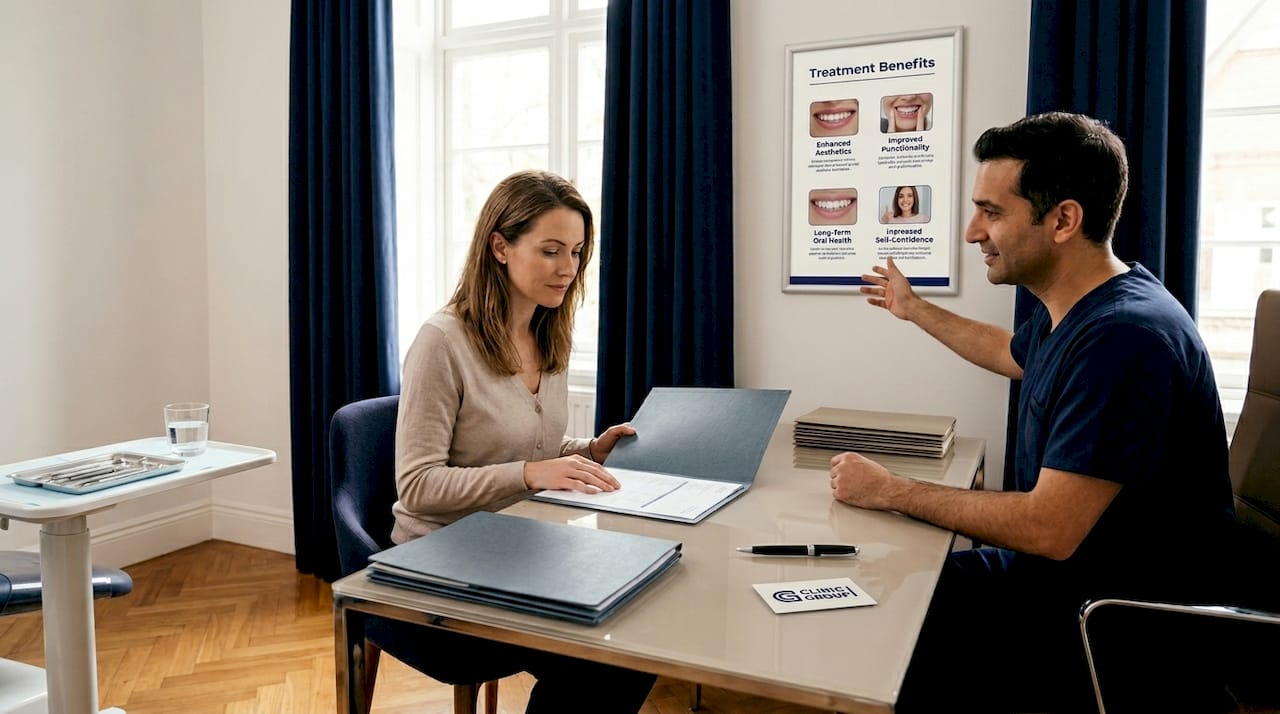
Speed and access are also meaningful advantages. In the UK, waiting times for NHS dental treatment remain problematic, particularly for complex restorative work. Many clinics abroad can schedule consultations and begin treatment within days. For patients needing several crowns, a full-arch restoration, or cosmetic composite bonding, this can represent months saved.
Range of services is another frequently cited benefit. Some clinics abroad have invested heavily in technology, offering in-house CBCT scanning, same-day crown milling with CAD/CAM systems, and immediate loading implant protocols. These are services that even some private UK practices do not offer at the same price points.
Quality is the area requiring the most careful scrutiny. High quality is genuinely achievable abroad, but it cannot be assumed. It must be verified through credentials, patient reviews from verifiable sources, and the presence of a structured aftercare framework. Explore what dental travel benefits and risks look like in practice before making any decisions.
“Patients should not let the appeal of a holiday destination influence a medical decision. The choice of where to receive treatment must be based on clinical criteria, not travel preferences.” This reflects the core principle behind the NHS guidance on treatment abroad.
This distinction matters more than it may seem. Mixing a holiday with dental treatment is not inherently problematic, but it becomes risky if the holiday aspect clouds your clinical judgement or causes you to rush procedures that require adequate recovery time.
Comparing treatment models: which models offer real benefits?
Not all approaches to dental care abroad are equally reliable. Understanding the differences between common treatment models helps you identify which offers the safest, most transparent outcomes.
| Treatment model | What it typically includes | Key strengths | Key risks |
|---|---|---|---|
| Package deals | Fixed price for bundled procedures | Simple pricing, convenient | Lacks clinical detail, may not address complexity |
| Structured written plan | Itemised diagnostics, materials, clinicians, pricing, aftercare | Transparent, defensible, safe | Requires more upfront effort to obtain |
| Staged care | Treatment phased over multiple visits or weeks | Appropriate for complex cases | Requires extended stays or return trips |
| Single-visit tourism | All work done in one trip | Fast, convenient | Unsuitable for invasive or multi-stage procedures |
For straightforward treatments such as composite bonding, teeth whitening, or a single crown, a well-documented single visit may be entirely appropriate. For dental implants, full-arch restorations, or work involving bone grafting, staged care is essential. Comparing clinic features systematically, rather than relying on glossy images, gives you far more useful information.
The DentalHealth.org dental tourism guidance is clear that the best outcomes come from requiring a structured, written plan covering diagnostics, clinician assignments, material specifics, clear pricing, and an aftercare pathway. This is the standard you should hold every clinic to, regardless of destination or price.
Key questions to ask when evaluating a treatment plan:
- Which specific implant system or crown material will be used?
- Will the same clinician perform all stages of the treatment?
- What is the protocol if an implant fails or a crown fractures after you return home?
- Is there a guarantee period, and what does it cover specifically?
- Does the plan reference navigating consultations abroad safely at each stage?
Pro Tip: Request the plan in writing via email, not just verbally during a consultation. This creates a clear record and gives you time to review it with your usual dentist before committing.
Critical risks and how to protect yourself
Understanding the genuine risks of dental treatment abroad allows you to address them proactively rather than being caught unprepared after returning home.
The most significant risks fall into four categories:
- Complications and infections arising from procedures performed without adequate follow-up. Implant failure, dry socket after extractions, and poorly fitted crowns causing bite misalignment are among the most commonly reported issues.
- Lack of regulatory oversight in the destination country, meaning complaints processes may be limited or inaccessible to foreign patients.
- Continuity of care gaps when returning home. Your local dentist may be unfamiliar with the materials or techniques used abroad, complicating any remedial work.
- Inadequate recovery time before flying. Swelling, bleeding, or infections following oral surgery can be exacerbated by air travel too soon after procedures.
BDJ In Practice reporting has documented cases where UK patients returned with severe complications requiring urgent NHS care, adding both personal distress and financial cost to what was intended to be a cost-saving exercise.
“Complex surgical cases, patients with underlying health conditions, and multi-stage restorations require particularly careful planning and should not be compressed into a single short trip.”
Here is a practical table of risk factors and corresponding mitigation strategies:
| Risk factor | Mitigation strategy |
|---|---|
| Implant failure | Confirm implant brand reputation; insist on staged placement and loading |
| Post-procedure infection | Verify sterilisation protocols; complete antibiotic courses as prescribed |
| No local aftercare | Brief your UK dentist before you travel; share full treatment documentation |
| Complication after flying | Allow minimum 72 hours post-surgery before flying for minor procedures; longer for complex cases |
| Regulatory gap | Confirm aftercare support for medical tourists is in place before committing |
Steps to protect yourself before, during, and after treatment:
- Get a second opinion from your usual dentist or GP before travelling
- Share the full written treatment plan with your regular dental practice
- Confirm the clinic has a dedicated aftercare coordinator
- Stay in-country long enough for any immediate post-procedure concerns to be addressed
- Ensure your travel insurance explicitly covers dental treatment complications
The edge cases where extra caution is essential include patients with diabetes or cardiovascular conditions (which affect healing), those requiring bone grafting prior to implants, and anyone whose treatment plan involves more than three or four procedures in a single visit.
Why a structured, evidence-based approach wins: opinion from the Clinic Group editorial team
There is a persistent narrative around dental tourism that reduces the entire decision to price. Find the cheapest clinic, fly out, come home with a new smile. This framing is not just oversimplified. In many cases, it is actively misleading.
What our experience across hundreds of patient journeys consistently shows is that the patients who benefit most from treatment abroad are those who approach the decision with the same rigour they would apply to any significant healthcare choice at home. They research credentials. They request written plans. They involve their regular dentist. They choose destinations and clinics based on verifiable standards, not lowest headline prices.
The clinics delivering the best outcomes are not necessarily the most expensive, but they are always the most transparent. They welcome scrutiny. They provide documentation without being asked twice. They have structured protocols for complications and clear policies on what their guarantees actually cover.
The uncomfortable reality is that many of the problems reported in dental tourism are entirely avoidable. They arise not from the concept of treatment abroad being inherently flawed, but from patients choosing on price alone or failing to ask the right questions before committing. A clinic that cannot provide a detailed written treatment plan is telling you something important about how it operates.
Our view is straightforward: for treatments ranging from implants to full smile makeovers, a safe, evidence-based approach is not a luxury. It is the minimum standard every patient deserves, regardless of where they choose to receive care.
How Clinic Group supports safe, high-quality dental treatment abroad
Clinic Group connects European patients with thoroughly vetted clinics and credentialled dental specialists across Europe and the Middle East. Every clinic in the network is evaluated for practitioner registration, infection control standards, and aftercare provision before being listed on the platform. Transparent, itemised treatment plans are a core requirement, not an optional extra. Whether you are considering dental implants, cosmetic dentistry, or full-mouth rehabilitation, you can explore dental treatment options alongside verified clinic information, real patient reviews, and clear guidance on what to expect at each stage. Visit Clinic Group to compare verified providers and take the first step towards affordable, reliable dental care you can trust.
Frequently asked questions
What checks should I make before choosing a dental clinic abroad?
Confirm practitioner credentials with the relevant national regulator, review the clinic’s infection control standards, and demand a written aftercare and complication plan before proceeding, as outlined in the NHS treatment abroad checklist.
Are dental treatments always cheaper abroad for Europeans?
Dental treatments are often more affordable abroad, but genuine savings depend on choosing reputable, accredited clinics and accounting for travel, accommodation, and potential follow-up costs. The NHS guidance confirms that lower costs are achievable when due diligence is applied carefully.
How can I avoid complications after dental treatment abroad?
Stay in-country long enough to allow initial recovery, coordinate your aftercare plan with a clinic contact before you travel, and involve your usual dentist in treatment planning. The NHS checklist specifically recommends understanding possible complications, getting a second opinion, and confirming aftercare coordination before departure.
What are the risks if something goes wrong with my dental treatment abroad?
Complications can require urgent treatment at home, adding unexpected costs and potentially placing strain on NHS resources. BDJ In Practice reporting has documented cases of patients returning with serious issues, making a pre-agreed emergency and aftercare plan an essential part of any dental travel arrangement.