TL;DR:
- Clinic location significantly influences available procedures, technology, legal protections, and costs in medical tourism. Patients often save thousands by choosing accredited clinics abroad, but must carefully evaluate risks, aftercare, and authentic quality indicators beyond price. Thorough research and prioritizing clinic safety, accreditation, and communication lead to better outcomes when traveling for treatment.
Where you choose to have your treatment is one of the most consequential decisions you will make as a medical tourist, yet many patients treat it as an afterthought. The assumption that all clinics offer broadly similar care regardless of geography is a costly misconception. In reality, clinic location shapes everything from the procedures available to you, the technology used, and the price you pay, to the legal protections you carry and the aftercare you receive. Some patients save $30,000 or more on treatments such as All-on-4 dental implants by travelling abroad, even after accounting for flights and accommodation. This guide explains what drives those differences, how to compare your options, and how to make a location-based decision you can feel confident about.
Table of Contents
- Why clinic location matters in medical tourism
- Comparing clinic locations: Core differences in choice
- Risks and nuances of choosing distant clinics
- Expert advice: Making the best location-based choice
- Why conventional wisdom about clinic location is missing the mark
- Explore safer treatment options with Clinic Group
- Frequently asked questions
Key Takeaways
| Point | Details |
|---|---|
| Location dramatically affects cost | Choosing the right clinic location can save you tens of thousands while improving access to quality care. |
| Risks increase with distance | Travelling further for treatment raises the risk of complications, aftercare gaps, and legal issues. |
| Accreditation outweighs price | Prioritise international accreditation and robust aftercare over simply searching for cheaper options. |
| Expert advice helps minimise risk | Use expert checklists and guidance when researching clinics to make safer, smarter choices abroad. |
| Clinic Group offers trusted options | Clinic Group lists accredited clinics and supports informed decisions for dental and aesthetic treatments. |
Why clinic location matters in medical tourism
The decision to seek treatment abroad is rarely impulsive. It is driven by a combination of pressures at home and genuine advantages elsewhere. Researchers describe this as the “push-pull” model of medical tourism, and it is a useful framework for understanding why location matters so deeply.
Push factors are the conditions at home that make patients look elsewhere:
- Long NHS waiting times for dental and aesthetic procedures
- High private treatment costs in the UK, where a single dental implant can exceed £2,500
- Limited availability of specialist treatments in certain regions
- Access deserts, where rural patients have no nearby provider at all
Pull factors are the reasons a particular destination becomes attractive:
- Significantly lower costs for comparable procedures
- Clinics holding international accreditation such as JCI (Joint Commission International) or ISO certification
- Access to advanced technology like CAD/CAM same-day crown milling or digital smile design software
- The appeal of combining treatment with travel to a desirable location
Research confirms that cost is the primary driver for 80 to 90 per cent of medical tourists, followed by speed of access and availability of treatments. Roughly 60 per cent of patients also factor in the appeal of a combined treatment-and-holiday experience. Understanding these motivators helps you assess your own priorities before comparing specific destinations.
“The decision to travel for care is rarely just about money. It reflects a system that, for many patients, feels inaccessible, slow, or simply unaffordable.” — Published research on dental tourism behaviour.
Understanding the dental travel benefits available to patients considering treatment abroad is the natural starting point for planning your journey. Once you understand why location matters in principle, you can start comparing what different locations actually offer in practice.
Pro Tip: Before you even begin comparing clinic locations, write down your three most important priorities, whether that is cost, technology, aftercare, or speed. This list will anchor your decision-making and prevent you from being swayed by attractive marketing alone.
Comparing clinic locations: Core differences in choice
The global dental tourism market is now valued at between $9 billion and $16 billion annually, with an estimated 1.2 million dental tourists travelling worldwide each year. Those figures reflect a mature, established industry, not a fringe phenomenon. But not all destinations are equal, and understanding the key differences between popular clinic locations can help you make a far more informed choice.
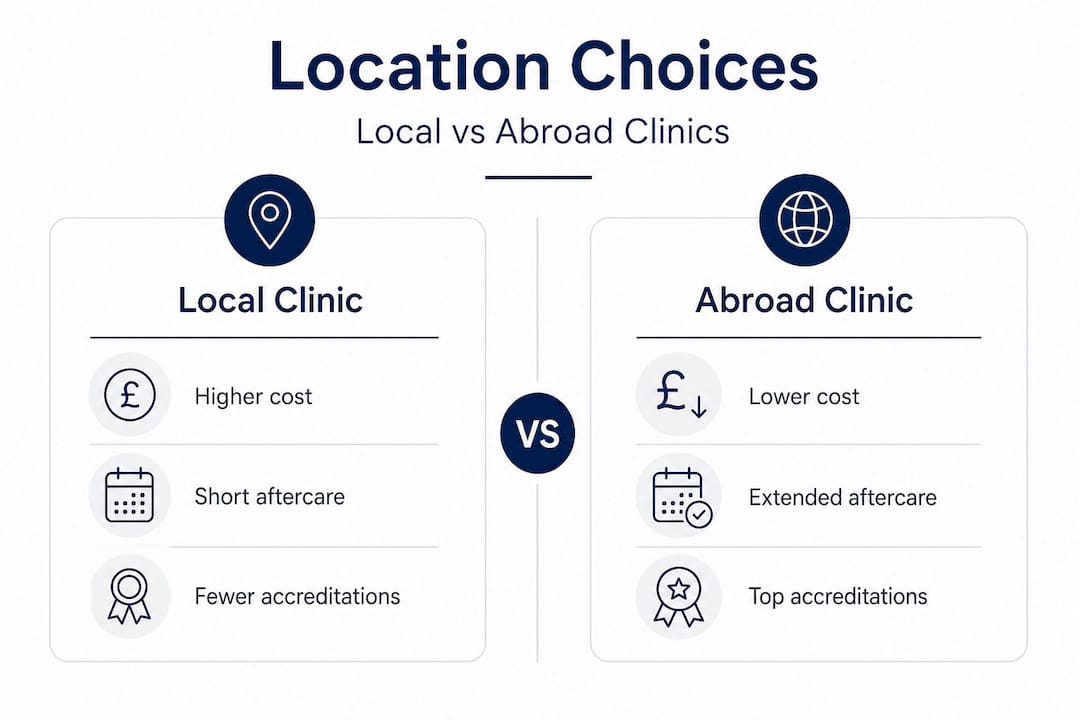
Below is a comparison of what patients typically encounter across common medical tourism destinations:
| Destination | Typical implant cost (per tooth) | Common accreditations | Technology level | English-speaking staff | Average flight time from UK |
|---|---|---|---|---|---|
| Turkey | £400 to £700 | JCI, ISO | High | Widely available | 3 to 4 hours |
| Hungary | £500 to £900 | ISO, EU regulated | High | Common | 2 to 3 hours |
| Poland | £600 to £1,000 | EU regulated | High | Common | 2 to 3 hours |
| Spain | £700 to £1,100 | EU regulated | High | Available | 2 to 3 hours |
| UK (private) | £1,800 to £2,800 | CQC regulated | High | Native | None |
These figures are indicative, but the pattern is clear. Patients can achieve savings of 50 to 75 per cent on dental implants, full-mouth restorations, veneers, and hair transplants by choosing a reputable international clinic rather than a UK private provider. For a full mouth reconstruction involving multiple implants, that difference can easily total tens of thousands of pounds.
Research also highlights an important social dimension to location choice. Lower socioeconomic status patients show a significantly higher willingness to travel greater distances for treatment, roughly 10 kilometres per grade compared to 1.7 kilometres for higher-income patients. This suggests that access to quality care is, for many people, a matter of economic necessity rather than lifestyle preference.
When comparing destinations, consider the following factors alongside cost:
- Regulatory environment: EU member states such as Hungary, Poland, and Spain operate under consistent European Union healthcare standards, offering a degree of legal and quality assurance that non-EU destinations may not match.
- Material standards: Some overseas clinics use dental materials from different manufacturers than those standard in the UK, which can affect compatibility with future treatment.
- Language proficiency: Clear communication with your clinical team is essential for safe treatment. Verify that English-speaking dentists or coordinators are available throughout your care.
- Travel logistics: A shorter flight may mean a less stressful trip and easier follow-up visits if needed.
Reading safe dental treatment guidance before booking is a practical step that helps you ask the right questions when you make contact with potential clinics. Knowing how to compare clinic features specifically, rather than just comparing prices, will give you a far more complete picture of what you are choosing between.
Risks and nuances of choosing distant clinics
No honest guide to medical tourism would omit the risks. While the savings and quality available abroad are real, so are the complications that arise when things go wrong. Understanding these risks is not a reason to avoid international care, but it is a reason to approach it carefully.
The most commonly reported complications from overseas dental and aesthetic treatments include:
- Infection: Poor sterilisation protocols or rushed procedures increase infection risk. Dental infections can escalate quickly and may require emergency treatment on your return home.
- Treatment failure: Complications, including failing implants, poorly fitted crowns, and failed root canals affect a meaningful proportion of overseas patients. Some estimates suggest root canal procedures carry a complication rate of around 20 per cent in poorly regulated settings.
- Material incompatibility: Implants or crowns sourced from non-standard manufacturers may not integrate well with follow-up treatment in the UK.
- Rushed preparation: Some high-volume clinics grind down healthy teeth to fit crowns when minimally invasive veneers would have been the appropriate choice. This is irreversible damage.
- No legal recourse: If treatment fails or causes harm, pursuing compensation through a foreign legal system is costly, time-consuming, and rarely successful.
- Burden on home services: UK dentists frequently report being asked to remedy work carried out abroad, and the NHS is not obligated to correct complications arising from elective overseas treatment.
“Patients returning home with complications from dental tourism often face significant costs for corrective treatment, and many find they have no formal route for redress against the original provider.”
Understanding aftercare for medical tourists is particularly important in this context. A clinic that cannot offer a clear, documented aftercare plan, including protocols for remote consultations and emergency follow-up, is a red flag. Similarly, verifying accreditation for clinic safety before booking is one of the most reliable protective steps you can take.
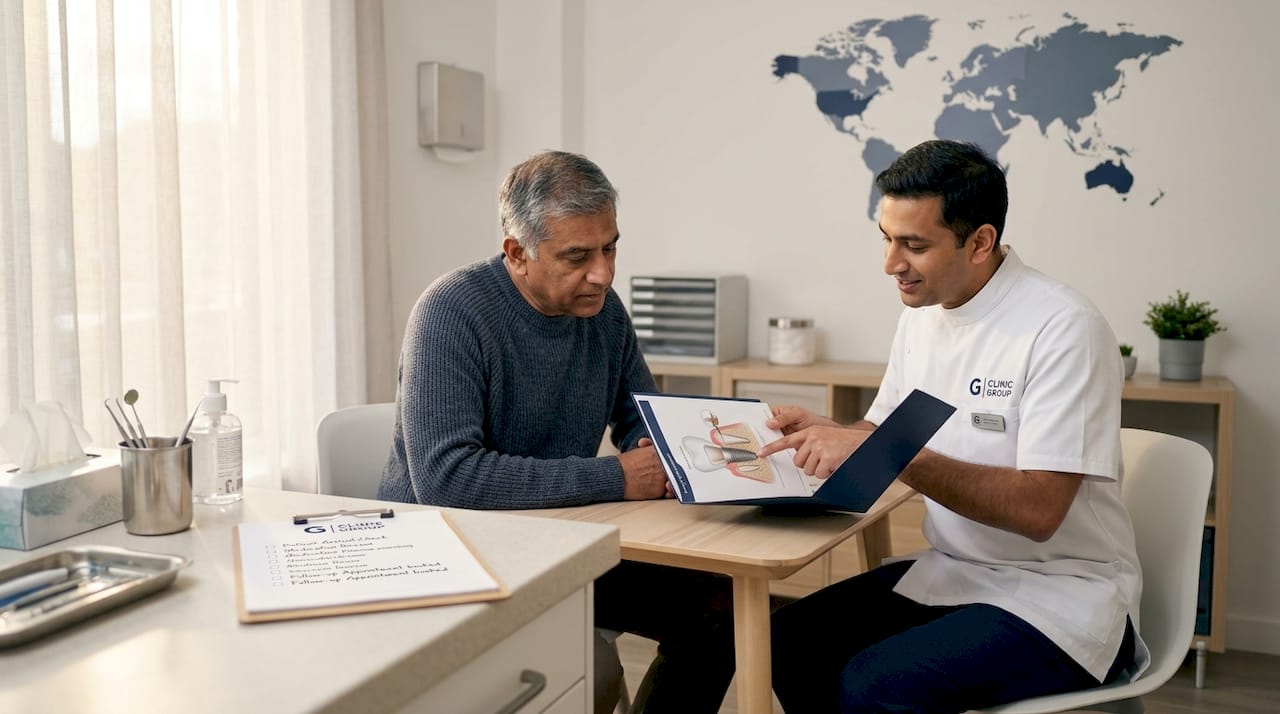
Pro Tip: Ask any prospective overseas clinic for written documentation of their sterilisation protocols, the brand names of implant or prosthetic materials they use, and their specific aftercare policy for international patients. If they cannot or will not provide this in writing, treat it as a serious warning sign.
Expert advice: Making the best location-based choice
With a clear picture of both the benefits and the risks, you are now in a position to make a genuinely informed decision. Expert guidance consistently points to a small set of factors that separate reliable overseas clinics from risky ones.
The most important checklist items when selecting a clinic abroad include:
- International accreditation: Look for JCI accreditation or ISO certification as a baseline indicator of quality management and patient safety standards.
- English-speaking clinical staff: Not just a coordinator, but the dentist or specialist who will actually treat you.
- Phased treatment plans: Reputable clinics prioritise phased planning over single-visit procedures for complex cases. Any clinic that promises a complete smile makeover in 48 hours deserves serious scrutiny.
- Documented aftercare protocols: Find out what happens if you develop a complication after returning home.
- Transparent pricing: Avoid clinics that provide vague or bundled quotes without itemising individual treatments and materials.
- Patient testimonials and verifiable reviews: Look beyond the clinic’s own website to independent platforms.
Red flags that suggest you should look elsewhere:
- Pressure to book quickly or accept discounts that expire imminently
- Inability to provide written treatment plans before you arrive
- No pre-treatment video consultation offered
- Very high patient volumes with extremely short appointment slots
- Reluctance to share the brand or origin of materials and implants
| Clinic quality indicator | Green flag | Red flag |
|---|---|---|
| Accreditation | JCI or ISO certified | No international certification |
| Treatment planning | Phased, documented, shared in advance | Single visit for complex cases |
| Aftercare | Written protocol for international patients | Vague or not offered |
| Communication | English-speaking specialist | Coordinator only |
| Pricing | Itemised, transparent | Bundled or quote only on arrival |
Before confirming any booking, we strongly recommend taking steps to navigate medical consultations abroad safely, as a well-structured pre-treatment consultation is one of the clearest indicators of a professional, patient-centred clinic. Reviewing clinic accreditation guidance will also help you understand exactly what certifications to look for and what they mean in practice.
Pro Tip: Arrange a video consultation with the actual treating clinician, not just a patient coordinator. Ask them to review your X-rays or scans and provide a written preliminary assessment. This alone will tell you a great deal about the clinic’s professionalism and patient care standards.
Why conventional wisdom about clinic location is missing the mark
Most conversations about medical tourism focus on two things: how much you can save and how far you need to travel. These are not unimportant questions, but they are the wrong starting point. The patients who get the best outcomes from overseas treatment are not the ones who found the cheapest clinic or the most convenient flight. They are the ones who spent the most time vetting their provider.
The CDC notes that while JCI-accredited clinics and destination promoters rightly highlight savings and rising quality standards, critics point to genuine complications, ethical concerns, and the burden placed on home healthcare systems when things go wrong. Both perspectives are valid. The mistake is assuming that one outweighs the other as a general rule.
Here is what we observe consistently across patient experiences: those who prioritise aftercare provisions, insist on seeing accreditation documentation, and arrange pre-travel consultations report far better outcomes than those who choose a clinic primarily because it appeared cheapest in a comparison table. Price is a proxy for quality only when every other variable is controlled. In medical tourism, very few variables are controlled automatically.
The real wisdom in choosing a clinic location lies in understanding that geography creates possibilities, not guarantees. Turkey, Hungary, or Poland may offer you genuinely world-class treatment at a fraction of UK prices. They may also offer substandard care at the same fraction of the price. The destination itself tells you very little. The individual clinic’s accreditation, clinical team, protocols, and aftercare commitment tells you a great deal.
We believe patients should invest more time comparing clinics on these substantive factors than debating flight costs or sightseeing appeal. Use tools that help you compare clinic features meaningfully, not just headline prices. That shift in focus is, in our experience, the single most impactful change you can make to improve your chances of a safe, successful outcome abroad.
Explore safer treatment options with Clinic Group
Clinic Group connects patients across the UK and Europe with verified, internationally accredited clinics offering dental, cosmetic, hair restoration, and wellness treatments. Every clinic on our platform is assessed for quality standards, patient safety protocols, and aftercare provisions, giving you a reliable foundation for your decision-making. Whether you are exploring treatment options for the first time or ready to compare specific providers, our platform is designed to make the process transparent and straightforward. Browse our network of trusted clinics worldwide and connect with expert guidance to take the next step with confidence. We support you from initial enquiry through to aftercare, because a good outcome depends on the full journey, not just the procedure itself.
Frequently asked questions
How much money can I save by choosing a clinic abroad?
Savings can reach $30,000 or more for treatments such as All-on-4 dental implants in destinations like Turkey, even after accounting for flights and accommodation.
What are the biggest risks with overseas dental or aesthetic clinics?
Common risks include infection, implant failure, and rushed or destructive treatment preparation, alongside limited aftercare provision and little or no legal recourse if complications arise.
Does distance matter more or less depending on my income?
Research shows that lower-income patients are typically willing to travel significantly further for treatment, around 10 kilometres per socioeconomic grade compared to 1.7 kilometres for higher-income patients, reflecting differing motivations and access barriers.
What should I check before booking treatment abroad?
Prioritise clinics with international accreditation, English-speaking clinical staff, phased treatment plans for complex procedures, and a clear written aftercare protocol for patients returning home after treatment.