TL;DR:
- Choosing an international clinic requires evaluating safety standards, diagnostic thoroughness, and protocol personalisation beyond marketing claims. Using side-by-side comparisons of verified clinics based on transparent criteria helps patients make well-informed decisions that ensure safety and quality. Prioritising documented standards, proper sterilisation, personalised treatment plans, and reliable aftercare reduces risks associated with medical tourism.
Choosing a clinic abroad for dental work, a cosmetic procedure, or a regenerative therapy is not straightforward. Without a clear clinic comparison checklist, patients risk choosing based on attractive websites rather than genuine clinical quality. The challenge is real: different countries have different standards, marketing materials rarely disclose infection control protocols, and pricing is often unclear until you are already committed. Using side-by-side comparison with consistent metrics gives you a reliable way to cut through the noise and make a well-informed decision. This guide gives you exactly that.
Table of Contents
- Essential criteria for comparing international clinics
- Verifying safety and infection control standards
- Comparing diagnostic and treatment protocols
- Using side-by-side comparison to shortlist clinics
- Making the final decision: balancing cost, quality, and support
- Why strict clinic comparison is vital for international healthcare safety
- How Clinic Group supports your safe international treatment journey
- Frequently asked questions
Key Takeaways
| Point | Details |
|---|---|
| Use a detailed checklist | Structured comparison using a clear checklist improves clinic selection for international treatments. |
| Verify sterilization standards | Confirm clinics use Class B autoclaves compliant with EN 13060 to ensure instrument safety. |
| Evaluate protocols and diagnostics | Choose clinics that personalise treatment plans based on thorough diagnostics and ongoing monitoring. |
| Compare multiple clinics side-by-side | Shortlisting and comparing up to three clinics with consistent metrics helps avoid bias. |
| Prioritise transparency and support | Look for clear pricing, guarantees, and strong aftercare communication for a safer journey. |
Essential criteria for comparing international clinics
A solid clinic comparison checklist starts with establishing what actually matters. For European patients considering aesthetic, dental, or regenerative treatments abroad, the stakes are high enough to demand a structured clinic evaluation guide rather than gut instinct.
An 8-dimension framework covering diagnostic thoroughness, protocol quality, physician expertise, monitoring frequency, medication quality, telehealth access, pricing transparency, and communication reliability has been shown to be effective for medical facility comparison. Each of these dimensions reveals something different about how a clinic actually operates, not just how it presents itself.
When building your healthcare provider checklist, prioritise these core clinic selection criteria:
- Diagnostic thoroughness: Does the clinic carry out meaningful baseline assessments before recommending treatment, or do they fast-track you to a package?
- Protocol quality: Are treatment protocols evidence-based, clearly documented, and tailored to your individual results?
- Physician expertise: Can you verify the qualifications and experience of the specialists who will treat you?
- Monitoring capabilities: For multi-stage treatments, does the clinic offer follow-up appointments or remote consultations?
- Pricing transparency: Is there a written, itemised cost breakdown available before you commit?
- Communication reliability: Can you reach the clinic easily in your language, and do they respond promptly?
Explore the clinic comparison features that reliable international platforms assess when vetting partners, and browse a medical clinics directory of verified providers to begin your search with confidence.
Verifying safety and infection control standards
Once you have a working evaluation framework, safety verification becomes your next non-negotiable step. Infection control is particularly critical for dental procedures and any invasive aesthetic or regenerative treatment. It is also the area where shortcuts are most common and least visible to patients.
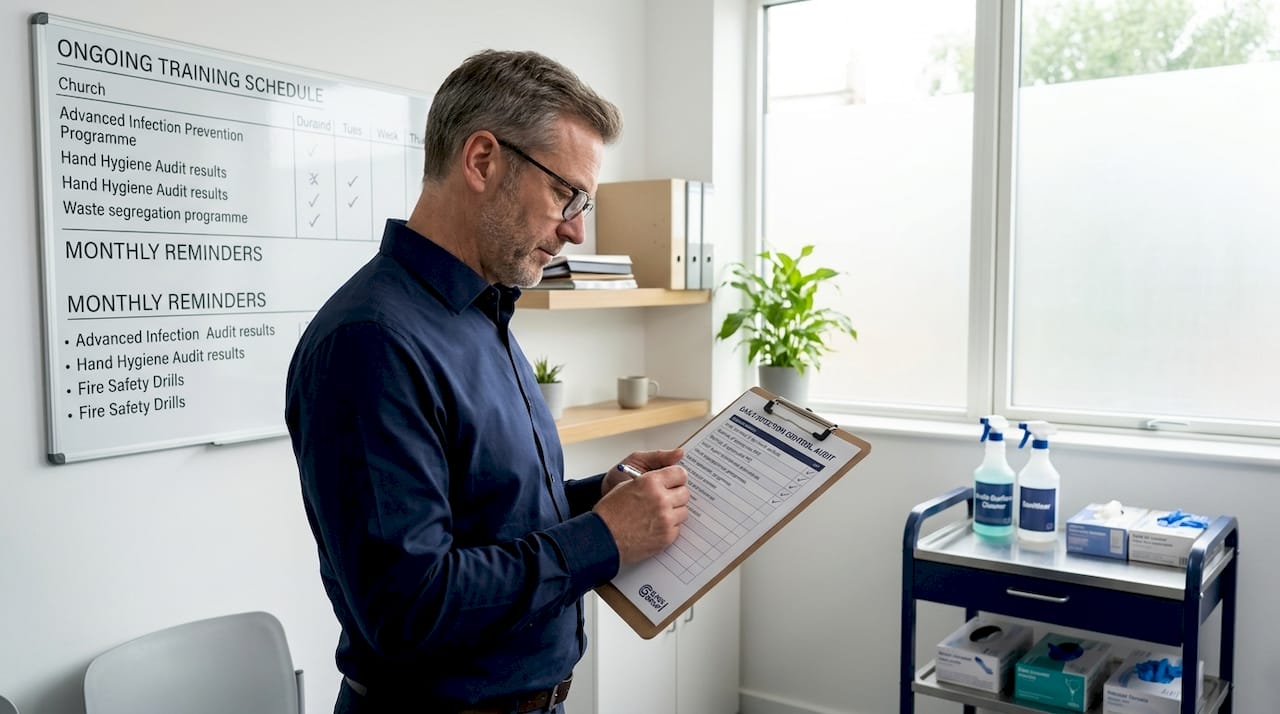
The single most important piece of equipment to ask about is the autoclave used for instrument sterilisation. Class B autoclaves compliant with the EN 13060 standard are essential because they sterilise a full range of instruments reliably, including hollow and porous items. Class N autoclaves, by contrast, are only suitable for solid, unwrapped instruments and should not be used for complex dental or surgical tools. A clinic that cannot confirm it uses a Class B autoclave is taking a shortcut you should not accept.
Use this safety verification list when assessing any clinic for your checklist for choosing a clinic:
- Autoclave class: Confirm Class B, not Class N or Class S.
- Standard compliance: Ask for EN 13060 certification or an equivalent national standard.
- Documentation: Request written proof, not a verbal assurance during a sales call.
- Instrument scope: Ask which instrument types are sterilised, as the answer reveals whether the clinic understands its own processes.
- Single-use items: Confirm that needles, syringes, and disposable components are never reused.
Pro Tip: When contacting a clinic, ask specifically: “What class of autoclave do you use, and can you share your sterilisation certification?” A hesitant or vague response is itself useful information.
Review our detailed dental treatment safety guide for a broader look at what safe dental care abroad should involve.
Comparing diagnostic and treatment protocols
Infection control confirms a clinic is safe. Diagnostic and treatment protocols confirm it is clinically competent. These two things are different, and both matter. Many clinics pass a surface-level safety check but fail to deliver personalised care because their treatment approach is standardised regardless of the patient’s individual profile.
A weighted evaluation framework assigns particular importance to diagnostics, protocol quality, and monitoring frequency, especially for multi-stage treatments that require ongoing clinical oversight. This is the right approach, because a one-size-fits-all protocol applied without adequate diagnostics is a significant risk, whether you are receiving hormone therapy, a full dental restoration, or a regenerative treatment.
When assessing any clinic’s diagnostic and treatment approach, work through these steps in order:
- Ask about baseline diagnostics. Before any treatment is proposed, a reputable clinic should request blood work, imaging, or relevant scans. If a treatment plan is offered before diagnostics are completed, that is a red flag.
- Confirm protocol personalisation. Protocols should be built around your individual results, not a fixed package. Ask directly whether treatment adjustments are made based on your diagnostic findings.
- Evaluate monitoring frequency. For treatments that unfold over weeks or months, ask how often your progress is reviewed and what triggers a protocol adjustment.
- Verify discussion of alternatives. A trustworthy clinic presents options, including what happens if the initial approach needs revision. Clinics that offer only a single pathway without discussion of alternatives may be prioritising throughput over care.
Pro Tip: Request a sample treatment plan or a case study from the clinic before booking. Reputable clinics are happy to demonstrate the structure of their protocols. If they are reluctant, consider that a signal.
For guidance on what to expect and ask during your initial consultations, see our resource on navigating medical consultations abroad safely.
Using side-by-side comparison to shortlist clinics
The most effective way to apply your clinic features checklist is to narrow your options to a shortlist of three clinics and evaluate them against the same criteria, simultaneously. This discipline eliminates the cognitive bias that comes from evaluating clinics in sequence, where the most recently reviewed one tends to seem most appealing.
Public reporting tools designed for international clinic selection use standardised definitions precisely to reduce this kind of bias. When you define “safety” or “transparency” in the same way for each clinic, the comparison becomes genuinely objective.
Here is an example of how a structured side-by-side comparison might look for three shortlisted clinics:
| Criteria | Clinic A | Clinic B | Clinic C |
|---|---|---|---|
| Sterilisation standard | Class B, EN 13060 certified | Class B, unverified | Class N confirmed |
| Baseline diagnostics | Full blood panel + imaging | Questionnaire only | Full blood panel |
| Protocol personalisation | Confirmed in writing | Verbal assurance | Confirmed in writing |
| Monitoring frequency | Monthly check-ins | Single follow-up | Fortnightly check-ins |
| Itemised pricing | Yes, written | On request | Yes, written |
| Accreditation status | JCI accredited | Local only | ISO certified |
| Patient reviews | 4.8/5 (200+ reviews) | 4.2/5 (40 reviews) | 4.7/5 (150+ reviews) |
In this example, Clinic A scores well across the board. Clinic C is strong but offers less frequent monitoring. Clinic B has gaps in sterilisation verification and diagnostic depth that should concern you regardless of its price point.
When finalising your shortlist, also consider:
- Accreditation status: JCI (Joint Commission International) or ISO certification adds an important layer of independent verification.
- Volume of patient reviews: A clinic with 200 verified reviews is more reliable than one with five glowing testimonials.
- Language and communication: Can you correspond clearly and without confusion before you have even arrived?
Read our clinic accreditation guide for a thorough explanation of what different accreditations mean and how to verify them.
Making the final decision: balancing cost, quality, and support
Cost matters. It is often the primary reason European patients explore treatment abroad in the first place, and there is nothing wrong with that. Dental implants in Hungary or Turkey can cost 60 to 70 per cent less than equivalent treatment in the UK, with no compromise in quality at verified clinics. But cost should be your final filter, not your first one.
Marketing claims differ from clinical governance. Clinics with the most polished websites and the most aggressive pricing campaigns are not always the ones delivering the best outcomes. Patients must insist on clear explanations of diagnostics, monitoring protocols, and aftercare before committing to any booking.
When making your final decision, use this checklist for choosing a clinic:
- Prioritise verified clinics with documented protocols and written guarantees rather than those leading with testimonials and promotional offers.
- Confirm aftercare arrangements before you travel. Can you contact the clinic after you return home? Are remote consultations available?
- Request itemised costs in writing. A trustworthy clinic will provide a full cost breakdown covering consultations, diagnostics, treatment, and any follow-up appointments.
- Assess communication quality. If getting a straight answer before booking feels difficult, it will not improve once you are in the treatment chair.
- Consider support services. Some international healthcare platforms assist with travel logistics, accommodation, and coordination, which reduces stress and the chance of avoidable complications.
For a full breakdown of what good international aftercare looks like and why it matters, read our guide on aftercare services for medical tourists.
Why strict clinic comparison is vital for international healthcare safety
There is a tendency among patients to treat medical tourism like booking a holiday, comparing prices, reading a few reviews, and going with the option that feels right. The consequence of that approach, when it goes wrong, is not a disappointing hotel room. It is a healthcare complication in a foreign country, often with limited recourse.
The best practices for clinic comparison are not bureaucratic box-ticking. They are a direct defence against being misled by presentation rather than substance. A clinic’s website can be beautiful and its patient coordinators warm and responsive, but neither of those things tells you whether its sterilisation equipment meets EN 13060, or whether its protocols are adjusted based on your actual diagnostics results.
What we find consistently in the verified clinics we work with is that the ones delivering the best outcomes are also the ones most willing to be transparent. They share documentation. They explain protocols. They welcome questions about monitoring frequency. Clinics that deflect, generalise, or rely on marketing language when asked specific clinical questions are telling you something important.
Infection control is the area patients most frequently underestimate. It is invisible, it is not discussed in brochures, and it requires specific questions to surface. Yet it is one of the primary drivers of complications following dental and surgical procedures abroad. If your clinic features comparison does not include sterilisation standards as a weighted criterion, it is incomplete.
Objective, side-by-side comparison reduces the risk that you will choose a clinic because it felt more confident, or because its coordinator replied faster. It grounds your decision in measurable, comparable factors. That is not overcaution. It is how informed patients protect themselves.
How Clinic Group supports your safe international treatment journey
Clinic Group connects European patients with a network of verified medical clinics that have been assessed against strict safety, transparency, and quality standards. Every partner clinic in our directory is evaluated using the same criteria this article describes: sterilisation protocols, diagnostic depth, transparent pricing, and aftercare capability.
We match patients with the right clinic based on their specific treatment needs, health profile, and budget. Our support does not stop at the booking. We assist with travel planning, partner accommodation, and aftercare coordination to make the entire experience as straightforward as possible. Browse our full range of available treatments or explore the Clinic Group platform to start comparing verified options with confidence.
Frequently asked questions
What is the most important safety feature to check when choosing a dental clinic abroad?
Verify the clinic uses a Class B autoclave compliant with EN 13060 or an equivalent standard to ensure proper sterilisation of all dental instruments, including hollow and porous items.
How can I compare clinics effectively when considering international treatment options?
Create a shortlist of up to three clinics and compare them side-by-side using consistent metrics such as safety standards, patient experience, pricing transparency, and accreditation status to reach an objective decision.
Why is transparent pricing important in choosing a clinic abroad?
Itemised written costs prevent unexpected fees and allow you to compare clinics on a genuine like-for-like basis, ensuring what you pay for in one clinic is truly equivalent to what another is offering.
What role does aftercare play in selecting an international clinic?
Follow-up care policies including remote consultations ensure you receive ongoing clinical support after returning home, which is especially important for multi-stage or recovery-intensive treatments.
How can I be sure a clinic provides personalised treatment protocols?
Ask the clinic directly how they adjust protocols based on your individual diagnostic results and whether monitoring during treatment leads to real-time adjustments, rather than a fixed plan applied to every patient.