TL;DR:
- Booking medical treatment abroad requires thorough preparation, including gathering essential documents and verifying clinic accreditation to ensure safety.
- Following a clear step-by-step process—from research to final confirmation—reduces risks and promotes a smooth treatment experience internationally.
Booking a medical treatment abroad can feel overwhelming at first. You might worry about choosing the right clinic, managing paperwork across different countries, communicating in a second language, or simply not knowing where to begin. These concerns are completely understandable. Every year, hundreds of thousands of Europeans travel abroad for high-quality, affordable cosmetic surgery, dental work, hair transplants, and wellness programmes. The good news is that with the right preparation and a clear process, securing safe and reliable care internationally is far more straightforward than most people expect.
Table of Contents
- What to prepare before booking your treatment
- Step-by-step guide to booking your treatment
- Common mistakes and how to avoid them
- What to expect after booking: confirmation and preparation
- Our experience: what most guides miss about booking medical treatments abroad
- Next steps: discover trusted clinics and book with Clinic Group
- Frequently asked questions
Key Takeaways
| Point | Details |
|---|---|
| Prepare documentation early | Start gathering medical records and travel documents well before booking to ensure smooth process. |
| Follow clear booking steps | Systematically research clinics, verify their credentials, and follow a structured appointment process. |
| Double-check for mistakes | Avoid common pitfalls by confirming paperwork and aftercare arrangements before finalising your booking. |
| Expect timely confirmation | Reliable clinics will send booking confirmations and preparation instructions soon after you schedule treatment. |
| Clinic Group is a trusted platform | The Clinic Group enables you to find and book fully accredited medical treatments with confidence. |
What to prepare before booking your treatment
Before you can confidently book, it is important to understand the documentation and preparations you will need. Skipping this stage is one of the most common reasons patients experience delays or complications when seeking care abroad. Preparing patient prerequisites is essential prior to booking any treatment abroad, and getting this right sets the tone for a smooth entire experience.
Documents and records you will need
Gathering the right paperwork early is crucial. Here is what most international clinics will ask for:
- Medical records and recent test results: This includes blood tests, imaging scans, diagnoses, and any previous treatment notes relevant to your condition.
- Identification and travel documents: A valid passport is required. Depending on your destination country, you may also need a visa. Check entry requirements well in advance of your travel date.
- Travel insurance with medical coverage: Standard travel insurance may not cover elective medical procedures. Look specifically for policies that include treatment complications and repatriation cover.
- Proof of eligibility or referral letters: Some clinics, especially those offering specialist treatments such as oncology support or fertility therapies, may request a referral from your GP.
- Consent forms and health questionnaires: Many reputable clinics will send these in advance so you can complete them carefully and accurately from home.
- List of current medications: Include dosages and frequency, as this can affect treatment planning and anaesthesia decisions.
It is also worth reviewing the clinic accreditation standards of your chosen destination country before you book. Accreditation indicates that a clinic meets recognised safety and quality benchmarks, which is a key factor in protecting you as a patient.
Pro Tip: Scan and store all documents in a secure cloud folder, such as Google Drive or Dropbox. Share access with a trusted family member in case of emergency. Label each file clearly so clinic staff can find what they need quickly.
Preparation overview table
| Document type | Why it is needed | When to prepare |
|---|---|---|
| Medical records | Guides diagnosis and treatment planning | At least 4 weeks before booking |
| Passport and visa | Required for international travel | At least 6 weeks before travel |
| Travel insurance | Covers complications and repatriation | Before confirming your appointment |
| Referral letter | Confirms eligibility for specialist care | As early as possible |
| Medication list | Prevents dangerous drug interactions | Before your initial consultation |
Taking a structured approach to this preparation stage reduces last-minute stress and gives the receiving clinic everything they need to start planning your care effectively.
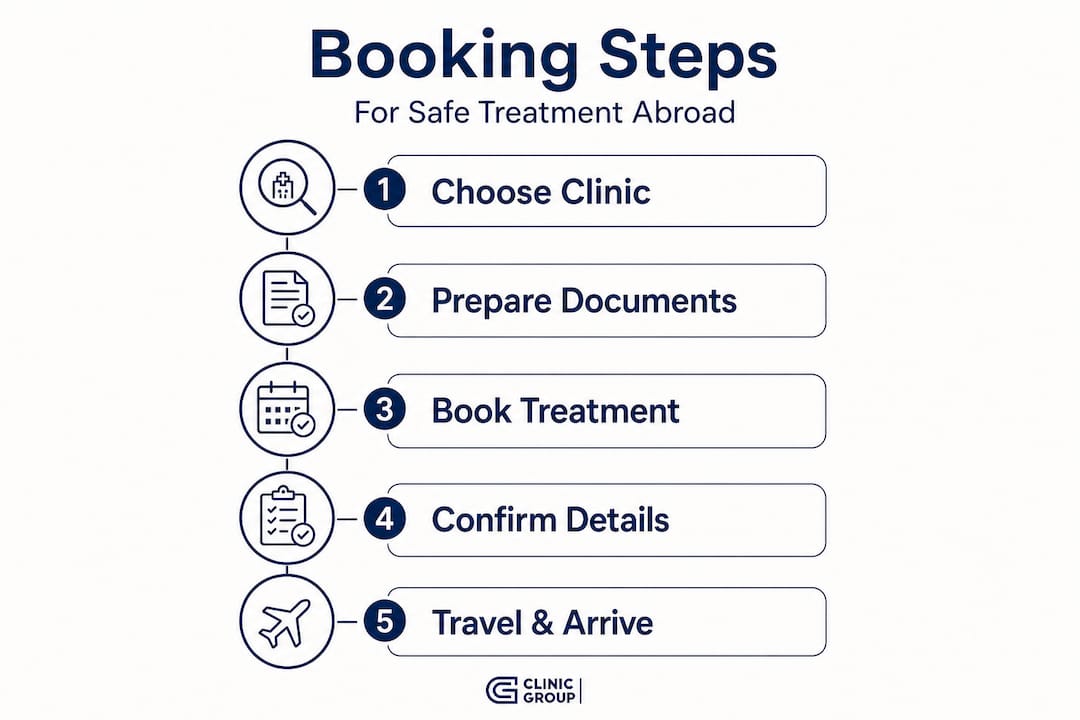
Step-by-step guide to booking your treatment
Once you have your documents ready, here is a step-by-step guide to secure your medical booking efficiently. The process is more involved than booking a GP appointment locally, but each step has a clear purpose that protects both your health and your money.
-
Research clinics and shortlist credible options. Start by identifying clinics that specialise in your treatment. Look for those with verified patient reviews, published success rates, and clear information about their medical team’s qualifications. Avoid clinics that offer unusually low prices without explaining why.
-
Verify credentials before making contact. Check that the clinic holds accreditation from a recognised body such as JCI (Joint Commission International) or an equivalent national authority. Review the qualifications of the surgeon or specialist you would be seeing. This step is non-negotiable.
-
Contact the clinic and submit your prerequisites. Use the clinic’s official contact channel to send your medical records and initial enquiry. A reliable clinic will respond promptly with clear information about next steps. Booking a specialist appointment ensures timely care and a streamlined process, so do not delay this step once you have chosen your preferred provider.
-
Book an initial consultation, either online or in person. Many international clinics now offer video consultations, which is a practical and cost-effective way to assess suitability before committing to travel. Scheduling a consultation involves stepwise confirmation and follow-up, so ask the clinic to send a written summary after each call or meeting.
-
Confirm treatment plan and costs in writing. Before paying any deposit, request a detailed written quote that includes the full cost of treatment, any additional fees, accommodation recommendations, and what is included in aftercare. Verbal agreements are not sufficient.
-
Arrange travel logistics. Once you have confirmed your booking and paid a deposit, plan your flights, accommodation, and local transport. Some clinics assist with these arrangements or have partner hotels with reduced rates for patients.
-
Confirm the appointment and make final payment arrangements. Contact the clinic one to two weeks before travel to reconfirm all appointment details, including the date, time, clinic address, and name of your treating specialist.
Pro Tip: Always compare clinic features across at least three providers before committing. Transparency about pricing, aftercare, and accreditation is a strong indicator of a trustworthy clinic.
Clinic comparison table
| Feature | What to look for | Red flag |
|---|---|---|
| Accreditation | JCI or national equivalent | No accreditation details provided |
| Pricing transparency | Itemised quote in writing | Vague estimates or hidden fees |
| Communication speed | Response within 24 to 48 hours | Slow or inconsistent replies |
| Aftercare policy | Clear written aftercare plan | No follow-up support offered |
| Patient reviews | Verified, recent testimonials | Only generic or anonymous reviews |
Common mistakes and how to avoid them
While following the steps is crucial, it is equally important to recognise common pitfalls and learn how to avoid them in your booking journey. Many patients encounter difficulties not because of poor treatment quality but because of avoidable errors made during the planning phase.
- Not verifying clinic accreditation. This is the most serious mistake you can make. Failing to confirm clinic accreditations and aftercare plans can result in real health risks. Always ask for documentary proof of accreditation, not just a logo on a website.
- Ignoring aftercare arrangements. Treatment abroad does not end when you fly home. You need a clear, written plan for recovery, including who to contact if you experience complications and whether your local GP will be informed of your treatment.
- Submitting incomplete paperwork. Missing documents can delay your treatment or force a cancellation on arrival. Use the checklist from the preparation section and confirm receipt of all files with the clinic before travelling.
- Poor communication with the clinic. If you are not receiving clear and timely responses to your questions before you travel, this is a warning sign. Clear communication with clinics reduces misunderstandings and ensures post-treatment support remains consistent.
- Failing to ask about emergency protocols. Find out what the clinic’s procedure is if something goes wrong during or immediately after treatment. Is there an on-site medical team available around the clock? Is the clinic near a hospital? These are essential questions.
- Not reading the contract carefully. Before signing anything or paying a deposit, read the clinic’s terms and conditions, particularly the cancellation and refund policy. If travelling far, travel disruptions do happen.
“The patients who have the smoothest experiences abroad are almost always those who asked the most questions before booking, not after. Preparation is not just about paperwork. It is about knowing what you are walking into.”
Understanding aftercare services for medical tourists is one of the most overlooked elements of the booking process. Arrange this at the same time as your treatment, not as an afterthought once you return home.
What to expect after booking: confirmation and preparation
With mistakes avoided, here is what you can expect after your booking is accepted, and how to get ready for your trip. A reliable clinic will not simply send you a booking reference and leave you to figure out the rest.
Most reputable international clinics follow a structured post-booking process. Detailed confirmation and pre-treatment preparation guidelines are standard practice among quality providers, and you should expect to receive these within a few days of confirming your appointment.
What you should receive after booking
- A formal confirmation email with your appointment date, time, specialist’s name, and clinic address.
- Pre-treatment instructions covering dietary restrictions, medications to pause, and any preparatory tests you need to complete before arrival.
- A contact person at the clinic who you can reach with questions before your trip, ideally by both email and phone.
- Information about what to bring on the day, including original documents, comfortable clothing, and any prescribed items.
- An estimated treatment timeline, so you know how long the procedure takes, how long you may need to remain in the destination country for recovery, and when you are safe to fly home.
Pro Tip: After receiving your confirmation, reply to the clinic to confirm that you have received and read all instructions. This creates a clear communication record and flags any details that do not match your expectations.
Post-booking timeline overview
| Timeframe | What to expect |
|---|---|
| Within 24 to 48 hours | Formal confirmation and pre-treatment document pack |
| 2 to 3 weeks before travel | Pre-treatment instructions and preparatory test list |
| 1 week before travel | Final appointment confirmation and logistics check |
| Day of travel | Arrival guidance and clinic contact confirmation |
| Post-treatment | Written aftercare plan and follow-up appointment schedule |
Reviewing dental travel essentials and similar treatment-specific guides can also help you understand what preparation looks like for your specific type of procedure.
Our experience: what most guides miss about booking medical treatments abroad
Having worked with patients and clinics across Europe and the Middle East for many years, we have noticed patterns that rarely appear in standard booking guides. These subtleties matter enormously to the overall patient experience.
The most overlooked factor is cultural expectations. Patients travelling from the UK, for example, may be accustomed to a particular communication style in healthcare settings. Clinics in Turkey, Poland, or Hungary may operate with different rhythms, different norms around formality, and different approaches to discussing pricing. Neither is wrong. But a patient who expects NHS-style directness may misread a more formal or detailed consultation approach as impersonal. Understanding that these differences exist, and asking your clinic how they prefer to communicate, can make a significant difference to how comfortable you feel.
We have also seen that the best clinics share one consistent quality: they answer questions quickly, clearly, and without making patients feel as though they are being a burden. Speed of response before booking is genuinely predictive of the quality of care you will receive. If a clinic takes five days to answer a simple question about pricing, that pattern rarely improves once you are on the treatment table.
Finally, successful patients tend to be proactive. They do not wait for the clinic to prompt them. They prepare their safe quality dental treatment guide resources in advance, ask about aftercare unprompted, and confirm every logistical detail in writing. Passivity in the booking process almost always results in a less smooth experience, regardless of how reputable the clinic is.
The practical lesson here is simple: treat the booking process as the first part of your treatment, not the admin before it begins.
Next steps: discover trusted clinics and book with Clinic Group
Ready to take the next step? Clinic Group connects patients across Europe with verified, high-quality clinics offering cosmetic surgery, dental treatments, hair transplants, anti-ageing therapies, and wellness programmes. Our platform allows you to search by treatment type and location, read genuine patient reviews, and compare clinics side by side so you can make a fully informed decision. Every clinic on our platform is vetted for safety, accreditation, and patient support standards. We also assist with travel arrangements, pre-treatment consultations, and aftercare coordination, so you are never navigating this process alone. Visit Clinic Group to browse trusted providers and book your consultation with confidence.
Frequently asked questions
What documents are required to book medical treatment abroad?
You generally need medical records, a valid passport, proof of travel insurance, and relevant test results. Patient prerequisites should be gathered well in advance to avoid delays in your booking.
How do I verify that a clinic is safe and accredited?
Ask the clinic directly for their accreditation certificates and check independent review platforms for verified patient feedback. Confirming clinic accreditations before booking is essential to protecting your health and avoiding substandard care.
What happens after I book my treatment?
You should receive a formal confirmation email, pre-treatment instructions, and a named contact at the clinic within 24 to 48 hours. Detailed preparation guidelines from reputable clinics ensure you are fully ready before you travel.
Do I need to arrange aftercare separately?
Not always, but you must confirm this explicitly with your provider before booking rather than assuming it is included. Post-treatment support should be documented in writing as part of your overall treatment agreement.