There’s no single best country for a facelift: the right choice depends on the surgeon’s experience, the facility, the support available during recovery and how follow-up care will work once you return to the UK. A destination should be judged on the whole care journey, not its name alone.
When considering the best country for a facelift, you also need to weigh travel, time away from home and access to care after surgery. Clear information about the procedure, its risks and recovery arrangements can help you compare options.
This guide explains how to assess destinations for facelift surgery, including clinical oversight, patient support and continuity of care. It also covers the practicalities of travelling for surgery and returning home, so you can decide whether treatment abroad suits your needs.
Key Takeaways
- Assess a surgeon’s qualifications and the facility’s standards alongside the treatment plan, not in isolation.
- Plan travel around recovery and clarify how you can access support while abroad.
- Arrange follow-up before returning to the UK, including who to contact about recovery concerns.
- Discuss your health, expectations and suitability with the provider before deciding on facelift surgery.
- Use Clinic Group’s plastic surgery provider listings to explore options in Albania or Dubai; the directory does not provide treatment or guarantee results.
What should you check before travelling for a facelift?
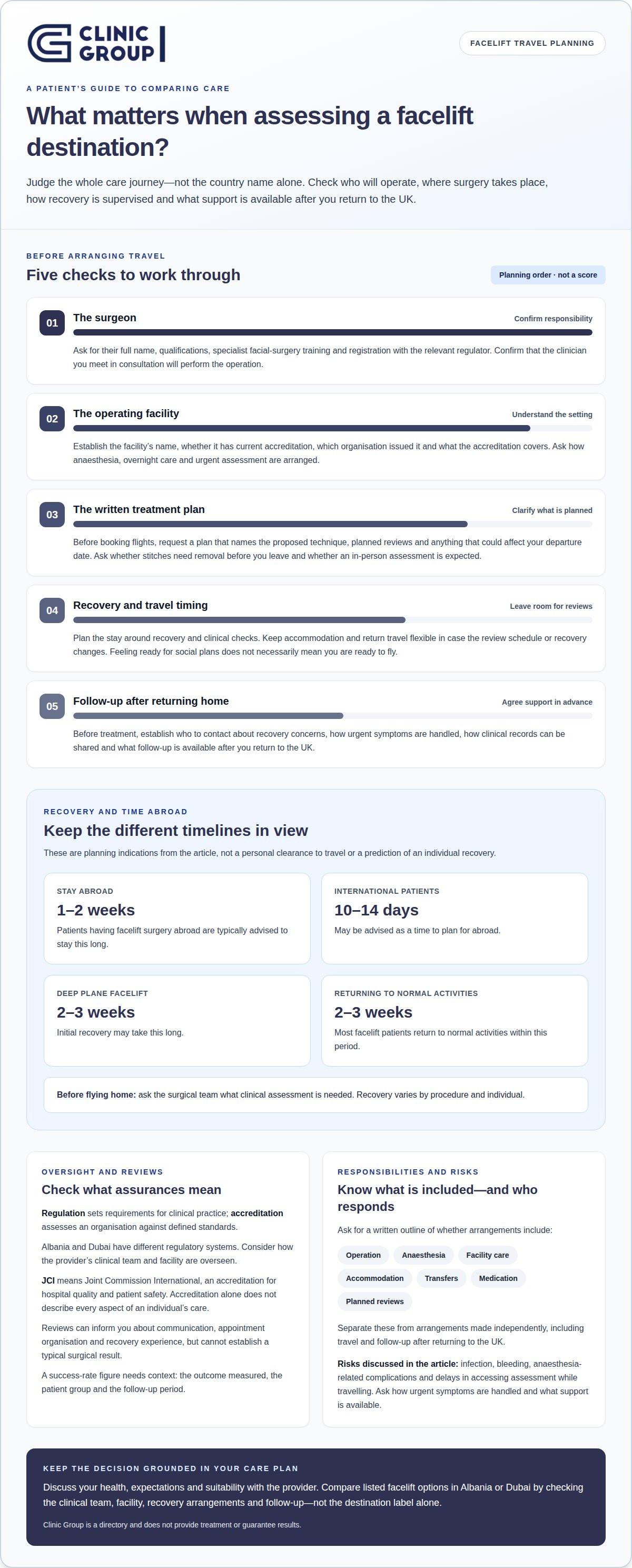
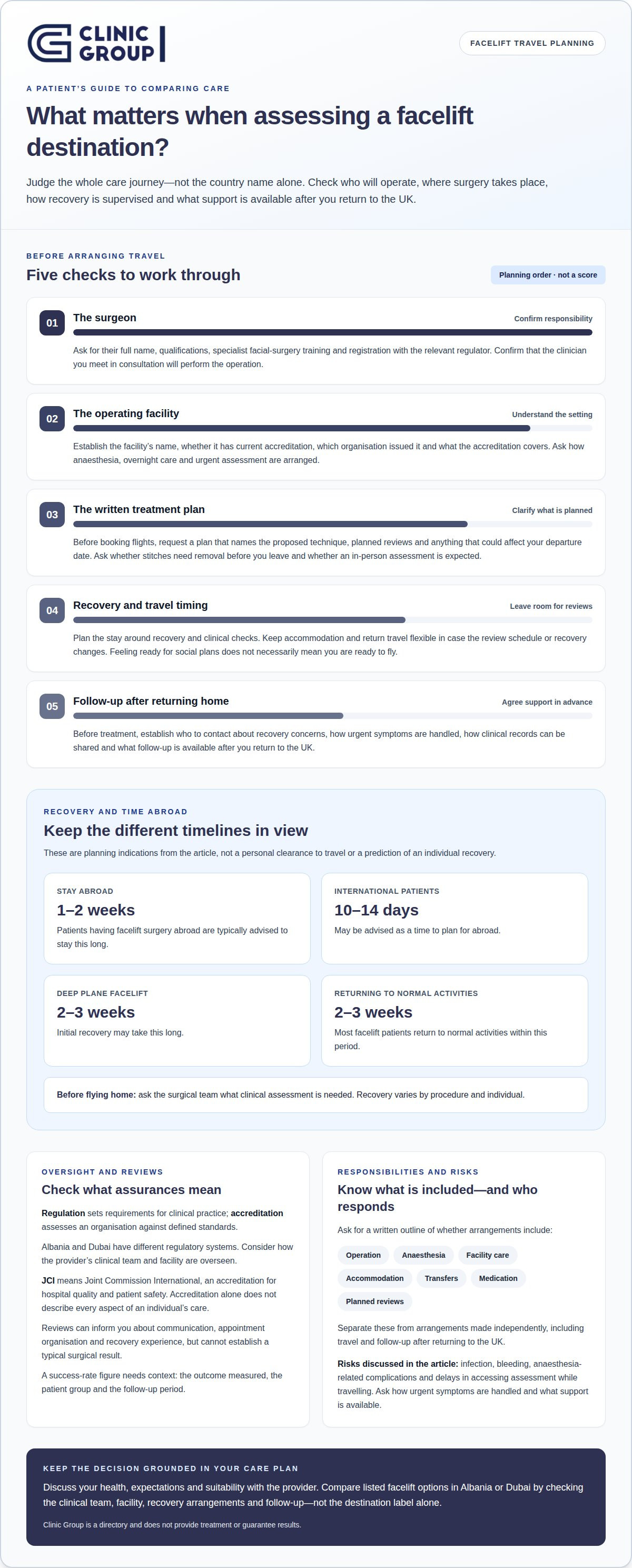
Before booking travel for facelift surgery, establish who will operate, where the procedure will take place and how recovery will be supervised. Ask for the surgeon’s full name, qualifications and specialist training in facial surgery, then check their registration with the relevant regulator in the country where the surgery is planned. Confirm that the clinician you meet during your consultation will perform the operation.
Facility standards matter as much as the surgeon’s credentials. Ask for the operating facility’s name and whether it holds current accreditation. Find out what the accreditation covers, which organisation issued it and whether it applies to the surgical site. Ask how anaesthesia, overnight care and urgent assessment are arranged. Specific answers give you a clearer picture than broad promotional claims.
Request a written treatment plan before arranging flights or accommodation. It should name the proposed facelift technique, set out planned reviews and explain what could affect your departure date. Ask whether stitches need to be removed before you leave and whether the surgeon expects to assess you in person. Plan travel around recovery and follow-up, rather than leaving these details until after booking.
Plan enough time in the destination for recovery and clinical reviews. Patients having facelift surgery abroad are typically advised to stay for 1-2 weeks, and international facelift patients may be advised to plan for 10-14 days abroad. Allow flexibility in your accommodation and return travel in case your recovery or review schedule changes. Before booking a flight, ask the surgical team what clinical assessment is needed before travelling home.
Recovery depends on the procedure and the individual. Initial recovery from a deep plane facelift may take 2-3 weeks, while most facelift patients return to normal activities within 2 - 3 weeks. Feeling ready for social plans does not necessarily mean you are ready to fly. Ask the team to explain which symptoms need prompt attention, how to reach them and how a review can be arranged after departure.
| Decision area | What to establish | Why it matters |
|---|---|---|
| Surgeon | Identity, registration, qualifications and relevant experience | Clarifies who is responsible for the operation |
| Facility | Operating location, accreditation scope and recovery arrangements | Sets out where surgery and immediate care take place |
| Travel plan | Review dates, time abroad and flexible accommodation | Leaves room for recovery and clinical checks |
Aesthetic judgement matters too: the surgeon should explain how the selected technique relates to your facial features and aims. The facelift treatment guide describes the procedure. Choose a plan only when the operating team, facility, reviews and travel schedule are clear to you.
How can you assess safety and patient support?
When comparing listed providers in Albania or Dubai, consider clinical oversight, patient support and what the treatment arrangements include. Look for clear processes and responsibilities, not just a destination label or general assurance.
Patient Safety and Medical Regulation
Regulation and accreditation cover different aspects of care. Regulation sets requirements for clinical practice, while accreditation assesses an organisation against defined standards. Albania and Dubai have different regulatory systems, so consider how each provider’s clinical team and facility are overseen. JCI stands for Joint Commission International, a recognised accreditation for hospital quality and patient safety. Accreditation alone does not describe every aspect of an individual patient’s care.
Ask the provider to explain its procedures for anaesthesia, infection prevention, complications and urgent assessment. Confirm which facility would be responsible for the operation and where immediate post-operative care would take place. Find out how international patients communicate with the clinical team, arrange appointments and access language support. Specific answers show how safety processes work in practice.
Patient Reviews and Success Rates
Reviews can offer insight into communication, appointment organisation and a patient’s experience of recovery, but they cannot establish a typical surgical result. Look for detailed accounts of what happened, such as how the clinic explained the treatment plan or handled follow-up. Treat brief praise as limited information and use reviews alongside a clinical discussion, not as a substitute for one.
A success rate needs context: the outcome measured, the patient group and the follow-up period. Without this information, a figure cannot tell you what an individual might experience. Ask how the provider describes outcomes and complications and what evidence informs those descriptions. The consultation should also establish whether a technique suits your facial features, rather than assuming that popularity means suitability.
Surgery Packages and Risks
Ask for a written outline of what the package includes, such as the operation, anaesthesia, facility care, accommodation, transfers, medication and planned clinical reviews. It should distinguish these from arrangements made separately, including travel and follow-up after you return to the UK. Clear responsibilities help you understand which team handles each part of your care.
Risks include infection, bleeding, anaesthesia-related complications and delays in accessing assessment while travelling. Concerns can also arise after you leave, when the overseas team is no longer nearby. Before treatment, establish how urgent symptoms are handled, how clinical records can be shared and what follow-up is available at home. These arrangements matter as much as the planned procedure.
To explore treatment information and listed options, browse the international treatment directory.
How is aftercare managed when you return home?
Continuity of care relies on a clear handover between the overseas surgical team and clinicians supporting you after your return. Before travelling, agree how post-operative reviews will be arranged, which records you will receive and who can answer clinical questions at home. A discharge summary, medication list and details of the procedure can help another clinician understand your care if you need an assessment.
For UK patients, plan the return journey around clinical advice and the review schedule. People are advised to wait 7 to 10 days after facial procedures before flying. The treating team should explain how this timing applies to your operation and what assessment is needed before departure. Arrange flexible travel and accommodation so changes to your recovery do not leave you without practical options.
Before leaving, request a written aftercare plan from the surgical team. It should cover wound care, medication guidance, review arrangements and symptoms that need prompt attention. Clarify how to contact the hospital or operating team from the UK and what happens if you need an in-person assessment. Keep copies of the plan and your clinical records accessible during your journey.
After returning, follow the agreed review schedule and share your discharge summary with the clinician supporting your recovery. If you seek advice, explain where and when the surgery took place, which technique was used and any medication prescribed. This gives the clinician useful context. Overseas facility accreditation does not define care after you leave, so establish who is responsible at each stage.
- Before departure: obtain your discharge summary, medication instructions and a contact route for the surgical team.
- During travel: keep records and prescribed medicines accessible, and follow the team’s travel advice.
- After returning: attend planned reviews and share relevant documents with the clinician involved in your care.
Transfers and accommodation can affect your ability to attend reviews, so organise them around the clinical schedule. Ask whether the team expects an in-person check before departure or remote contact afterwards. Remote updates can support communication, but they do not replace an examination when a clinician considers one necessary.
Hospitality and personal service can make an overseas stay feel organised, but they are separate from clinical aftercare. For an aesthetic procedure, focus on wound checks, escalation arrangements and record-sharing, not just transfers or accommodation. A clear handover plan connects overseas surgery with follow-up in the UK and clarifies responsibilities during recovery.
For UK patients, plan the return journey around clinical advice and scheduled reviews. People are advised to wait 7 to 10 days after facial procedures before flying; the treating team should explain how this applies to the operation and arrange any needed assessment. After returning, follow the agreed review plan, share your discharge summary and records with your clinician, and clarify how to contact the overseas team if further advice or an in-person assessment is needed.
What should you consider when choosing a facelift provider?
Suitability for facelift surgery depends on facial changes, general health, skin quality and the outcome you hope to achieve. The research describes typical candidates as aged 40-70, but age alone does not determine whether an operation is appropriate. A consultation should assess your individual features and explain what surgery can reasonably address.
Ask the provider to explain which procedures may address your concerns. A deep plane facelift works on deeper facial tissues, while other techniques address different areas or degrees of change—specialist aesthetic centres like Tseng Plastic Surgery demonstrate how advanced techniques are customised to structural anatomy. Find out what the recommended approach involves, where incisions are placed, what scars may look like and how recovery could affect daily activities. The explanation should be based on your assessment, not a standard package.
Your medical history matters. Tell the clinician about existing conditions, medicines, allergies and previous cosmetic surgery. Ask how these factors may affect the proposed procedure and anaesthesia, and whether you need further assessment. Explain your priorities, such as improving jawline definition or addressing loose skin, so the discussion can focus on suitable options.
Use the consultation to understand the provider’s role and the full treatment pathway. Ask who will perform the operation, who will provide anaesthesia and where surgery will take place. Clarify how the team handles post-operative reviews, complications and communication after you return home. These questions distinguish clinical responsibilities from travel arrangements and other services in a package.
- What specific facial concerns would the proposed procedure address?
- Why is this technique recommended over other facelift procedures?
- What are the material risks, and how might my health history affect them?
- Who performs the surgery, provides anaesthesia and leads follow-up?
- What recovery support and review arrangements are planned?
Take time to review the treatment plan and discuss anything unclear. A suitable provider should explain the expected changes, limits, risks and alternatives in language you understand. If a recommendation relies mainly on a promotional package or promised result, bring the discussion back to your clinical goals and individual assessment.
Compare the proposed procedure with your priorities, recovery arrangements and the provider’s answers, rather than choosing a clinic by destination alone. Cosmetic surgery is a personal medical decision. The right option is one that fits your needs after a clear discussion of benefits and risks. Keep written notes from the consultation so you can consider the details without pressure.
How can Clinic Group help you explore facelift providers?
Clinic Group’s Plastic Surgery Provider Listings help you explore options after considering the procedure, safety and aftercare. Its verified partner clinics are almost entirely in Albania, with a small number in Dubai. The directory can help you identify relevant providers and organise your next enquiries.
Use the listings as a starting point for comparing information about each provider. Consider the clinic’s location, the services described and whether the option fits your travel and follow-up needs. A directory can help organise your search, but it cannot replace an individual clinical assessment or determine whether facelift surgery is suitable for you.
Before deciding, discuss your health, expectations and treatment plan with the provider. Ask which clinician will assess you, who will perform surgery and how the clinic arranges reviews. Clarify the risks, recovery requirements and support available after you return to the UK. These discussions can help you judge whether an option suits your needs.
Clinic Group lists providers and helps readers explore options. It does not perform facelift surgery, make clinical decisions or guarantee results. The treating provider is responsible for assessing your suitability and explaining the proposed care. Keep these roles clear as you move from reading listings to discussing treatment with a clinic.
A practical way to use the directory is to:
- Identify listed providers in Albania or Dubai that offer facelift procedures.
- Compare the available information against your priorities, including location and follow-up arrangements.
- Use a consultation with the provider to discuss suitability, technique, risks and recovery.
- Consider how the proposed care connects with your plans after returning home.
No single destination makes a facelift the right choice for everyone. Your decision depends on your individual clinical assessment and whether the provider’s plan, setting and aftercare meet your needs. If you are still exploring, Clinic Group’s listings can help you focus on relevant options within its partner network, rather than treating a country name as a recommendation.
Clinic Group’s Plastic Surgery Provider Listings can be a useful next step if you want to explore facelift providers and prepare for a direct discussion about care. Take time to review your options and decide whether you are ready to speak with a provider. The medical tourism treatment guides can help you understand practical considerations before making a decision.
Contact Clinic Group to discuss exploring facelift provider options.
Take your next step towards an informed decision
Choosing the best country for a facelift matters less than finding a provider and care plan that fit your health, priorities and recovery needs. In your next conversation, clarify any uncertainties about clinical suitability, the proposed technique or continuity of care in the UK. Take time to consider the answers before deciding whether to proceed.
Clinic Group’s Plastic Surgery Provider Listings help readers explore facelift providers. Its Dental Treatment Directory and Hair Transplant Referrals support people researching other types of treatment abroad. For facelift surgery, focus your enquiries on the provider’s assessment, the care setting and follow-up arrangements. The directory helps you explore options; the treating provider remains responsible for clinical decisions and treatment.
A considered choice starts with clear information and a discussion that reflects your needs. When you are ready to explore the next step, browse Clinic Group’s provider listings or request a free consultation.
Take the time you need to make an informed decision that feels right for you.
Frequently Asked Questions
Why do patients consider facelift surgery abroad?
Patients may consider treatment abroad to explore different clinics, care arrangements and consultation options. Focus your decision on the treating surgeon, the clinical setting and how care continues after you return home. Ask who will explain your treatment plan and how the team will communicate if you have questions during recovery. A destination’s reputation alone cannot establish whether a particular provider suits your needs.
How should I compare facelift approaches abroad?
Compare the technique proposed for your facial features, the surgeon’s explanation and the clinic’s care plan. Ask what changes the procedure aims to address and what it cannot address. A deep plane facelift, for example, uses a particular surgical approach; the clinician should explain why it may suit your concerns. An individual rationale is more useful than a general claim about results.
How can I decide where to have a facelift?
There is no single best country for a facelift for every patient. Start by identifying the care characteristics that matter to you, such as a clear clinical discussion, communication during recovery or a practical follow-up plan at home. Then assess providers against those priorities. The country is only one consideration; the proposed procedure, clinical team and continuity of care also shape the decision.
How far in advance should I choose a destination?
Choose a destination only after taking time to understand the treatment proposal and discuss it with the provider. Explain your medical history, priorities and concerns during the consultation, and make sure you understand what the procedure involves. Do not let travel plans dictate a clinical decision. Discuss the plan first, consider it carefully and then organise travel, allowing time to resolve questions before committing.
How long do facelift results last?
Facelift results typically last 8-15 years, depending on technique, skin quality and lifestyle. This does not stop the natural ageing process, and individual results vary. During consultation, ask what changes the proposed procedure is intended to address and how the surgeon describes longer-term outcomes. A useful discussion focuses on your features and the selected technique, rather than treating a general timeframe as a personal prediction.
What should UK patients clarify about care abroad?
Clarify which team is responsible for each part of your care, including clinical reviews and communication after you return. Ask how your treatment records will be provided and what information a UK clinician may need if you seek an assessment at home. Arrangements vary between providers. Understanding them before making plans helps you see how overseas treatment connects with support after travel.
What indicates relevant facelift expertise?
Relevant expertise includes the surgeon’s qualifications, experience with the proposed technique and ability to explain why it may suit your case. Ask who will perform the operation and how the clinician will assess your facial features and medical history. The discussion should cover the procedure’s limits as well as its aims. A destination label or broad promotional statement cannot answer these clinical questions.
Which non-financial factors should I compare between providers?
Compare the clarity of the consultation, the proposed technique, facility arrangements and the plan for communication during recovery. Note whether the provider explains clinical responsibilities and how your records will be handled. Consider whether the planned follow-up suits your circumstances after returning home. These practical factors help you compare treatment options without relying on general claims about a destination.

Article by
Clinic Group Editorial Team
The Clinic Group editorial team publishes clear, practical guides for UK and EU patients researching medical travel — from dental implants and hair transplants to plastic surgery and eye care — with a focus on verified clinics, transparent “from” pricing, and safe planning.
Disclaimer
This article is for general information only and is not medical advice, diagnosis, or a substitute for an in-person consultation with a qualified clinician. Treatment suitability, risks, timelines, and costs vary by individual. Clinic Group connects patients with independent clinics; those clinics are responsible for clinical care. Always verify credentials, obtain a written treatment plan and itemised quote, and confirm aftercare arrangements and travel insurance cover (elective procedures are often excluded) before booking. Outcomes cannot be guaranteed.