A dental crown covers a tooth that needs support or restoration. The cost of dental crowns in Albania depends on the proposed material and the work involved, so a headline figure alone cannot show what a treatment plan includes. Understanding those details helps you make a more informed comparison.
It’s reasonable to consider treatment abroad while weighing your clinical needs, travel and overall value. But quotes may cover different materials, procedures or appointments, so compare them carefully and check exactly what each includes.
This guide explains how crowns are used, what can shape a dental treatment quote and how common materials differ. It also sets out practical ways to review clinic information, written plans and follow-up arrangements before making a decision. The aim is to help you identify the questions that matter, compare options on a like-for-like basis and decide whether travelling to Albania for crown treatment fits your circumstances.
Key Takeaways
- Understand how a crown protects a damaged tooth and when it may form part of a treatment plan.
- Compare zirconia, E-Max, porcelain-fused-to-metal and other materials by considering the tooth’s position and your priorities.
- Look beyond the crown itself: scans, consultation and any additional treatment can affect what a written plan includes.
- Use practical clinic checks to assess treatment planning, quality processes and arrangements for follow-up care.
- Explore Clinic Group’s Dental Treatment Directory to review listed dental options in Albania.
What Is a Dental Crown and When Do You Need One?
A UK dentist can assess a crown placed in Albania if it causes problems after you return. Raise treatment concerns with the treating clinic and keep the written plan, receipts and clinical records for any follow-up or complaint.
A dental crown is a tooth-shaped covering placed over a damaged tooth to restore its shape and strength. A dentist may recommend one when decay, a fracture or a large filling leaves too little sound tooth to support an ordinary filling. For example, a cracked back tooth may need protection during chewing, while damage to a visible front tooth may call for restoring its shape. As outlined by established practices such as colonydentalcaresa.com, clinicians assess tooth structure and biting forces to determine whether a crown or an alternative restorative procedure is the most appropriate solution.
Crowns can also complete a dental implant, which replaces a missing tooth with an artificial root in the jaw. The crown is the visible part and may connect to the implant through an abutment. This differs from covering a natural tooth, so the written quote should state which treatment applies.
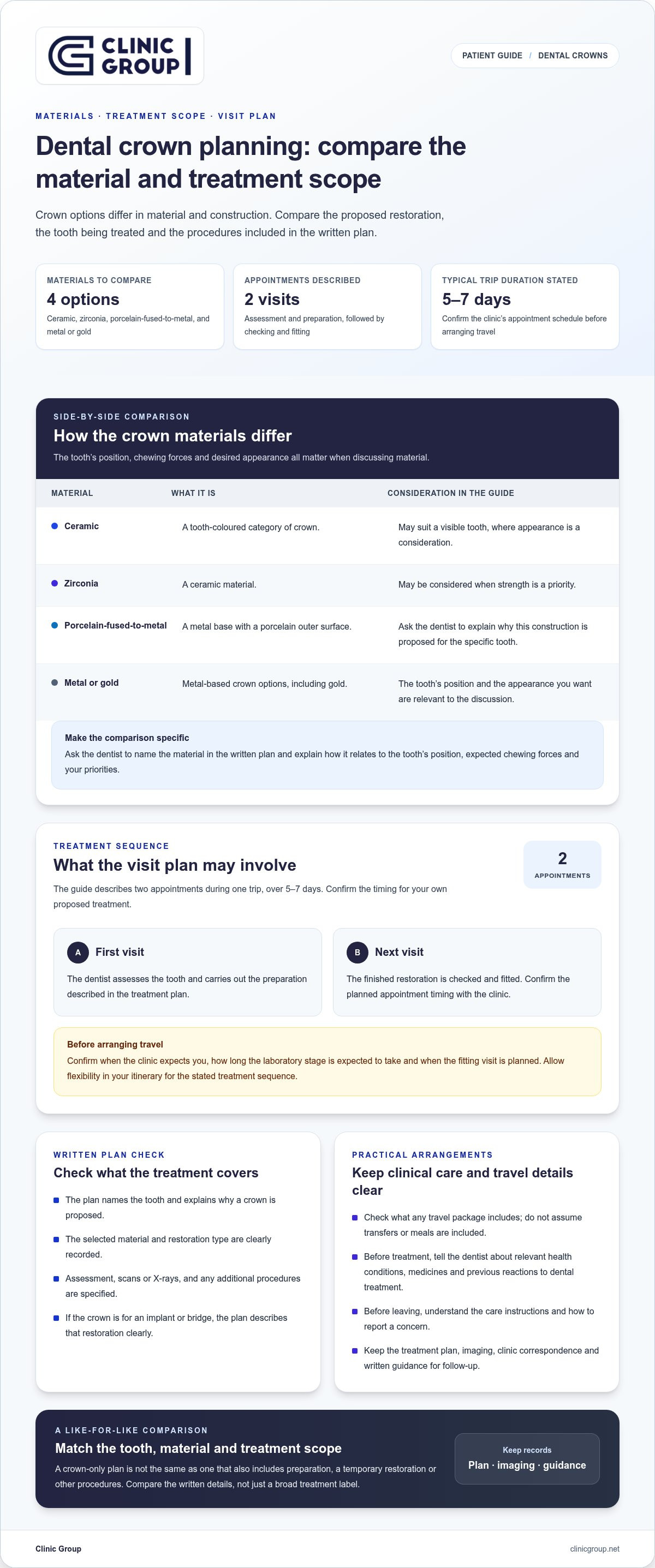
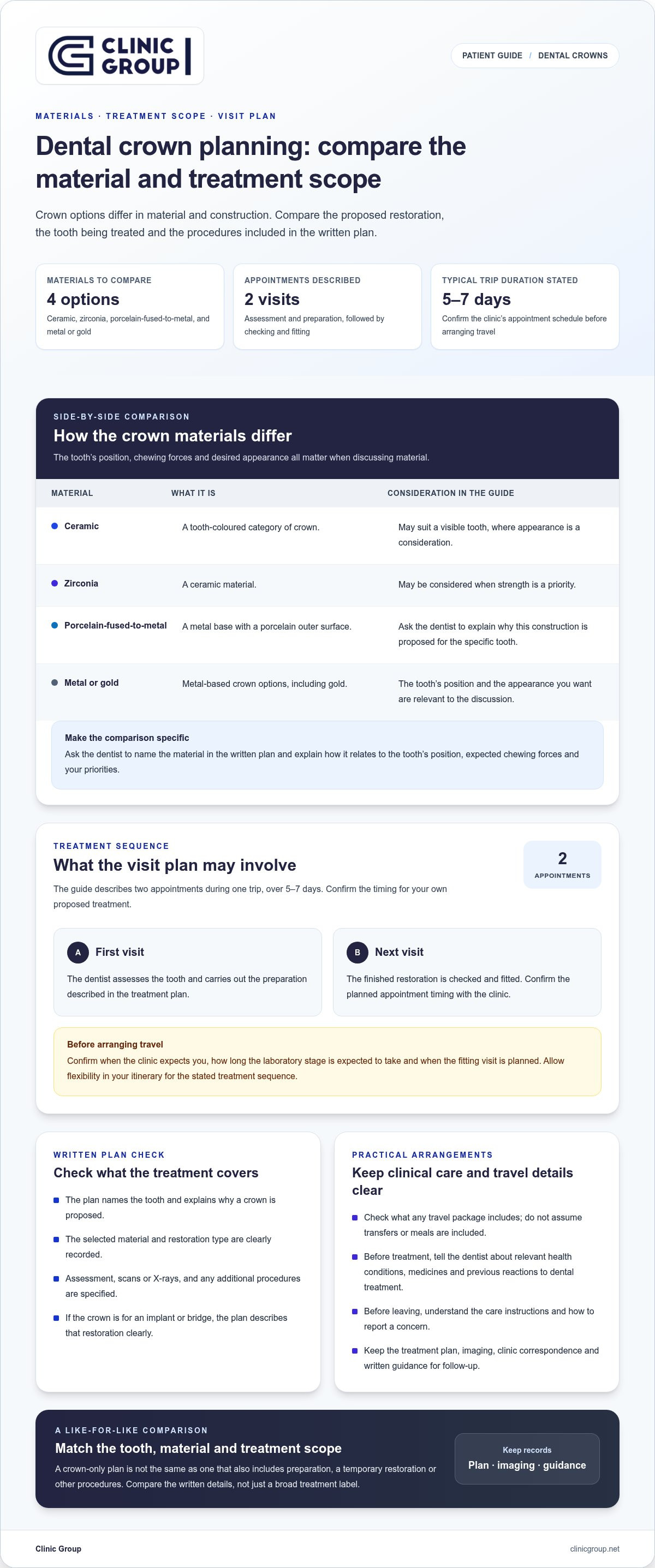
Dental crowns in Albania vary in cost according to the material and treatment required. To compare quotes, check the material and procedures described in each written plan. For example, a ceramic crown and a metal-based restoration are different options, not like-for-like quotes.
- Ceramic: A tooth-coloured category that may suit a visible tooth.
- Zirconia: A ceramic material considered when strength is a priority.
- Porcelain-fused-to-metal: A metal base with a porcelain outer surface.
- Metal or gold: Options where the tooth’s position and appearance are relevant.
When comparing quotes from Albania and the UK or elsewhere in Europe, first match the material, tooth and treatment scope. One quote may cover only the crown; another may include preparation or a temporary restoration. Check that each plan lists these details in writing. Comparing equivalent plans gives you a clearer picture than comparing totals without knowing what they include.
Before agreeing to treatment, check that the plan names the tooth, explains why a crown is proposed and records the selected material. If the recommendation is for a bridge or implant-supported crown, the plan should describe that restoration clearly. This helps you understand the proposed treatment instead of relying on a broad label such as “dental crown”.
Keep copies of the treatment plan, imaging and clinic correspondence after your visit. If the crown feels uncomfortable or appears damaged, these records can help a UK dentist understand what was done. The dental crown treatment guide describes the treatment for patients comparing their options.
What is the Cost of Dental Work in Albania?
A crown treatment in Albania typically involves two appointments within one trip, over 5-7 days. The first visit allows the dentist to assess and prepare the tooth; the next is for checking and fitting the finished restoration.
Consultation, Scans and Additional Treatment
A consultation helps establish whether a crown is suitable and assess the tooth’s condition. Scans or X-rays can help the dentist examine areas that aren’t visible during a physical examination. Their use depends on the findings and proposed treatment, so ask the clinic to state which assessments are included in the written plan.
Ask for an itemised breakdown of the assessment, imaging and any additional procedures. If the dentist identifies another issue, such as decay or a damaged neighbouring tooth, the plan should explain how it affects the treatment sequence. This makes it easier to see what the quoted dental work covers.
Clinics and Treatment Packages
A clinic may quote for dental treatment alone or describe it alongside travel arrangements. If a package is offered, check what it includes, such as accommodation, and what remains separate. Don’t assume a hotel stay also covers transfers or meals unless the written terms say so.
Compare package details separately from clinical care. The dentist is responsible for assessing and explaining the proposed treatment, while travel inclusions relate to the visit itself. A written plan and package description help distinguish arrangements for the crown from those for your stay.
Pain and Sensitivity During Treatment
Plan for comfort, particularly if you’re travelling soon after an appointment. During the consultation, tell the dentist about relevant health conditions, medicines and previous reactions to dental treatment. This helps inform the clinical discussion and gives the team a clearer picture of your needs.
Before leaving the clinic, make sure you understand the care instructions and how to report a concern. Keep the clinic’s written guidance with your treatment documents, and note the contact arrangements for follow-up. This can help you explain your treatment if you later seek dental advice in the UK.
Arranging Travel and Treatment
Plan travel only once the appointment schedule is clear. Confirm when the clinic expects you, how long the laboratory stage is expected to take and when the fitting visit is planned. Allow flexibility in your itinerary for the stated treatment sequence, rather than scheduling departure immediately after an appointment.
Keep appointment details, clinic correspondence and travel bookings together. Check the address and travel time between your accommodation and the clinic, then allow enough time to arrive without rushing. Patients can also review dental treatment information while organising their questions and travel arrangements.
Crown materials and types
Patients considering crowns in Albania may be offered ceramic, zirconia, porcelain-fused-to-metal, corrosion-resistant metal or gold. Each material has different qualities, so the tooth’s position, expected chewing forces and desired appearance all matter. A crown for a visible front tooth may prioritise a natural-looking finish, while a back tooth may need a material selected for strength.
How do the main materials differ?
Zirconia is a ceramic material used for crowns where strength is a consideration. A zirconia crown is tooth-coloured, making it an option for patients weighing durability alongside appearance. Its stated lifespan is 15 to 20 years with proper care, although this is not a guarantee for an individual crown.
E-Max is a type of ceramic crown. Its stated lifespan is also 15-20 years. The dentist considers the tooth’s position and the amount of force it takes before recommending a material. These factors help explain why the same option may not suit every patient.
Porcelain-fused-to-metal has a metal base with a porcelain covering. Its stated lifespan is 10-15 years. The porcelain provides a tooth-coloured surface, while the underlying metal forms part of the restoration. Ask how the material will look at the gumline and how its colour will be matched to nearby teeth.
Full metal or gold crowns have a stated lifespan of 20+ years. Their metallic appearance may make them less suitable when a crown is clearly visible. Corrosion-resistant metal is another crown category; the treatment plan should name the exact material rather than relying on a broad label.
What affects appearance and technique?
Ceramic and porcelain crowns can be selected to blend with surrounding teeth. Shade, shape and fit all contribute to the final appearance. Discuss how the proposed crown will look beside neighbouring teeth before treatment begins. As each crown is made for a specific tooth, the plan should identify its location and material.
The dentist prepares the tooth, takes measurements or scans, then arranges the restoration. The laboratory makes the crown to match the prepared tooth. In Albania, treatment typically involves two appointments within one trip; laboratory turnaround is usually 3-5 days. These steps matter to international patients planning travel from the UK or elsewhere in Europe.
A crown on a dental implant connects to the implant through an abutment. This differs from a crown fitted over a natural tooth, so the treatment plan should identify which restoration is proposed. Discuss material, position and expected lifespan with the treating dentist to understand the practical options.
Clinic selection and quality checks
Assess a dental clinic in Albania by reviewing its treatment plan, clinical communication and follow-up arrangements. Check what the dentist’s examination covers, which crown material is proposed, what facilities are used and how the clinic handles concerns after treatment.
What should the treatment plan explain?
Check that the plan identifies the tooth, the reason for treatment and the type of restoration. For example, it should distinguish a ceramic crown fitted over a natural tooth from a crown connected to an implant. It should also explain any proposed bridge, which replaces one or more missing teeth by joining artificial teeth to supporting teeth.
A personalised plan should reflect the patient’s examination rather than offer the same treatment to everyone. Look for clear notes on preparation, fitting and any temporary restoration. Ask for copies of the proposed plan and relevant records, so you and the dentist share the same understanding before treatment begins.
How can reviews and ratings help?
Read reviews for details about communication, appointment organisation and responses to concerns, not just star ratings. A review describing how a clinic explained a crown adjustment gives more useful context than a brief comment saying “excellent”. Compare several accounts and look for recurring themes, such as whether patients mention clear treatment explanations.
Reviews are individual accounts, not a clinical assessment of a dentist’s work. Consider them alongside the written plan and information about the clinic. A rating without recent or detailed comments offers limited insight into what to expect during treatment.
What facilities and quality checks matter?
Ask how the clinic assesses the tooth and records the proposed treatment. A useful discussion covers examination findings, scans where needed, and how the crown’s fit and bite will be checked. For a bridge or implant-supported crown, the plan should describe the supporting structure as well as the visible restoration.
Some clinics offer crown warranties, with market information describing typical terms of 2 to 5 years. Read the written conditions carefully: check what the warranty covers, any exclusions and the process for raising a concern. A stated warranty is not a substitute for understanding follow-up arrangements.
When speaking with the dental clinic, note whether the dentist answers specific questions about materials, hygiene procedures and records. Ask who will handle follow-up if discomfort or a fit problem develops after you return to the UK. Clear contact arrangements and accessible treatment documents are practical parts of planning dental care abroad.
Use a structured checklist to compare clinics: treatment plan, dentist’s explanations, facilities, review details and written aftercare arrangements. Clinic Group’s dental quality guide can help you organise these checks before choosing a clinic.
Reasons crowns may cost less in Albania
A lower quote for treatment in Albania does not explain the difference on its own. The price can reflect several aspects of the service, including clinic operating costs, laboratory arrangements, materials and the treatment plan. Compare these elements individually rather than assuming that a lower total means either lower or equivalent quality.
Start with the crown itself. A porcelain restoration, zirconia crown and metal-based option use different materials and laboratory processes. If two quotes specify different materials, they are not directly comparable. Ask for the exact material and tooth location in each plan, then compare the proposed treatment.
Next, check the clinical scope. One quote might cover a crown on a natural tooth, while another includes assessment or treatment of a damaged tooth first. A crown attached to a dental implant is also different from one fitted over a natural tooth. List each procedure in the treatment plan and compare like with like.
Laboratory arrangements can also affect a clinic’s treatment quote. The laboratory makes the restoration to match the dentist’s measurements and the patient’s bite. Ask how the crown is made, which material is specified and how the clinic checks its fit. These details explain the proposed work more clearly than a broad description such as “premium crown”.
Travel is a separate part of the decision for UK patients. Flights, accommodation, local transfers and time away from home sit alongside dental treatment, even when they aren’t included in the clinic’s quote. Compare a treatment-only plan with any travel package, then identify the items each covers. Keep clinic charges separate from personal travel spending.
Your aesthetic priorities can also shape the treatment plan. A crown on a front tooth may need careful shade and shape matching, while a back tooth has different functional demands. The dentist’s assessment, the tooth’s condition and the selected material inform the proposed procedures. A lower starting figure cannot show whether additional work is appropriate for an individual patient.
Use a written comparison with separate lines for assessment, scans, crown material, additional dental work, temporary restoration and travel arrangements. Mark differences between the plans, then ask the treating dentist to explain the clinical reason for each proposed step. This helps distinguish a comparable quote from one with a narrower scope.
The key point is not simply that treatment in Albania may cost less. Understand what drives each quote, which treatment it covers and what travel adds. Compare the complete plan, including accommodation and transfers, before judging value. A clear breakdown supports an informed decision about the proposed dental procedures and appearance.
Clinic Group: Dental Treatment Directory
Clinic Group’s Dental Treatment Directory helps patients explore dental options and listed partner clinics in Albania. It can be a useful next step after comparing crown materials, treatment plans and practical clinic checks, particularly for UK patients considering care abroad. The Medical Tourism Treatment Guides offer further information to help you plan and compare treatment options.
Clinic Group is a directory, not the treating clinic. The selected dental practice provides clinical examinations, recommendations and crown treatment. Use the directory to review available information, then consider how each clinic’s proposed plan aligns with your needs and travel arrangements. Browse dental treatment options at clinicgroup.net.
Make your next step an informed one
Before deciding, write down your priorities: the tooth’s function, the appearance you want and the treatment details you need explained. Use these points to guide a clinical discussion rather than choosing on the basis of a headline figure alone. The cost of dental crowns in Albania is only one part of deciding whether treatment abroad suits your circumstances.
Clinic Group offers a Dental Treatment Directory for patients exploring dental options, alongside Hair Transplant Referrals and Plastic Surgery Provider Listings. For crowns, the directory can help you explore listed dental treatment options and prepare for a conversation with a treating clinic. Clinical assessment and treatment remain the dental practice’s responsibility.
A considered decision starts with clear questions and a treatment plan you understand. Take time to weigh the clinical recommendation against your needs and travel arrangements.
With a clear plan in hand, you can take your next step with greater confidence.
Frequently Asked Questions
How much do veneers and crowns cost?
The amount depends on the restoration, material and work required for the individual tooth. Veneers cover the front surface, while crowns cover a tooth more fully; they aren’t interchangeable treatments. Compare written plans that name the material, tooth and included procedures. For a meaningful comparison, include any assessment or preparatory work in the total, rather than comparing a veneer quote with a crown quote.
Why are more and more patients choosing Albania for dental treatment?
Some patients consider Albania because treatment may cost less than private care in the UK, while others weigh clinic choice and travel arrangements. Consider the proposed treatment, the dentist’s explanation and follow-up planning, not just a headline figure. For example, when comparing two options, check whether both plans cover the same tooth and restoration before deciding which is more suitable.
How much does a dental crown cost in Albania in 2026?
The cost of dental crowns in Albania depends on the material, the tooth’s condition and whether the crown fits a natural tooth or an implant. A quote may also change if treatment is needed before fitting. Ask for a written plan that identifies each procedure and separates clinical treatment from travel arrangements. This helps you assess the proposed work without relying on a single headline total.
What are typical Albanian dental crown prices by material, such as zirconia, porcelain and metal-ceramic?
Material affects the quote, but its name alone doesn’t show whether it suits a particular tooth. Zirconia, porcelain and metal-ceramic differ in composition and appearance. Ask the dentist to name the exact material in the plan and explain why it suits the tooth’s position and function. When comparing quotes, check that both specify the same type of crown instead of treating broad material descriptions as equivalent.
Do Albanian dental crown prices include consultation, X-rays, temporary crowns and fitting?
Inclusions depend on the written treatment plan, so ask for each item to be clearly listed. Check whether the consultation, imaging, temporary crown and fitting appear as separate entries or within a stated treatment total. For example, a quote listing only the permanent crown may not describe every step planned for your visit. Request an itemised written quote before arranging travel and keep it with your treatment records.
How do dental crown costs in Albania compare with prices in the UK?
Compare complete treatment plans, not just crown totals. UK and Albanian quotes may differ in material, assessment, additional procedures or what the stated total includes. Put each quote side by side and check the tooth, restoration type, preparation and fitting stages. Then consider travel and follow-up arrangements separately. This like-for-like approach helps explain differences without assuming that similarly named treatments cover identical work.
What extra costs should UK patients budget for, including flights, accommodation and transfers?
Plan for travel expenses separately from dental treatment. Flights, accommodation, local transfers and meals can affect the overall trip budget, as can time away from work. The clinical schedule determines how long you need to stay, so align bookings with planned appointments. If a package description includes accommodation or transfers, check exactly what is covered and keep those costs separate from clinical charges.
Which Albanian cities and clinics offer dental crowns, and how do prices vary?
Clinic Group’s Dental Treatment Directory helps patients explore listed dental options and partner clinics in Albania. A crown quote depends on the treatment plan and material, not just a clinic’s location. Compare the exact restoration, any preparatory work and stated inclusions across available plans. Clinic Group is a directory, not the treating practice; the independent clinic provides the clinical assessment and crown treatment.

Article by
Clinic Group Editorial Team
The Clinic Group editorial team publishes clear, practical guides for UK and EU patients researching medical travel — from dental implants and hair transplants to plastic surgery and eye care — with a focus on verified clinics, transparent “from” pricing, and safe planning.
Disclaimer
This article is for general information only and is not medical advice, diagnosis, or a substitute for an in-person consultation with a qualified clinician. Treatment suitability, risks, timelines, and costs vary by individual. Clinic Group connects patients with independent clinics; those clinics are responsible for clinical care. Always verify credentials, obtain a written treatment plan and itemised quote, and confirm aftercare arrangements and travel insurance cover (elective procedures are often excluded) before booking. Outcomes cannot be guaranteed.