clinicgroup.net connects UK and EU patients with verified partner clinics and treatment information. Clinic Group supports patients with treatment research, clinic matching and coordination. It is a directory and medical-tourism platform, not a treating clinic: the independent partner clinic assesses patients, makes clinical decisions and provides care.
Before exploring treatment abroad, it helps to understand who is responsible for each step. This guide explains how the directory and clinic-matching process work, what coordination support includes and what to ask the treating clinic before deciding.
You’ll also find an overview of the listed treatment areas, from dentistry and hair transplants to eye care and plastic surgery, plus practical steps for reviewing a treatment plan, quote, after-care and insurance. This is general information, not medical advice. The independent clinic must assess your circumstances, and outcomes cannot be guaranteed.
Key Takeaways
- Use clinicgroup.net to explore treatment information and verified partner clinics across the listed care areas.
- The patient journey can include an enquiry, free consultation or case review, clinic matching, a written plan and travel coordination support.
- Clinic Group coordinates and connects patients; the independent clinic assesses suitability and provides clinical care.
- Before booking, review the written treatment plan and itemised quote, and confirm appointments, after-care and insurance arrangements.
- Prepare your treatment goals, relevant health information and questions for the clinic’s clinical team.
What is Clinic Group, and what does its treatment directory do?
Clinic Group connects patients with verified independent partner clinics and treatment information. Its directory helps UK and EU patients explore care options and find relevant clinic information. The partner network is based mainly in Albania, with a small number of clinics in Dubai. Clinic Group coordinates enquiries and clinic matching; the independent clinic is responsible for assessment and treatment.
At clinicgroup.net, patients can browse treatment categories and clinic information, then prepare questions for a clinical discussion. A listing can help you focus your research, but it cannot determine whether a treatment is suitable for you. That requires an assessment by the independent clinic.
Medical tourism means travelling across borders to access healthcare. The broader context of medical tourism includes practical arrangements as well as clinical care. It is useful to distinguish information and coordination from assessment and treatment.
Which treatment areas can patients explore through the directory?
The directory covers dental, surgical, non-surgical, eye-care and wellness categories. Use the relevant treatment and clinic information to identify what you want to discuss with the independent clinic.
- Dentistry: implants, crowns and bridges for restorative care, as well as orthodontics and cosmetic dentistry. The dentistry treatment directory is a starting point for exploring these options.
- Hair transplants: FUE and DHI techniques, as well as beard transplants.
- Plastic surgery: rhinoplasty, liposuction, breast augmentation and facelift procedures.
- Non-surgical aesthetics: Botox, fillers, PRP and lip augmentation.
- Anti-ageing: micro-needling, a treatment that uses fine needles to create controlled punctures in the skin.
- Eye care: LASIK, blepharoplasty, canthoplasty and premium lens surgery.
- Wellness: check-ups for patients seeking a broader review of their health.
These categories help you organise initial research; they do not replace an individual consultation. The treating clinic assesses your circumstances and discusses whether a proposed option is suitable.
How is a directory different from a treating clinic?
A directory organises information and connects patients with independent providers. Clinic Group supports exploration, enquiries and clinic matching. The partner clinic reviews a patient’s medical information, discusses suitability and makes clinical decisions. It also provides the agreed treatment and explains its follow-up arrangements.
Clinic Group is a directory and coordination platform, not the clinical provider. Assessment and treatment are the responsibility of the independent partner clinic.
“Verified” describes a clinic’s status within the partner network. It does not mean that a procedure is suitable for every patient or guarantee a particular result. Before proceeding, review the clinic’s assessment and written treatment information. This content is general information, not medical advice, and outcomes cannot be guaranteed.
How does the Clinic Group patient journey work from enquiry to follow-up?
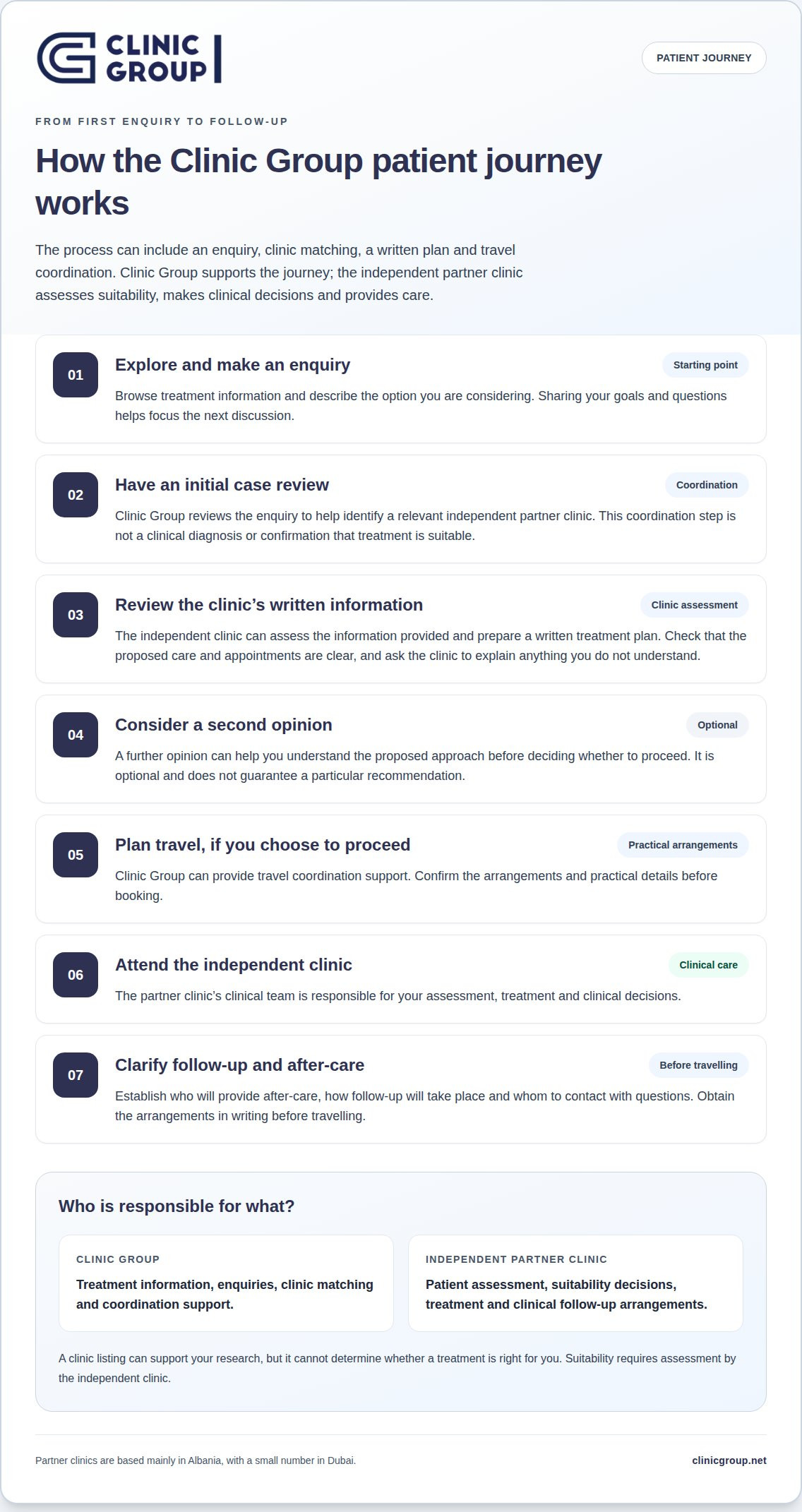
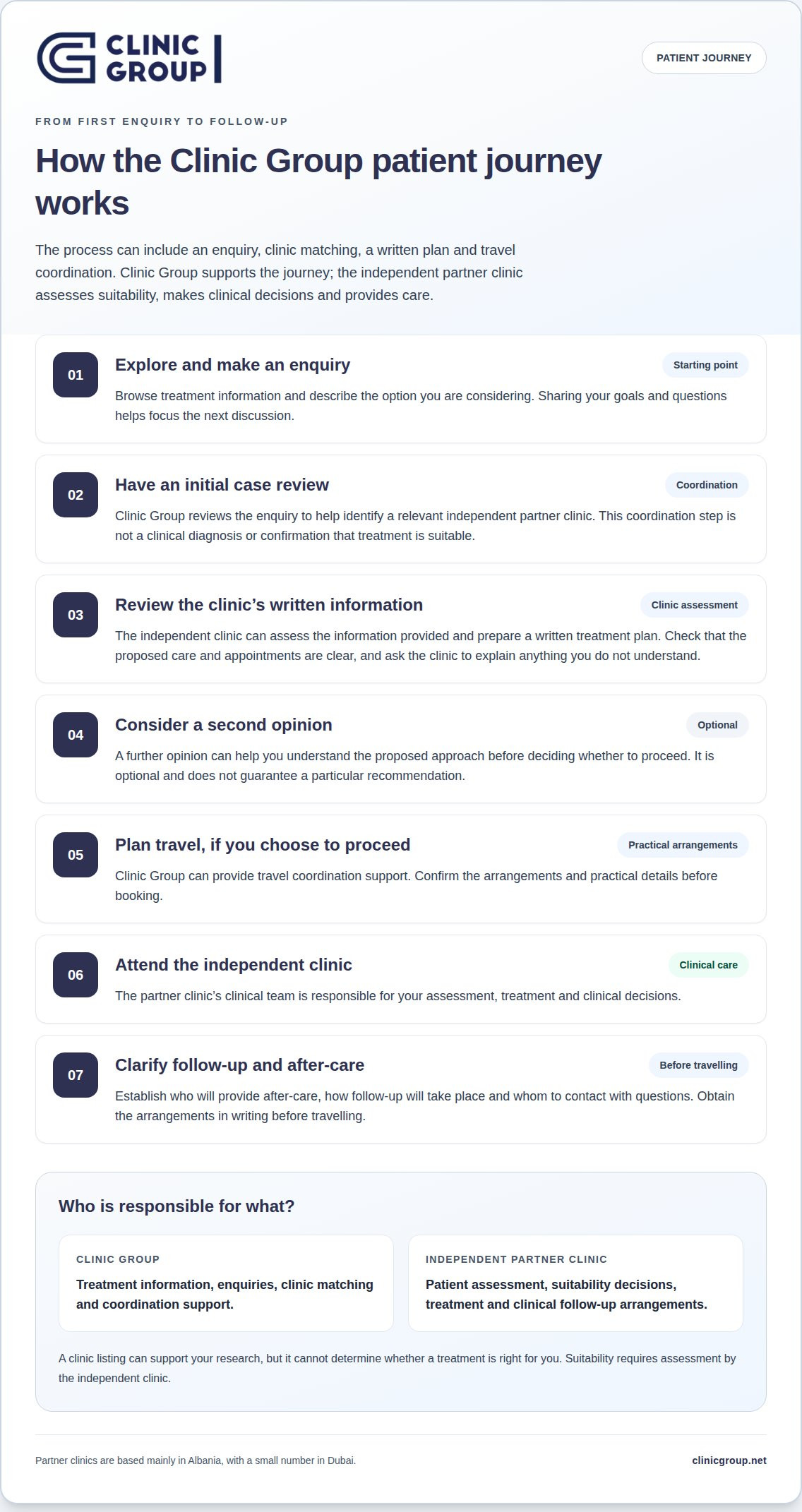
The patient journey starts with exploring treatment information and making an enquiry. It can then move through a free consultation or case review, clinic matching and a written proposal. Travel coordination and follow-up support can form part of the process. Clinical decisions and care remain with the independent partner clinic.
- Explore and enquire. Browse treatment categories on clinicgroup.net and describe the option you are considering. Include your goals and the information you need, so the next discussion can focus on your questions.
- Have a consultation or case review. Clinic Group offers a free initial consultation or case review to understand your enquiry and help identify a relevant partner clinic. This is coordination, not a clinical diagnosis or confirmation that treatment is suitable.
- Review the clinic match and written information. The independent clinic can assess the information you provide and prepare a written treatment plan and itemised quote. Check that the proposed treatment, appointments and terms are clear, and ask the clinic to explain anything you do not understand.
- Consider another opinion. An optional second opinion can help you understand a proposed approach before deciding whether to proceed. It is a further review, not a requirement or a guarantee of a particular recommendation.
- Plan travel, if you choose to proceed. Clinic Group can provide travel coordination support. Confirm your arrangements and practical details before booking.
- Attend the independent clinic. Assessment and treatment take place with the partner clinic. Its clinical team is responsible for your care and clinical decisions.
- Clarify follow-up. Establish who will provide after-care, how follow-up will take place and whom to contact with questions. Obtain the arrangements in writing before travelling.
What happens during consultation and clinic matching?
The initial case review helps direct your enquiry to a relevant partner clinic; it does not replace that clinic’s assessment. If the clinic prepares a plan and quote, use them to check the proposed care, appointments and what is included. Review the documents at your own pace, raise questions and consider an optional second opinion before deciding.
What support may be available around travel and follow-up?
Clinic Group provides coordination support for patients exploring treatment abroad. Depending on your arrangements, this can include help with travel, accommodation or airport transfers. A Patient coordinator can assist with appointment scheduling, travel logistics and translation services. These are practical support services, not clinical care. Before booking, get the arrangements, follow-up contact and after-care terms in writing from the clinic.
Read the GOV.UK guidance on medical treatment abroad and clarify after-care and insurance arrangements for your circumstances. This article is general information, not medical advice, and outcomes cannot be guaranteed. To explore treatment information and make an enquiry, browse Clinic Group’s treatment information.
Who provides care, and what should patients understand about clinic verification?
Clinic Group’s directory and coordination role is separate from the independent partner clinic’s clinical responsibilities. “Verified” describes a clinic’s status within the partner network. It is not a promise that a treatment is suitable, a statement that a particular accreditation applies or a guarantee of a specific result. Base your decision on the treating clinic’s assessment and written information.
What does Clinic Group coordinate, and what does the clinic decide?
Clinic Group coordinates
- Information about listed treatments and partner clinics.
- Initial enquiries and case reviews, followed by clinic matching and coordination support.
- Practical assistance with travel arrangements, accommodation and airport transfers.
The independent clinic is responsible for
- Reviewing your health information and carrying out a clinical assessment.
- Deciding whether a treatment is suitable and discussing potential benefits and risks.
- Providing treatment, clinical after-care and information about follow-up.
Clinical decisions and care remain with the independent clinic, not the directory. Any agreement for treatment, including payment arrangements, is between the patient and the clinic. Clinic Group does not provide clinical care, and no outcome can be guaranteed.
This distinction matters even when you receive help with matching or travel planning. Coordination can help organise the process, but it does not replace a consultation with the treating clinical team. The CDC's medical tourism travel advice also outlines practical issues to consider when arranging care abroad, including continuity of care.
What written information should patients review before deciding?
Ask the independent clinic for documents that explain the proposed care in clear terms. Compare the written information with what has been discussed, and raise anything unclear or incomplete before you decide.
- Personalised treatment plan: Check that it sets out the proposed approach and planned appointments based on the clinic’s assessment.
- Itemised quote: Review what is included and what may be separate. Ask the clinic to explain any unclear item.
- After-care details: Request written instructions, follow-up arrangements and the appropriate clinic contact for questions or concerns after treatment.
- Warranty terms, where applicable: Ask for the terms in writing, including what they cover and any stated limitations. A warranty is not a guarantee of a clinical outcome.
- Insurance: Contact your insurer directly to understand whether your policy covers elective treatment abroad and possible complications. Do not assume standard travel insurance provides that cover.
Use clinicgroup.net to explore the directory, then base your treatment decision on the clinic’s assessment, plan and written terms. This information is general and is not medical advice; a qualified clinician must assess your individual circumstances.
How can UK and EU patients prepare for treatment abroad?
Prepare by understanding the proposed treatment, sharing relevant health information with the independent clinic and organising practical arrangements before you commit. Use clinicgroup.net to explore treatment information, then approach the clinic with clear goals and questions. The checklist below is a planning aid, not medical advice or a recommendation for a particular treatment.
Which questions help clarify the proposed treatment plan?
Before deciding, check that the clinic’s written information reflects your discussion. Ask who will provide care, what the plan includes and how the proposed appointments fit together. Direct questions about your health, suitability, risks or recovery to the treating clinic, which can assess your circumstances.
- Goals: What would you like to address, and what matters most to you about the proposed care?
- Health history: Have you shared relevant medical conditions, allergies, medicines and previous treatment with the clinic? Ask what further information it needs to assess you.
- Plan: What treatment is proposed, what does it include and which independent clinic will provide it?
- Appointments: What visits are planned, and what could affect their timing or sequence?
- After-care: What follow-up is planned, whom should you contact with concerns, and can the clinic provide the after-care terms in writing?
- Quote: Does the itemised quote match the proposed plan? Are any items unclear or excluded?
Keep the plan, quote and written replies together. If details change during your discussions, request updated documents so you can review the current proposal rather than relying on earlier messages.
How should patients organise travel, insurance and after-care?
Understand the proposed appointments before finalising travel dates. Confirm which arrangements Clinic Group is coordinating, what the clinic has booked and what you need to organise yourself. Keep enough flexibility to follow the clinic’s schedule, and ask the treating team about appointment requirements.
Contact your insurer before booking. Ask whether your policy covers the planned elective procedure abroad and any related complications. Do not assume a standard travel policy covers treatment or follow-up. Keep the insurer’s response in writing, together with the clinic’s after-care instructions and contact details.
Plan for continuity of care before departure, not only after returning home. Confirm how follow-up will take place, how to reach the clinic and what written information you will receive about care after the procedure. Clinic Group’s medical tourism guides can support your initial research; questions about your individual care need answers from the treating clinic. This guide offers general information, not medical advice, and no treatment outcome can be guaranteed.
What are the next steps for exploring Clinic Group treatments?
If you are not ready to enquire, start by deciding what you want to learn. You might be exploring a broad treatment area, comparing procedures within it or looking for information about a particular clinic. A clear starting point helps focus your research without requiring an immediate treatment decision.
- Choose a topic to explore. Use the treatment categories on clinicgroup.net to find information relevant to your current interest.
- Read about relevant options. Note the terms or approaches you want an independent clinic to explain.
- Decide whether to enquire. If you would like a conversation, request a consultation or case review and describe what you want to understand.
Where can patients start if they are still comparing treatment areas?
The treatment directory lets you browse by category and focus on the subjects most relevant to your research. For dental care, the dentistry directory covers implants, crowns, bridges and orthodontics. As you read, distinguish general information from questions that need an individual clinical assessment. This keeps your research focused without requiring you to decide on your own whether a treatment is suitable.
What should patients expect after requesting a consultation?
A free consultation or case review gives you an opportunity to explain your area of interest and what you hope to understand. Clinic Group can use your enquiry to help identify a relevant independent partner clinic. The clinic’s assessment is where clinical suitability can be considered. A consultation or match is a step in gathering information, not a commitment to undergo treatment.
Use the discussion to clarify what you still need to know and whether you wish to continue exploring the pathway. This information is general, not medical advice, and treatment outcomes cannot be guaranteed.
Take your next step with clear questions
Deciding whether to explore care abroad is personal, and you can take time before moving from research to a conversation. Use clinicgroup.net to identify the treatment area you want to understand, then note your questions about the proposed care, appointments and follow-up. Clinic Group connects patients with verified independent partner clinics and offers a free consultation and coordination support as part of the patient journey.
Let your questions guide the next step rather than treating an enquiry as a commitment. If you decide to explore a clinic match, review the independent clinic’s written plan and itemised quote. Confirm after-care arrangements and insurance cover before booking. Clinical assessment is essential, and outcomes cannot be guaranteed. This article provides general information, not medical advice.
A considered decision starts with understanding your options. Take the time you need, and proceed when the information is clear.
Frequently Asked Questions
What is Clinic Group?
Clinic Group is an online medical-tourism directory for patients researching treatment options abroad. It connects patients with verified partner clinics and provides information across areas such as dentistry, hair transplants, plastic surgery, eye care and wellness. Browse the categories to identify what you want to explore, then prepare focused questions for an independent clinic. The directory is a research resource, not a substitute for individual clinical advice.
Does Clinic Group provide dental treatment or surgery?
No. Clinic Group is a directory and coordination platform, not a treating clinic. Independent partner clinics provide dental procedures, surgery and other clinical care. Direct questions about a procedure to the treating clinic’s clinical team, which can respond based on your circumstances. Keep a record of the clinic and the person or team answering clinical questions, so you can refer back to the information later.
How does Clinic Group match patients with a clinic?
Clinic matching uses the treatment area and details in your enquiry to identify a relevant partner clinic. Make your enquiry specific by naming the care area and explaining what you want to understand, such as the differences between proposed approaches. An initial match is not a diagnosis or a clinical recommendation. The clinic’s clinicians must consider your circumstances before discussing suitability.
Can Clinic Group help organise travel and accommodation?
Clinic Group provides coordination support for patients exploring treatment abroad, including help with travel arrangements. Keep your itinerary, accommodation details, appointment information and clinic contact details together. If airport transfers are part of your arrangements, confirm collection details and whom to contact if plans change. Keep booking confirmations and travel information in writing.
Are Clinic Group partner clinics and treatment outcomes guaranteed?
No. A clinic’s status in the partner network does not guarantee a particular result or mean that every treatment is suitable for every patient. The treating clinic must assess the individual clinical factors, and outcomes cannot be guaranteed. Review clinic-specific information and discuss uncertainties about the proposed care with the clinical team. Directory information can help you prepare questions, but it cannot predict an individual outcome.
What should I check before booking treatment abroad?
Before committing, obtain and review the independent clinic’s written treatment plan and itemised quote. Confirm which clinic will provide care, what the proposed appointments involve and what the quote includes. Get the after-care arrangements and relevant contact details in writing, and check with your insurer whether your policy covers elective treatment abroad and related complications. Keep correspondence and updated documents together so you can refer to the agreed information.
Does travel insurance cover complications after elective treatment abroad?
Not necessarily. Travel insurance terms differ, and some policies exclude elective procedures or related complications. Contact your insurer with details of the planned treatment and ask what the policy covers, including complications connected with it. Request a written response and read the exclusions. Do not assume ordinary holiday cover applies because treatment takes place during a trip.

Article by
Clinic Group Editorial Team
The Clinic Group editorial team publishes clear, practical guides for UK and EU patients researching medical travel — from dental implants and hair transplants to plastic surgery and eye care — with a focus on verified clinics, transparent “from” pricing, and safe planning.
Disclaimer
This article is for general information only and is not medical advice, diagnosis, or a substitute for an in-person consultation with a qualified clinician. Treatment suitability, risks, timelines, and costs vary by individual. Clinic Group connects patients with independent clinics; those clinics are responsible for clinical care. Always verify credentials, obtain a written treatment plan and itemised quote, and confirm aftercare arrangements and travel insurance cover (elective procedures are often excluded) before booking. Outcomes cannot be guaranteed.