TL;DR:
- Trust in international clinics is primarily based on verifiable accreditation, transparent outcomes, and regulated oversight.
- European clinics adhere to strict EU directives and international standards, often providing high-quality, cost-effective care comparable to Western European benchmarks.
- Patients can mitigate risks by verifying accreditation, confirming detailed aftercare plans, and following a structured, informed selection process before treatment abroad.
Choosing medical treatment abroad raises a very real question: can you genuinely trust an overseas clinic with your health? For many patients, the hesitation is understandable. Yet 97% of medical tourists rate trust as a significant factor when selecting treatment abroad, and a growing body of evidence shows that many international clinics, particularly across the EU, not only meet but frequently exceed the standards patients experience at home. This article provides a clear, practical framework for evaluating international clinic quality, understanding the real risks, and confidently accessing safe, affordable treatment wherever you choose to travel.
Table of Contents
- What makes an international clinic trustworthy?
- How do European clinics guarantee safety and quality?
- Understanding the risks: not all international clinics are equal
- How to confidently choose an international clinic
- The uncomfortable truth about trust in medical tourism
- Find safe, accredited clinics for your next treatment
- Frequently asked questions
Key Takeaways
| Point | Details |
|---|---|
| Trusted clinics meet top standards | The best international clinics maintain recognised accreditations and strict oversight. |
| EU clinics rival domestic quality | Outcomes data shows leading EU clinics equal or exceed Western national healthcare benchmarks. |
| Risks require careful vetting | Not all clinics are alike; check regulation, accreditation, and aftercare provisions. |
| Smart research saves money | Choosing a vetted EU clinic can save 40-70 percent without compromising quality or safety. |
| Step-by-step selection is key | Follow a checklist to confirm credentials, reviews, and aftercare before booking abroad. |
What makes an international clinic trustworthy?
Let’s begin by clarifying what really justifies trust when it comes to medical care abroad. Trust is not simply a feeling. In healthcare, it should be grounded in verifiable, objective criteria that patients can check before they ever book a flight.
The most reliable starting point is international accreditation. Recognised bodies such as the Joint Commission International (JCI), the International Organisation for Standardisation (ISO 9001), the French accreditation body CMJ, and OECD quality frameworks all evaluate clinics against rigorous benchmarks covering patient safety, clinical governance, sterilisation protocols, equipment certification, and staff training. A clinic holding JCI accreditation, for example, has passed over 1,000 individual standards across patient care and operational management. That is not a certificate easily obtained. You can read more about how these standards work in this clinic accreditation guide.
Beyond accreditation, several additional pillars define a trustworthy international clinic:
- Regulatory oversight and regular inspections: A credible clinic operates under the supervision of a national health authority and welcomes scheduled and unannounced inspections. This accountability is non-negotiable.
- Transparent patient outcomes: Reputable clinics publish or willingly share their complication rates, patient satisfaction data, and procedure volumes. High volume often correlates with high proficiency.
- Verified surgeon credentials: Every clinician should hold qualifications from a recognised medical institution, with traceable specialist training and, where relevant, international fellowship experience.
- Honest patient reviews: Independent platforms and verified testimonials give you an unfiltered view of real patient experiences, including post-treatment follow-up.
- Clear, itemised cost structures: A trustworthy clinic provides transparent pricing with no hidden fees, and is happy to provide written treatment plans before any commitment is made.
European medical centres operate under strict EU standards with unified licensing, equipment certification, and quality control, giving them a structural advantage over many other international providers.
“A clinic’s accreditation status is the single most objective signal of quality you can verify before travelling. It reflects not just current standards, but a commitment to continuous improvement.”
Pro Tip: Before booking, ask any clinic directly which accrediting body has certified them, and cross-reference this with the accrediting body’s own online directory. Legitimate accreditations are always publicly verifiable.
How do European clinics guarantee safety and quality?
With the essential trust factors in mind, let’s see how European clinics in particular deliver on those promises.
The EU regulatory framework creates a unified baseline of safety that applies across all member states. Every clinic operating in countries such as Poland, Hungary, Czech Republic, or Croatia must comply with EU directives on hygiene, medical device certification, clinical waste management, and staff licensing. Regular inspections by national health authorities enforce these standards consistently. EU member state clinics adhere to strict EU safety, hygiene, and quality directives, with regular inspections and compliance to international standards like ISO 9001 and CMJ accreditation.
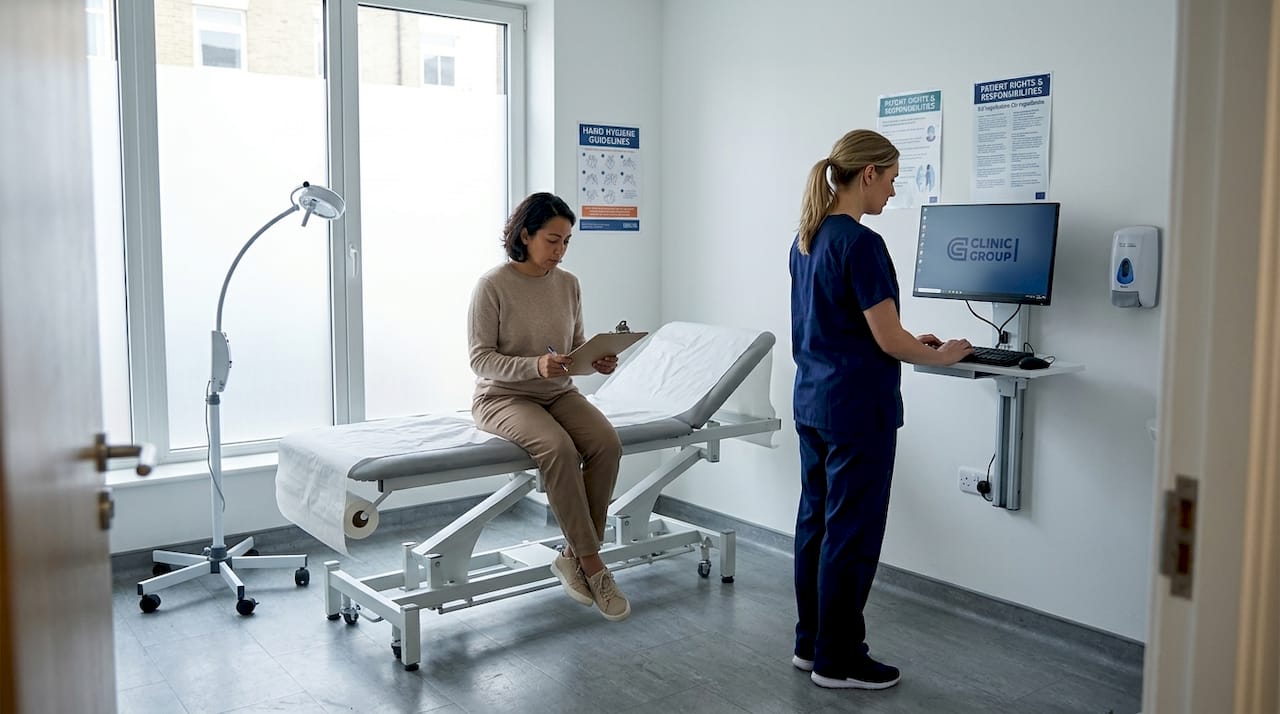
What surprises many patients is the strength of the clinical outcomes data from countries that are often perceived as lower-cost destinations. Poland, for instance, is frequently cited as a benchmark of affordable, high-quality healthcare. Poland’s healthcare quality indicators are comparable to Germany’s per the OECD Health at a Glance 2024 report. For dental, cosmetic, and hair transplant procedures in particular, Polish and Hungarian clinics routinely report patient satisfaction rates above 90%.
| Procedure | Average UK cost | Average Poland/Hungary cost | Potential saving |
|---|---|---|---|
| Dental implant (single) | £2,500 | £700 | Up to 72% |
| Rhinoplasty | £6,500 | £2,800 | Up to 57% |
| Hair transplant (2,500 grafts) | £5,000 | £1,800 | Up to 64% |
| Breast augmentation | £7,000 | £3,200 | Up to 54% |
These savings do not come from cutting corners. They reflect lower operational costs, more efficient clinic models, and differing national wage structures, none of which affect the quality of care delivered. It is also worth noting that many surgeons practising in EU medical tourism hubs trained in the UK, Germany, or France before returning to their home countries. Their clinical education is often equivalent to or shared with Western European institutions.
For patients travelling specifically for dental work, our dental travel tips and guide to safe dental treatment abroad provide a thorough breakdown of what to look for when comparing clinics. Both resources address hygiene protocols, material standards, and the importance of written guarantees on restorations.
Key indicators that a European clinic is delivering genuine quality include:
- Annual procedure volumes exceeding 1,000 for their core specialities
- Active membership of European specialist associations (e.g., the European Association for Osseointegration for implant dentistry)
- CBCT digital scanning and CAD/CAM technology for dental work
- Published five-year survival rates for implants or surgical outcomes
- Dedicated international patient co-ordinators who communicate in your language
Understanding the risks: not all international clinics are equal
However, not all international clinics maintain the same standards. It is important to know the differences and potential pitfalls before you commit to any provider.
Risks include variable regulation, limited aftercare, no legal recourse, complications such as infections, and the reality that standard insurance does not cover planned elective procedures abroad. These are not reasons to avoid medical tourism. They are reasons to be selective.
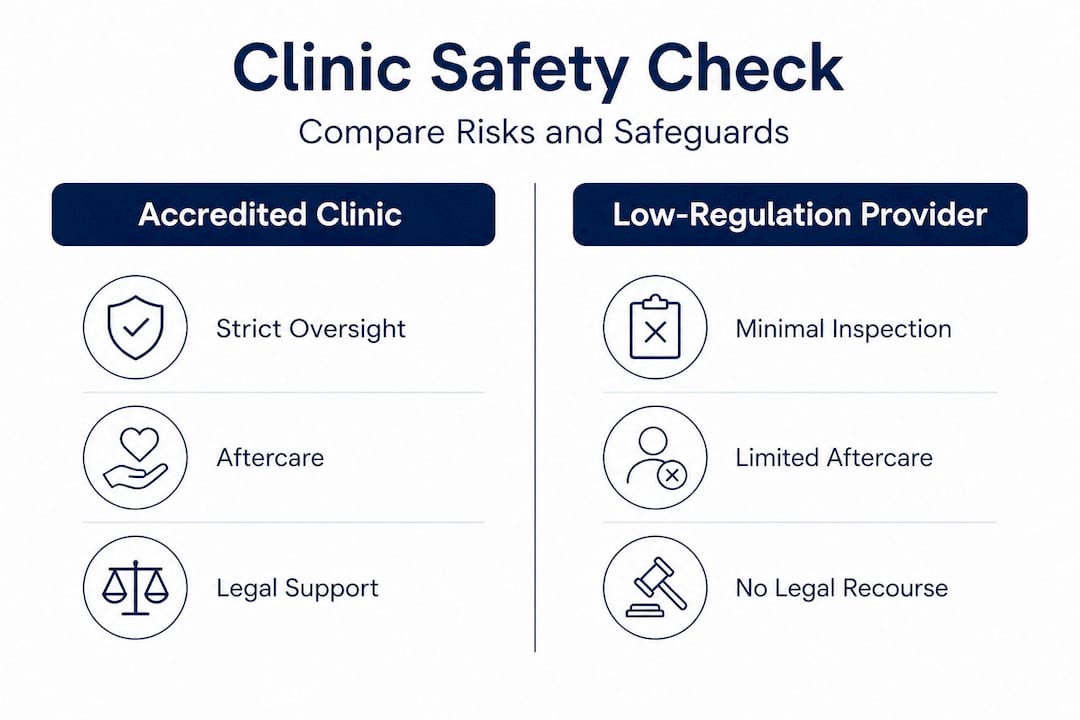
The distinction between an accredited EU clinic and an unregulated provider in a less-governed market can be significant:
| Factor | Accredited EU clinic | Less regulated provider |
|---|---|---|
| Regulatory oversight | Strict EU directives and national inspections | Inconsistent or minimal |
| Legal recourse | Subject to EU patient rights legislation | Often limited or non-existent |
| Aftercare provision | Clearly defined and documented | Vague or absent |
| Surgeon credentials | Verifiable via national medical board | Difficult to confirm |
| Equipment standards | EU-certified and regularly audited | Unconfirmed |
| Patient reviews | Independent, verifiable | May be fabricated or unverifiable |
The most common pitfalls patients encounter include being drawn in by unusually low pricing with no explanation of what is included, clinics that are difficult to contact once a deposit has been paid, and situations where aftercare is assumed rather than confirmed in writing. These are avoidable scenarios.
Here are the precautionary steps every patient should take:
- Verify accreditation status independently through the issuing body’s website
- Confirm that aftercare is detailed in your written treatment plan before you travel
- Check that your travel insurance covers medical complications arising from elective procedures
- Read recent patient reviews on independent platforms, not just testimonials on the clinic’s own website
- Avoid any clinic that discourages questions or rushes you towards a decision
You can explore verified, accredited providers in our trusted clinics directory, and find specific guidance on managing your recovery in our aftercare tips resource.
Pro Tip: If a clinic’s quoted price seems dramatically lower than all comparable accredited providers, that gap needs an explanation. Ask specifically what is excluded. Hidden costs for anaesthesia, follow-up consultations, or revision procedures can quickly erode apparent savings.
How to confidently choose an international clinic
To turn these insights into action, here is how you can make a confident, informed clinic choice.
The process of selecting an international clinic should be methodical. Rushing towards the cheapest option, or the first result in a search engine, rarely serves patients well. Instead, follow a structured approach.
- Identify your treatment and speciality requirements. Know exactly what procedure you need and whether it requires a general surgeon, a specialist (such as an implantologist or a plastic surgeon), or a multidisciplinary team.
- Search for clinics holding relevant international accreditations. JCI, ISO 9001, and EU compliance are your baseline. For specific treatments, look for procedure-specific certifications.
- Verify every surgeon’s credentials. Ask for the surgeon’s full name, their specialist qualification, the institution where they trained, and their registration number with the relevant national medical board. All of this should be verifiable online.
- Request a detailed, written treatment plan. This should include a full breakdown of costs, the materials or implants being used, the timeline, and what aftercare is included.
- Assess responsiveness and communication quality. How a clinic communicates before you become a patient is a reliable indicator of how it will treat you afterwards. Slow, vague, or evasive responses are warning signs.
- Compare at least three clinics before committing. Use our guide to comparing clinic features to structure this process objectively.
- Arrange a pre-travel consultation. Many reputable clinics now offer video consultations, allowing you to speak directly with your surgeon before you travel. This is an essential step, and our consultation safety tips outline exactly what to ask.
- Confirm your aftercare plan. Know who to contact if you experience complications, what follow-up appointments are included, and whether your clinic can liaise with your GP at home.
As the Medical Tourism Association’s 2024 survey confirms, prioritising international accreditations like JCI and ISO 9001 is the single most effective step patients take to mitigate risk when seeking care abroad.
“The right clinic will welcome your questions. It will provide clear documentation, verifiable credentials, and a transparent aftercare plan without hesitation. Anything less should prompt you to look elsewhere.”
Pro Tip: Always ask specifically about the legal framework governing your treatment. In EU countries, patients benefit from the EU Cross-Border Healthcare Directive, which provides rights around information, safety, and recourse if something goes wrong.
The uncomfortable truth about trust in medical tourism
Here is something that many articles about medical tourism overlook: even the EU label does not guarantee uniform quality across every clinic. It establishes a floor, not a ceiling.
We have observed a pattern where patients assume that any clinic based in Poland, Hungary, or another EU state is automatically comparable to the best providers in those countries. That is simply not accurate. Within any regulated market, there is a wide spectrum of quality, from outstanding specialist centres with international reputations down to smaller, less experienced practices that technically meet minimum regulatory requirements but fall well short of what discerning patients should expect.
The 97% of medical tourists who rate trust as paramount are right to do so. But trust should not be a passive feeling. It must be actively constructed through evidence. That means going beyond the accreditation certificate on the wall and examining real patient outcomes, speaking directly with previous patients where possible, and reading between the lines of clinic communications.
The other dimension that is rarely discussed is patient responsibility. Even the best clinic in the world cannot guarantee a good outcome if a patient does not follow pre-operative instructions, cuts short their recovery period, or conceals relevant medical history. Medical tourism requires a higher degree of personal engagement than domestic treatment, simply because the support infrastructure at home is less immediately available.
Our own experience supporting patients across Europe confirms that those who invest time in research, ask detailed questions, and treat the selection process seriously consistently report better outcomes and higher satisfaction. The clinic safety guide we have developed reflects years of observing what separates successful treatment journeys from disappointing ones.
Robust aftercare, transparent communication, evidence-based accreditations, and your own due diligence are not separate factors. They work together. Remove any one of them and the risk profile of your treatment abroad increases substantially.
Find safe, accredited clinics for your next treatment
Armed with these strategies, your next step is to find internationally trusted clinics where safety and quality come first. Clinic Group connects patients with a carefully verified network of accredited clinics and specialist surgeons across Europe and the Middle East. Every clinic in our network is assessed for regulatory compliance, patient outcomes, and communication quality, so you can compare providers with confidence rather than anxiety. Whether you are seeking cosmetic surgery, advanced dental work, hair restoration, or wellness therapies, you can explore treatments matched to your specific needs, or browse our full directory to find accredited clinics that meet the highest international standards. Start your journey with a trusted platform built around your safety.
Frequently asked questions
What international accreditations should I look for when choosing a clinic?
Look for certifications like JCI, ISO 9001, and, for EU clinics, compliance with EU safety and hygiene directives. EU member state clinics adhere to strict EU safety, hygiene, and quality directives, with regular inspections and compliance to international standards like ISO 9001 and CMJ accreditation.
Is aftercare included when I get treatment at international clinics?
Aftercare varies by clinic, so top clinics clarify their services upfront, but it is essential to confirm all aftercare arrangements in writing before you travel. Risks include variable regulation, limited aftercare, and no legal recourse, making upfront confirmation critical.
How can I check a clinic’s patient outcomes or safety record?
Review published statistics comparing international clinics to national standards and consult independent patient reviews from verified platforms. Poland’s healthcare quality indicators are comparable to Germany’s per the OECD Health at a Glance 2024 report, illustrating the kind of benchmark data worth seeking out.
Do international clinics save money without sacrificing care quality?
Many EU clinics offer savings of 40 to 70% and match top global quality due to strict regulation and efficient operations. Always verify specific clinic accreditations and surgeon training to confirm that the savings reflect efficiency, not a reduction in care standards.
What’s the biggest risk when booking an international clinic?
The biggest risks are variable regulation, limited legal recourse, and unreliable aftercare, so always vet clinics for accreditation and full transparency. These risks are manageable when patients choose accredited EU providers and confirm aftercare arrangements before travelling.