TL;DR:
- Postoperative care involves structured management of wound healing, pain control, nutrition, and mobility to ensure safe recovery. Following these practices and recognizing warning signs helps prevent complications and accelerates healing. Active participation in recovery, guided by medical advice, is essential for a successful surgical outcome.
Post-operative care is the planned clinical and personal management of a patient’s recovery immediately following surgery. Known formally as postoperative care, it covers everything from wound management and pain control to nutrition, mobility, and complication monitoring. The American College of Surgeons and NHS care frameworks both recognise postoperative care as a multidisciplinary recovery process designed to restore safe physiologic function and reduce the risk of complications. Getting this phase right is not optional. It is the foundation on which a successful surgical outcome is built.
What are the core components of post-operative care?
Postoperative care is not a single action. It is a structured set of practices that work together to support your body as it heals. Understanding each component helps you follow your post-operative care instructions with confidence rather than guesswork.

Wound and incision care
Keeping your wound clean and dry is the first priority after surgery. Your surgical team will show you how to change dressings and what a healthy incision looks like. Watch for early signs of infection, including increased redness, warmth, swelling, or any unusual discharge. Catching these signs early makes a significant difference to your recovery outcome.
Pain management
Effective pain control is central to safe healing. Pain medication works best when taken on a regular schedule before pain becomes severe, rather than waiting until it is unbearable. Alongside prescribed medication, non-pharmacological methods such as ice packs, heat therapy, and relaxation techniques can reduce discomfort between doses. Your surgeon will provide a clear medication schedule; follow it precisely.
Hydration and nutrition
Your body repairs tissue using nutrients and fluids. The American College of Surgeons advises patients to drink 8–10 glasses of water daily during recovery. A balanced diet rich in protein, vitamins C and D, and zinc supports wound healing and immune function. Skipping meals or under-hydrating slows the repair process considerably.
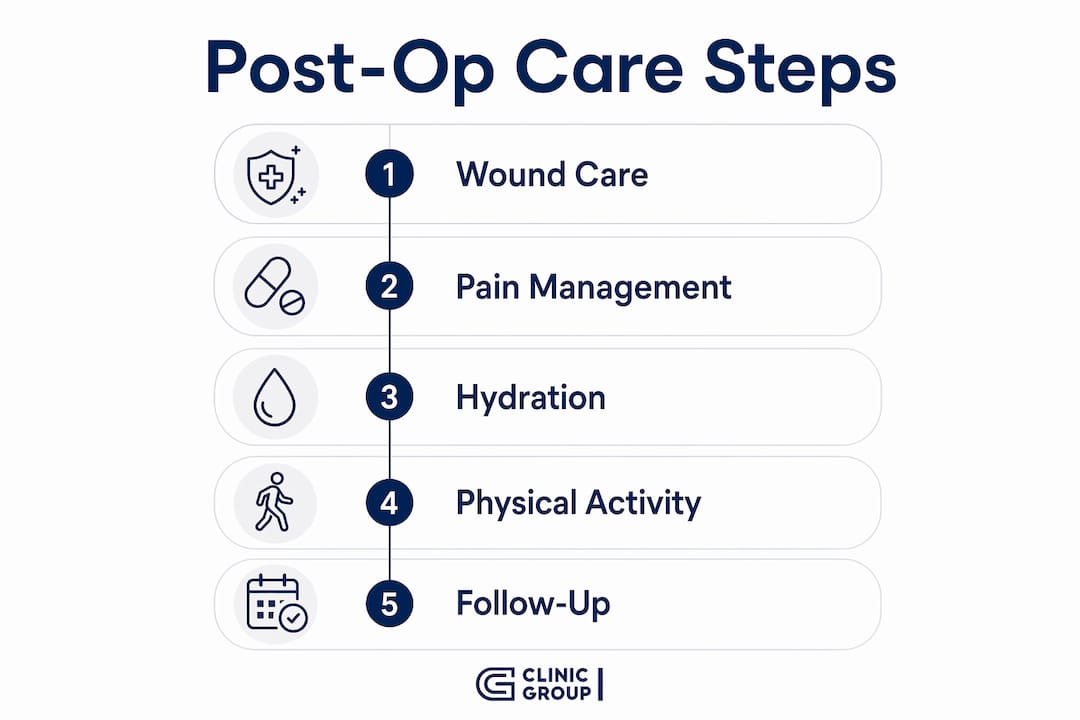
Physical activity and mobility
Bed rest alone is not the goal. Gentle, gradual movement prevents blood clots, improves circulation, and reduces the risk of pneumonia. Your surgical team will advise when to begin short walks and how to progress activity safely. Pushing too hard too soon is as harmful as staying completely still.
Pro Tip: Keep a simple daily log of your wound appearance, pain level, and fluid intake. This record helps your surgeon make faster, more accurate assessments at follow-up appointments.
How long does post-op recovery typically last?
Recovery length depends on the type of surgery, your general health, and how closely you follow your post-operative care instructions. Patients often underestimate how phased this process is.
Return to work after major surgery typically takes 4–6 weeks. Minor procedures may allow a return to light activity within a few days. Driving, exercise, and demanding physical tasks each have their own timelines, guided by your surgeon’s specific advice.
One aspect many patients do not anticipate is the cognitive effect of anaesthesia. Cognitive effects post-anaesthesia can persist for 24–48 hours after discharge. During this window, patients should not drive, operate machinery, or make major decisions. Signing legal documents during this period is also strongly discouraged.
Follow-up appointments are not administrative formalities. Clinical follow-up visits are critical opportunities for your surgical team to monitor healing, adjust medication, and identify any early complications before they escalate.
| Recovery milestone | Typical timeframe |
|---|---|
| Light activity and short walks | 1–3 days post-surgery |
| Return to desk-based work | 1–2 weeks (minor) or 4–6 weeks (major) |
| Driving | As advised by surgeon, often 2–6 weeks |
| Moderate exercise | 6–8 weeks, subject to surgeon clearance |
| Full physical activity | 3–6 months for major procedures |
Pro Tip: Ask your surgeon for a written recovery timeline at discharge. Having milestones on paper makes it easier to pace yourself and know when to seek advice.
What signs should prompt immediate medical attention?
Recognising complications early is one of the most important post-surgery recovery tips any patient can act on. Most complications are treatable when caught quickly. The risk rises sharply when warning signs are ignored.
Contact your surgical team or go to an emergency department immediately if you notice any of the following:
- Fever of 38°C or higher. Fever at or above 38°C, combined with increased redness, swelling, or wound drainage, signals a possible infection requiring prompt assessment.
- Severe or worsening pain. Pain that increases rather than gradually improving, or that does not respond to prescribed medication, is not normal and needs clinical review.
- Breathing difficulties or chest pain. These symptoms may indicate a pulmonary embolism or deep vein thrombosis, both of which are serious post-surgical complications.
- Unusual wound discharge. Any discharge that is cloudy, foul-smelling, or increasing in volume warrants immediate attention.
- Swelling or redness in a limb. This can indicate a blood clot forming, particularly in the legs after abdominal or orthopaedic surgery.
For patients who have travelled abroad for treatment, knowing how to access local emergency services and having your clinic’s out-of-hours contact number is non-negotiable. Clinicgroup provides patients with direct access to their treating clinic’s aftercare team, so support is always within reach. You can also review a detailed aftercare checklist for patients to prepare before your procedure.
How to manage post-op pain and promote safe healing at home
Managing pain at home is where many patients struggle most. The good news is that evidence-based strategies make this manageable when followed consistently.
- Take medication on schedule. Proactive pain medication taken at regular intervals is more effective than reactive dosing. Do not wait until pain is severe before taking your next dose.
- Use ice and heat appropriately. Ice reduces swelling and numbs localised pain in the first 48–72 hours. Heat can ease muscle tension and stiffness in later recovery stages. Always wrap ice packs in a cloth to protect the skin.
- Practise breathing and coughing exercises. Breathing exercises post-surgery are critical for preventing pulmonary complications, including pneumonia. Use a pillow pressed against your abdomen when coughing to reduce discomfort at the incision site.
- Balance rest with movement. Short, frequent walks are more beneficial than prolonged bed rest. Aim for gentle movement every 1–2 hours during waking hours, increasing duration gradually as your strength returns.
- Prioritise sleep. Your body performs most of its tissue repair during sleep. Create a comfortable sleeping position using pillows to support the surgical site and reduce pressure.
Pro Tip: Relaxation techniques such as slow diaphragmatic breathing and guided meditation can reduce the perception of pain without any medication. Apps like Calm or Headspace offer guided sessions specifically for recovery and rest.
Returning to normal life is a phased process guided by surgeon instructions rather than a fixed calendar. Every patient heals at a different rate. Comparing your progress to someone else’s is rarely helpful and often discouraging. Focus on your own milestones and communicate openly with your surgical team when something does not feel right.
For a broader understanding of what this process involves from discharge onwards, the guide on patient aftercare covers the full scope of post-discharge responsibilities in plain language.
Key takeaways
Postoperative care is an active, structured process that directly determines how safely and quickly you recover from surgery.
| Point | Details |
|---|---|
| Definition of post-op care | Postoperative care is a planned, multidisciplinary approach to safe recovery and complication prevention. |
| Pain management | Take prescribed medication on schedule before pain peaks; supplement with ice, heat, and breathing techniques. |
| Recovery timelines | Major surgery typically requires 4–6 weeks before returning to work; minor procedures may take only days. |
| Warning signs | Fever of 38°C or higher, worsening pain, breathing difficulties, or unusual wound discharge all need immediate attention. |
| Follow-up appointments | Clinical monitoring visits are critical for assessing healing and adjusting your recovery plan. |
Recovery is active management, not passive waiting
After years of working with patients preparing for and recovering from surgery abroad, one pattern stands out clearly. The patients who recover well are not necessarily those who had the smoothest procedures. They are the ones who treated their recovery as seriously as the surgery itself.
There is a common misconception that post-op care means lying still and waiting to feel better. The evidence says otherwise. Recovery requires active participation: structured wound care, consistent pain management, deliberate nutrition, and progressive mobilisation. Passive rest alone does not prevent blood clots, does not strengthen healing tissue, and does not catch complications early.
Individual recovery also varies far more than most patients expect. Two people undergoing the same procedure with the same surgeon can have meaningfully different timelines. Age, baseline health, nutrition, sleep quality, and adherence to post-operative care instructions all play a role. Comparing your week three to someone else’s week three is not a useful measure.
The most reliable thing you can do is communicate openly with your surgical team. If something feels wrong, say so. If you are unsure whether a symptom is normal, ask. Surgical teams would always rather answer a question that turns out to be nothing than miss a complication that needed early intervention. That open dialogue, combined with consistent adherence to your care plan, is what underpins a safe and successful outcome.
— Clinic
Planning surgery abroad? Clinicgroup supports your full recovery
Clinicgroup connects patients from the UK and across Europe with verified clinics and board-certified specialists in Albania and Dubai. Every treatment package includes clinic matching, travel logistics, partner hotel arrangements, and dedicated aftercare support, so your recovery is planned from day one, not as an afterthought.
Whether you are considering plastic surgery treatments or exploring non-surgical options, Clinicgroup’s network operates to European standards of care with transparent pricing. Patients receive direct access to their clinic’s aftercare team throughout recovery, whether they are still in the destination country or back home in the UK. Speak to the Clinicgroup team today to understand what your post-operative support plan would look like before you book.
FAQ
What is post-op care in simple terms?
Post-operative care is the medical and personal support a patient receives immediately after surgery to promote healing, control pain, and prevent complications. It includes wound care, medication management, nutrition, and follow-up appointments.
How long does post-operative care last?
Recovery from major surgery typically takes 4–6 weeks before returning to work, while minor procedures may require only a few days. Full recovery for major procedures can take 3–6 months depending on the surgery type and individual health.
When should I call a doctor during recovery?
Contact your surgical team immediately if you develop a fever of 38°C or higher, notice increased redness or unusual wound discharge, experience worsening pain, or have any difficulty breathing or chest pain.
Can I drive after surgery?
Patients should not drive for at least 24–48 hours after discharge due to the cognitive effects of anaesthesia. Your surgeon will advise the specific timeframe based on your procedure and medication.
Why are follow-up appointments important after surgery?
Follow-up visits allow your surgical team to monitor healing, identify complications early, and adjust your recovery plan. Skipping these appointments removes a critical safety check from your recovery process.