TL;DR:
- A telemedicine consultation involves remote medical advice via digital tools, becoming standard across NHS primary care. Patients can access routine and follow-up care through video, phone, or online forms, but in-person visits remain essential for emergencies and complex conditions. Proper preparation and understanding telehealth limits improve safety and effectiveness in the evolving healthcare landscape.
A telemedicine consultation is the remote delivery of medical advice and care through digital communication tools, connecting patients with healthcare professionals without requiring physical attendance. The NHS and UK GP practices have adopted this model at scale: 98.7% of GP practices in England now offer online access, with over 8 million patients using online consultation services in a single month. That figure reflects a fundamental shift in how primary care operates. Understanding how telehealth consultation works, when it is appropriate, and how to prepare for it puts you in a far stronger position to get the care you need.
What is a telemedicine consultation and how does it work?
A telemedicine consultation is a structured clinical exchange between a patient and a healthcare professional conducted via video call, telephone, or an online consultation form. The term “telehealth consultation” is often used interchangeably in NHS and digital health frameworks, though telemedicine technically refers to clinical services specifically, while telehealth can include broader health monitoring and education.
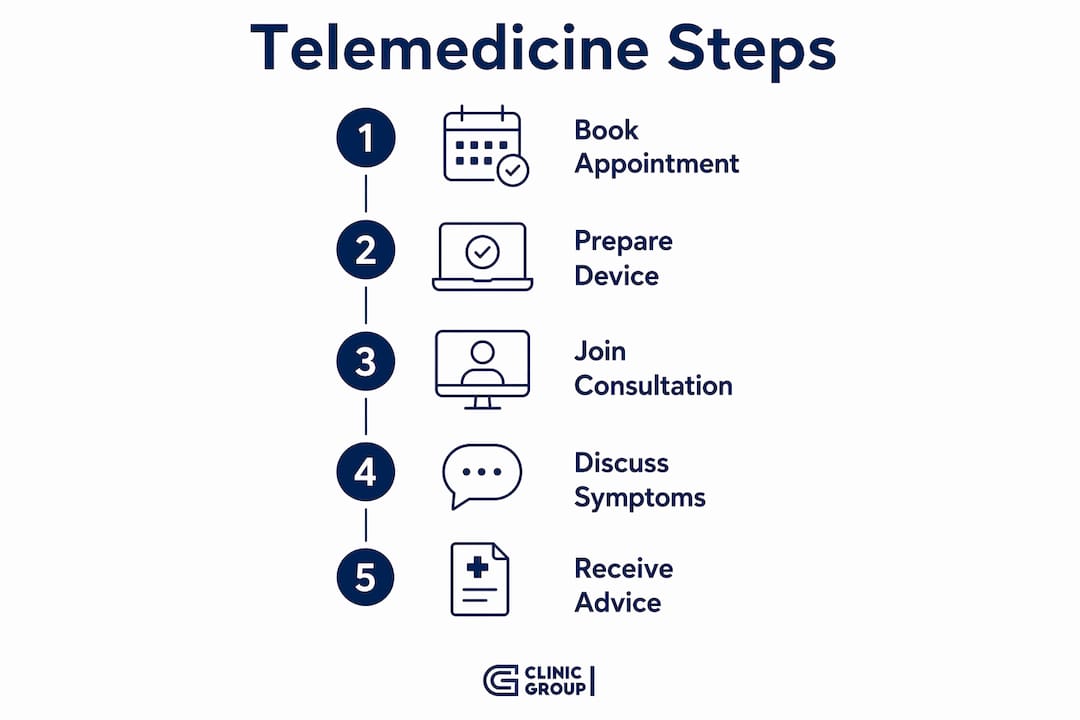
The process typically begins when a patient submits a request through their GP practice’s online portal or calls to book a telephone appointment. Online consultation systems triage patient submissions to direct queries to the appropriate healthcare professional promptly. This means your request may go to a GP, a practice nurse, a pharmacist, or a physiotherapist depending on the nature of your concern. That triage step is one of the most underappreciated parts of the process. It reduces waiting times and ensures you speak to the right clinician from the outset.
The three main channels for virtual doctor visits are:
- Video consultations — conducted via secure platforms, allowing the clinician to observe visible symptoms, skin conditions, or mobility issues in real time.
- Telephone consultations — the most common format in UK primary care, suitable for straightforward queries, medication reviews, and follow-up appointments.
- Asynchronous online forms — patients describe symptoms in writing; the clinician reviews and responds, often within the same working day.
Pro Tip: Before your appointment, test your internet connection and camera if using video. A dropped call mid-consultation wastes clinical time and can lead to incomplete advice.
The ICE framework, which stands for Ideas, Concerns, and Expectations, is a standard communication tool used by GPs to structure remote consultations. Using the ICE method at the start of a consultation ensures the clinician focuses on what matters most to you, not just your presenting symptoms. Preparing your own ICE notes before the call makes the exchange more productive for both sides.
What are the benefits of telemedicine for patients?
Telemedicine consultations remove several practical barriers that prevent patients from seeking timely medical advice. Patients with mobility limitations, caring responsibilities, or demanding work schedules gain access to clinical input they might otherwise delay or avoid entirely. That reduction in friction translates directly into earlier intervention for many conditions.
The benefits most relevant to patients in the UK include:
- Convenience — appointments can take place from home, a workplace, or any private location with a reliable connection.
- Reduced travel — no need to commute to a surgery, which matters particularly for patients in rural areas or those managing chronic conditions.
- Lower exposure risk — patients with compromised immune systems avoid waiting rooms where infection risk is higher.
- Faster access — online triage systems often generate same-day responses for non-urgent queries.
- Broader clinical team — telemedicine enables nurses, pharmacists, and allied health professionals to handle appropriate cases, freeing GP time for complex presentations.
Telemedicine is best suited for routine and follow-up care rather than complex clinical situations. Repeat prescriptions, mental health check-ins, post-operative reviews, and mild respiratory symptoms are all appropriate uses. Patients managing long-term conditions such as hypertension or type 2 diabetes benefit particularly from regular remote check-ins that do not require a physical visit every time.
Acceptance among patients has grown considerably. The scale of NHS online consultation uptake, over 8 million patients in a single month, shows that virtual doctor visits are no longer a niche preference. They are the standard first point of contact for a significant proportion of UK primary care.
Pro Tip: If you are managing a long-term condition, ask your GP practice whether a structured remote monitoring programme is available. Some practices offer regular telephone reviews specifically for patients with chronic conditions, which reduces the need for repeated in-person appointments.
When is telemedicine not appropriate?
Telemedicine carries specific clinical risks that patients and clinicians must take seriously. The absence of physical examination can lead to misdiagnosis or delayed treatment, particularly when a condition requires palpation, auscultation, or direct observation of a wound or lesion. That limitation is not a minor caveat. It is the central reason why telemedicine cannot replace in-person care for all presentations.
“Telephone consultations tend to generate higher follow-up rates than in-person visits because clinicians may miss information that a physical examination would reveal. Patients who feel their concerns were not fully addressed remotely have every right to request a face-to-face appointment.” Scoping review of patients’ experiences in UK primary care
Conditions and situations where telemedicine consultation is not appropriate include:
- Medical emergencies — chest pain, severe breathlessness, suspected stroke, or loss of consciousness require 999 or immediate attendance at A&E.
- Acute severe symptoms — rapidly worsening abdominal pain, high fever with confusion, or significant trauma need physical assessment.
- Conditions requiring examination — suspected fractures, skin lesions requiring biopsy, ear infections in young children, and abdominal masses cannot be reliably assessed remotely.
- Mental health crises — patients experiencing suicidal ideation or acute psychosis need in-person or crisis team support, not an online form.
- Complex multi-system presentations — where the clinical picture is unclear and physical signs are likely to be informative.
Clinical negligence perspectives underscore the importance of clear documentation and communication in telemedicine consultations. If a clinician does not record the limitations of a remote assessment, and harm results from a missed diagnosis, the legal and clinical consequences are significant. Patients benefit from understanding this context because it reinforces their right to request an in-person review.
How to prepare for a telemedicine consultation
Preparation is the single most effective thing you can do to improve the quality of your remote consultation. Patients who arrive at a virtual appointment without a clear account of their symptoms often receive less thorough advice, not because the clinician is inattentive, but because the consultation time is short and remote communication removes the visual and tactile cues that help clinicians gather information quickly.
Follow these steps before your appointment:
- Write down your symptoms — note when they started, how they have changed, and what makes them better or worse.
- Apply the ICE framework — identify your own Ideas (what you think is causing the problem), Concerns (what you are worried it might be), and Expectations (what you hope the consultation will achieve).
- List your current medications — include doses and how long you have been taking them.
- Choose a private, quiet location — background noise and interruptions reduce the quality of communication for both parties.
- Have a pen and paper ready — write down any advice, referrals, or follow-up instructions given during the call.
Pro Tip: If you are using an online consultation form, treat it like a written summary of your appointment. The more clearly you describe your symptoms and concerns, the more accurately the triage system can direct your query to the right clinician.
Patients can and should request an in-person follow-up if the remote consultation feels rushed or incomplete. That right is not conditional on the severity of your symptoms. If you leave a telephone or video appointment feeling uncertain about the advice given, contacting the practice to arrange a face-to-face review is entirely appropriate. For patients considering medical consultations abroad, the same principle applies: a remote initial consultation should be followed by a thorough in-person assessment before any treatment begins.
Key takeaways
Telemedicine consultation is a clinically effective tool for routine and follow-up care, but it requires patient preparation, clear communication, and an understanding of its limitations to deliver safe outcomes.
| Point | Details |
|---|---|
| Definition is specific | Telemedicine consultation is remote clinical care via video, phone, or online forms, not a general health information service. |
| NHS adoption is near-universal | 98.7% of GP practices in England offer online access, making telehealth consultation the standard first contact for many patients. |
| ICE framework improves outcomes | Preparing your Ideas, Concerns, and Expectations before the call helps clinicians focus on what matters most to you. |
| Emergencies require in-person care | Chest pain, severe breathlessness, and acute crises are not suitable for telemedicine. Call 999 or attend A&E. |
| Patients have the right to follow-up | If a remote consultation feels incomplete, you can and should request a face-to-face appointment. |
Telemedicine is a tool, not a replacement
Working with patients across Europe and the Middle East, one pattern stands out clearly. Patients who understand telemedicine as a complement to in-person care get far better results than those who treat it as a substitute. The technology is not the issue. The issue is expectation management.
Remote consultations work exceptionally well for what they are designed to do: triage, routine reviews, repeat prescriptions, and initial assessments that determine whether further investigation is needed. Where they fall short is in the grey areas, the presentations where a clinician’s hands, eyes, and instinct matter. A GP who cannot examine a patient is working with incomplete information. That is not a failure of the system. It is simply a boundary that patients and clinicians need to acknowledge together.
The digital health innovation sector is actively developing hybrid models that combine remote triage with structured in-person pathways. That direction is the right one. The future of healthcare is not fully remote or fully in-person. It is a thoughtful combination of both, guided by clinical need rather than convenience alone.
For patients considering treatment abroad, telemedicine plays a particularly valuable role in the early stages. An initial remote consultation with a verified specialist can clarify whether a procedure is appropriate, what preparation is needed, and what to expect from recovery. That conversation, conducted before any travel is booked, is one of the most important steps in a safe treatment pathway. Clinicgroup facilitates exactly this kind of structured pre-treatment dialogue, connecting patients with board-certified specialists who take the time to assess suitability before any commitment is made.
— Clinic
Clinicgroup and remote consultations for international patients
Clinicgroup connects patients from the UK, Italy, and across Europe with verified clinics and board-certified specialists in Albania and Dubai. For patients considering elective treatments, including cosmetic and plastic surgery, dentistry, hair transplants, or anti-aging therapies, the process begins with a remote consultation. That initial conversation establishes clinical suitability, outlines treatment options, and sets realistic expectations before any travel is arranged.
Every patient pathway through Clinicgroup includes clinic matching, travel logistics, partner hotel arrangements, and structured aftercare. Transparent pricing and European standards of care are central to every referral. If you are weighing up your options and want to understand what a treatment abroad involves from the first consultation to recovery, Clinicgroup’s network of specialists is ready to guide you through each step.
FAQ
What is a telemedicine consultation used for?
A telemedicine consultation is used for routine care, repeat prescriptions, mental health check-ins, and follow-up appointments. It is not appropriate for emergencies or conditions requiring physical examination.
How does a telehealth consultation work in the UK?
Patients submit a request via their GP’s online portal or book a telephone appointment. The practice’s triage system directs the query to the appropriate clinician, who responds by video, phone, or written message.
Is telemedicine as effective as an in-person visit?
Telemedicine is effective for routine and follow-up care, but telephone consultations carry higher follow-up rates than in-person visits due to the absence of physical examination.
Can I request an in-person appointment after a remote consultation?
Yes. Patients have the right to request a face-to-face follow-up if a remote consultation feels incomplete or rushed. Contact your GP practice directly to arrange this.
How do I prepare for a virtual doctor visit?
Write down your symptoms, current medications, and use the ICE framework (Ideas, Concerns, Expectations) to structure what you want to communicate. Choose a quiet, private location and have a pen ready to note any advice given.