Medically, it is an established emergency treatment for decompression illness and arterial gas embolism, and a recognised adjunct for selected non-healing wounds and radiation tissue injuries. The NHS Wales Joint Commissioning Committee commissions HBOT for decompression illness and gas embolism, recommending treatment begins optimally within six hours of presentation.
The primary evidence-backed indications are:
- Decompression illness (the “bends”) and arterial gas embolism
- Selected non-healing wounds, including diabetic foot ulcers with poor vascular supply
- Radiation tissue injury (osteoradionecrosis, soft-tissue radionecrosis)
- Carbon monoxide poisoning in certain acute clinical scenarios
HBOT is generally well tolerated, but it carries important contraindications. Untreated pneumothorax is the one absolute contraindication, and several relative contraindications require careful screening before any session begins.
Key takeaways
Hyperbaric oxygen therapy is an established emergency treatment for decompression illness and gas embolism, with a more limited and variable evidence base for other indications.
| Point | Details |
|---|---|
| What HBOT is | Breathing 100% oxygen at 2.0–2.8 ATA in a specialist chamber to increase dissolved oxygen in plasma. |
| Strongest evidence | Decompression illness and gas embolism; treatment optimally within six hours of presentation. |
| Absolute contraindication | Untreated pneumothorax is the only absolute contraindication; several relative ones require pre-treatment screening. |
| What to ask a clinic | Confirm accreditation, clinician credentials, emergency protocols and a written, itemised cost estimate before booking. |
| Clinicgroup’s role | Clinicgroup matches patients with verified, accredited HBOT clinics and coordinates bookings, travel and aftercare. |
Table of Contents
- How does hyperbaric oxygen therapy work in the body?
- Which conditions does hyperbaric treatment actually support?
- What should you expect before, during and after a session?
- What are the risks and contraindications of HBOT?
- How strong is the clinical evidence for hyperbaric oxygen healing?
- How much does hyperbaric oxygen therapy cost?
- How do you choose a safe HBOT provider?
- How Clinicgroup supports patients seeking HBOT
- A brief history of hyperbaric oxygen therapy
- What post-therapy care and monitoring should you expect?
- Where is HBOT research heading?
- Managing side effects during hyperbaric therapy sessions
- Clinicgroup can help you find verified HBOT care
- Sources
- FAQ
How does hyperbaric oxygen therapy work in the body?
Breathing pure oxygen at normal atmospheric pressure raises the oxygen content of red blood cells modestly. Under increased pressure, the physics change substantially. Henry’s Law dictates that more gas dissolves into liquid as pressure rises, so at 2.0–2.8 ATA (atmospheres absolute), the pressures commonly used in recompression protocols, plasma carries significantly more dissolved oxygen independently of haemoglobin. That extra dissolved oxygen reaches tissues even where blood flow is compromised.
The main physiological effects include:
- Bubble reduction: increased pressure physically compresses gas bubbles in decompression illness, reducing their volume and accelerating inert-gas elimination via the lungs.
- Hyper-oxygenation: plasma-dissolved oxygen reaches ischaemic tissue that red cells cannot penetrate, supporting cellular repair.
- Angiogenesis: repeated sessions stimulate new blood-vessel formation in chronically hypoxic wounds.
- Antimicrobial effect: high local oxygen tensions inhibit certain anaerobic bacteria and support white-cell killing mechanisms.
Statistic callout: Treatment pressures in recompression protocols are typically set within a range appropriate to the clinical protocol and patient status. Elective wound-care sessions often run at the lower end of this range. Always confirm the protocol with the treating hyperbaric physician, as pressure selection depends on the indication and the patient’s clinical status.
Multiplace chambers accommodate several patients simultaneously, who breathe oxygen via masks or hoods while the chamber is pressurised with air. Both types achieve the same therapeutic goal; the choice depends on clinical need, emergency capability and facility configuration.
Which conditions does hyperbaric treatment actually support?
Not every claimed use of HBOT has the same level of evidence. The distinction between commissioned, evidence-backed indications and experimental uses matters enormously when you are deciding whether to pursue treatment.
| Indication | Evidence and commissioning status |
|---|---|
| Decompression illness / gas embolism | Established; commissioned by NHS England and NHS Wales |
| Carbon monoxide poisoning (acute) | Commissioned in selected cases; practice varies by jurisdiction |
| Radiation tissue injury (osteoradionecrosis) | Commissioned in many health systems with supporting evidence |
| Diabetic foot ulcer / selected non-healing wounds | Mixed evidence; some commissioning with strict criteria |
| Sudden sensorineural hearing loss | Limited evidence; not routinely commissioned |
| Long COVID / post-viral fatigue | Investigational; no routine commissioning |
| Athletic recovery / anti-ageing optimisation | No robust clinical evidence; not commissioned |
| Autism spectrum disorder | No reliable evidence; not recommended |
NHS England’s commissioning policy notes that recompression with HBOT is accepted as standard treatment for decompression illness despite limited randomised-trial evidence, because the observational rationale and clinical practice are well established. For conditions further down the table, the evidence base is thinner and commissioning is either restricted or absent.
If you are considering HBOT for a condition not on the commissioned list, discuss it with your treating clinician first. Emergency indications such as decompression illness require urgent referral to the nearest hyperbaric facility, not an elective booking process.
What should you expect before, during and after a session?
A typical HBOT course involves a pre-treatment assessment, a series of pressurised sessions over days or weeks, and brief observation after each one. Here is what the process looks like in practice:
- Pre-treatment assessment: Chest imaging to exclude pneumothorax, ENT and dental checks (air-filled spaces must equalise pressure), blood glucose measurement for diabetic patients, and a review of all medications. Discuss any history of claustrophobia with the clinical team at this stage.
- Entering the chamber: You change into cotton clothing (synthetic fabrics carry a fire risk in high-oxygen environments) and remove jewellery, hearing aids and petroleum-based products.
- Pressurisation (compression): Pressure rises gradually over 10–15 minutes. You will feel fullness in your ears, similar to descending in an aircraft. Staff will guide you through ear-clearing techniques (swallowing, yawning, or the Valsalva manoeuvre).
- Treatment phase: You breathe 100% oxygen via a mask, hood or the chamber atmosphere (monoplace). Sessions at treatment pressure typically last 60–120 minutes for elective indications. Emergency recompression sessions for decompression illness may run considerably longer, sometimes around five hours, depending on the protocol.
- Decompression: Pressure is reduced slowly to allow safe off-gassing. This phase takes roughly 10–15 minutes.
- Post-session observation: Clinical staff monitor you briefly for any adverse effects before discharge.
The number of sessions depends entirely on the indication. Decompression illness may require one to several sessions; wound-care courses often run to 20–40 sessions over several weeks. Frequency is typically once daily on weekdays.
Pre-treatment checklist for patients:
- Inform the team of all medications, including inhalers and ear drops
- Avoid alcohol and carbonated drinks on the day of treatment
- Discuss any history of ear surgery, sinus problems or lung disease
- Confirm blood glucose is within target range if you have diabetes
- Raise any anxiety about enclosed spaces before the session, not during
What are the risks and contraindications of HBOT?
HBOT is generally well tolerated, but predictable risks require screening and monitoring. StatPearls identifies untreated pneumothorax as the only absolute contraindication; all other conditions are relative, requiring clinical judgement.
Common side effects:
- Middle ear barotrauma: the most frequent adverse effect; managed with ear-clearing techniques and, rarely, myringotomy.
- Sinus squeeze: pressure-related sinus pain, particularly in patients with active upper respiratory infections.
- Transient myopia: temporary short-sightedness that usually resolves within weeks of completing a course.
- Claustrophobia: manageable with patient preparation and, where necessary, mild anxiolytic medication.
Serious but rare risks:
- Oxygen toxicity seizures: rare at standard treatment pressures; managed by air breaks during sessions and careful pressure selection.
- Pulmonary oxygen toxicity: a concern in very long or very frequent courses; mitigated by protocol design.
Relative contraindications requiring assessment:
- Severe or uncontrolled COPD (risk of air trapping)
- Recent ear or sinus surgery
- Certain ophthalmic conditions (e.g. optic neuritis)
- Uncontrolled high fever
- Claustrophobia (relative, not absolute; manageable in most cases)
- Some chemotherapy agents that interact with high oxygen tensions
Safe delivery requires trained chamber staff, documented emergency protocols, and the ability to manage a patient inside a pressurised environment. The NHS England consultation guide stresses timely access, staff competency and clear service configuration as non-negotiable elements of safe HBOT provision.
How strong is the clinical evidence for hyperbaric oxygen healing?
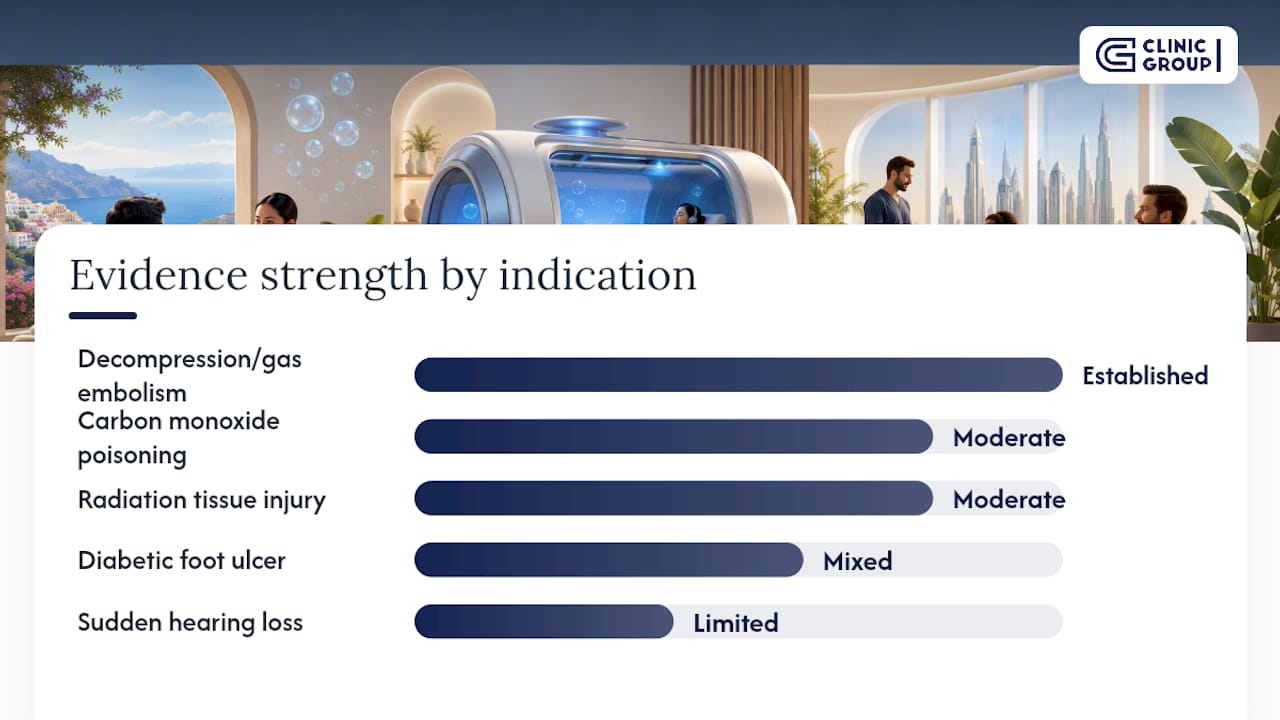
The strongest evidence supports HBOT for decompression illness and gas embolism; evidence for other indications is variable and, in some cases, weak.
| Indication | Evidence strength | Typical rationale |
|---|---|---|
| Decompression illness / gas embolism | Established (observational + clinical consensus) | Recompression is physiologically rational; no RCT feasible |
| Carbon monoxide poisoning | Moderate (some RCT data, practice varies) | Accelerates carboxyhaemoglobin elimination |
| Radiation tissue injury | Moderate (controlled trials, some commissioning) | Promotes angiogenesis in hypoxic tissue |
| Diabetic foot ulcer | Mixed (limited commissioning, variable RCT results) | Adjunct to standard wound care |
| Sudden hearing loss | Limited (small trials) | Adjunct in selected acute cases |
| Investigational uses | Insufficient for routine commissioning | Research ongoing |
MedlinePlus provides patient-facing summaries of HBOT uses and typical side effects, and is a reliable starting point for patients who want to understand what the evidence says before speaking to a clinician.
Before booking any elective HBOT course, ask the treating clinician to specify the expected measurable outcome for your indication, the number of sessions required, and what follow-up monitoring will confirm whether treatment is working. A clinic that cannot answer those questions clearly warrants caution.
How much does hyperbaric oxygen therapy cost?
Costs vary widely depending on the indication, session length, chamber type and whether treatment is NHS-funded or privately arranged. Emergency treatment for decompression illness via NHS-commissioned services differs entirely from elective private courses for wound care or investigational uses.
Key cost drivers to understand:
- Chamber type: Multiplace facilities with critical-care capability cost more to operate than monoplace units; this is reflected in session fees.
- Number of sessions: A single emergency recompression may cost very differently from a 30-session wound-care course.
- Clinician fees: Pre-treatment assessment, in-session medical supervision and follow-up consultations are separate from chamber fees at many facilities.
- Diagnostics: Chest X-ray, ENT assessment and blood tests before starting add to the total.
- Travel and accommodation: For patients travelling to access care, these costs can equal or exceed the treatment fee itself.
Insurance checklist:
- Confirm whether your indication meets your insurer’s commissioning criteria before booking.
- For emergency decompression illness, most travel insurers cover repatriation and emergency treatment; check the policy wording carefully.
- Request pre-authorisation in writing before elective sessions begin.
- Ask the clinic for a written, itemised cost estimate covering all phases of the course.
For patients considering cross-border care, compare the total package cost: treatment, travel, accommodation and aftercare together. Clinicgroup can help you obtain bundled quotes from verified clinics and clarify what is included before you commit to anything.
How do you choose a safe HBOT provider?
Prioritise accredited facilities with experienced hyperbaric teams and documented emergency protocols. The quality of the clinical team and the facility’s emergency capability matter far more than price or convenience.
Credential checklist:
- Chamber accreditation or certification by a recognised hyperbaric medical body
- Clinicians with formal hyperbaric medicine training or board certification
- Documented emergency protocols, including management of oxygen toxicity and fire safety
- Critical-care capability or a clear, tested emergency transfer pathway
- Minimum annual treatment volumes to maintain staff competency (the NHS England consultation guide recommends activity thresholds for this reason)
Questions to ask before booking:
- Who will conduct my pre-treatment assessment, and what are their qualifications?
- What chamber type is used, and what is the maximum treatment pressure?
- How are medical emergencies managed inside the chamber?
- What follow-up is provided after each session and at the end of the course?
- Can you provide a written cost estimate covering all fees?
Red flags:
- No verifiable accreditation or staff credentials
- Vague or absent emergency transfer arrangements
- No written consent process or post-treatment follow-up plan
- Claims that HBOT treats conditions for which there is no established evidence
Pro Tip: Request a copy of the clinic’s most recent staff training records or patient-safety policy. A reputable facility will provide these without hesitation. If a clinic is reluctant to share this information, treat that as a significant warning sign.
How Clinicgroup supports patients seeking HBOT
Clinicgroup connects patients with verified clinics and coordinates bookings, travel and aftercare. We do not provide clinical care ourselves, and we do not give individual medical diagnoses or treatment recommendations.
What Clinicgroup verifies and arranges for HBOT enquiries:
- Clinic accreditation status and chamber certification
- Board-certified or formally trained hyperbaric clinicians
- Transparent, itemised pricing with no hidden fees
- Partner hotel arrangements near the treatment facility
- Aftercare coordination and follow-up scheduling
Booking support includes consultation scheduling, a written cost estimate, travel logistics and aftercare coordination. We strongly recommend that every patient discusses clinical suitability with their own treating physician before booking any HBOT course. Clinicgroup does not guarantee clinical outcomes.
A brief history of hyperbaric oxygen therapy
The use of pressurised environments in medicine predates modern HBOT by centuries. Pressurised chambers, called “pneumatic institutes,” appeared in Europe in the 17th century, though their therapeutic rationale bore little resemblance to current practice. The modern era of hyperbaric medicine began in the 1930s and 1940s, when military and naval medicine confronted decompression illness in divers and caisson workers at scale.
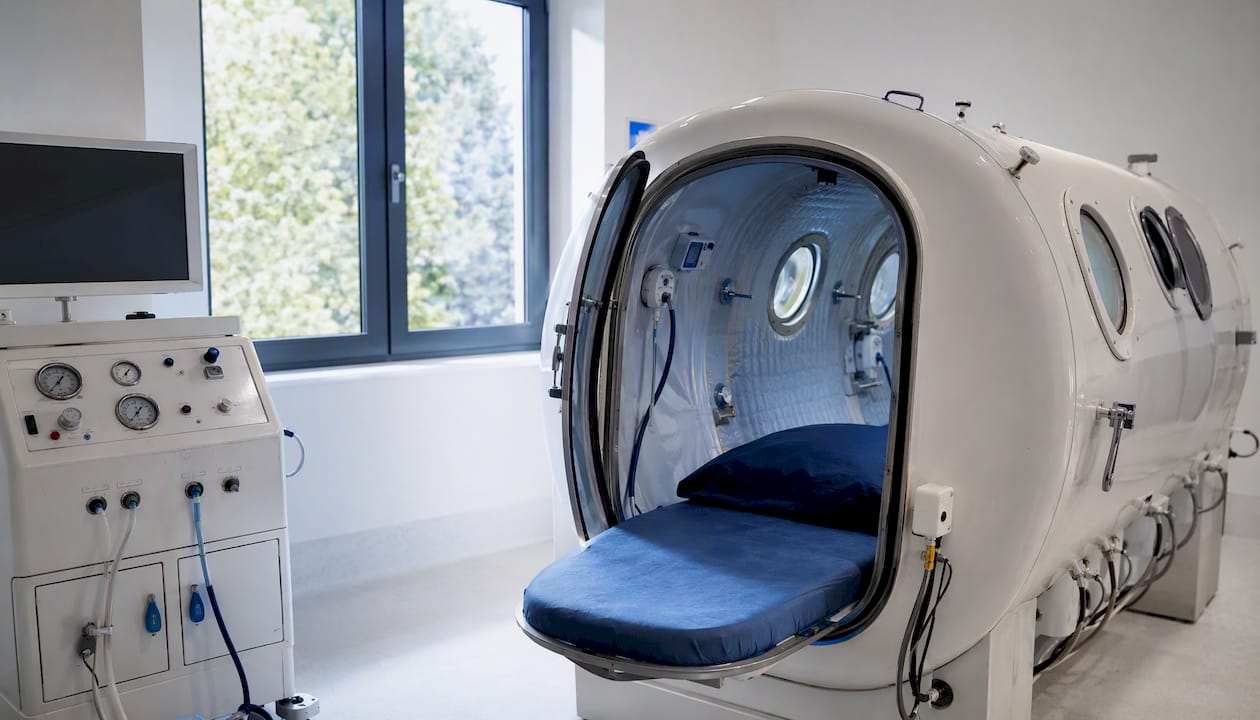
The Undersea and Hyperbaric Medical Society (UHMS), founded in 1967, became the principal body for establishing evidence-based indications and training standards. By the 1970s and 1980s, multiplace chambers were operating in major trauma and naval centres across Europe and North America, and the physiological rationale for HBOT in wound care and radiation injury was being investigated systematically. Today, hyperbaric medicine is a recognised clinical subspecialty with formal training pathways in many countries.
What post-therapy care and monitoring should you expect?
After each session, clinical staff observe patients briefly for signs of barotrauma, oxygen toxicity or cardiovascular changes before discharge. Most patients return to normal activities the same day, though fatigue is common after longer sessions.
Across a full course of treatment, monitoring typically includes:
- Regular review of the target wound or condition to assess response (photography, measurement, or imaging)
- Periodic ENT assessment if ear or sinus symptoms develop
- Ophthalmology review if transient myopia becomes persistent or worsens
- Blood glucose monitoring for diabetic patients throughout the course
- A formal end-of-course clinical review to determine whether further sessions are warranted
Patients should report any new or worsening symptoms between sessions rather than waiting for the next scheduled appointment. Prompt reporting allows the clinical team to adjust the protocol or pause treatment if needed. Good aftercare coordination is particularly important for patients who have travelled for treatment and are returning home between sessions or after completing a course.
Where is HBOT research heading?
Current research is exploring HBOT in several directions beyond its established indications. Trials are investigating its role in traumatic brain injury, post-stroke rehabilitation, and long COVID, though none of these has yet produced evidence strong enough for routine commissioning.
Intermittent hypoxia-hyperoxia training protocols, which alternate low and high oxygen concentrations, are being studied as a distinct but related intervention for cardiovascular and cognitive ageing. Separately, researchers are examining whether HBOT can lengthen telomeres and reduce senescent cell burden, with small preliminary findings generating interest in longevity medicine, though these results remain early-stage.
Chamber technology is also advancing. Portable and soft-sided hyperbaric chambers have entered the consumer market, but these typically operate at pressures well below therapeutic thresholds (often 1.3 ATA or less) and should not be conflated with medical-grade HBOT. Patients considering any hyperbaric intervention should confirm the pressure range and clinical supervision offered before proceeding.
Managing side effects during hyperbaric therapy sessions
Most side effects during HBOT are predictable and manageable with straightforward techniques. Ear discomfort during compression is the most common issue; the clinical team will demonstrate ear-clearing manoeuvres before the first session and can slow the compression rate if needed.

For patients prone to anxiety in enclosed spaces, preparation matters. Visiting the facility before the first session, understanding exactly what will happen, and having a clear communication system with chamber staff (most chambers have intercom systems) reduces anxiety substantially. Mild anxiolytic medication is an option in some facilities, but this requires clinical assessment.
Oxygen toxicity seizures, while rare at standard pressures, are managed by incorporating air breaks into longer sessions. These brief periods of breathing air rather than pure oxygen reduce cumulative oxygen exposure without significantly reducing therapeutic effect. Patients should not drive immediately after a session if they have received any sedating medication.
Clinicgroup’s perspective on accessing HBOT safely
Every patient who contacts Clinicgroup about HBOT has already done something right: they are asking questions before committing to treatment. That matters, because the gap between well-run hyperbaric facilities and poorly supervised ones is wider than in many other medical fields. The physics of pressurised oxygen leave little room for shortcuts in equipment maintenance, staff training or emergency preparedness.
Clinicgroup’s view is straightforward: clinical assessment by a qualified hyperbaric physician must come before any booking decision. Our role is to make the step after that assessment, finding a verified, accredited facility and organising the practical elements of the trip, as clear and stress-free as possible. Patients deserve transparent pricing, confirmed credentials and a named aftercare contact. That is what we verify before recommending any clinic in our network.
Clinicgroup can help you find verified HBOT care
For patients who have discussed HBOT with their clinician and are ready to explore options, Clinicgroup offers a no-obligation matching service. We identify verified facilities, provide itemised cost estimates and handle the travel and accommodation logistics so you can focus entirely on your treatment.
For every HBOT enquiry, Clinicgroup confirms: chamber accreditation and type, clinician qualifications, emergency protocols, and what aftercare is included in the quoted price. Booking support covers consultation scheduling, written cost estimates, partner hotel arrangements and post-treatment follow-up coordination.
Clinicgroup does not make medical recommendations or guarantee clinical outcomes. A consultation with your own physician is the essential first step. Once you have clinical clearance, explore our treatments or contact our team directly to request a verified clinic match and a transparent quote for your HBOT course.
Sources
The following sources informed this article and are recommended for patients and clinicians seeking primary guidance:
- Hyperbaric Oxygen Therapy (all ages)
- Clinical commissioning policy: Hyperbaric oxygen therapy for decompression illness/gas embolism (all ages)
- Hyperbaric Oxygen Therapy Contraindications - StatPearls - NCBI Bookshelf
This article provides general information only and is not a substitute for professional medical advice. Discuss your suitability for HBOT with a qualified clinician before making any treatment decision.
FAQ
What is hyperbaric oxygen therapy used for?
HBOT is primarily used for decompression illness, arterial gas embolism, carbon monoxide poisoning, radiation tissue injury and selected non-healing wounds. Emergency indications such as decompression illness require urgent treatment, ideally within six hours.
Is hyperbaric oxygen therapy safe?
HBOT is generally well tolerated. The most common side effect is ear barotrauma, managed with ear-clearing techniques. Untreated pneumothorax is the only absolute contraindication; a pre-treatment assessment screens for other relative contraindications such as severe COPD or recent ear surgery.
How many sessions of HBOT are typically needed?
Session numbers depend on the indication. Emergency decompression illness may require one to several sessions; wound-care or radiation-injury courses often involve 20–40 sessions over several weeks, typically once daily.
How can Clinicgroup help me access HBOT?
Clinicgroup matches patients with verified, accredited hyperbaric facilities, confirms chamber type and clinician credentials, provides itemised cost estimates and coordinates travel and aftercare. Clinical suitability must be confirmed by your own physician before booking.
Does private health insurance cover hyperbaric oxygen therapy?
Coverage depends on your insurer and the indication. Emergency treatment for decompression illness is often covered by travel insurance; elective courses require pre-authorisation and must meet the insurer’s commissioning criteria. Always request written pre-authorisation before beginning a course.