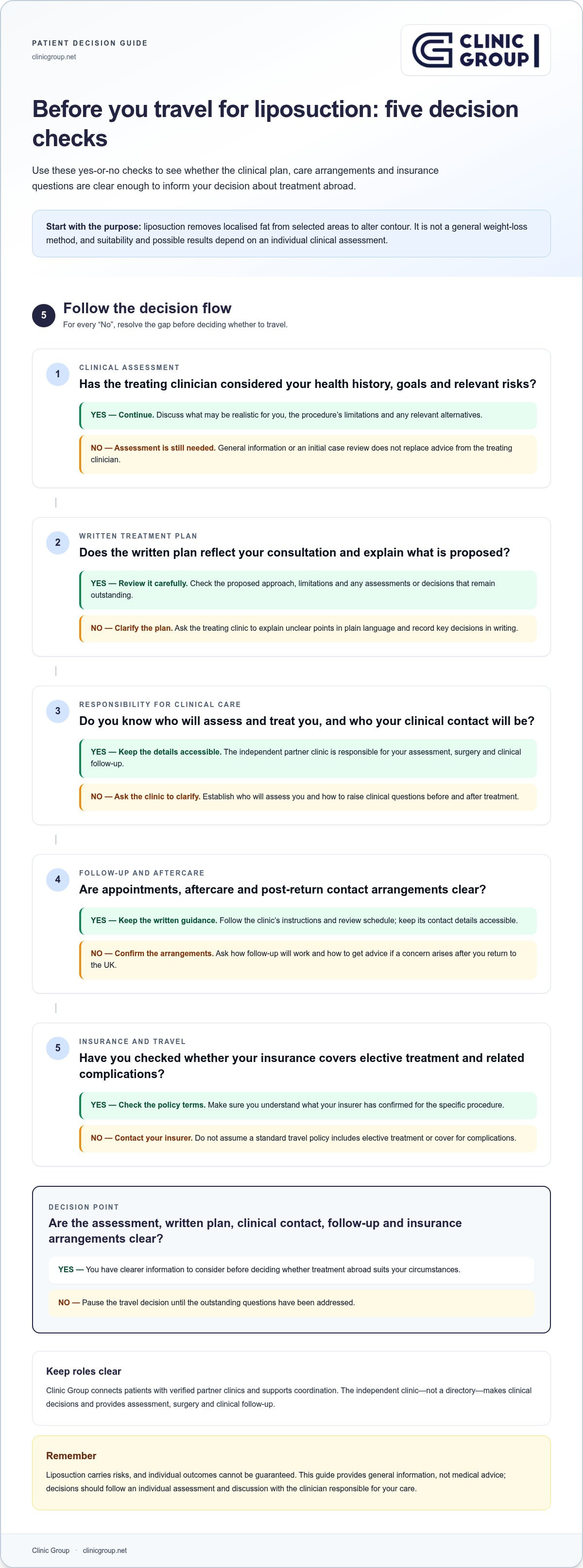
When comparing liposuction clinics abroad, focus on who will assess and treat you, how the clinic explains risks and limitations, and what follow-up is arranged. Ask for a patient-specific written plan, an itemised quote and clear clinical contact details before booking travel. The independent clinic, not a directory, provides clinical care.
It can be difficult to assess clinical information when it appears alongside travel arrangements and promotional claims. This guide sets out questions to ask during a consultation, details to compare between clinics and practical steps to take before deciding whether treatment abroad suits your circumstances.
Clinic Group connects patients with verified partner clinics and offers consultation and coordination support. The independent partner clinic is responsible for your clinical assessment, surgery and aftercare. Before making a decision, clarify the clinic’s follow-up arrangements and check your insurance cover for treatment-related complications. Liposuction carries risks, and individual outcomes cannot be guaranteed. This article provides general information, not medical advice.
Key Takeaways
- Understand what liposuction can address and why it is not a general weight-loss method.
- Compare liposuction clinics abroad using consistent information about the clinical team, treatment plan and follow-up arrangements.
- Before booking travel, obtain a written plan and itemised quote, arrange aftercare and check insurance cover for treatment-related complications.
- Clinic Group can help you explore partner clinics and coordinate enquiries. Clinical assessment and care remain the partner clinic’s responsibility.
What should UK patients know about liposuction clinics abroad?
Liposuction is a surgical procedure in which a treating clinician removes localised fat from selected areas of the body. It aims to alter the contour of an area, not to act as a general weight-loss method. Whether it may be suitable for you, and what it could achieve, can only be discussed after an individual clinical assessment.
When researching liposuction clinics abroad, separate general information about the procedure from decisions that depend on your health and circumstances. Clinic Group connects patients with verified partner clinics and can support coordination. The independent clinic is responsible for assessing you and providing clinical care.
What does liposuction aim to do?
Liposuction aims to remove localised fat from selected areas. It should not be presented as a way to manage overall weight, and no particular body shape or result can be promised. A clinician must assess your individual circumstances to decide whether it may be suitable.
Use the consultation to explain what you hope to change and ask what may be realistic for you. Ask the treating clinician to discuss the procedure’s limitations, potential risks and any factors in your health history that could affect their recommendation. You can read a general overview in Liposuction Wikipedia, then ask the clinician how that information applies to your case. For a treatment overview, see Clinic Group’s liposuction treatment page.
A useful consultation should give you clear answers and time to consider them. You could ask:
- Which areas are being considered, and why?
- What limitations or risks are relevant to my circumstances?
- What further information or assessment is needed before a decision can be made?
Who is responsible for care at a clinic abroad?
The independent partner clinic is responsible for your clinical assessment, surgery and clinical follow-up. Clinic Group connects patients with clinics and supports coordination; it does not perform surgery or make clinical decisions. Before proceeding, establish who will assess you and who will be your clinical contact during follow-up.
A directory can help organise information and enquiries, but it cannot replace a conversation with the treating clinician or determine whether surgery is appropriate for you. Ask the clinic to explain its care arrangements and make sure you know how to raise questions about your treatment.
This guide offers general information, not medical advice. Liposuction carries risks, and individual outcomes cannot be guaranteed. Make decisions after an individual assessment and a clear discussion with the clinician responsible for your care.
How is liposuction abroad assessed, planned and followed up?
A clear process helps distinguish general information about liposuction from advice that must take account of your health and an examination. The treating clinic should assess your circumstances, explain its recommendation and set out follow-up arrangements before you decide whether to travel.
A practical patient journey includes these steps:
- Share information for an initial case review. Provide accurate details about your health, medical history and goals. This can help the clinic decide what further discussion or assessment may be needed, but it is not a substitute for clinical advice.
- Have an individual consultation. Discuss your goals, medical history, limitations and possible risks with the treating clinician. Ask them to explain the proposed approach and any relevant alternatives.
- Review the written plan. Request a plan describing the proposed treatment and identifying any assessments or decisions still outstanding. Check that it reflects what you discussed.
- Agree the care and travel arrangements. Confirm appointment dates, your clinical contact and how follow-up will work. Ask how to get advice if a concern arises after you return to the UK.
- Follow the clinic’s instructions and attend follow-up. Keep the clinic’s contact details and written guidance accessible, and follow the review and aftercare schedule it provides.
What should an individual consultation cover?
Explain what you hope to change and ask the treating clinician to consider your medical history before making a recommendation. Discuss possible risks and limitations as well as the intended approach. Confirm who will answer clinical questions before treatment and who will be available for follow-up. The treating clinic must provide instructions specific to you; general online guidance cannot replace them.
If something is unclear, ask for an explanation in plain language and request that key decisions are recorded in the plan. UK Government guidance also advises care when considering cosmetic treatment abroad. Its advice on cosmetic surgery abroad can help you prepare questions before committing.
What should the written plan and follow-up explain?
Ask for the proposed treatment plan and aftercare arrangements in writing. They should explain planned appointments, identify the clinical contact for questions and set out how to raise concerns after you return home. Instructions and follow-up timelines vary between patients and clinics, so do not rely on a generic recovery schedule or assume verbal discussions will be clear later.
Before booking travel, check whether your travel insurance covers elective treatment and complications arising from it. Do not assume a standard policy includes this cover. Tell your insurer about the specific procedure, ask about the policy terms and request written clarification.
Clinic Group can help organise enquiries and coordination with partner clinics, while the independent clinic remains responsible for clinical assessment, treatment and follow-up. To explore the directory and support, visit Clinic Group’s clinic directory.
How can you compare liposuction clinics abroad fairly?
Compare clinics using the same questions and information you can inspect, rather than relying on polished advertising or a headline rating. Record what each clinic documents about the clinician, proposed care, follow-up and communication. If a detail is missing or unclear, note it as unanswered instead of assuming the clinic meets a particular standard.
A comparison table can help highlight what is documented and where you need clarification:
| What to compare | Information to record |
|---|---|
| Clinician identity | Name of the treating clinician, relevant qualifications, experience related to the procedure and stated responsibility for your care. |
| Clinic details | The facility where care is planned, information provided about it and any accreditation or registration claims, with supporting details. |
| Written plan | Whether the plan reflects your assessment, explains the proposed approach and records limitations or decisions still outstanding. |
| Aftercare | Planned follow-up, the clinical contact for questions and how concerns are handled after you return to the UK. |
| Communication | Whether responses are clear and consistent, and whether the person responding can answer clinical questions or direct them to the treating clinician. |
Which clinic details should you compare?
Look for the treating clinician’s identity and relevant credentials, then confirm that the named person is responsible for the proposed care. Review the consultation process and patient information alongside the written plan. A profile or brochure can help you prepare questions, but it is not a substitute for clinic-specific evidence or an individual assessment.
Where practical, record the source and date of the information. If a clinic makes an accreditation or qualification claim, look for documentation that explains what it applies to. Do not assume one clinician’s credential covers the whole clinic, or that a general quality statement proves a specific standard. A guide to clinic accreditation can help you understand what an accreditation claim does and does not establish. For a repeatable approach to care abroad, use this guide to choosing a clinic for affordable, quality care abroad as a comparison framework.
How should you assess reviews and quality claims?
Patient testimonials describe individual experiences. They may suggest questions to raise, but they cannot predict your outcome or establish that every patient receives the same care. Give more weight to specific, verifiable information about responsibilities, assessment and follow-up than to broad promotional statements or unsupported success claims.
Keep a short evidence log for each clinic: what is documented, what is unclear and what the clinic has explained directly. This makes gaps visible without treating an incomplete profile as a judgement about clinical quality. Clinic Group’s directory can help you organise information about its verified partner clinics, while the independent clinic remains responsible for clinical care.
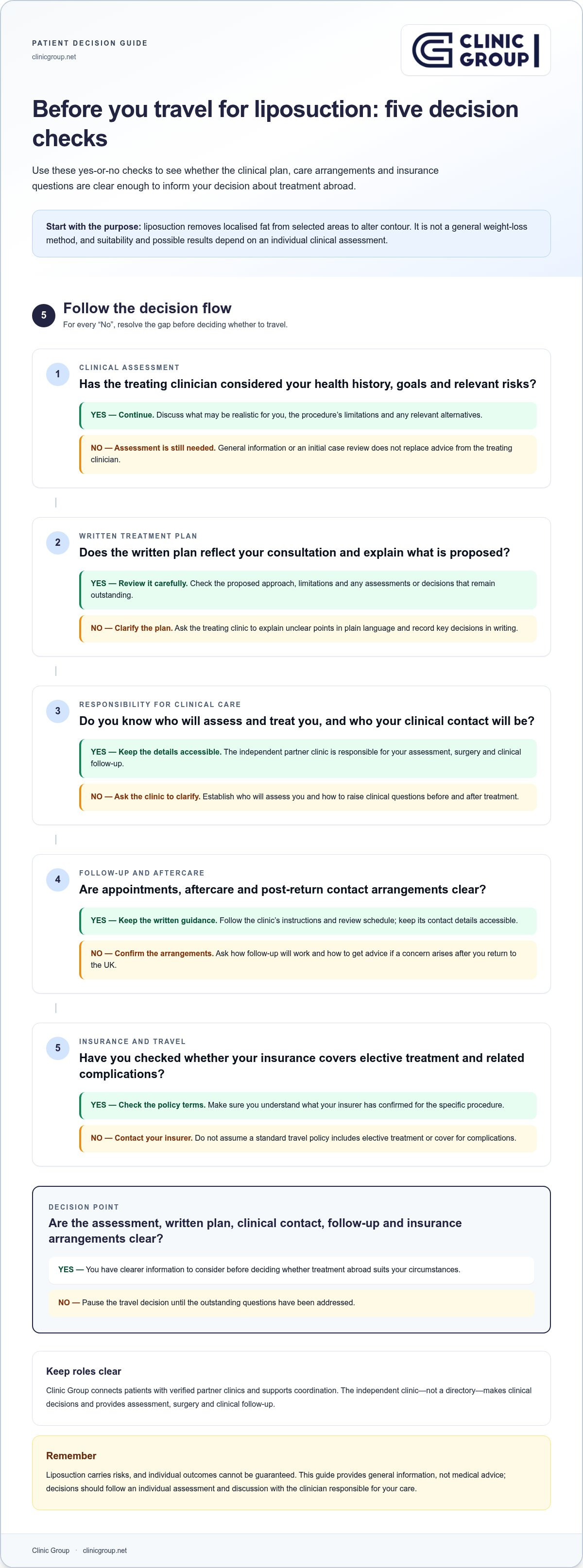
What should you organise before travelling for liposuction?
Before booking travel, get the clinical plan, appointment schedule and follow-up arrangements in writing. This gives you time to resolve unanswered questions while you are still in the UK. Use the treating clinician’s assessment to guide decisions about travel and recovery; a generic timeline cannot establish what is suitable for you.
Work through this checklist with the independent clinic and, where relevant, your insurer:
- Written treatment plan: Keep the latest version accessible and check that it reflects discussions with your treating clinician.
- Itemised quote: Request a written breakdown of what is included so you understand the proposed arrangements before deciding.
- Appointments: Ask the clinic to set out appointment dates and follow-up visits before you book travel.
- Aftercare and contacts: Obtain the clinic’s aftercare terms, complication procedures and contact details for clinical questions during your stay and after you return to the UK.
- Insurance: Ask your insurer whether the policy covers planned elective treatment and related complications.
- Logistics: Keep travel details together and get accommodation or transfer arrangements in writing if coordination support is available through the clinic.
What documents and arrangements should be ready?
Keep the written plan, itemised quote, appointment details and clinic contact information somewhere easy to access, with a separate copy if practical. Note who is responsible for clinical advice while you are abroad and how to contact them after you return home. If the clinic arranges accommodation or transfers, keep those details in writing too. Coordination can help organise logistics, but it does not replace clinical care from the independent partner clinic.
Check that the appointment schedule allows for the assessments and discussions the clinic says you need. Do not plan around an assumed procedure date or standard stay length before the treating team explains what applies to your case. If plans change, ask for updated written details so you and the clinic have the same information.
How should you plan aftercare and insurance?
Ask the clinic to explain in writing how follow-up is arranged, who handles clinical concerns and what steps to take if a problem arises after you return to the UK. Recovery and travel advice vary, so there is no single timeframe that applies to every patient. Follow the treating clinician’s individual assessment and instructions before arranging your return journey.
Insurance cover for elective procedures or related complications is not automatic. Tell your insurer about the planned treatment and ask what the policy covers, what it excludes and what process applies if you need help. Read the policy wording and keep the insurer’s response with your travel documents. A general description of cover cannot answer questions about your own policy.
Use Clinic Group’s clinic directory and patient support to explore partner-clinic options and organise your enquiries.
How can Clinic Group help you explore liposuction clinics abroad?
Clinic Group helps patients explore liposuction clinics abroad through its directory of verified partner clinics, with consultation and coordination support. This can help you organise enquiries and review information, while clinical decisions remain with the independent clinic that would provide your care. A consultation or clinic match is a starting point for assessment, not confirmation that surgery is suitable.
The process may include:
- Explore the directory. Review partner-clinic information and identify what matters to your decision.
- Request a free consultation. Share your questions and relevant information for enquiry review and case-review support.
- Consider clinic matching. Clinic Group supports connections with partner clinics and helps organise enquiries. The treating clinic must assess your circumstances directly.
- Review the clinic’s documents. Read its patient-specific written plan and itemised quote carefully. These are for you to consider and do not promise a particular result.
- Decide what happens next. Take time to clarify unanswered questions. You can seek a second opinion before committing if that would help you make an informed decision.
What happens after you request a consultation?
The Clinic Group team reviews your enquiry and supports clinic matching and coordination. The independent partner clinic provides the clinical assessment and, where appropriate, a written treatment plan and quote for you to review. Treatment is provided by that clinic, not by Clinic Group. Coordination can help organise access, but the clinic is responsible for clinical advice, treatment and follow-up.
Depending on the clinic, coordination support may also help organise practical travel arrangements, such as accommodation or transfers. These arrangements vary by clinic, so review them alongside the clinic’s written plan rather than assuming they are included. Direct questions about suitability, risks and aftercare to the treating clinician.
What should you decide before booking?
Before arranging travel, make sure you know the treating clinician’s identity and responsibilities, understand the written plan and have an itemised quote to review. Confirm the aftercare arrangements and clinical contact, including how to raise concerns after returning to the UK. Check your insurance wording directly for cover relating to elective treatment and complications. If anything remains uncertain, pause and ask for clarification.
Take time to consider the information and seek a second opinion if it would help you assess the proposed approach. A consultation can support your enquiry, but it cannot confirm suitability or guarantee an outcome. Clinical advice must come from the independent partner clinic after its assessment.
To explore treatment information or consultation support, browse Clinic Group treatments and consultation support.
Take your next step with clear information
Choosing between liposuction clinics abroad takes more than comparing promotional claims. Review the clinic’s information, list any unanswered questions and consider whether the proposed care and follow-up arrangements meet your needs. If you would find a second opinion helpful, consulting an experienced plastic surgeon such as Dr. Leonard Grossman can provide clear insight before committing.
Clinic Group connects patients with verified partner clinics and provides free consultation and case-review support. Coordination for travel arrangements, such as accommodation or transfers, depends on the partner clinic. The clinic is responsible for clinical assessment, treatment and aftercare, and outcomes cannot be guaranteed. Use the consultation to organise your questions and understand the next steps, not as a substitute for advice from the treating clinician.
Take the next step when you feel ready, with the written information you need to make a considered decision. Meanwhile, for patients who decide to pursue aesthetic treatments closer to home with readily available UK aftercare, exploring cosmetic dentistry with providers like Khan Dental offers an alternative path to personal transformations without the complexities of travelling overseas.
Frequently Asked Questions
Is liposuction abroad safe?
No surgery can be guaranteed safe or free from complications. Your personal risk depends on factors a treating clinician must assess, including your health and the proposed procedure. Before deciding, establish who will perform the surgery, where it will take place and how clinical concerns will be managed. A clinic’s location alone does not determine safety, and general information cannot replace an individual assessment.
How can I check whether a liposuction clinic abroad is verified?
Check whether the clinic appears as a partner in Clinic Group’s directory, then review the clinic-specific information available. Confirm the treating clinician’s identity, relevant credentials, the facility where care is planned and who is responsible for your treatment. Ask for supporting details about any qualification or accreditation claim. Partner status identifies clinics in the directory, but it does not establish that surgery is suitable for you or guarantee an outcome.
Does liposuction abroad remove excess weight?
Liposuction is not a general weight-loss treatment. It removes localised fat from selected areas, and a clinician must assess whether the procedure may suit your circumstances. Explain your goals during the consultation rather than assuming liposuction will address overall weight. The treating clinician should discuss what the procedure may and may not achieve for you without promising a particular change in shape or weight.
What should I ask during a liposuction consultation abroad?
Ask how your health history and goals affect the clinician’s recommendation, what approach they propose, and what limitations or risks apply to your case. Prepare details of relevant medical conditions, previous operations, allergies and medicines to discuss. Ask who will answer clinical questions before and after treatment, and what further assessment is needed before a decision. Do not change prescribed medicines unless your clinician advises you to.
How long should I stay abroad after liposuction?
There is no single stay length that applies to every patient. Ask the treating clinician to assess your planned procedure and explain which appointments must take place before you travel home. Avoid booking a return journey based on a generic recovery estimate. Confirm what review is needed, who will decide whether you are ready to travel and how to contact the clinic if your plans change.
Does travel insurance cover complications after liposuction abroad?
Do not assume it does. Policies vary, and cover for planned elective surgery or related complications may be excluded. Tell your insurer about the specific procedure and destination, then request written clarification of what is covered, which exclusions apply and how to seek help. Check whether the policy addresses complications after you return to the UK as well as during the trip. Keep the policy terms and insurer’s response accessible.
Who provides aftercare if I have liposuction through Clinic Group?
The independent partner clinic that provides your treatment is responsible for clinical aftercare, not Clinic Group. Before travelling, identify the clinic’s clinical contact and establish how follow-up will work after you return to the UK. Ask how to raise a concern and which contact to use. Clinic Group connects patients with partner clinics and supports coordination, but does not provide surgery or clinical care.

Article by
Clinic Group Editorial Team
The Clinic Group editorial team publishes clear, practical guides for UK and EU patients researching medical travel — from dental implants and hair transplants to plastic surgery and eye care — with a focus on verified clinics, transparent “from” pricing, and safe planning.
Disclaimer
This article is for general information only and is not medical advice, diagnosis, or a substitute for an in-person consultation with a qualified clinician. Treatment suitability, risks, timelines, and costs vary by individual. Clinic Group connects patients with independent clinics; those clinics are responsible for clinical care. Always verify credentials, obtain a written treatment plan and itemised quote, and confirm aftercare arrangements and travel insurance cover (elective procedures are often excluded) before booking. Outcomes cannot be guaranteed.