When comparing LASIK eye surgery abroad, look beyond the procedure to the full care pathway: who assesses you, what the written plan says, how appointments fit around travel and how follow-up works after you return to the UK. Compare these details with UK-based care so you can identify what to clarify before deciding whether an overseas option suits you.
It’s understandable to have questions about how to assess an overseas clinic, what happens if you need advice after travelling home and whether written plans cover the same things. A structured comparison helps you identify what to clarify before booking, rather than relying on assumptions or headline claims.
This guide explains what to compare between overseas and UK-based care, which documents and arrangements to discuss before travelling, and why an in-person assessment matters when deciding if LASIK is suitable. It also explains how Clinic Group’s directory of verified partner clinics and consultation support can help you explore options. Clinical assessment, treatment and after-care remain the responsibility of the independent clinic. This information is general and isn’t medical advice.
Key Takeaways
- Compare the full care pathway for LASIK eye surgery abroad, not just the procedure.
- Review the written treatment plan and clarify assessment, travel arrangements and follow-up before booking.
- Use the same comparison points for UK and overseas care, including where assessments take place and who manages follow-up.
- LASIK and premium lens surgery are different treatment pathways; suitability and choice require assessment by an independent eye-care team.
- Clinic Group can help you explore verified partner clinics through consultation and matching support, while clinical care remains the clinic’s responsibility.
What should you compare when considering LASIK eye surgery abroad?
LASIK abroad means planned vision-correction treatment received outside your home country. To compare it fairly with UK-based care, consider how your eyes will be assessed, how the treatment plan is explained, what travel involves and how follow-up will work after you return. The treating clinical team must assess whether LASIK is suitable for you.
LASIK reshapes the cornea, the clear front surface of the eye, to help correct vision. The approach depends on the clinical assessment and the plan for the individual. For an overview of the procedure, see What is LASIK? Clinic Group’s LASIK eye surgery information also introduces this treatment pathway.
Why do UK patients consider LASIK abroad?
Some patients explore treatment overseas to consider a wider choice of clinics and care arrangements. Travelling adds practical questions to a personal decision: when and where will assessments happen, how long will you need to stay, and who will provide clinical after-care when you’re back in the UK?
These considerations don’t make overseas care unsuitable by default, and they don’t establish that a particular option is right for you. They are reasons to compare the arrangements in detail before deciding.
What does a useful comparison cover?
A written plan makes it easier to understand what each care pathway involves. Compare the same details across options, rather than relying on a headline description that may leave out important steps.
- Clinical assessment: Find out how the treating team will assess your eyes and discuss whether LASIK is appropriate for your individual needs.
- Treatment planning: Review the proposed approach and what the clinic says will happen. Make a note of anything that remains unclear.
- Travel arrangements: Map the expected appointments against flights, accommodation and time away from home. Consider how changes to your plans could affect the clinical schedule.
- After-care: Understand who will arrange clinical follow-up, how it will be provided after you return, and whom to contact if you have concerns.
A useful comparison covers the full pathway, from assessment and treatment planning to travel and follow-up, rather than the procedure alone.
Before booking, keep the written plan and supporting information together, then compare like with like. Check that you understand what is proposed, which steps take place in person and how the clinic will communicate with you at each stage. If something is unclear, seek an explanation from the clinical team before deciding. LASIK eye surgery abroad should only be considered after an individual assessment; eligibility and treatment decisions belong to the treating clinical team. This guide offers general information, not medical advice, and outcomes can’t be guaranteed.
How does the LASIK journey abroad work, from assessment to follow-up?
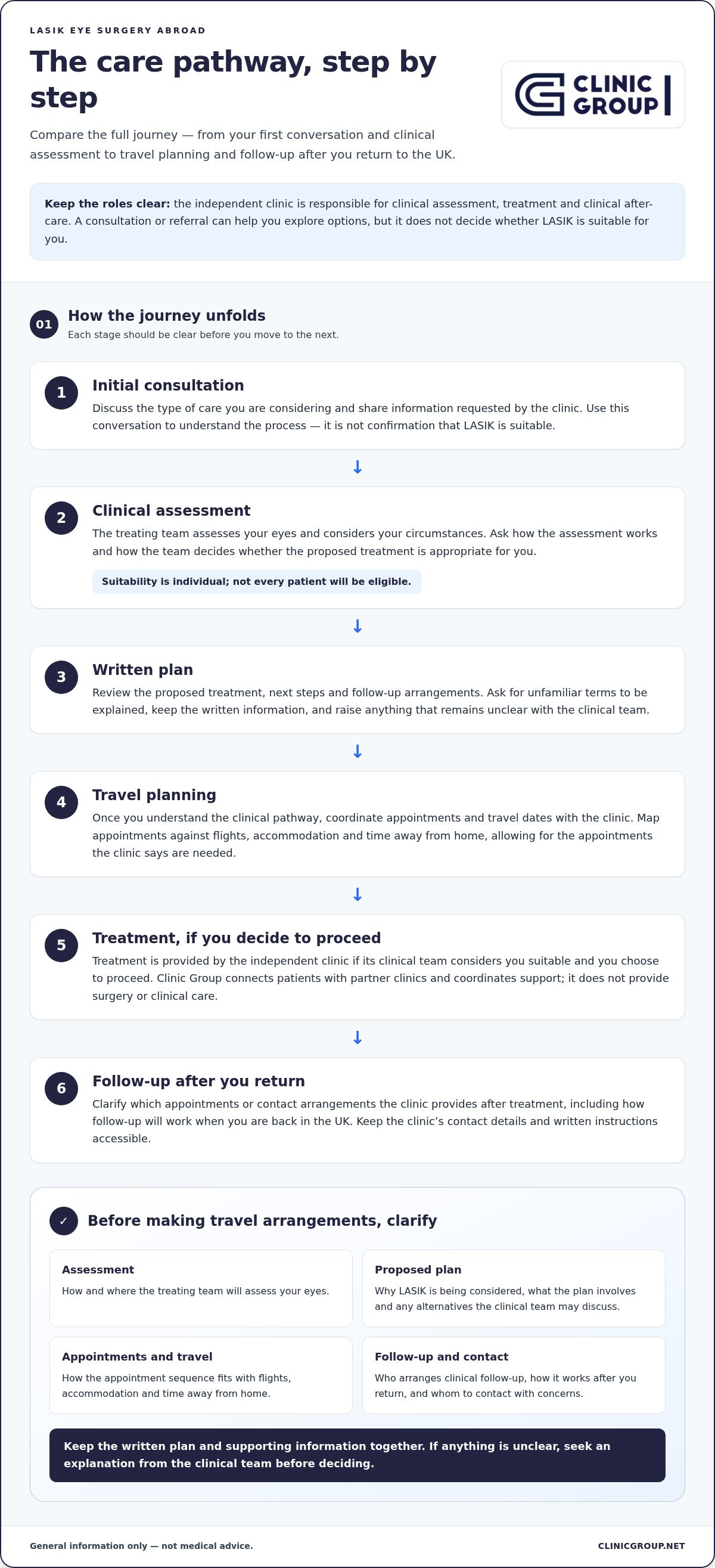
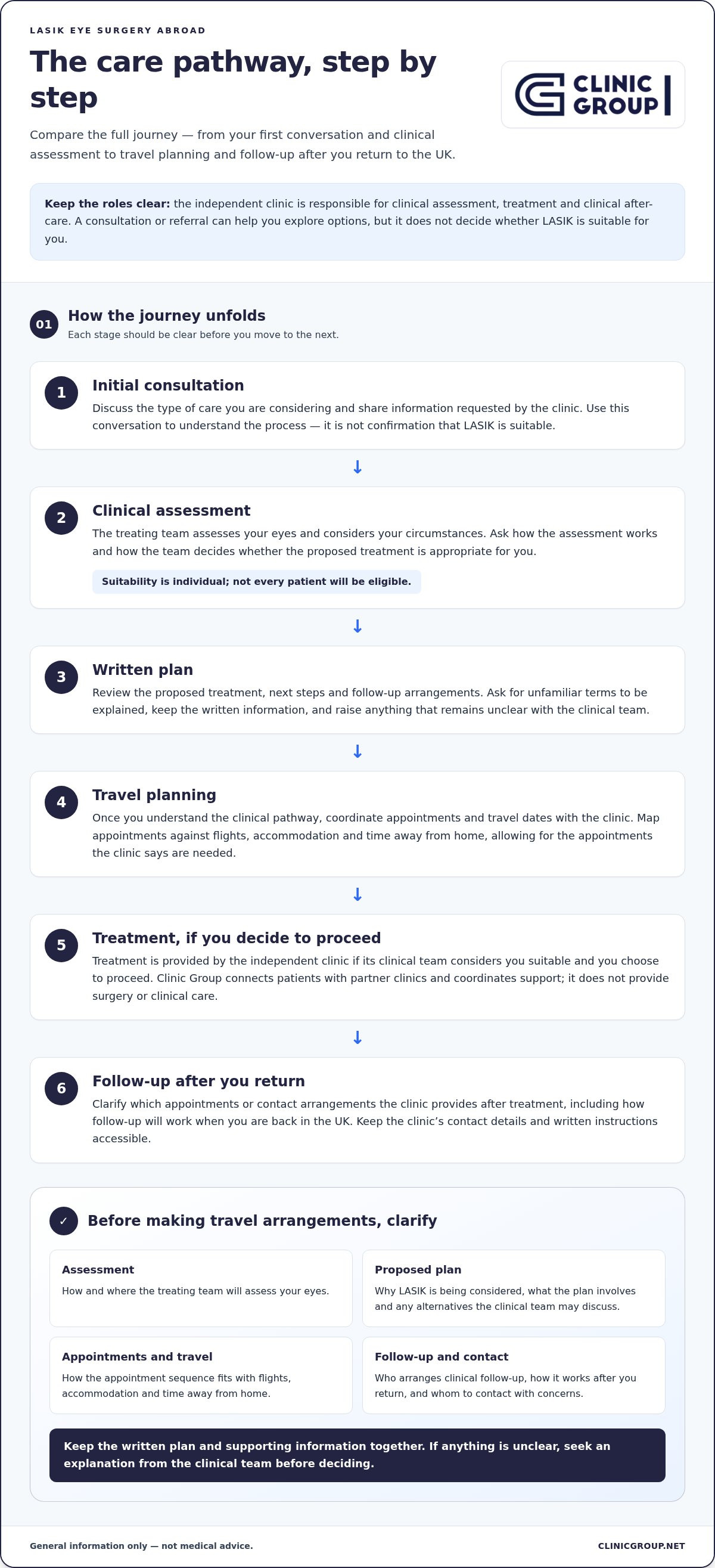
A clear pathway helps you see how clinical decisions and travel arrangements fit together. For LASIK eye surgery abroad, the independent partner clinic is responsible for clinical assessment, treatment and clinical after-care. A consultation or referral can help you explore options, but it doesn’t determine whether you’re suitable for surgery.
- Initial consultation: Discuss the type of care you’re considering and share information requested by the clinic. Treat this as a chance to understand the process, not as confirmation that LASIK is suitable.
- Clinical assessment: The treating team assesses your eyes and considers your circumstances. The clinic should explain its assessment process and how it will decide whether the proposed treatment is appropriate.
- Written plan: Review the proposed treatment, next steps and follow-up arrangements. Ask for explanations of unfamiliar terms and keep a copy of the plan and any written information supplied by the clinic.
- Travel planning: Once you understand the clinical pathway, coordinate appointments and travel dates with the clinic. Allow time for the appointments the clinic says are needed.
- Treatment: If the clinical team considers you suitable and you decide to proceed, the independent clinic provides the treatment. Clinic Group connects patients with partner clinics and coordinates support; it doesn’t provide surgery or clinical care.
- Follow-up: Clarify which appointments or contact arrangements the clinic provides after treatment, including how follow-up will work once you’re home in the UK. Keep the clinic’s contact details and written instructions accessible.
What should the initial assessment and written plan clarify?
Ask the treating clinic to describe the assessment and explain how it will reach a recommendation. Suitability is individual, and not every patient will be eligible. Before making travel arrangements, write down questions about why LASIK is being considered, what alternatives the clinical team may discuss, what the proposed plan involves and what follow-up is expected. Ask for clear written answers so you can review them in your own time and raise any remaining questions with the treating team before deciding.
How should travel and follow-up fit together?
Build the schedule around the clinic’s appointment sequence, rather than treating travel as a separate task. Before booking, request written details of the planned appointments, how the clinic will contact you after you return, and whom to reach if you have a concern. Clarify how clinical follow-up is arranged and what happens if you need further advice. This makes continuity of care easier to understand before you commit.
Clinic Group’s LASIK eye surgery treatment information can help you explore the pathway, and a Clinic Group consultation offers a way to discuss partner-clinic options. Clinical suitability and care remain the independent clinic’s responsibility. This section is general information, not medical advice, and individual outcomes can’t be guaranteed.
How can you compare LASIK abroad with care in the UK?
Compare the practical arrangements side by side, rather than treating location as a measure of quality. UK-based care may make appointments easier to attend locally, while overseas treatment involves coordinating travel and clinical visits. Neither arrangement guarantees a particular standard or outcome. For LASIK eye surgery abroad, distance can make follow-up more complicated, so agree how you’ll contact the clinic after returning home before booking.
| Factor | UK-based care | Care abroad |
|---|---|---|
| Care location | Appointments take place in the UK, which may simplify local travel. | Clinical appointments take place overseas, so plan the journey around the clinic’s schedule. |
| Assessment arrangements | Clarify which assessments take place in person and how the team explains its recommendation. | Establish when and where the treating team will assess you, and whether any steps happen before travel. |
| Travel needs | Consider how you’ll reach appointments and fit them around daily commitments. | Coordinate transport and accommodation with appointment dates, allowing for the clinic’s stated schedule. |
| Follow-up responsibility | Ask the treating provider to set out its follow-up arrangements and contact route. | Get the clinic’s post-treatment contact and follow-up plan in writing, including how it works once you’re home. |
The table is a starting point, not a verdict. Compare the written information from each care pathway: a clear plan should identify who assesses and treats you, what is proposed, and who is responsible for clinical follow-up. If an itemised quote is provided, review what it covers alongside the clinical plan, rather than comparing headline figures alone. Local access and overseas coordination describe different practical arrangements, not guarantees of clinical quality.
Which documents and safety details should you compare?
Keep the written clinical plan, itemised quote, appointment details and follow-up instructions together. Ask for clinic-specific information about the treating team’s qualifications and relevant clinic protocols, and make sure you understand which organisation is responsible for each part of care. Don’t infer accreditation from a general claim or directory listing. Check credentials for the specific clinic and clinical team involved. Compare how clearly each clinic explains its assessment, proposed care and responsibilities, and note any unanswered questions.
What should you clarify about after-care and insurance?
Request the clinic’s follow-up schedule and contact route in writing. Clarify how to reach the clinical team once you’re back in the UK, what to do if you have a concern, and whether a return visit may be needed. The practical guide to after-care in the UK following treatment abroad can help you consider continuity of care.
Read your insurance policy before making arrangements. Ask your insurer directly whether elective treatment abroad and potential complications are covered; don’t assume they are. Clarify how you would seek advice in the UK if you needed further care, as access depends on your circumstances and clinical assessment. This section is general information, not medical advice.
Is LASIK the right treatment pathway, or should you compare eye-care options?
LASIK and premium lens surgery are distinct eye-care pathways, not interchangeable versions of the same procedure. LASIK uses a laser to reshape the cornea, while premium lens surgery involves a lens-based approach. Which, if either, merits consideration depends on your individual assessment. Start with the treating eye-care team’s written recommendation, then compare the options and care arrangements it describes.
Clinic Group’s premium lens surgery information introduces another listed eye-care option. Reading about it can help you prepare questions, but general information cannot establish which treatment is appropriate for you. The independent clinical team is responsible for assessing your eyes, explaining possible options and recommending a pathway based on your circumstances.
How does LASIK differ from premium lens surgery?
At a broad level, LASIK is laser treatment that reshapes the cornea. Premium lens surgery follows a lens-based pathway instead. The procedures are different, and one should not be treated as a substitute for the other based on a general description or preference alone.
The treating clinician can explain which options merit individual assessment and what each would involve in your case. Avoid drawing conclusions about suitability, recovery or likely results from a comparison of procedure names.
What questions help you understand the recommended pathway?
Ask the clinician to explain the reasoning for the proposed option in plain English. If alternatives are relevant, request a clear account of how they differ and why they may or may not be considered for you.
- What did the assessment show, and how does it inform the recommendation?
- Which alternatives merit consideration in my circumstances, and why?
- What does the proposed treatment involve, and what remains uncertain?
- What follow-up is planned, and who is responsible for each part of care?
- Can I have the recommendation and relevant after-care information in writing?
Written answers help you understand the clinical reasoning and compare the proposed pathway with other information you receive. If an explanation is unclear, ask the treating team to clarify it before making travel or treatment decisions. A referral or introductory consultation may help you explore options, but it isn’t a clinical decision about your suitability.
Treatment comparisons should support clinical assessment, not replace it. This matters when researching LASIK eye surgery abroad: the choice of treatment belongs with the independent eye-care team following an appropriate assessment. No general guide can determine your eligibility or guarantee an outcome. This information is for general guidance and is not medical advice.
How can Clinic Group help you explore LASIK eye surgery abroad?
Clinic Group is a directory and coordination platform, not a clinic or provider of surgery. It connects patients with independent partner clinics and helps coordinate the steps involved in exploring care. Clinic Group supports clinic discovery and coordination; the independent clinic is responsible for clinical assessment, treatment and clinical after-care. A consultation with Clinic Group is a starting point for discussing options, not a decision about your clinical suitability.
What support can patients expect before travelling?
A free consultation can help you explain what you’re looking for and consider relevant partner-clinic options. Clinic matching supports your search; it doesn’t replace an assessment by the treating eye-care team or determine which treatment is appropriate. Use the discussion to identify what information you still need, such as how the clinic’s process is arranged or which questions you want answered before deciding.
Coordination support can include travel assistance, with arrangements depending on the partner clinic. An optional second opinion may also be part of your decision process if you want another clinical perspective. The clinic remains responsible for its assessment and advice. Clinic Group’s ophthalmology directory can help you explore listed partner options without starting your search from scratch.
What should be settled before booking?
Before you commit, distinguish coordination details from clinical decisions. Keep the clinic’s documents together and note which organisation is responsible for each arrangement. This checklist can help you identify unanswered questions before booking travel:
- Clinical paperwork: Obtain the independent clinic’s written plan and itemised quote, and understand what each document describes.
- Named responsibilities: Know which team handles clinical questions, appointment changes and coordination queries, so you can direct each question appropriately.
- After-care contact: Save the clinic’s written contact route and follow-up information somewhere you can access while travelling and after returning home.
- Insurance details: Obtain written information from your insurer about cover for elective treatment and possible complications; don’t rely on assumptions about policy wording.
These checks won’t decide whether treatment is right for you, but they can make the practical arrangements clearer before you choose to proceed. Outcomes can’t be guaranteed, and this article provides general information rather than medical advice. The clinical team’s assessment should guide decisions about treatment.
Explore the LASIK treatment information to understand the listed pathway, or use Clinic Group’s consultation and coordination support to explore partner-clinic options without pressure to book.
Take your next step at your own pace
Choosing whether to pursue LASIK eye surgery abroad doesn’t need to be an immediate yes or no. Take time to consider what matters most to you, whether that’s understanding the proposed treatment, feeling confident about travel arrangements or knowing how you’ll seek advice if questions arise. A useful next step is to write down what you still need to understand and take those questions to the relevant consultation.
You can also decide that you need more time or would prefer to explore another eye-care pathway. The aim is to make a decision with a clear understanding of your options and any information still outstanding. Any decision about suitability should follow an individual assessment by the treating clinical team; general information can help you prepare, but it can’t replace that advice.
Whatever you decide, a measured approach helps you ask informed questions and choose the next step that feels right for you.
Frequently Asked Questions
Is LASIK eye surgery abroad safe?
Safety can’t be judged by destination or promotional claims alone. For LASIK eye surgery abroad, consider how the independent clinic assesses you, explains its clinical processes and arranges support after treatment. Request the treating team’s credentials and relevant protocols in writing, then check that the follow-up plan gives you a clear contact route. No guide can determine your suitability or guarantee an outcome. This is general information, not medical advice.
Can anyone have LASIK eye surgery abroad?
No. Only an individual clinical assessment can determine whether LASIK may be suitable; an online guide, referral or introductory conversation can’t establish eligibility. Ask the treating eye-care team to explain its findings and recommendation in plain English, including whether it considers another pathway relevant. Clinic Group can connect you with independent clinics, but it doesn’t assess your eyes or provide clinical care. Take time to understand the clinician’s advice before deciding.
How many visits are needed for LASIK abroad?
There isn’t one appointment schedule for every patient. The independent clinic’s assessment and treatment plan determine which visits are needed and when, so don’t assume a single trip will cover everything. Ask for a proposed appointment sequence before arranging travel, including when follow-up is expected. Compare the clinic’s appointment dates with your available travel days and make sure your plans allow you to attend each appointment it recommends.
What should a written LASIK treatment plan include?
Ask the treating clinic to document its assessment, recommended treatment, relevant alternatives and planned appointments. The plan should also explain follow-up and identify who is responsible for clinical care and whom to contact with concerns. Request an itemised quote as a separate document so you can see what it covers. Keep these records with the clinic’s after-care and insurance information. Clinic Group may coordinate access, but the independent clinic provides treatment.
Will UK public healthcare automatically treat complications after LASIK abroad?
Don’t assume public healthcare services in the UK will automatically provide treatment for a complication following elective care abroad. How a need for care is handled depends on the circumstances and clinical assessment. Before deciding, get the overseas clinic’s after-care and contact arrangements in writing, and ask your insurer about cover for complications. Consider how you would seek advice in the UK if a concern arose, without relying on an assumed route to treatment.
Does travel insurance cover LASIK complications abroad?
Don’t assume standard travel insurance covers elective treatment or related complications. Policy terms differ, so read the wording and ask your insurer directly about the planned procedure and the specific complications you want covered. Request written confirmation before booking and keep it with your travel documents. Insurance is separate from the clinic’s clinical after-care plan, so obtain that plan and its contact details directly from the treating clinic as well.

Article by
Clinic Group Editorial Team
The Clinic Group editorial team publishes clear, practical guides for UK and EU patients researching medical travel — from dental implants and hair transplants to plastic surgery and eye care — with a focus on verified clinics, transparent “from” pricing, and safe planning.
Disclaimer
This article is for general information only and is not medical advice, diagnosis, or a substitute for an in-person consultation with a qualified clinician. Treatment suitability, risks, timelines, and costs vary by individual. Clinic Group connects patients with independent clinics; those clinics are responsible for clinical care. Always verify credentials, obtain a written treatment plan and itemised quote, and confirm aftercare arrangements and travel insurance cover (elective procedures are often excluded) before booking. Outcomes cannot be guaranteed.